REVIEW · KYOTO
Kyoto: Nijo Castle, Kiyomizu & Fushimi Inari Guided Tour
Book on GetYourGuide →Operated by AMIGO TOURS JAPAN GK · Bookable on GetYourGuide
Kyoto in one long, well-paced day. You’ll hit the big-name sights, starting with early Arashiyama and ending in Fushimi Inari by torii, all guided in English and Spanish. I like how the day is structured so you get context as you walk, not just checklists and photos.
Second, I love the mix of guided time and breathing room. You’ll get set stops for temples, then real free time to linger, snack, and pace yourself at the places that need it.
One thing to plan for: it’s an 11-hour day with walking, and some key entrances depend on your advance ticket option. If you’re sensitive to crowds or mobility limits, this may not be the right fit.
In This Review
- Key highlights worth your attention
- Why this Kyoto day tour works for first-timers
- The pickup and bus rhythm: where the day starts
- Arashiyama Bamboo Grove: early entry and calm walking
- Kinkaku-ji (Golden Pavilion): the gold-leaf moment
- Nijo Castle: shogun residence and the nightingale floors
- Kiyomizu-dera: the wooden stage viewpoint
- Fushimi Inari Taisha: torii gates and choosing your own effort
- Price, what’s included, and what you must budget
- The guide and driver factor: why the day feels smooth
- What to bring (and what to skip) for 11 hours
- Who should book this tour, and who should think twice
- Should you book this Kyoto day tour?
- FAQ
- How long is the Kyoto Nijo Castle, Kiyomizu & Fushimi Inari guided tour?
- Where do I meet the guide?
- What time should I arrive for check-in?
- Which major sights are included in the day?
- Are admission tickets included for all temple stops?
- What happens if Nijo Castle can’t be visited?
- Is food included?
- What languages is the guide available in?
- Is the tour suitable for wheelchair users or limited mobility?
- Where do you drop off at the end?
Key highlights worth your attention

- Early Arashiyama Bamboo Grove access that helps you beat peak crowds
- Fast bilingual guiding (English/Spanish), with past guides praised for switching smoothly
- Nijo Castle’s nightingale floors and tatami-room history
- Golden Pavilion and certain temple entries are option-based (advance ticket needed)
- Fushimi Inari torii trails with true free time to choose how far you go
- A comfortable coach ride with frequent regrouping so the day stays organized
Why this Kyoto day tour works for first-timers
This is a classic “see the essentials” Kyoto plan, but it avoids the usual chaos by doing two smart things: batching the sights by area and keeping the group moving on a coach with clear meet points. In a single day, you go from bamboo quiet to gold-leaf glamour to shogun-era security tricks.
What makes it feel worth the time is the guide’s role. They set you up with history and what to look for, then let you see it at your own pace. That balance is what turns famous places into something you actually understand.
And yes, the schedule is full. But the pacing is designed to keep you from sprinting between sites with no time to settle in.
You can also read our reviews of more tours and experiences in Kyoto.
The pickup and bus rhythm: where the day starts
You meet outside Hotel Keihan Kyoto Grande, and the guide waits with an Amigo Tours sign. Show up at least 10 minutes early for check-in, because once the bus leaves, you’re done with logistics and on to Kyoto.
The driving time between stops is short enough that you still feel like you’re touring, not just commuting. You’ll have coach stretches where you can cool off, especially helpful in hot months. Many guests specifically mention the coach ride being comfortable and air-conditioned.
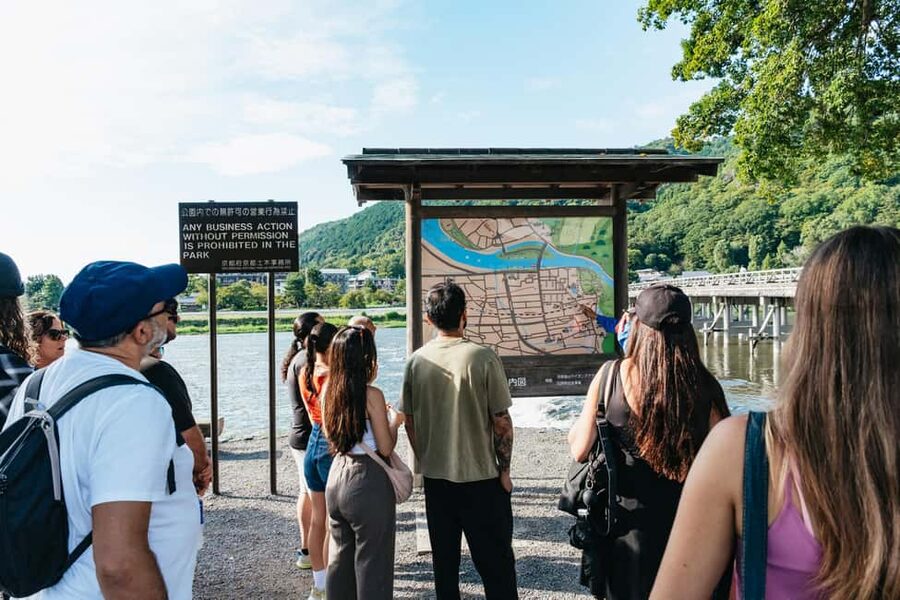
Between sites, the tour setup makes it easier to stay oriented. You regroup at designated points, then you go out as a group for the walking portions. It’s a relief if you’re navigating Kyoto for the first time.
Arashiyama Bamboo Grove: early entry and calm walking
Your day starts in Arashiyama Bamboo Grove, and the big advantage here is timing. You get early access to explore before the heavier crowds roll in. Even if you’ve seen photos, being in the grove changes the feel—tall stalks, soft leaf rustle, and a kind of stillness you don’t get when it’s packed.
You have about 70 minutes at this stop, which is enough to stroll slowly, take photos, and actually absorb the atmosphere. This is also one of the best places to slow down mentally. Think of it as your Kyoto reset before the day turns into temple hopping.
Practical tip: wear comfortable shoes. The paths are not extreme, but you’ll be on foot for most of the day.
Kinkaku-ji (Golden Pavilion): the gold-leaf moment
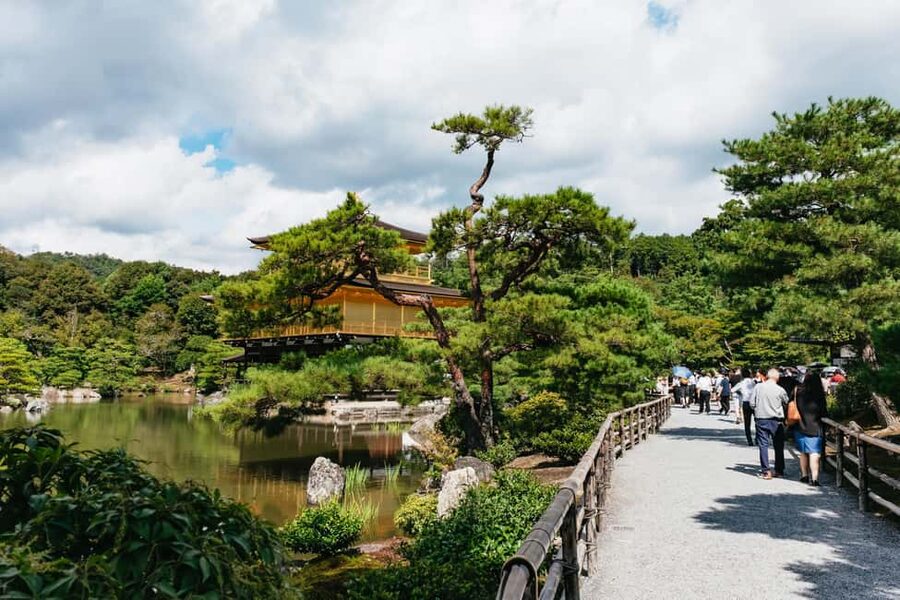
After Arashiyama, you go to Kinkaku-ji, the Golden Pavilion, where you’re set up for that iconic view—gold leaf, pond, and garden composition. This is a major stop, and there’s a reason it’s always photographed.
One key detail: Golden Pavilion entry is included only if you bought the ticket option in advance. If you didn’t, you may not get the same inside access. So when you book, double-check that you’re covered for entry rather than just passing by.
You get about 45 minutes here. That’s enough time for the main pavilion area, photos, and a bit of wandering around the pond-side views. If you want the best pictures, arrive early in your allotted time block and don’t wait until the last 10 minutes.
Nijo Castle: shogun residence and the nightingale floors
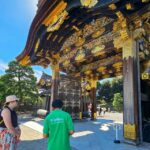
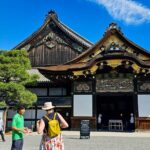
Next up is Nijo Castle, a historic residence tied to the shogun. What I like about this stop is that it doesn’t just look pretty. It’s designed to make you understand how power worked—security, layout, and the everyday reality of elite life.
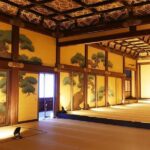
You’ll wander through spacious gardens and traditional rooms with tatami flooring. The standout feature is the nightingale floors—an ingenious security system from that era. The idea is simple and clever: the floorboards are designed to make noise underfoot, acting like an alarm for anyone who shouldn’t be there.
You have about 1.5 hours here, plus a chance to take in the architecture without rushing. That matters because Nijo doesn’t give you the same instant wow effect as a temple with torii gates. It rewards patience.
Important planning note: Nijo Castle may become inaccessible due to circumstances beyond the operator’s control. If that happens, the tour will swap in a visit to Sanjūsangen-dō Temple instead. That’s a real possibility to keep in mind when you’re building your day.
Kiyomizu-dera: the wooden stage viewpoint
Then comes Kiyomizu-dera, one of Kyoto’s most famous temple complexes. This stop is built for views. The temple features an impressive wooden stage that overlooks the valley, and that vantage point is exactly why people come.
Like Kinkaku-ji, access depends on your ticket choice. Entry to Kiyomizu-dera is granted only if you selected the right advance ticket option. If you didn’t, you may miss the full temple visit.
You’ll also get a combined visit, lunch, and free time window of about 2.5 hours. That’s a smart chunk of time because Kiyomizu is both temple and neighborhood. You’ll be right in the area known for traditional sweets and craft shops, so you can turn this stop into a mini cultural break rather than only a photo run.
How to make the most of this time: spend the first part on the temple views, then save the free time to wander the surrounding streets. If you do it the other way around, crowds and foot traffic can make it harder to settle into the temple viewpoint.
Fushimi Inari Taisha: torii gates and choosing your own effort
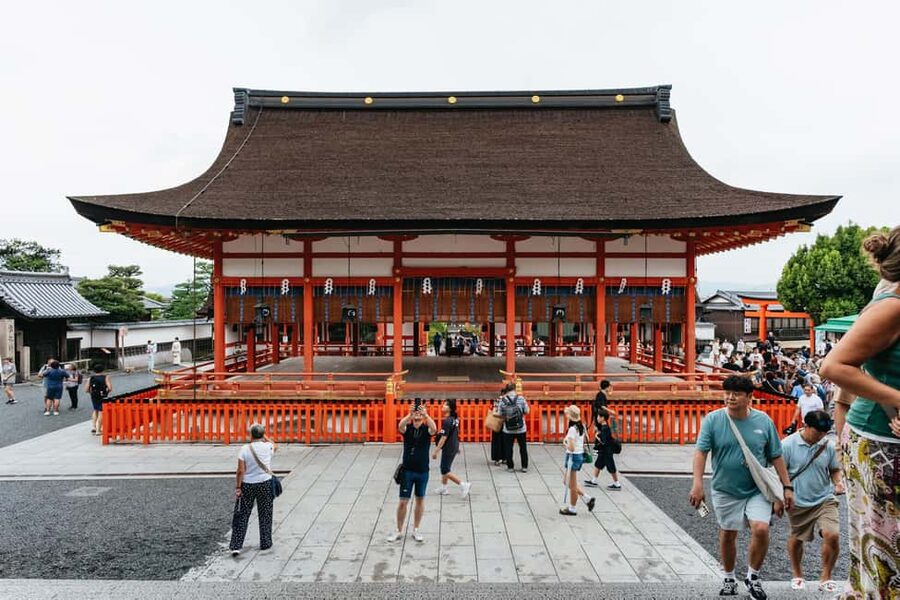
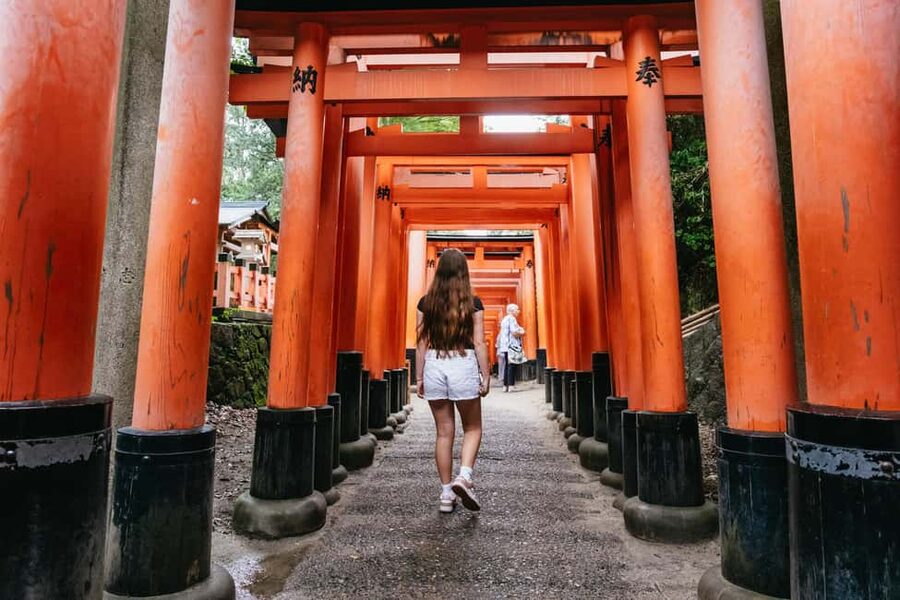
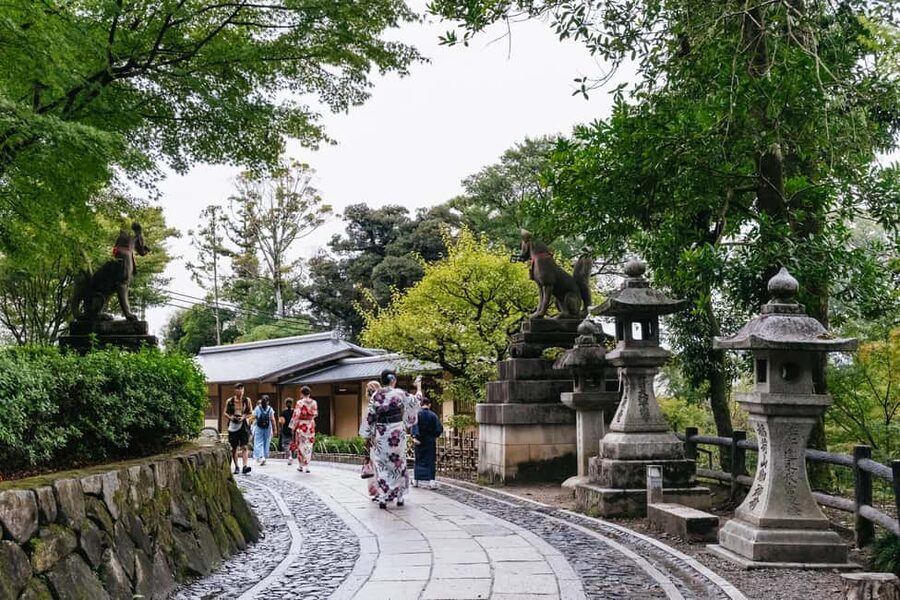
Finally, you reach Fushimi Inari Taisha, famous for thousands of bright red torii gates winding up the mountainside. This is where the day shifts from major landmark viewing to a more personal experience.
You get about 1.5 hours of visit and free time here. That’s the right amount because Fushimi Inari is not an all-or-nothing walk. You can choose how far up you go based on energy and how crowded it is.
Here’s the practical magic: each torii gate creates repetition, and repetition helps you slow down. You’re not looking at one wow scene only. You’re moving through a living sequence of gates, which makes the whole walk feel more like a ritual path than a tourist corridor.
At the end, you’ll drop off at one of two places: Fushimi Inari Taisha or Kyoto Station. If you’re continuing your day elsewhere, having that Kyoto Station option is handy for getting your bearings fast.
Price, what’s included, and what you must budget
At $54 per person for an 11-hour day, this tour is mainly about value through concentration. You’re paying for:
- round-trip style transport between multiple zones of Kyoto
- a bilingual guide (English/Spanish)
- admissions to Golden Pavilion, Nijo Castle, and Kiyomizu-dera when you pick the advance ticket options
Food and drinks are not included, so plan for meals on your own. The good news is that the Kiyomizu-dera area is a natural place to grab lunch while you still stay in the cultural neighborhood.
Whether this is a good deal for you comes down to one question: do you want a day where someone else handles timing and getting you between top sites? If yes, this is strong value. If you’re the type who likes flexible, on-your-own exploration, you might prefer a looser plan and pay admissions separately.
The guide and driver factor: why the day feels smooth
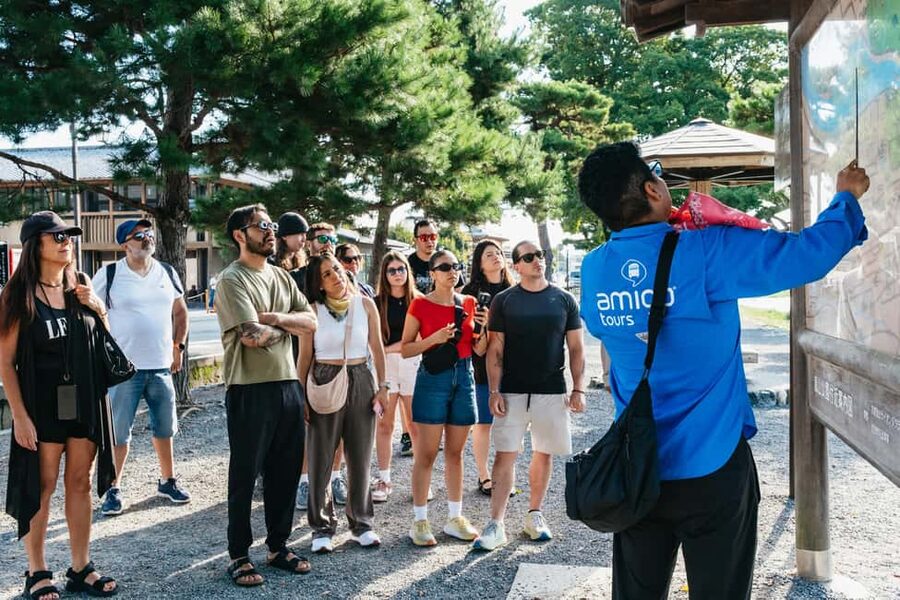
This kind of full-day tour lives or dies on people. Here, the big pattern in the feedback is the guide’s ability to keep the group organized and explain what you’re seeing.
Guides such as César/Caser and Ángeles are specifically praised for being careful with pacing and for switching between English and Spanish quickly. Some groups even mention the guide moving between languages smoothly enough that nobody felt left behind.
Drivers named Ken, Hamada, Kobachi, and others are praised for safe, steady navigation through Kyoto traffic. That matters more than you think. When the driving is calm, you start the day less stressed—and you walk better later.
If you’re the kind of person who likes questions, this tour is set up for it. The guide often makes room for people to ask and clarify, especially during regrouping times.
What to bring (and what to skip) for 11 hours
You’ll be on foot enough that packing matters. Bring:
- comfortable shoes
- hat
- camera
- sunscreen
- water
For me, the biggest must is shoes. Bamboo groves and temple areas involve lots of walking and standing around for views.
Also, consider the weather. This is Kyoto. It can be hot, rainy, or both. Even if the itinerary adjusts, you’ll still need to be able to handle changes without melting.
Who should book this tour, and who should think twice
This works best if you:
- are visiting Kyoto for the first time and want the top sights in one day
- prefer a planned route with a guide to explain what you’re looking at
- want a mix of guided walking and free time at major sites
You might think twice if you:
- need wheelchair-friendly access (this tour is not suitable for wheelchair users or people with mobility impairments)
- hate long days and lots of walking
- want a slow, neighborhood-by-neighborhood experience rather than major attractions
A final note on timing: the tour includes early access to Arashiyama, which is great if you hate crowds. But you should still expect busy scenes at the most famous spots. That’s not a flaw—it’s Kyoto on a schedule.
Should you book this Kyoto day tour?
If you want a one-day plan that actually covers Kyoto’s headline attractions—Arashiyama Bamboo Grove, Kinkaku-ji, Nijo Castle, Kiyomizu-dera, and Fushimi Inari—this is a solid way to do it. The bilingual guiding, the attention to pacing, and the helpful coach structure are exactly what you want when time is limited.
Book it if you:
- like having a route and timing handled
- want admissions included (and are comfortable choosing the advance ticket options)
- can handle a long walking day
Skip it if you’re mobility-limited or you’re dreaming of a slower, off-the-map Kyoto day. For those travelers, the value here comes from compression. If you don’t want compression, look for something more spread out.
FAQ
How long is the Kyoto Nijo Castle, Kiyomizu & Fushimi Inari guided tour?
The tour runs for about 11 hours.
Where do I meet the guide?
You meet outside Hotel Keihan Kyoto Grande, with the guide waiting and holding an Amigo Tours sign.
What time should I arrive for check-in?
Arrive at least 10 minutes before departure time for check-in.
Which major sights are included in the day?
You’ll go to Arashiyama Bamboo Grove, Kinkaku-ji (Golden Pavilion), Nijo Castle, Kiyomizu-dera, and Fushimi Inari Taisha.
Are admission tickets included for all temple stops?
Admission is included for the Golden Pavilion, Nijo Castle, and Kiyomizu-dera only if you chose the ticket option in advance for those entries.
What happens if Nijo Castle can’t be visited?
If Nijo Castle is not accessible, the tour will include a visit to Sanjūsangen-dō Temple instead.
Is food included?
No. Food and drinks are not included.
What languages is the guide available in?
The tour offers a bilingual guide in English and Spanish.
Is the tour suitable for wheelchair users or limited mobility?
No. It is not suitable for people with mobility impairments or wheelchair users.
Where do you drop off at the end?
The tour ends with drop-off at Fushimi Inari Taisha and also at Kyoto Station.