REVIEW · KYOTO
Kyoto: Nijo-jo Castle and Ninomaru Palace Guided Tour
Book on GetYourGuide →Operated by KYOTO CITY TOURISM ASSOCIATION · Bookable on GetYourGuide
Kyoto’s feudal power still feels oddly real. This 1-hour Nijo-jo Castle and Ninomaru Palace guided tour turns a famous UNESCO site into something you can actually picture: Tokugawa politics, palace layout, and the symbolism packed into gates and rooms. I especially love how the guide makes the Ninomaru Palace understandable fast, and I also like the built-in pacing that lets you enjoy the grounds afterward. One possible drawback: you’ll need to pay the castle admission separately in cash, and it’s possible the inside feels warm (no AC was noted by a recent visitor).
If you want more than photos of old wood, this is the type of visit where a guide changes everything. Many recent groups praised guides like Kingo, Ayu, Kaoru, Ai, Don, and Miki for clear explanations and for pointing out details people miss on their own. Just plan to arrive a bit early—if you miss the start, you won’t join the tour.
In This Review
- Key things that make this guided Nijo-jo visit work
- Nijo Castle: what you’re really looking at in one hour
- Meeting at the East Main Gate and getting oriented fast
- Your guided route: gates, palace rooms, and a garden loop
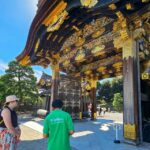
- East Main Gate and Higashi Ote-mon Gate: entry as a power statement
- Kara-mon Gate: where visitors feel the story
- Ninomaru Palace: why the guide matters so much
- Ninomaru Garden: the relaxing contrast that sticks
- “Exclusive access” and what it means for you
- Price and value: $16 plus the cash admission reality
- Who this tour is best for (and who might skip)
- Practical tips that make the hour smoother
- Should you book this Nijo-jo Castle and Ninomaru Palace tour?
- FAQ
- Do I pay for Nijo Castle admission with the tour ticket?
- How long is the guided tour?
- Is the guide speaking English?
- Where exactly do I meet the guide?
- What areas are included in the 60-minute tour?
- Is there an earphone system?
- When is Nijo Castle (this tour area) closed?
Key things that make this guided Nijo-jo visit work
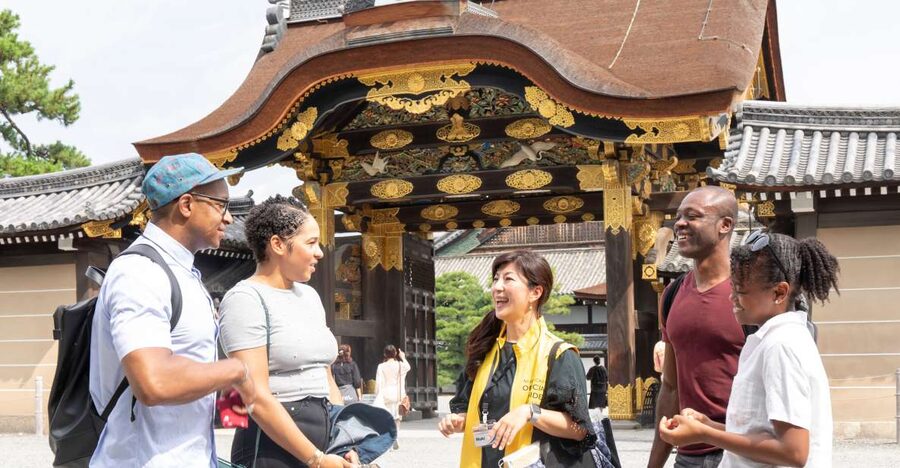
- Tour-only access inside the palace complex, not just the standard public route
- English live guide that connects architecture to how the Tokugawa world ran
- A tight 60-minute format focused on the highest-impact stops
- Stops that cover the main defensive logic and the secondary circle feel of the castle
- A gate-and-palace route (East Main Gate → Kara-mon Gate → Ninomaru-goten → Ninomaru Garden) that avoids wandering
- A guide-led visit where people still get time for garden wandering after
Nijo Castle: what you’re really looking at in one hour
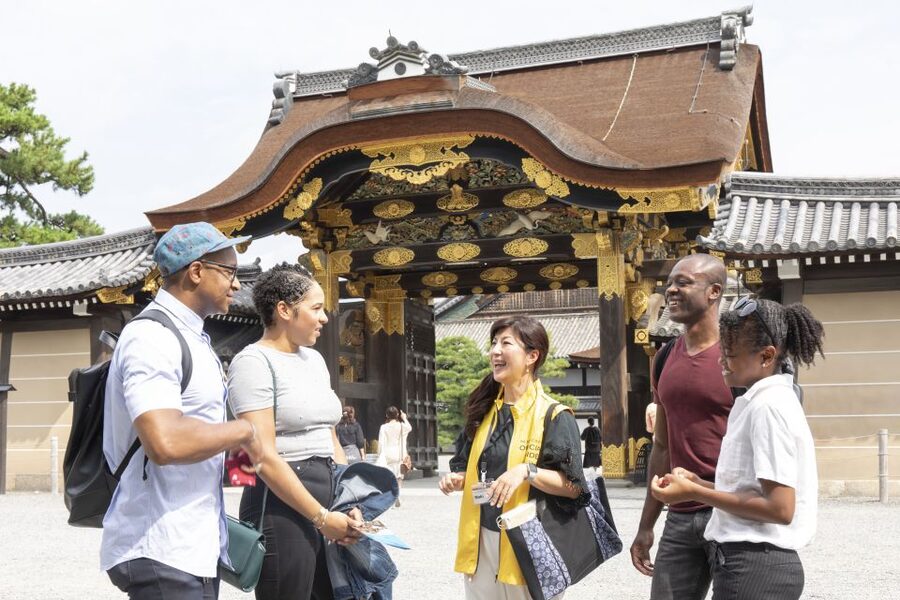
Nijo Castle was built in 1603 as Kyoto’s residence for Tokugawa Ieyasu, the first shogun of the Edo Period. That time matters because this wasn’t a “castle for fighting.” It functioned as a political stage—built to impress, control access, and manage relationships with visitors coming to Kyoto.
When the Tokugawa Shogunate ended in 1867, Nijo Castle shifted roles again. It became an imperial palace, then later was donated to Kyoto City and opened to the public as a historic site. In other words, you’re not just seeing one era of “cool buildings.” You’re seeing how power expressed itself through design more than 400 years ago.
The UNESCO designation (from 1994) isn’t just a stamp. It’s a signal that Nijo Castle is one of the best surviving examples of Japan’s feudal-era castle architecture. If you come without context, you’ll still enjoy it. With context, you start spotting why each wall, gate, and corridor was built the way it was.
You can also read our reviews of more tours and experiences in Kyoto.
Meeting at the East Main Gate and getting oriented fast
This tour asks you to start at the Nijo Castle Tour Ticket Booth, then enter through the East Main Gate. After you walk in, you gather at the reception area next to the General Reception, on the left side once you’re through the gate. If you want this to feel smooth (and not stressful), arrive early enough to find the meeting spot without rushing.
That detail sounds minor, but it’s the difference between “I’m on time” and “I’m stuck looking for my group while everyone else leaves.” The tour also follows a strict start time, so you can’t lag behind and join later.
Your timing is straightforward: the guided portion is 60 minutes, and it’s in English with a live guide. Earphones are provided for paid participants, which helps a lot in a place that can get crowded and noisy.
Your guided route: gates, palace rooms, and a garden loop
The included route is designed to hit the highest-value parts of the site without turning the visit into a long hike. You’ll cover the Higashi Ote-mon Gate and the Kara-mon Gate first, then move into the star attraction: Ninomaru Palace (Ninomaru-goten Palace). The tour also includes the Ninomaru Garden, which is a nice way to shift from the strict world of rooms to the softer world of scenery.
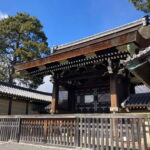
East Main Gate and Higashi Ote-mon Gate: entry as a power statement
Gates are more than entrances here. They’re part of the “how you’re supposed to behave” logic. A guide helps you notice the structure and placement—how the castle communicates authority before you even step into the palace spaces.
If you’re the type who likes “reading” buildings, this early stretch is worth your attention. The best guides use these first stops to set up what you’ll learn later in the palace.
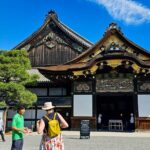
Kara-mon Gate: where visitors feel the story
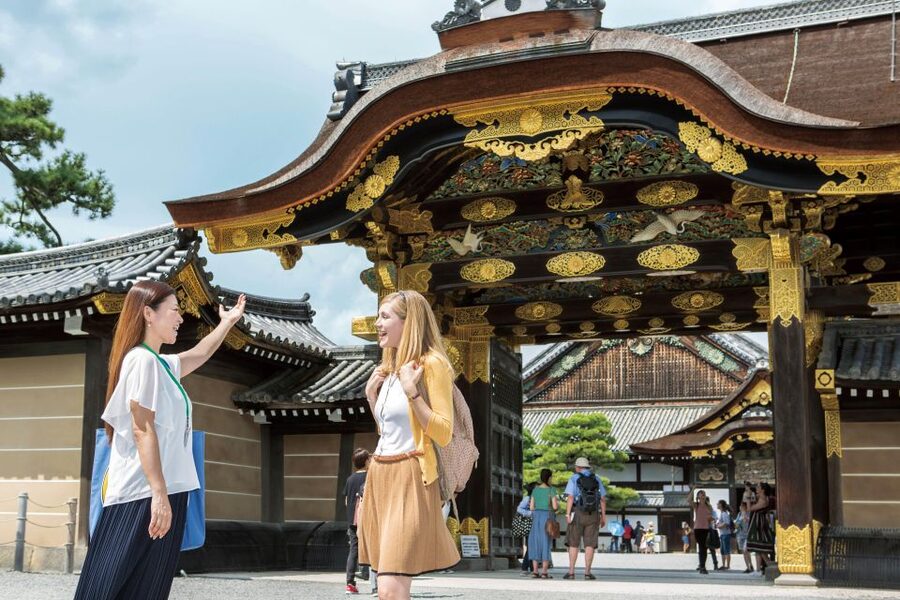
The Kara-mon Gate is called out as a key stop for a reason. It’s the kind of place where symbolism and architectural style do heavy lifting. On a guided visit, you’ll get explanations of what you’re seeing and how the design links back to the Tokugawa world.
This is also where you start understanding why Nijo Castle is often described as a masterpiece of feudal design. It’s not just ornate. It’s purposeful.
Ninomaru Palace: why the guide matters so much
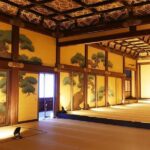
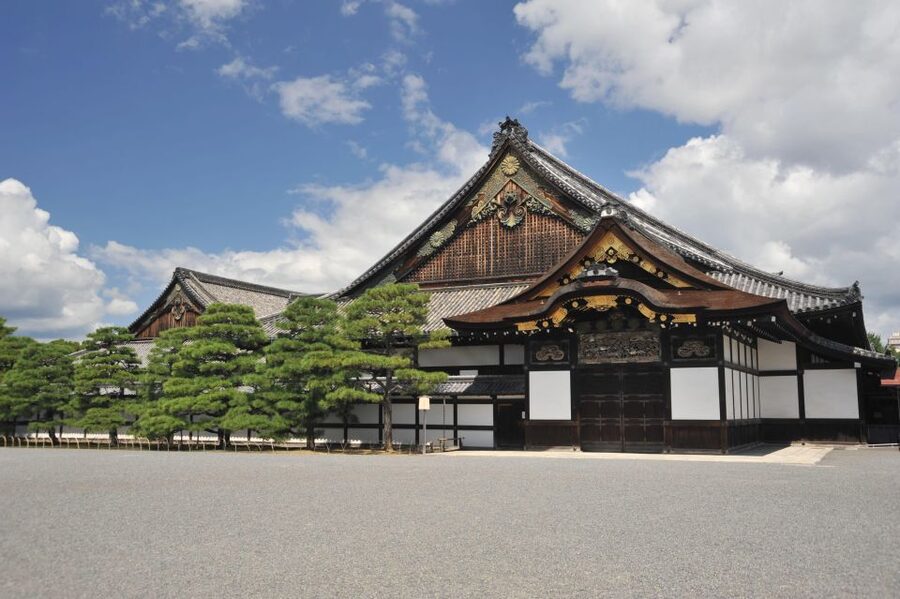
The Ninomaru Palace (Ninomaru-goten) is the main attraction, and for many people it’s where the tour earns its keep. This palace served as the shogun’s residence and office during visits to Kyoto, and many elements remain intact today.
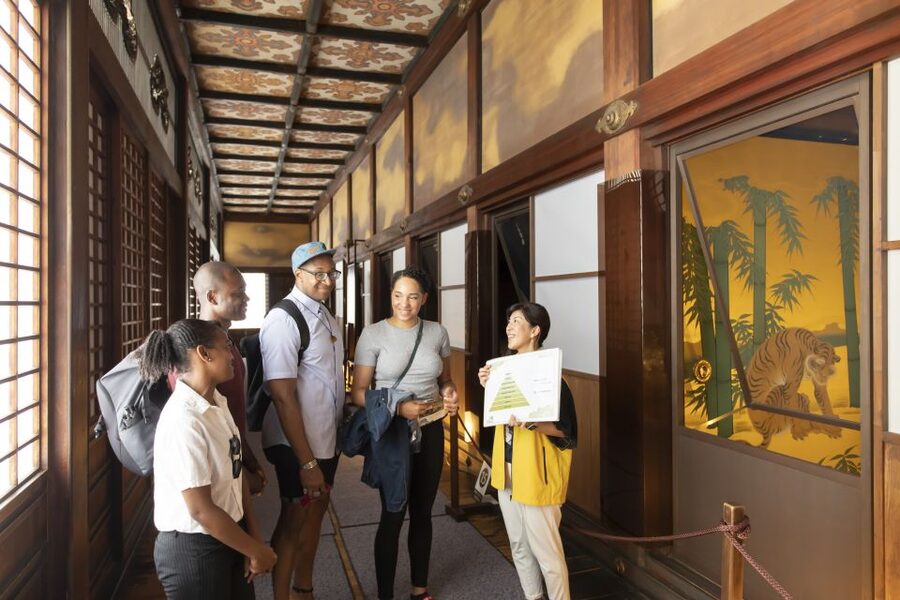
In practical terms, the palace is easy to appreciate even if you know nothing. But it’s also easy to leave with only vague impressions. The guides on this tour repeatedly get praised for turning “pretty rooms” into “I understand what each room is for and why.”
Some guide styles highlighted in real experiences include:
- Kingo, who explained the history, significance, and decoration in a way that made the palace feel usable and human
- Kiku, with insights into court intrigue and power plays tied to the Edo period
- Miki, who helped people connect ruling structure and the meaning behind art and paintings
- Kaoru, who kept the pacing steady even when crowds were thick and questions kept coming
- Ai and Ayu, who were noted for clear, enthusiastic explanations without rushing
One concrete detail you should plan for: inside the palace, you may have restrictions like no water and no photos, and there’s no AC (a recent visitor specifically noted it was warm inside during a summer heat wave). That means you’ll want to think ahead about comfort. Bring what you’re allowed to bring, wear breathable layers, and treat the interior as a “slow look” space, not a long sit-down.
Ninomaru Garden: the relaxing contrast that sticks
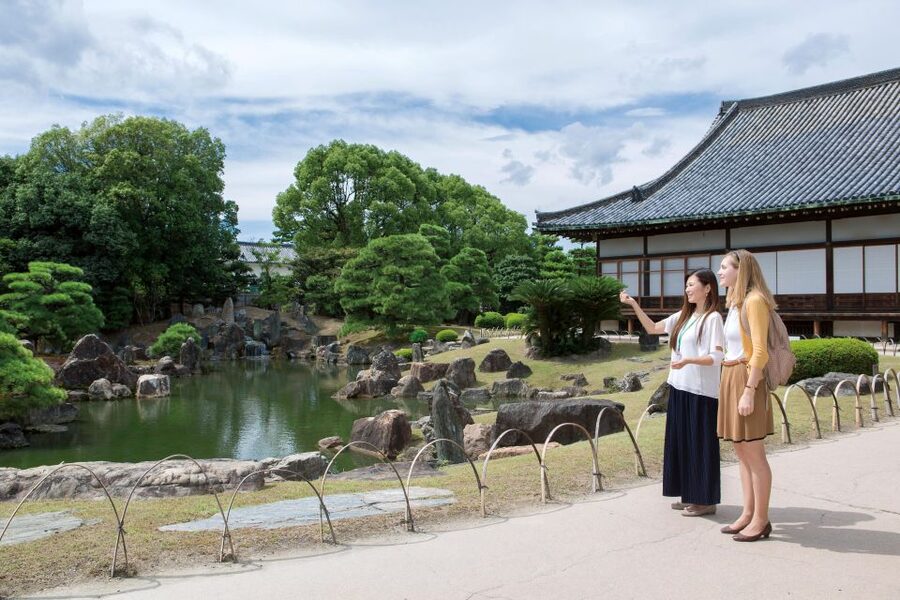
After rooms full of meaning, the Ninomaru Garden is your decompression moment. The tour includes it, and that matters because the garden can otherwise turn into “pretty greenery” if you’re tired or distracted by the castle crowds.
When a guide connects the garden to the palace setting, it changes your experience. You start noticing the relationship between the built world and the cultivated landscape. Even if you don’t consider yourself a “garden person,” you’ll likely appreciate the rhythm: strict architecture, then softer lines and space to reset your eyes.
A recent visitor also liked the structure because the guided portion hit the highlights, then they could wander the gardens afterward on their own. That’s a solid approach. Let the guide give you the map, then let the grounds do the calming work.
“Exclusive access” and what it means for you
The tour’s headline promise includes exclusive access to a part of the castle normally unavailable to the public. In real experiences, people described being taken to restricted areas and seeing additional tour-only spots inside the palace complex.
What this means for your decision is simple: if you’re paying just to see what everyone else sees, a guided tour won’t feel worth it. If you want more access plus clearer interpretation, it’s usually the difference between a standard visit and a truly memorable one.
Because the tour route focuses on the Ninomaru area, you get extra value from your time. Even if you could navigate the castle alone, you might miss why certain areas matter or how to connect the rooms and gates into one story.
Price and value: $16 plus the cash admission reality
The price is listed as $16 per person for the 60-minute guided tour. That fee covers the guide and the guided route (gates, Ninomaru Palace spaces, and the Ninomaru Garden). It does not include the castle admission fee, which you pay separately with cash on site.
If you’re budget-minded, this is the big practical math:
- Tour cost: $16
- Plus separate admission fees paid onsite (one recent visitor estimated about 1,300 yen extra)
So is it good value? For me, yes—when you treat it as a “context upgrade” to a top-tier UNESCO site. One hour is short enough that you won’t feel trapped, and the palace is the part where understanding really pays off. In places like this, the guide can help you get meaning from details you’d otherwise walk past.
If you’re the type who doesn’t like tours, you could visit on your own. But if your goal is to understand how Tokugawa power showed up in architecture, the $16 fee is often money well spent.
Who this tour is best for (and who might skip)
This tour fits you best if you:
- Want your visit to feel organized and purposeful, not like casual roaming
- Prefer English explanations delivered live by a guide
- Like feudal-era context, symbolism, and the “why” behind rooms and decoration
- Are okay with palace rules like no photos and a warm interior (especially in summer)
You might think twice if you:
- Hate structured group timing and want maximum freedom
- Are very sensitive to heat and indoor restrictions
- Only care about taking lots of photos without any limitations
The good news: many people praised the guides for pacing and clarity, including how they kept groups together even in crowded conditions. That’s a real comfort factor when Kyoto is busy.
Practical tips that make the hour smoother
A few small choices can make a big difference at Nijo Castle:
- Arrive early and use the East Main Gate meeting instructions exactly. Waiting around mid-gate is no fun.
- Dress for comfort. Inside the palace, conditions can be warm and it’s not an AC experience.
- Bring a cold drink before you go in—since a visitor noted no water inside—then sip later outside if allowed.
- Expect audio support only for paid participants since earphones are provided to paid participants.
- If you’re bringing kids, note the rule: each paid participant can bring one child aged 0–12 for free, and the child must be accompanied by an adult.
Should you book this Nijo-jo Castle and Ninomaru Palace tour?
Book it if you want to leave with more than a set of impressive images. This tour’s biggest advantage is that it helps you read Nijo Castle in an hour—especially the Ninomaru Palace, where symbolism and room function matter. The repeated praise for guides like Ayu, Kaoru, Ai, Don, Miki, and Kingo points to the same thing: strong explanation skills make a major difference here.
Skip it only if you’re determined to self-explore and you don’t want to follow a guided pace. Otherwise, plan for the added onsite cash admission, bring comfort for the palace interior, and you’ll likely feel you got real value from your hour in one of Kyoto’s most important castle sites.
FAQ
Do I pay for Nijo Castle admission with the tour ticket?
No. The castle admission fee is not included in the tour price. You need to pay the admission fee with cash on site.
How long is the guided tour?
The guided portion lasts 60 minutes.
Is the guide speaking English?
Yes. This tour is conducted only in English, with a live guide.
Where exactly do I meet the guide?
Meet at the Nijo Castle Tour Ticket Booth. Then enter through the East Main Gate and gather at the reception area next to the General Reception, on the left side after entering the East Main Gate.
What areas are included in the 60-minute tour?
The tour includes Higashi Ote-mon Gate, Kara-mon Gate, Ninomaru-goten Palace, and Ninomaru Garden.
Is there an earphone system?
Earphones are provided only to paid participants. If earphones are required for children, you may need to purchase adult tickets.
When is Nijo Castle (this tour area) closed?
The tour is closed on every Tuesday of July, August, December, and January, and Ninomaru Goten is closed from December 26 to January 3.