REVIEW · SPLIT
Split: Diocletian Palace & Old Town Guided Walking Tour
Book on GetYourGuide →Operated by APODOS TRAVEL AGENCY · Bookable on GetYourGuide
Roman walls still run Split. In a tight guided walk, you’ll move from the waterfront into the heart of Diocletian’s Palace and see why this UNESCO Old Town still feels alive.
What I like most is how the tour turns key places into a story you can picture—think the Peristyle courtyard and the palace’s still-standing gates like the Bronze, Silver, Golden, and Iron entrances. And the guide quality is consistently strong, with names like Ina, Natasha, Darko, and Tin often praised for making the details click without making it slow.
One drawback to plan for: the route involves uneven cobblestones and about 15–30 steps, so bring grippy shoes and be ready to walk a bit more than a flat promenade.
In This Review
- Key highlights worth your time
- A short tour that makes Split click in under an hour
- From the Riva promenade into Diocletian’s Palace
- The palace walk: Peristyle, cellars, gates, and private spaces
- Peristyle courtyard and the palace layout
- The four gates: Bronze, Silver, Golden, and Iron
- The emperor’s private chambers and observatory
- A note about hearing
- St. Domnius (Sv. Duje): the cathedral that anchors the view
- Fruit Square and Town Hall: the later layers after Rome
- Benedictine and Old Town streets: making the maze feel navigable
- Why the guides matter: what you should look for (and what people love)
- Price and value: $17 for Roman gates, a tower climb, and context
- Practical tips for a smooth walk on cobblestones
- Meeting point reality: finding your guide near Apodos and the red bus
- Should you book this Split Old Town and Diocletian’s Palace tour?
- FAQ
- How long is the Diocletian’s Palace and Old Town guided walking tour?
- Where does the tour start?
- What’s included in the tour?
- Does this tour skip ticket lines?
- What languages are offered?
- Is the tour wheelchair accessible?
- How much walking is involved?
- What should I bring?
- Is payment flexible and are there refunds if plans change?
Key highlights worth your time
- Peristyle courtyard access with Roman layout explained in plain language
- All four named palace gates: Bronze, Silver, Golden, and Iron
- Cathedral of St. Domnius (Sv. Duje) and bell tower views for context and orientation
- Fruit Square monuments + Town Hall to connect the palace to later city life
- Benedictine and other less-obvious stops that help the Old Town make sense fast
- Short duration (around 50 minutes) so you can still enjoy Split afterward
A short tour that makes Split click in under an hour
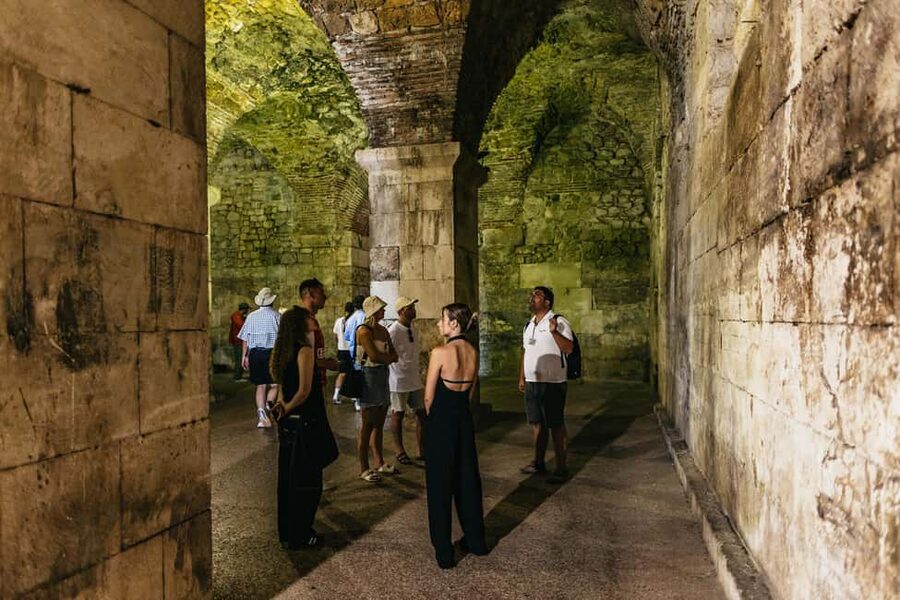
Split is the kind of city where it’s easy to wander around and still feel like you’re seeing individual sights without the bigger picture. This tour is built for the opposite goal: get your bearings fast, then understand how Diocletian’s Roman palace became a real neighborhood, not a museum set.
At about $17 per person, it’s also one of those rare “small price, big payoff” options. You’re not just looking at ruins—you’re learning what you’re looking at, and you get a guided route that keeps you from zigzagging randomly through the Old Town maze.
You can also read our reviews of more tours and experiences in Split.


From the Riva promenade into Diocletian’s Palace

Your walk starts near the Riva promenade, Split’s palm-lined waterfront where cafés and sea breeze set the tone. It’s a good warm-up before the stonework starts—this is the moment where you can look across the harbor and remember you’re in a port city, not a remote archaeological site.
Then you step inside the palace complex, the 4th-century AD setting built for Emperor Diocletian. Today it still forms the core of the UNESCO-listed Old Town, which is the key idea: you’re walking through an empire-made structure that kept being used, adapted, and built over.
The route also includes a handy photo stop early on, so you’re not hunting for good angles while you’re already moving into crowds.
The palace walk: Peristyle, cellars, gates, and private spaces
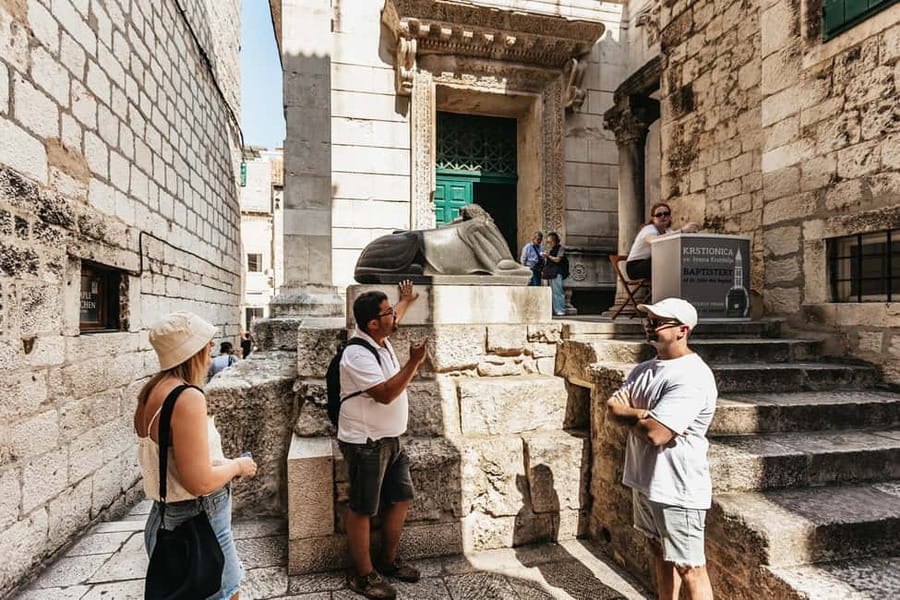
This is where the tour earns its keep. A lot of palace tours do the quick “here’s a column, here’s a wall” routine. This one points you to the spots that make the Roman plan readable.
Peristyle courtyard and the palace layout
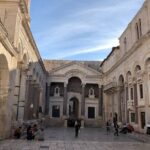
You get access to the Peristyle courtyard, the dramatic open space that feels like a stage set even though people still live in the surrounding buildings. With a guide, you learn how the palace’s structure organized movement and power—where the emperor’s world met the realities of daily life for others inside the complex.
I also like that the tour includes time around the palace’s indoor areas and cellars. It helps explain that this was a working imperial residence, not just a pretty exterior you can photograph from one angle.
The four gates: Bronze, Silver, Golden, and Iron
The walk includes the palace entrances known as the Bronze, Silver, Golden, and Iron Gates. These names can sound like fantasy until you connect them to the idea of controlled access and protection.
When you see all four in sequence with context, you stop thinking of them as separate landmarks and start seeing them as an intentional system—how the palace controlled who moved in, where they entered, and how the complex was guarded.




The emperor’s private chambers and observatory
The tour also takes you through the emperor’s former private areas, including an observatory. That’s a powerful stop for understanding Roman interest in planning, geometry, and how power liked to be associated with knowledge and observation.
You don’t need to be an architecture nerd to enjoy it. Even if your Roman history is rusty, this part helps you grasp what “imperial” meant in physical space—privacy, status, and control built into the layout.
A note about hearing
One small friction point popped up in feedback: a guest wished the guide used a microphone. If you’re sensitive to audio, try to position yourself where you’ll clearly hear the guide during pauses, especially in tighter interior spots.
St. Domnius (Sv. Duje): the cathedral that anchors the view

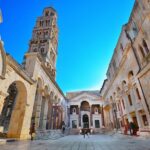
After the palace interior, you’ll reach Sv. Duje, the Cathedral of St. Domnius. The big payoff here is how it ties the Roman imperial story to later religious and civic use.
You’ll also climb the bell tower for panoramic views of Split and the harbor. This is more than a reward view; it’s a way to re-orient yourself. From above, the Old Town’s structure starts making sense, and you’ll spot how the palace core acts like a foundation for the neighborhoods around it.
If you’re the type who loves photos with context, this tower stop is a strong one to prioritize during a short visit.
Fruit Square and Town Hall: the later layers after Rome
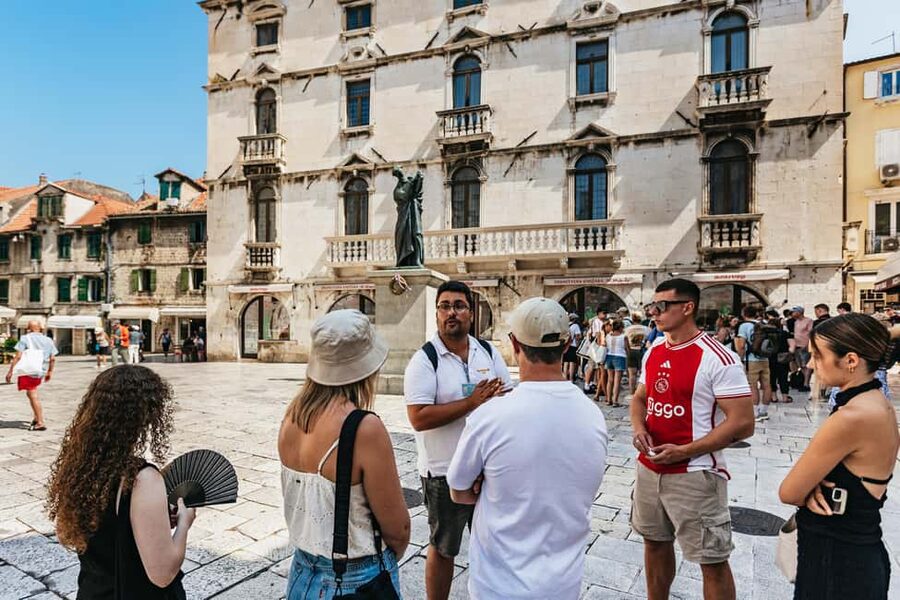
The tour doesn’t leave you stuck in Roman time. You’ll move onward to Fruit Square, where you get baroque-style monuments that show the city kept evolving after the empire era.
You’ll also learn about the 15th-century Town Hall—one of those stops that’s easy to pass by if you’re just scanning for big, famous sights. In a short tour, it matters because it connects what you saw in the palace to how the city governed itself centuries later.
This is a practical way to walk away with more than memories. You’ll understand that Split isn’t one historical theme—it’s stacked periods, each leaving its marks on streets, institutions, and how public space works.
Benedictine and Old Town streets: making the maze feel navigable
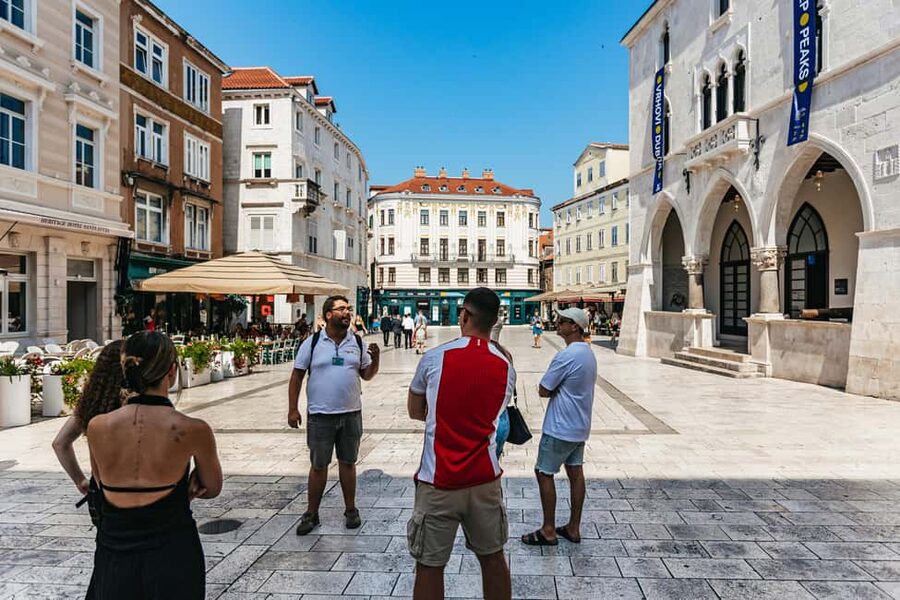
One reason this tour works so well in a limited time window is how it treats the Old Town streets like a guided map. You’ll hear stories that explain how Roman foundations mixed with medieval charm and later cultural influences.
You’ll also visit points like the Benedictine area (included as a highlight), which helps you see the city’s religious and cultural history as part of the same walking circuit—not a separate “half-day add-on.”
By the time you finish, the Old Town usually feels less like a random labyrinth and more like a set of connected corridors with a logic you can remember.
Why the guides matter: what you should look for (and what people love)
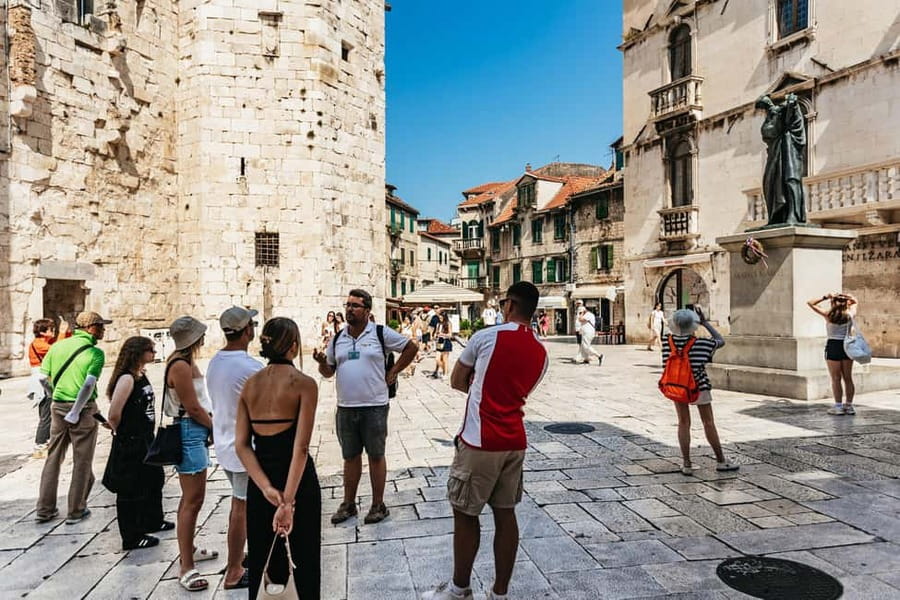
This tour’s strongest ingredient is the human guide. Across feedback, the same theme repeats: guides like Ina, Natasha, Darko, and Tin are praised for bringing the palace to life with clear explanations and good pacing.
A few patterns you can watch for when you’re on the tour:
- Straight answers, not rambling: you should feel like you’re getting the point of each stop
- Humor that doesn’t derail the story: some guides are funny in a way that keeps attention up
- Room for questions: several comments mention patience and willingness to talk through details
If you’re trying to choose between this kind of short guided walk and an independent wander, this is the difference. Independent time is great. But with a guided route, you get the why behind the what—especially when the architecture is layered and the names are unfamiliar.
Price and value: $17 for Roman gates, a tower climb, and context
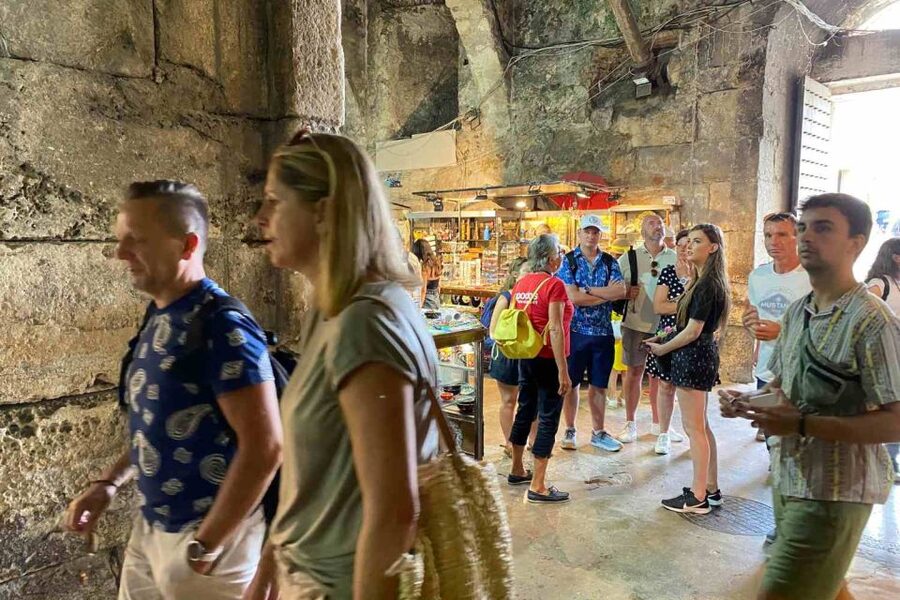
For about $17 per person, you’re paying for three things: a timed route, guided interpretation, and access to key spaces like the Peristyle courtyard. That’s a lot of value for a tour that runs around 50 minutes.
This is especially worth it if:
- it’s your first day in Split and you want orientation
- you don’t want to commit to a long tour
- you want to understand Diocletian’s Palace without studying beforehand
It’s less of a bargain if you already know the palace well and prefer to roam slowly on your own. But even then, the bell tower view and the gate-to-gate explanation are hard to replicate without doing your own research.
Practical tips for a smooth walk on cobblestones
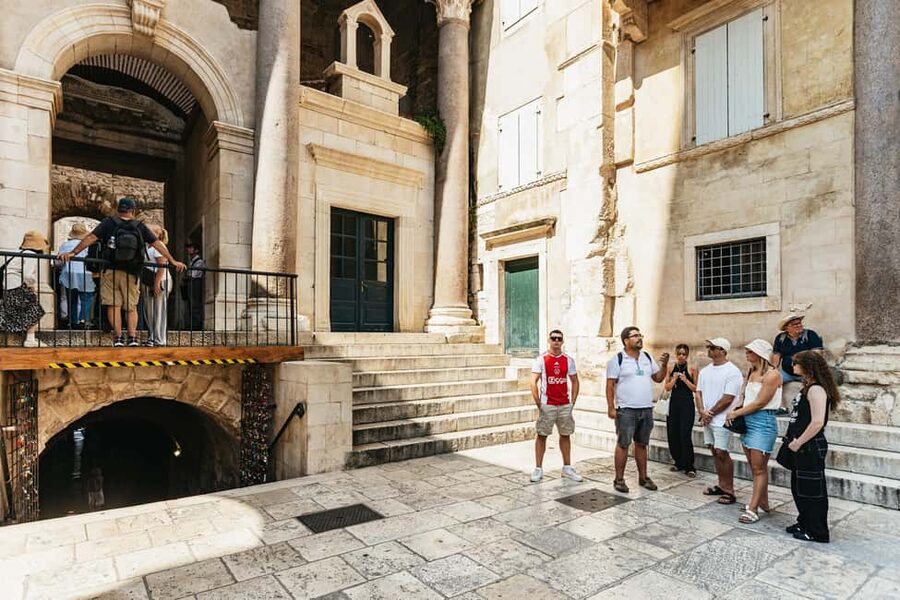
You’ll want to plan for walking conditions. The route is wheelchair accessible, but it still includes uneven cobblestone surfaces and 15–30 steps, so “accessible” doesn’t mean “flat and easy.”
Bring:
- Comfortable shoes with grip
- Water (you’ll be outside for a real chunk of it)
- A camera (you’ll have photo moments and a tower view)
On days with wind, wear long sleeves. On sunny days, sunglasses and a hat help a lot.
Also, don’t underestimate the crowded Old Town feel. A few reviews mention keeping things moving efficiently even when groups are around. Your best move is arriving ready to walk and staying near the guide during tighter sections.
Meeting point reality: finding your guide near Apodos and the red bus
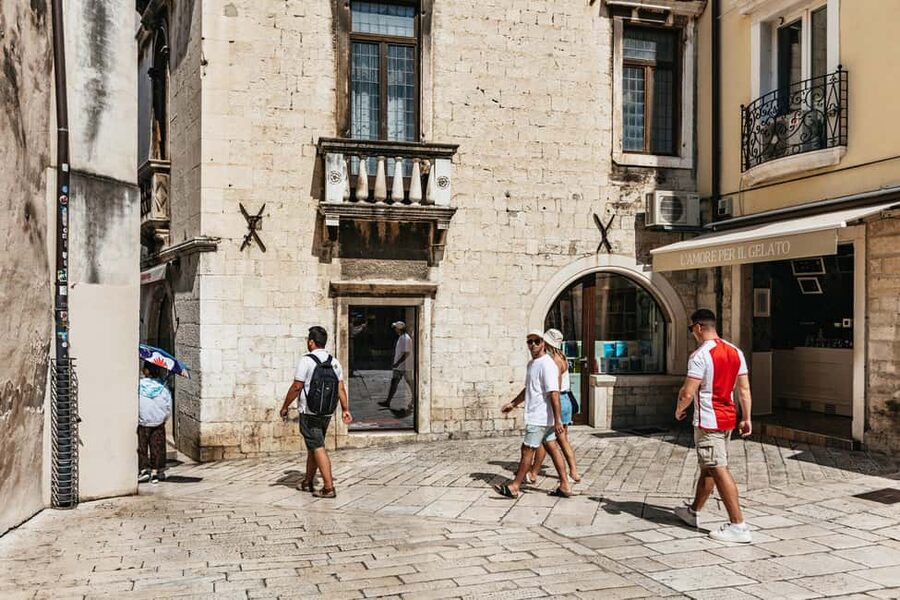
You meet at Apodos Travel Agency. The instruction to look for an open-top red bus nearby—and for the team to be wearing red or white shirts—is the easiest way to avoid confusion.
If you’re the kind of person who hates waiting, show up a little early so you’re not trying to figure out where the bus stop is while the group forms. One review noted that the open-top bus can be delayed, so build in a small buffer even if you’re usually punctual.
Should you book this Split Old Town and Diocletian’s Palace tour?
Book it if you want an efficient, guided primer that makes Split’s Old Town feel legible. This tour shines when you have limited time, care about the story behind the stones, and want orientation from the palace layout plus the St. Domnius bell tower view.
Skip it only if you already know Diocletian’s Palace deeply and prefer slow independent exploration. Otherwise, the combination of the Roman gates, Peristyle access, and later Town Hall / Fruit Square context is a smart way to spend $17 when you’re trying to see the main bones of Split without losing half your day.
FAQ
How long is the Diocletian’s Palace and Old Town guided walking tour?
The tour runs for about 50 minutes.
Where does the tour start?
Meet at Apodos Travel Agency, next to an open-top red bus. The team will be wearing red or white shirts and will connect you with the guide.
What’s included in the tour?
You’ll get a guided walking tour covering Diocletian’s Palace and Split Old Town, including access to the Peristyle courtyard, visits to the Bronze, Silver, Golden, and Iron Gates, the emperor’s private chambers/observatory, and stops such as St. Domnius (Sv. Duje), the 15th-century Town Hall, and the Fruit Square area.
Does this tour skip ticket lines?
Yes. It’s described as skipping the ticket line.
What languages are offered?
The live guide is available in English, Spanish, and Italian.
Is the tour wheelchair accessible?
It is listed as wheelchair accessible, but the route still includes walking over uneven cobblestone and about 15–30 steps.
How much walking is involved?
Expect uneven surfaces and enough steps that it may feel like a short, active walk (about 15 to 30 steps is mentioned as part of participation).
What should I bring?
Bring comfortable shoes, a camera, and water. On windy days, long sleeves help, and on sunny days sunglasses and a hat are recommended.
Is payment flexible and are there refunds if plans change?
There is free cancellation up to 24 hours in advance for a full refund. You can also reserve and pay later so you do not have to pay immediately.