REVIEW · SPLIT
Walking Tour of Split and Diocletian’s Palace
Book on Viator →Operated by Ancient Tours · Bookable on Viator
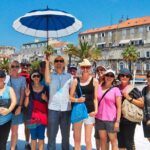
Diocletian’s Palace still shapes Split. This walking tour helps you get your bearings fast, because the route is built around key palace spaces like the Peristyle and the Golden Gate statue area. I love the step-by-step pacing (you’re not rushed), and I love how the guide connects what you see to Dalmatian culture and Croatian identity. The main drawback to plan for: in busy hours, hearing can be tricky since headsets are not included.
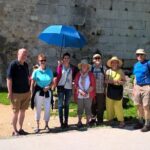
You’ll walk in a small group of up to 20, usually for about 1 hour 30 minutes, with several departure times across the day. Most stops are outside or in areas you can view without extra tickets, but a couple of paid sections (like museum parts) aren’t part of the tour. Bring comfy shoes. Uneven stone and stairs are part of the deal, so I don’t recommend it if high steps are a problem.
In This Review
- Key highlights to know before you go
- Why Diocletian’s Palace Makes Split Easy to Understand
- Peristil ul.: Meeting Point, Timing, and Footwork Reality
- Peristyle: The Palace’s Main Crossroads
- Vestibulum: A Quick Stop That Adds Atmosphere
- Diocletian’s Substructures: What’s Under the Street Level
- Golden Gate + Gregory of Nin: Where Power Turns into Identity
- Riva Harbor: The Bronze Model That Turns the Scale into Reality
- Fruit’s Square (Trg Brace Radic): Venetian Layers and Marko Marulić
- Split Synagogue: A Pass-By Stop You Can Use as a Prompt
- Price and Value: What You Pay For (and What You Don’t)
- Who This Tour Fits Best (and Who Should Skip It)
- Quick tips so you hear more and enjoy more
- Should you book the Walking Tour of Split and Diocletian’s Palace?
- FAQ
- Is the tour admission-ticket free?
- How long is the Walking Tour of Split and Diocletian’s Palace?
- Where does the tour start and end?
- What size is the group?
- Is it offered in English?
- Can I cancel and get a full refund?
Key highlights to know before you go
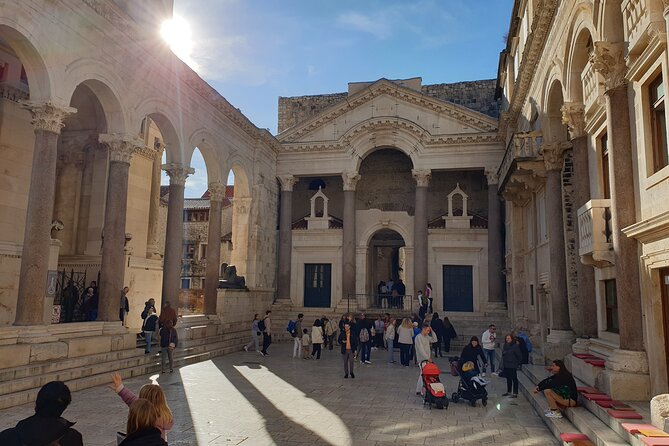
- UNESCO orientation inside Diocletian’s Palace: Start at the Peristyle and learn how the palace layout works.
- Golden Gate + Gregory of Nin: You get the story behind the statue tied to history and language.
- Riva Harbor bronze model moment: A palace model helps you picture the big site from the promenade.
- Venetian-era cues at Fruit’s Square: Learn about the 15th-century citadel and Marko Marulić.
- Most viewing points are ticket-free: Many stops are included without paying admission.
- Small group, but no headsets: You may need to position yourself well to hear in peak crowds.
Why Diocletian’s Palace Makes Split Easy to Understand
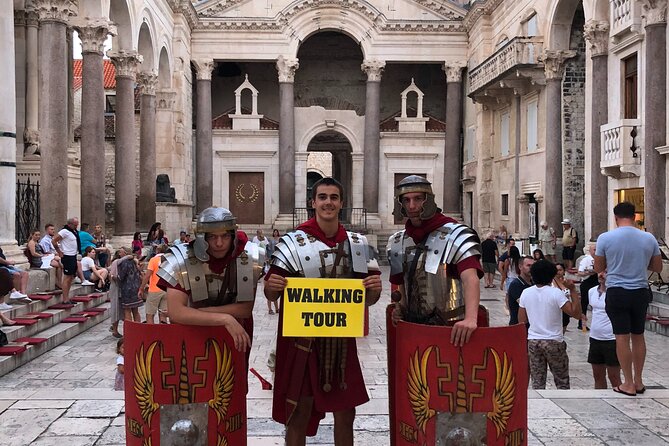
Split can feel confusing at first glance. Streets curl through old stone, and it’s not always obvious where the Roman power center ends and everyday city life begins. This tour works because it treats Diocletian’s Palace as your map. You’re not just looking at ruins. You’re learning how the palace’s spaces connect to the streets you’ll walk later.
You also get a strong cultural angle, not only Roman dates. The Golden Gate stop includes the statue of Gregory of Nin, and the explanation links him to Croatian history and even language. That kind of context is what turns a big attraction into something you’ll remember.
You can also read our reviews of more tours and experiences in Split.


Peristil ul.: Meeting Point, Timing, and Footwork Reality

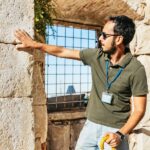
The tour starts at Peristil ul., 21000, Split. The meeting point can be tricky to spot at the beginning, especially if you arrive late or with a tight schedule. I strongly recommend showing up a bit early so you can orient yourself before the group gathers.
The walking is short overall, but it’s not flat. Reviews and tour details point to up-and-down movement and uneven steps. If your legs don’t love stairs, this is the wrong choice. If you can handle uneven stone and short climbs, you’ll be fine, just go slow and don’t rush the photos.
Also note the pacing: it’s set for about 1 hour 30 minutes. That means you’ll get compact explanations at each stop. If you like lingering, plan extra time after the tour to wander at your own speed.
Peristyle: The Palace’s Main Crossroads
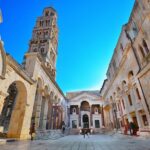
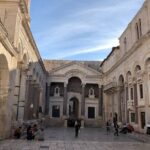
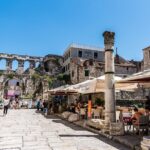
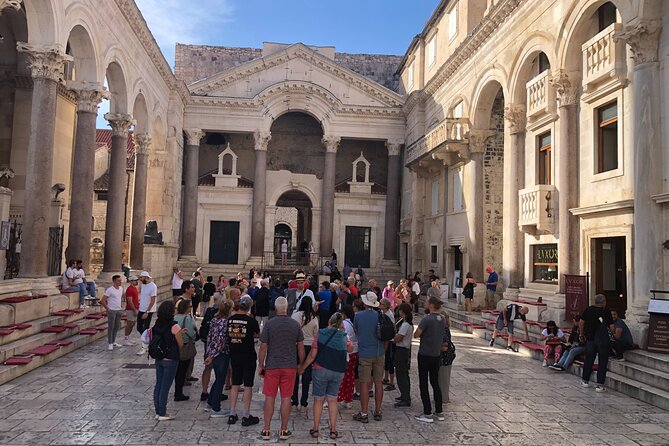
Your first major stop is the Peristyle of Diocletian’s Palace. This central square is the hub. It’s the place where you can reach almost all other locations within the palace complex. Standing here gives you the palace scale in a way that photos usually can’t.
This is the kind of stop that saves you time later. Once you understand where the Peristyle sits, the rest of the walk clicks into place. You’ll start to recognize why certain streets feel like they were designed for flow and movement inside a fortified site.
Time on this stop is about 15 minutes, and it’s admission-free. That’s great value because you’re paying only for the guide and interpretation, not for ticketed entry at the start.
Vestibulum: A Quick Stop That Adds Atmosphere
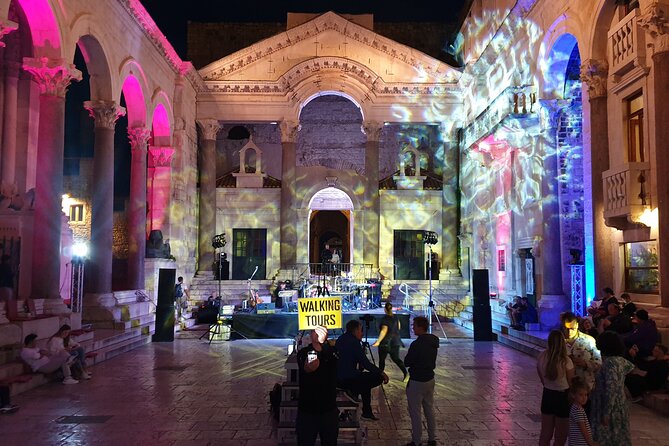
Next comes the Vestibulum of Diocletian’s Palace. This is more compact, about 5 minutes, but it’s a nice contrast to the big open space of the Peristyle. You’ll learn about the vestibule area tied to Emperor Diocletian’s presence.
One detail that caught my attention from the tour description: you might hear traditional Dalmatian singing. Even if it’s not guaranteed in every moment, the possibility signals how this area can feel less like a museum and more like a living cultural corner of the city.
This stop is free to view, so it doesn’t cost you any extra money. The value is in what the guide draws out—why it mattered, and how it fits the palace story.
Diocletian’s Substructures: What’s Under the Street Level
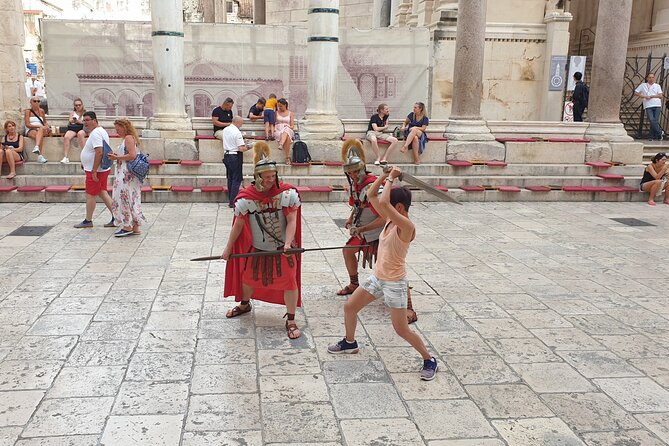
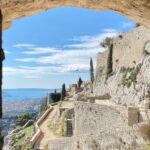
Then you walk through the Diocletian Palace substructures for about 10 minutes. This is the “below the main action” part of the site. The tour focuses on the history of the construction and their function over time.
Important practical note: you won’t visit the museum portion of the substructures during the tour. That paid museum area is not included, and you’d need to visit it separately if you want deeper indoor exhibits.
This is still worth doing on a guided walk. The substructures help you understand how the palace supported daily life and operations, not just ceremonial or decorative areas. If you only tour the main visible parts, you risk missing how the palace worked as an engineered system.



Golden Gate + Gregory of Nin: Where Power Turns into Identity
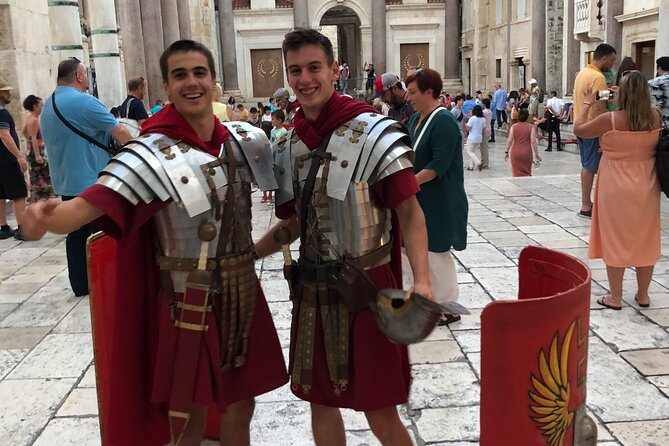
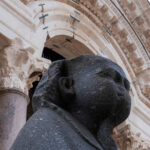
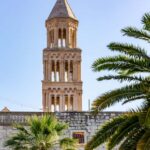
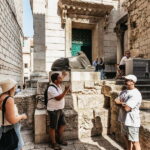
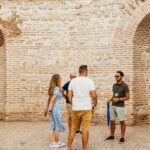
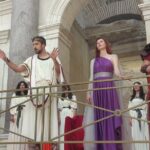
The Golden Gate is one of the most memorable stops on this route. It’s the main entrance of Diocletian’s Palace, and it’s built for impact. You’ll spend about 10 minutes here learning about the gateway and seeing the statue of Gregory of Nin.
What I like about this stop is the connection it makes. The guide ties Gregory of Nin’s importance to Croatia’s history and language. That’s a different kind of storytelling than you get from straight archaeology tours, and it helps you see why these monuments still matter in everyday conversations and cultural pride.
This stop is admission-free. You’re spending a short amount of time on an outside highlight that anchors the rest of your palace understanding.
Riva Harbor: The Bronze Model That Turns the Scale into Reality
After the palace core, you head toward the city’s seafront rhythm. At Riva Harbor, you’ll see a bronze model of Diocletian’s Palace. Models are underrated. They can feel touristy until you realize how hard it is to picture a massive complex while you’re standing inside it.
This stop takes about 15 minutes and includes a look at the history of Split’s Riva promenade. When you combine the palace model with what you’ve learned from the Peristyle and Golden Gate, the city layout makes more sense. You start to recognize where the palace influence reaches outward into the promenade life you’ll likely enjoy after the tour.
This stop is also admission-free.
Fruit’s Square (Trg Brace Radic): Venetian Layers and Marko Marulić

Next is Fruit’s Square, also called Trg Brace Radic. You’ll spend about 10 minutes here, learning about a 15th-century Venetian citadel and the importance of Marko Marulić, described as the father of Croatian literature.
This stop matters because it shows Split didn’t stay frozen in one era. After Diocletian’s time, the city kept reshaping itself. Venetian influence and Croatian literary identity both show up in the way places are remembered and named.
If you enjoy when a tour adds culture to architecture, this is a strong payoff moment. It’s a short stop, but it gives you enough context to notice details on your own during later wandering.
Split Synagogue: A Pass-By Stop You Can Use as a Prompt
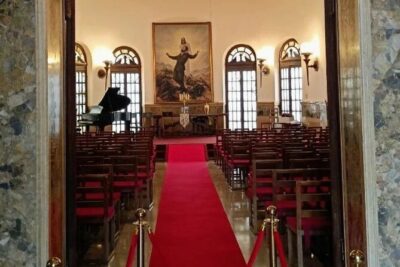
You’ll pass by the Split Synagogue, a site with a 16th-century background tied to the history of the Jewish people in Split. This is a about 10-minute stop, and the admission is not included as part of the tour.
I like pass-by moments when they work like a signpost. You get the idea of something important in the city’s story, without the time pressure of an inside visit. If you want to go deeper, you can plan a separate visit later when you’re not on a tight guided schedule.
Price and Value: What You Pay For (and What You Don’t)
The price is $48.37 per person for about 1 hour 30 minutes. For Split’s top attraction, that can be fair value—especially because your guide’s job here is interpretation. You’re not just taking a loop around landmarks. You’re learning how to see the palace in the right order so you don’t waste time later.
Here’s the practical side of cost:
- You get a guided walking tour led by an educated guide.
- Most major viewing stops are ticket-free.
- Some areas aren’t part of the included experience. The substructures museum portion is not visited, and the synagogue stop is pass-by only.
So what you’re really paying for is the route, the guidance, and the ability to connect details to the bigger palace and city story. If you plan to tour Diocletian’s Palace on your own afterward, this guide can help you focus your time. That’s where the value shows up.
Who This Tour Fits Best (and Who Should Skip It)
This tour fits best if you want an organized introduction to Diocletian’s Palace and Split’s Old Town without spending hours figuring out where to start. You’ll also like it if you enjoy cultural links: the statue of Gregory of Nin, Marko Marulić at Fruit’s Square, and the synagogue pass-by all add meaning beyond stone and dates.
Skip this one if:
- stairs and uneven steps are a problem for you
- you need a quieter, headset-supported experience to follow commentary clearly
Also, it’s offered in English, and the group is capped at 20 travelers, which helps the guide keep your questions from getting swallowed.
Quick tips so you hear more and enjoy more
- Position yourself early when the guide speaks. In busy palace moments, sound carries, and crowding matters.
- Bring your own hearing aid solution if you rely on it. The tour setup does not include headsets based on common feedback.
- Wear grippy shoes. Uneven stone plus stairs can slow you down if you’re not careful.
- Arrive a few minutes early at Peristil ul. The meeting point can be hard to find fast.
- Plan extra time after the tour if you want to go into paid areas, like the museum portion of the substructures.
Should you book the Walking Tour of Split and Diocletian’s Palace?
If you’re visiting Split for a short time, I think this is a smart buy. It focuses on the parts that help you understand the palace quickly: Peristyle orientation, Golden Gate storytelling, and then the city connections at Riva Harbor and Fruit’s Square. The route also keeps costs reasonable because many stops are admission-free and you’re not locked into extra ticket expenses.
I’d only hesitate if hearing clarity is your top concern. Without headsets and with crowds forming in the palace, you may need to work a bit harder to stay close enough to catch every word. If you can handle that, you’ll come away with a much better sense of how Split works—literally carved from Roman walls, then layered with later Croatian and Venetian identity.
FAQ
Is the tour admission-ticket free?
The tour includes guided stops, but it does not include admission tickets. Many viewing points are free to see, while some paid sections (like the substructures museum area) are not included.
How long is the Walking Tour of Split and Diocletian’s Palace?
It lasts about 1 hour 30 minutes.
Where does the tour start and end?
It starts at Peristil ul., 21000, Split, Croatia and ends back at the same meeting point.
What size is the group?
The tour has a maximum of 20 travelers.
Is it offered in English?
Yes, it’s offered in English.
Can I cancel and get a full refund?
Yes, you can cancel for a full refund if you cancel at least 24 hours before the experience starts. If you cancel less than 24 hours before, the amount paid is not refunded. If it’s canceled because a minimum number of travelers isn’t met, you’ll be offered a different date/experience or a full refund.