REVIEW · SPLIT
SPLIT-PRIVATE Walking Tour of Diocletian’s Palace & Old Town
Book on Viator →Operated by Walking Tour of SPLIT · Bookable on Viator
Diocletian’s Palace feels like a living time machine. In about two hours, you’ll move from Roman power to medieval Split, with a guide who knows how to keep the story moving (and the jokes landing). This is a private walk for up to 12 people, so you can actually ask questions instead of listening to a headset shuffle.
What I like most is the mix of must-see palace spaces and the streets locals use today. I also love how the route pinpoints the key parts of the palace complex—then ties them to everyday Old Town life right outside the walls. One thing to plan for: a few stops have optional entries with extra fees, so check what you want to add before you start.
In This Review
- Key takeaways before you go
- A time machine walk through Split’s most important address
- The price is per group, not per person
- Meeting point and the easy start near Riva
- Stop 1: Palazzo di Diocleziano and the big idea behind it
- Stop 2: Old Split’s medieval streets
- Stop 3: Cathedral of Saint Domnius (outside views first)
- Stop 4: Riva Harbor and the promenade reset
- Stop 5: The Peristyle, Emperor’s Square, heart of Split
- Stop 6: Grgur Ninski Statue and Croatian historical identity
- Stop 7: Fruit’s Square (Trg Brace Radic) and Marul
- Stop 8: Narodni Trg, the People’s Square
- Stop 9: Temple of Jupiter (outside view, optional entry)
- Stop 10: The 500-year-old city clock
- Stop 11: The Golden Gate, the palace’s main entrance
- Stop 12: Diocletian Palace substructures, the best-preserved part
- Stop 13: Vestibulum, the emperor’s private residence entrance
- What makes the guide matter here
- Optional ticket costs: what you might add
- Weather and comfort: don’t underestimate it
- Who this private tour is best for
- Should you book this Split private palace walk?
- FAQ
- FAQ
- How long is the Split private walking tour?
- What is the price and group size?
- Is the tour private?
- What language is the tour offered in?
- Where does the tour start and end?
- Are any attraction entry fees included?
- Does the tour require certain weather?
Key takeaways before you go
- Private guide, group of up to 12: you get the pacing and Q&A that shared tours rarely manage.
- Diocletian’s Palace highlights in a tight route: from the Golden Gate to the substructures.
- Old Town squares, not just monuments: you’ll pass the areas people fill with daily life.
- Optional cathedral and temple interiors: you can choose the extra tickets or stick to exterior views.
- A 2-hour format that fits real vacations: short enough for a same-day pairing with beaches or dinner plans.
- Expect a story-first tour: this is about how Split became Split, not a checklist.
A time machine walk through Split’s most important address
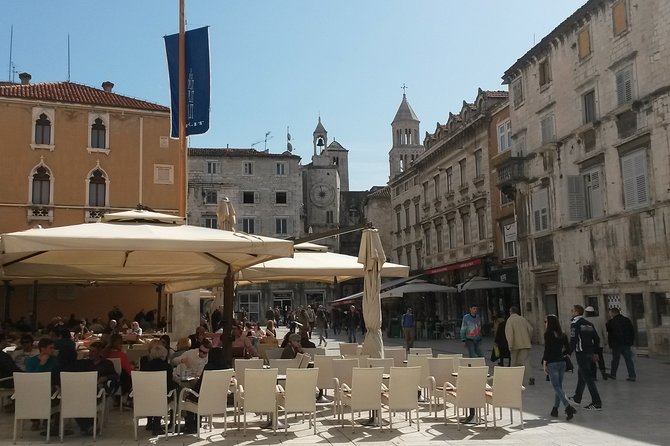
Split can feel confusing at first. Streets curve. Buildings look “old” in different ways. Then you notice the real reason everything makes sense: Diocletian’s Palace is still in the middle of town.
This tour takes that idea seriously. You’re not just looking at big stone. You’re learning how an emperor’s complex turned into a city that kept evolving—Roman, medieval, and modern all layered on top of each other. And because it’s private, your guide can slow down when the questions come, or speed up if your group wants the quick hits.
You can also read our reviews of more tours and experiences in Split.
The price is per group, not per person
At $240 per group (up to 12) for about 2 hours, the value depends on your group size.
- If you’re a couple or a small family, you’ll pay more per person than a big group would.
- If you’re traveling with friends and can fill the group cap, it starts to look like excellent value because everyone gets a real guide.
- You also get a custom-designed itinerary and tour organization, which matters here. Split’s palace is huge. A good route saves time and keeps you from wandering.
Think of this as paying for wayfinding plus storytelling in one package. If you like history tours but hate slow pacing, this format often hits the sweet spot.
Meeting point and the easy start near Riva
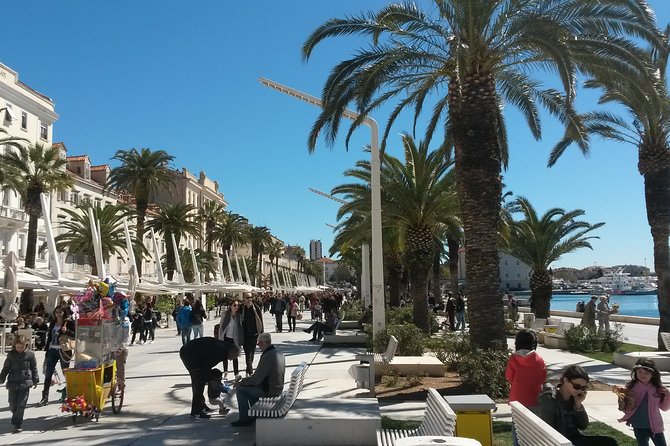
The walk begins at Obala Hrvatskog narodnog preporoda 22, 21000 Split, and it ends back at the meeting point. The route also centers on the Main Riva Promenade, so you’re not dropped somewhere awkward or far from the action.
If you’re planning your day, this is helpful. You can schedule it before lunch, then spend the rest of the day exploring on your own while everything is still fresh in your head.
Stop 1: Palazzo di Diocleziano and the big idea behind it
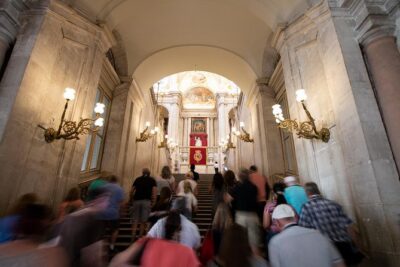
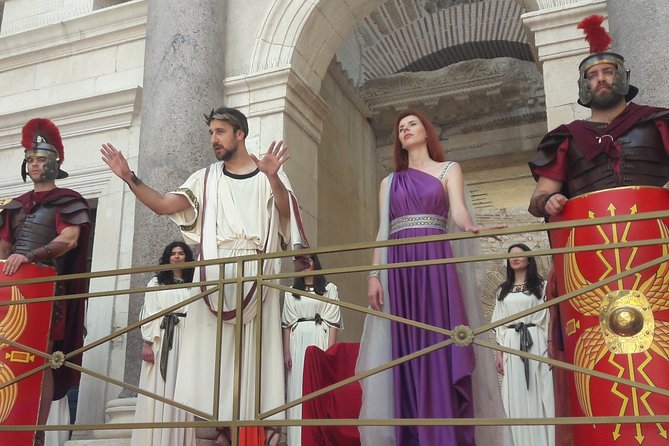
You start with the core of the story: the guided tour of Diocletian’s Palace, built in AD 305. This UNESCO World Heritage site isn’t just impressive because it’s old. It’s impressive because it was designed with power in mind, and you can still read that design today.
The way the palace is laid out affects where you stand and what you notice next. Once you understand the emperor’s purpose, the later stops make more sense: why certain spaces exist, how movement through the complex was arranged, and why some structures survived better than others.
Practical note: if you’re the type who likes a “where are we” explanation, this first segment sets your bearings fast.
Stop 2: Old Split’s medieval streets
After the palace intro, you shift into Old Split, the medieval town. This is where the tour stops being only Roman. You see how the palace’s boundaries and spaces shaped a later city.
I like this part because it changes your perspective. You go from “a palace” to “a neighborhood,” from official rooms to streets people walk every day. If you’re staying in Split for more than a day, this segment helps you stop treating the Old Town like a museum and start treating it like a place with its own logic.
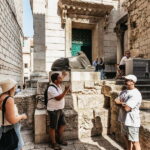
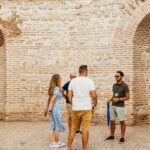


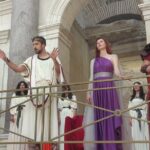

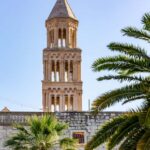
Stop 3: Cathedral of Saint Domnius (outside views first)
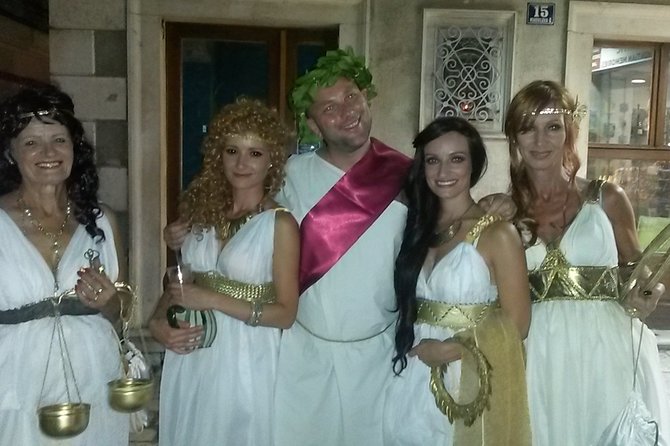
The Cathedral of Saint Domnius shows up next, and you’ll see it from outside with an optional interior visit. The extra entry fee is €3.50 per person.
If you don’t want to add another ticket, the exterior is still worth it. The cathedral’s presence reinforces the long timeline of the area—something changed over centuries, but the center stayed central.
Tip: if your group includes people who prefer shorter stops, you can skip the interior without feeling like you missed the main point of the walk.
Stop 4: Riva Harbor and the promenade reset
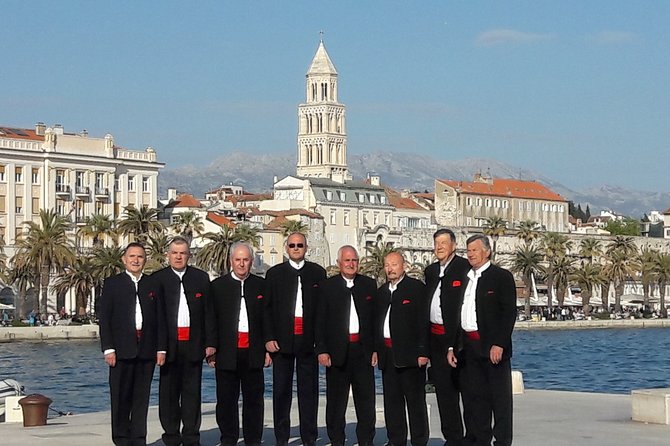
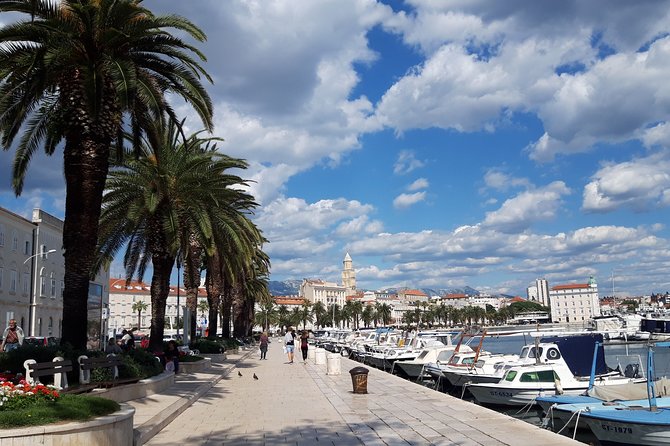
At Riva Harbor, the tour starts and finishes at the Main Riva Promenade area. This gives you a breather. After stone corridors and historical walls, the open setting helps your brain catch up.
Also, it’s a smart “reset” place for photos. Even if you’re not a photo person, you’ll want a few frames with the harbor vibe mixed in.
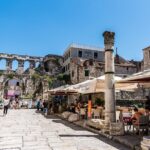
Stop 5: The Peristyle, Emperor’s Square, heart of Split
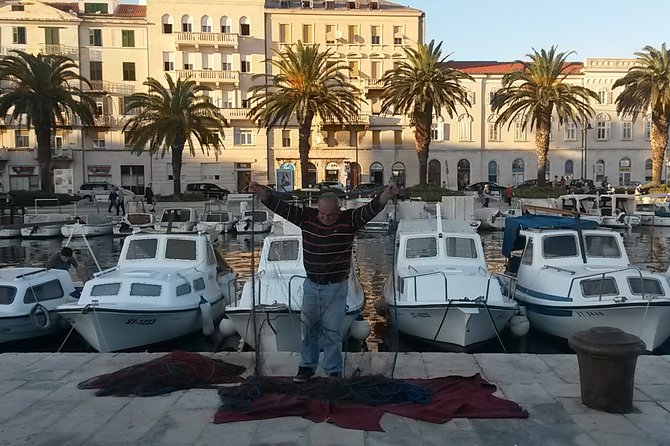
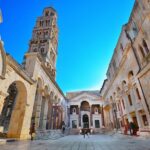
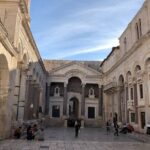
Then you hit a defining space: The Peristyle of Diocletian’s Palace, the Emperor’s Square, often described as the heart of Split’s story.
This is the moment where the tour stops feeling like a lecture and starts feeling like you’re standing in the geometry of history. A square like this isn’t random. It’s where power and daily life would connect.
Short stop, big impact. You’ll notice the flow of space and how it frames the rest of what you see next.
Stop 6: Grgur Ninski Statue and Croatian historical identity
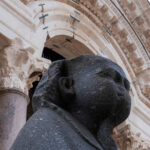
Next up is the Grgur Ninski statue, tied to one of Croatia’s key historical figures. This is a quick stop, but it works because it connects the Roman world to later Croatian identity.
Even if your tour focus is architecture, I find these “people stops” help you remember what you heard. Buildings are easier to forget than a person and their influence.
Stop 7: Fruit’s Square (Trg Brace Radic) and Marul
You’ll visit Fruit’s Square (Trg Brace Radic), the former green market area, and you’ll see the famous statue of Marul, often called the father of Croatian literature.
This is a nice pivot from emperors and temples to culture. Markets and literature don’t sound related, but in Old Town life they are. Where people gather to buy food often becomes where ideas travel too.
Stop 8: Narodni Trg, the People’s Square
The People’s Square (Narodni Trg) is next—described as the biggest and liveliest piazza in Old Town.
Here’s why I like this stop: it anchors you in the present. You see where the city breathes, not just where it was arranged centuries ago. Then you move back into the historical layer with better context.
Stop 9: Temple of Jupiter (outside view, optional entry)
The Temple of Jupiter comes last among the classical-looking stops. You’ll see it from outside, with an optional interior visit for €1.50 per person.
I’d treat this as a choose-your-own-level-of-depth moment:
- If your group wants more indoor time, add the entrance.
- If you’re keeping the pace tight, exterior views still help you “read” Roman remains as part of the palace’s original religious landscape.
Stop 10: The 500-year-old city clock
Then: City Clock, described as a 500-year-old 24-hour clock. This kind of detail is exactly why short tours can still feel satisfying. You get one “wait, that’s still here?” moment, and it sticks.
This stop also helps you understand how Split kept its systems—timekeeping, routines, public markers—even as empires changed.
Stop 11: The Golden Gate, the palace’s main entrance
You’ll see the Golden Gate, the main and most beautiful entrance into Diocletian’s Palace.
This is a strong photo stop, yes. But it’s also a storytelling stop. Gates tell you what matters in a city. They show where people entered, how they moved, and what kind of access was reserved.
If you’re the type who likes architectural clues, don’t rush this.
Stop 12: Diocletian Palace substructures, the best-preserved part
Next is a big one: Diocletian Palace Substructures, described as the best preserved part of the palace. Here, admission is not included, so you’ll pay the relevant entrance fee separately.
If you want one reason this tour gets such consistent high praise, it’s this type of moment: you’re not only walking the surface. You’re stepping into the parts of the complex that make the whole place feel real.
Practical caution: substructures can mean more enclosed spaces and uneven footing. Wear shoes you trust.
Stop 13: Vestibulum, the emperor’s private residence entrance
You finish with the Vestibulum of Diocletian’s Palace, described as the main entrance to the emperor’s private residence. This stop is short, but it gives you a final “close the loop” feeling.
Once you’ve seen the gate, the square, the temple exterior, and the substructures, this entrance wraps the story up. You understand where the public spaces likely ended and where access became more restricted.
What makes the guide matter here
This tour is only “easy” on paper. In real life, Split’s layers are dense, and the palace is easy to misread if you’re walking alone.
The best guides here do two things well:
- They make Roman names and dates feel like a story you can follow, not a list you survive.
- They adjust the pace for the group—slowing for questions, adding extra points nearby, and keeping the tour fun.
From what I’ve heard in the field, guides like Joško/Josko/Jocko/Joko have a strong sense of humor and a talent for taking complicated timelines and slicing them into digestible chunks. That’s the difference between seeing stones and actually understanding why they’re there.
And yes, groups that include kids seem to do well too, because the delivery keeps moving and doesn’t treat younger visitors like they’re stuck in a classroom.
Optional ticket costs: what you might add
This tour includes some palace guidance, with several optional or extra-fee spots.
From the info provided, here are the costs to keep in mind:
- Cathedral of Saint Domnius interior (optional): €3.50 per person
- Temple of Jupiter interior (optional): €1.50 per person
- Diocletian Palace Substructures entrance: not included
- Museum of Diocletian’s Cellars: not included, €10.00 per person
If your group wants maximum “go inside” time, your total cost will rise. If you’re happy with excellent exterior views and a focused interior moment (especially in the substructures), you can keep it lean.
Weather and comfort: don’t underestimate it
This experience requires good weather. Old Town walks work best when sidewalks are dry and visibility is good.
Also, plan for a classic walking-day mix: short stops, then movement between them. Bring water. Wear comfortable shoes. And if you’re traveling in hot months, remember that shade will be your friend.
Who this private tour is best for
You’ll likely love this tour if:
- You want a first-time orientation to Split that goes beyond a skim.
- You like Roman history but want it told in a human way, with clear context.
- You’re traveling as a small group and want the guide to tailor the pace and answer questions.
- You don’t want a full-day commitment—just a well-timed, high-value hit of the palace and Old Town.
It may be less ideal if:
- You hate history storytelling and prefer only long free-time roaming.
- Your group wants long indoor museum time (this is paced as a walk with key stops).
Should you book this Split private palace walk?
I’d book it if you want Split to make sense fast. Two hours is enough time to connect the palace layout to the streets you’ll later explore on your own. Add in the private format, and it feels like the best kind of tour: not a performance, but a guided walk through a place that refuses to be simple.
If you’re the kind of traveler who enjoys architecture plus clear story threads—and you’re okay paying a few optional entry fees—this is a strong choice.
FAQ
FAQ
How long is the Split private walking tour?
The tour lasts about 2 hours.
What is the price and group size?
The price is $240.00 per group, with a maximum group size of up to 12 people.
Is the tour private?
Yes. This is a private tour, and only your group participates.
What language is the tour offered in?
The tour is offered in English.
Where does the tour start and end?
It starts at Obala Hrvatskog narodnog preporoda 22, 21000, Split, Croatia, and ends back at the same meeting point.
Are any attraction entry fees included?
Some stops include free admission ticket access, but there are also optional entry fees (Cathedral of Saint Domnius interior €3.5 per person, Temple of Jupiter interior €1.5 per person). The Diocletian Palace Substructures entrance is not included, and the Museum of Diocletian’s Cellars costs €10.00 per person and is not included.
Does the tour require certain weather?
Yes. The experience requires good weather. If canceled due to poor weather, you’ll be offered a different date or a full refund.