REVIEW · RHODES
The Palace of the Grand Master. Self-guided Audio Tour
Book on Viator →Operated by Clio Muse Tours · Bookable on Viator
Two hours here can feel like centuries. The Palace of the Grand Master becomes much easier to read when you have an offline audio guide in your pocket, telling you what you’re looking at as you move room to room. I like that it’s truly self-guided, so you can stop and linger instead of rushing with a group.
What I like most is the focus on specific spaces that otherwise blur together. The inner courtyard story (horse stables turned into something else, plus the Roman senators statues) makes the palace feel practical and lived-in, not just impressive stone. And at $13.88, you’re basically paying for clear context without the cost and scheduling hassle of a live guide.
One drawback to keep in mind: this experience depends on your phone working and getting the right activation access. If the activation link doesn’t show up in time or the audio file isn’t downloaded well before you arrive, the whole thing can turn frustrating fast. Also, the app isn’t compatible with Windows phones, and you’ll need your own phone and headphones.
In This Review
- Key things to know before you go
- Why a self-guided audio tour works at this Palace
- Price and time: what $13.88 buys you in Rhodes
- Getting your phone ready: activation, offline audio, and common pitfalls
- Entering the Palace with a plan for the Inner Courtyard
- The Room with the Nine Muses: why it’s worth your attention
- The ribbed vault room: mosaics from Kos and Cesare Maria De Vecchi
- How to use the audio guide so you don’t miss the best parts
- Timing, entry hours, and where to start
- Who this tour fits best (and who might want something else)
- Should you book this self-guided audio tour for Rhodes?
- FAQ
- How long is the self-guided audio tour?
- What’s included with the ticket?
- Does the tour include a live guide?
- Do I need to bring a phone and headphones?
- Is the audio tour available offline?
- Is the experience compatible with Windows phones?
- Where does the tour start and end?
- Is the admission ticket included?
- What if I need to cancel?
- Are service animals allowed?
Key things to know before you go

- Offline narration with maps helps you keep going even with weak reception inside the palace.
- Mobile ticket + activation link are required, so don’t treat this like a walk-up purchase.
- Inner courtyard details connect the Knights Hospitallers to visible features like the Roman senators statues.
- Ribbed vault room context includes the Kos mosaic floor imagery and the role of Cesare Maria De Vecchi in restoration.
- Phone app compatibility matters: Windows phones are not supported.
- No live guide means you’re responsible for pacing and attention, which is great if you like control.
Why a self-guided audio tour works at this Palace
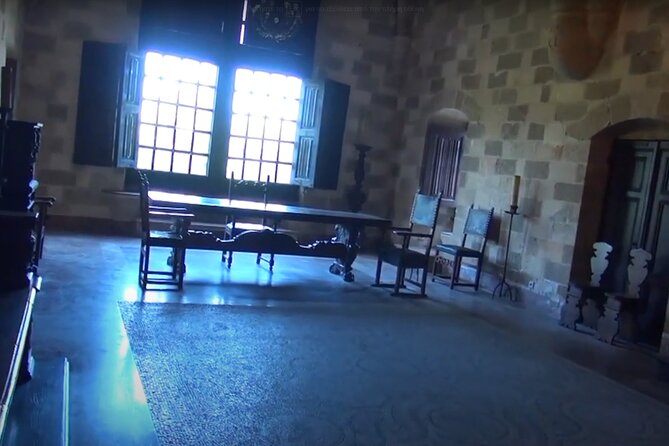
The Palace of the Grand Master is big enough that you can easily lose the thread. Even if you know the broad story of the Knights of Rhodes, the real challenge is figuring out which room served what purpose and why certain details exist where they do.
That’s where a self-guided audio setup shines. You get short, targeted explanations right as you face the spot: why you’re seeing particular sculptures, what function a space once had, and how restoration changed what you see today. At a palace like this, timing matters. If you only get a quick signboard, you’ll miss how everything connects.
The pace is also a real advantage. You can spend extra time with the rooms you like and skip the parts that don’t grab you. If you’re someone who walks fast through museums, this format keeps you from feeling lost. If you like to slow down and look closely, the audio gives you a reason to do that.
You can also read our reviews of more tours and experiences in Rhodes.



Price and time: what $13.88 buys you in Rhodes

At about 2 hours, this tour fits nicely into a day that already includes beaches, the Old Town walls, and a mix of street wandering. And $13.88 per person is the point here: you’re paying for explanations on-demand, not for a person following you around.
I see it as “value for clarity.” A live guide can be great, but it usually adds cost and fixed timing. A self-guided audio tour can be cheaper and more flexible, and the audio format works especially well when the palace has many rooms with small visual cues.
The important caveat is that you must bring the basics: smartphone and headphones. The tour includes the audio content and maps, but it doesn’t include the hardware. If you show up without headphones, your experience can quickly turn into a noisy, half-heard exercise.
Getting your phone ready: activation, offline audio, and common pitfalls
This tour includes an activation link and offline content (text, narration, and maps). That offline piece matters a lot in older stone buildings where mobile reception can be patchy.
Do this before you arrive:
- Confirm you have the activation access on your phone.
- Download or load the audio content ahead of time so you’re not relying on spotty reception.
- Bring your own headphones if you want to hear clearly while other people pass by.
There’s another practical detail: the app isn’t compatible with Windows phones. If you use a Windows device, this isn’t the format to choose. Also, the tour is described as being accessible on Android and iOS, so plan around that.
Finally, keep your expectations realistic. This is private in the sense that it’s only for your group, but it still isn’t a guided service. If your phone battery dies halfway, you’re the one who has to solve the problem.
Entering the Palace with a plan for the Inner Courtyard
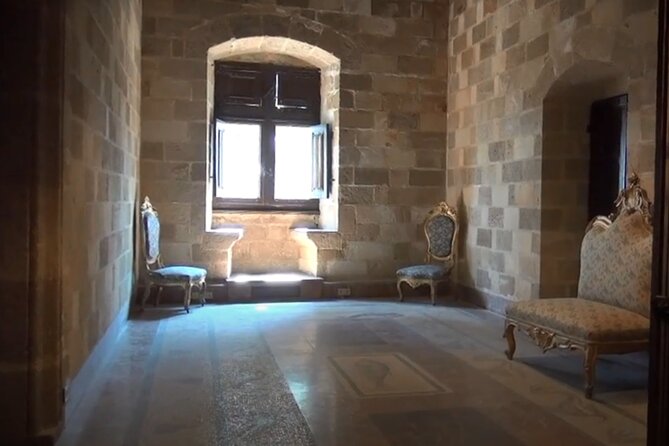
Your first major stop is the Inner Courtyard area, where the audio nudges you to look beyond the immediate beauty. This courtyard once hosted horse stables and a kitchen, and that contrast is the key. It turns the space from “pretty open area” into “functional engine room” for the Knights.
The narration also points you toward the statues of Roman senators. Even if you’ve seen classical sculpture before, this specific placement is what the audio helps connect. You’re not just looking at statues; you’re seeing how later eras used and reused symbols to build authority.
One more detail the audio is designed to bring out: contemporary restoration. You’re encouraged to look closely and understand what went wrong. That kind of explanation helps you read the building like a timeline rather than a frozen object.
If you want to get the most from this courtyard, do it in a slow loop:
1) Look at the courtyard layout first.
2) Then focus on how the audio links features to past uses.
3) Finally, return to the Roman senators statues and see them through the lens of the story you just heard.
The Room with the Nine Muses: why it’s worth your attention
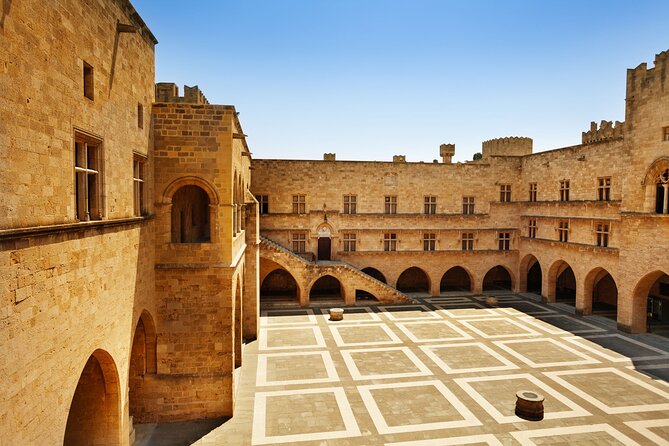
The Room with the Nine Muses is one of the headline spaces in this palace, and it’s the kind of room that can feel confusing if all you have is a short sign. With the audio guide, you’re not stuck trying to guess what the room is trying to communicate.
Even without a detailed visual breakdown in the basic overview, the audio angle is clear: it helps you connect decoration and symbolism to the broader Knights-era story. When a room is known for the Muses, it’s usually aiming at ideas—learning, arts, and cultural identity. The audio supports that by giving you context while you’re standing inside the space.
This is a great spot if you like architecture with meaning. If you’re more into stonework than iconography, you may still find it useful because the narration helps you focus on what to notice instead of what to ignore.
Practical tip: don’t rush through it. These are rooms where one extra minute of looking is often the difference between seeing decoration and understanding why the decoration matters.
The ribbed vault room: mosaics from Kos and Cesare Maria De Vecchi
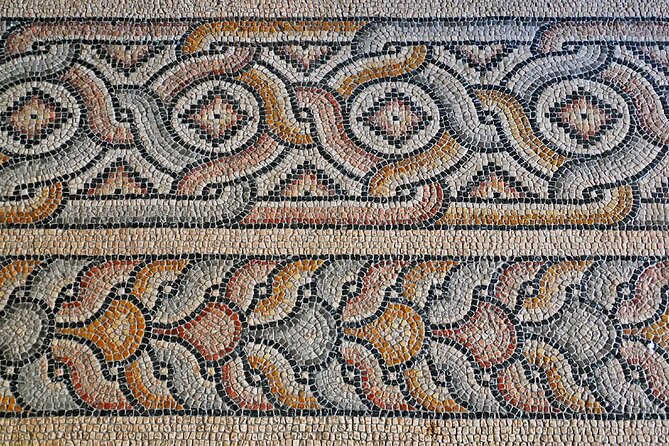
The Room with the Ribbed Vault is where the palace starts to feel like a puzzle you can solve. The audio describes a mosaic pavement decorated with birds, trees, and vases. It also explains that the mosaic originated from Kos, which gives the palace a wider reach than you might expect.
Then the room gets more specific. The narration notes 16th-century furniture, which helps you imagine the space as working office or room, not just a preserved showpiece. And it links the room to a person: Cesare Maria De Vecchi, whose office this room used to be.
The most valuable part is how the audio frames restoration. De Vecchi is presented as the person who conceived the restoration program tied to the Knights’ glory. In other words, you’re not only learning what used to be here—you’re learning how later restoration shaped what you see now.
If you enjoy details, this is the room to linger in. Watch the angles of the vault, then shift your attention down to the mosaic patterns. The audio’s combination of visual cues plus human stories is what makes this space click.
How to use the audio guide so you don’t miss the best parts
The audio tour is designed to take you through key rooms with narration timed to what you can see. Still, your experience will depend on your listening habits.
Here’s what works:
- Keep your phone at a comfortable volume. If you hear it only partly, you’ll miss the connections.
- Pause when the audio tells you to look closer. If you keep walking, the narration becomes background noise.
- Use the maps in the app to stay oriented. The palace layout can make it easy to lose your sense of where you are.
- If you notice an audio segment feels off early on, don’t panic. The tour is built to get you back on track as you continue through the route.
One more practical note: because this is offline, treat your phone like part of the tour. Carry a power bank if your battery is aging. Two hours sounds short, but photos, maps, and audio together drain quickly.
Timing, entry hours, and where to start
This experience runs daily 8:00 AM to 8:00 PM during the stated period. Since the tour is self-guided, you don’t have to squeeze it into one exact minute—but you do want daylight in the palace courtyard areas and enough energy to look carefully.
Your meeting point and endpoint are the same: the Palace of the Grand Master of the Knights of Rhodes, Ippoton, Rodos 851 00, Greece. The tour ends back at that location.
It’s also near public transportation, which helps if you’re combining it with other Old Town stops. And service animals are allowed, which is always good to know ahead of time.
Who this tour fits best (and who might want something else)
This works best if you:
- Want a structured walk through the palace, but prefer your own pace.
- Like facts and timelines tied to what you see on the walls and floors.
- Don’t want to pay for a live guide just to get basic context.
- Are comfortable using a phone for sightseeing.
It may be less ideal if you:
- Want a conversation and real-time Q&A. This is audio, not a live person.
- Don’t have headphones available.
- Have a Windows phone, since the app isn’t compatible.
- Hate depending on activation access and downloading before you get there.
A helpful way to decide is to ask yourself: do you enjoy learning in short bursts while you look? If yes, this format fits naturally.
Should you book this self-guided audio tour for Rhodes?
I think this is worth booking if you want clarity without extra cost. The strongest reason is the way the narration targets the rooms that matter: the inner courtyard’s former practical uses, the Roman senators statues, the Room with the Ribbed Vault and its mosaic connection to Kos, plus the story around Cesare Maria De Vecchi and restoration.
But I’d only book it if you’re willing to do two prep steps. First, make sure you get the activation access in advance. Second, load the audio content before your visit so you’re not stuck in a reception dead zone.
If those two steps feel annoying, then a live guided option might be less stressful. If they don’t bother you, this self-guided experience is a smart, budget-friendly way to turn the Palace of the Grand Master from impressive scenery into a place you can actually understand.
FAQ
How long is the self-guided audio tour?
It takes about 2 hours (approx.).
What’s included with the ticket?
You get a self-guided audio tour in English on your smartphone (Android & iOS), an activation link, and offline content (text, audio narration, and maps).
Does the tour include a live guide?
No. It’s self-guided, with no live guide included.
Do I need to bring a phone and headphones?
Yes. A smartphone and headphones are not included.
Is the audio tour available offline?
Yes. The content includes offline text, narration, and maps to help avoid roaming charges.
Is the experience compatible with Windows phones?
No. The app is not compatible with Windows phones.
Where does the tour start and end?
It starts at the Palace of the Grand Master of the Knights of Rhodes, Ippoton, Rodos 851 00, Greece, and ends back at the same meeting point.
Is the admission ticket included?
No. The listing specifies that the admission ticket is not included.
What if I need to cancel?
You can cancel up to 24 hours in advance for a full refund.
Are service animals allowed?
Yes, service animals are allowed.