REVIEW · HERAKLION
Crete: Palace of Knossos E-Ticket and Audio Guide
Book on GetYourGuide →Operated by Clio Muse Tours · Bookable on GetYourGuide
Knossos can feel like a time machine. The pre-booked e-ticket and phone audio tour make it easy to experience the palace at your own pace. You’ll get a downloadable storyline plus a map for navigation, so you’re not just walking through ruins wondering what you’re looking at.
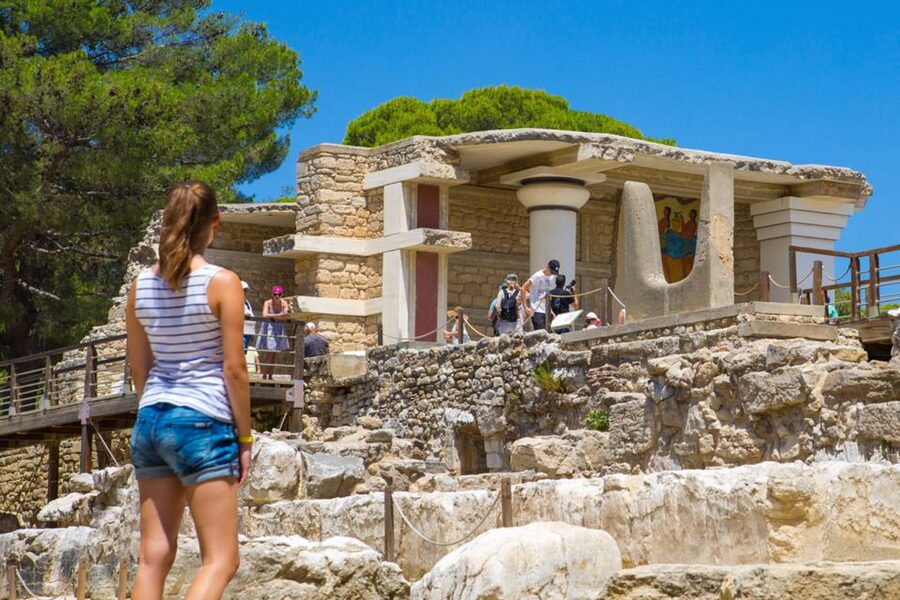
I particularly like the way this setup mixes big sights with practical learning. You’ll hear about Minoan daily life as you move from key areas like the South Propylaeum to the Queen’s Megaron, with a focus on frescoes, public spaces, and even personal habits like bathing.
One thing to consider: the audio can be slightly harder to match to the exact spot on-site, especially if parts of Knossos are closed for maintenance or heat. You’ll still get the big picture, but you may have to pause, read the signage, and sort out the next stop yourself.
In This Review
- Key highlights you’ll feel right away
- Knossos, simplified: how the e-ticket + audio combo works
- Price and value: what $34 actually buys you
- Getting in without drama: skip-the-line mindset and real-world timing
- Your smartphone matters: compatibility, headphones, and storage
- How long should you stay? (1 to 5 hours, and what that means)
- South Propylaeum and procession frescoes: where the story gets human
- West Magazines: bureaucracy, early writing, and trade networks
- South Entrance Corridor: the Prince of the Lilies and a perfect Mount Juktas frame
- Queen’s Megaron: blue dolphins, toilets, and bath habits
- Heraklion Archaeological Museum (optional): what it adds to the Knossos story
- Phaistos Palace audio add-on: how to build a bigger arc
- Making the audio guide work for you (even when directions slip)
- Crowds, heat, and a practical survival kit
- Who this Knossos e-ticket and audio tour is best for
- Should you book this Knossos e-ticket and audio tour?
- FAQ
- How long does the Knossos e-ticket and audio guide take?
- Is a live guide included?
- What do I need to bring?
- Which languages are available for the audio guide?
- Can I use this on a Windows phone or older iPhone models?
- Are pets allowed inside Knossos?
- Is this tour suitable for wheelchair users?
Key highlights you’ll feel right away
- Pre-booked e-ticket helps you avoid the longest ticket lines at busy times
- Phone audio guide keeps the story going as you walk, in multiple languages
- Minoan fresco stops at places like the South Propylaeum and Queen’s Megaron
- West Magazines context for early writing, bureaucracy, and trade networks
- Mount Juktas viewpoints framed by the palace walls
- Optional audio add-ons for Heraklion City and Phaistos Palace
Knossos, simplified: how the e-ticket + audio combo works
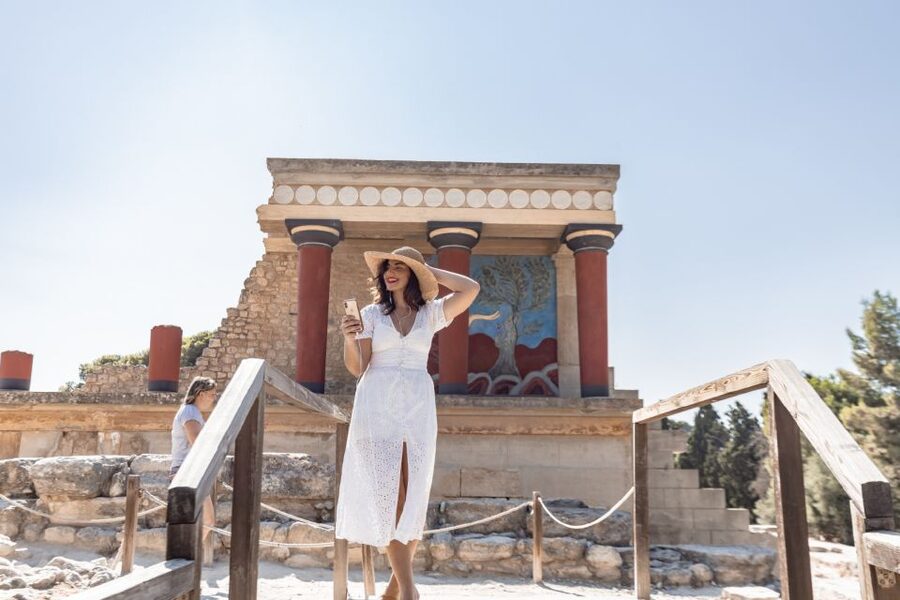
Knossos is huge, and it’s easy to lose the thread if you’re only reading signs. This experience leans into the main advantage: you enter with a pre-booked e-ticket and carry the explanation in your pocket. When the story is with you, you can stop where you want and keep moving when you feel ready.
The audio guide is designed to be listened to while you walk. It’s downloadable on your smartphone, so you’re not stuck trying to rely on spotty mobile data inside the site. You’ll also get a detailed map of the complex, which matters because Knossos is more like a maze of rooms and reconstructed sections than a neat, linear path.
The other smart part is choice. If you only want the palace, you can keep it to a focused visit. If you want more, you can add audio for Heraklion City and Phaistos Palace, plus optional entry to the Heraklion Archaeological Museum.
You can also read our reviews of more tours and experiences in Heraklion.


Price and value: what $34 actually buys you
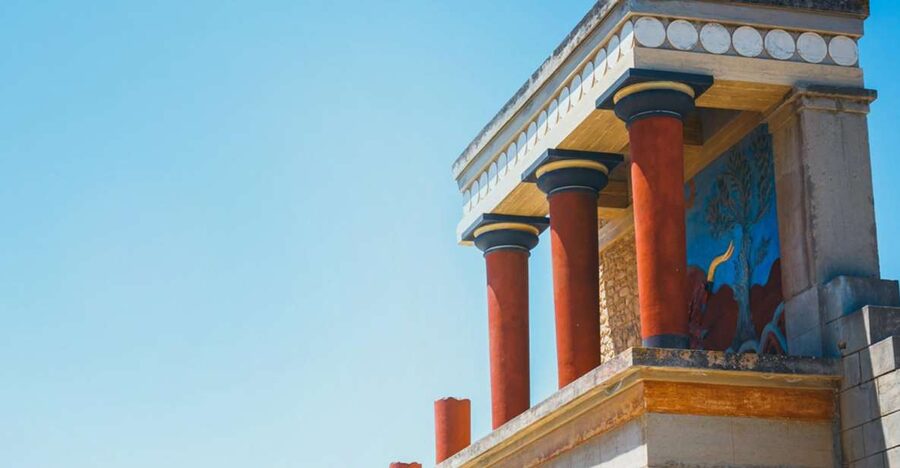
At about $34 per person, you’re paying for two things: a guaranteed entry ticket workflow and an audio guide that guides you through the palace. You’re not buying a live docent, and you shouldn’t expect the kind of tailored, question-answering commentary you’d get from a person standing next to you.
So the value depends on how you like to travel.
If you enjoy exploring independently, this price can feel fair because you’re buying time and clarity. Many people head to Knossos thinking they’ll just “see the ruins,” then realize they want context halfway through. This format brings that context right to the spots where it helps.
If you’re the kind of visitor who gets more out of a live guide’s back-and-forth explanations, then this may feel like less than you want. In that case, you might still use the ticket for entry efficiency and consider a separate guided add-on elsewhere.
Getting in without drama: skip-the-line mindset and real-world timing
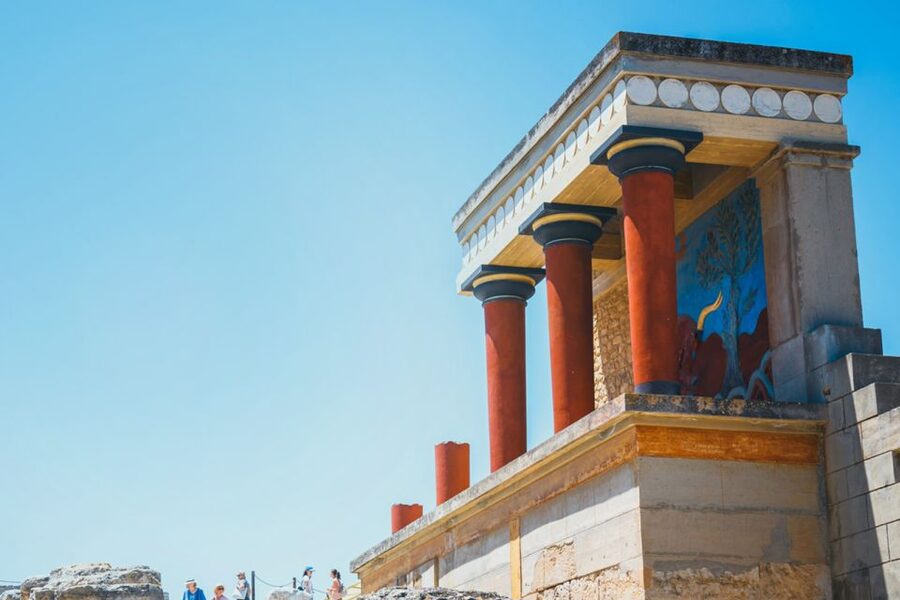
A big reason to book ahead is timing. Knossos can get very busy, especially at popular hours. One account described a long ticket queue when arriving around late morning, while arriving earlier meant very little waiting.
This experience is built to help with that first step. You’ll receive an email from the provider with ticket and audio instructions. The meeting point can vary by option, so follow the email carefully instead of assuming the same location every time.
Here’s the practical tip I’d use: show up early enough that you can enter calmly. You’re walking in heat, and you don’t want your audio experience squeezed by impatience at the entrance.
Your smartphone matters: compatibility, headphones, and storage
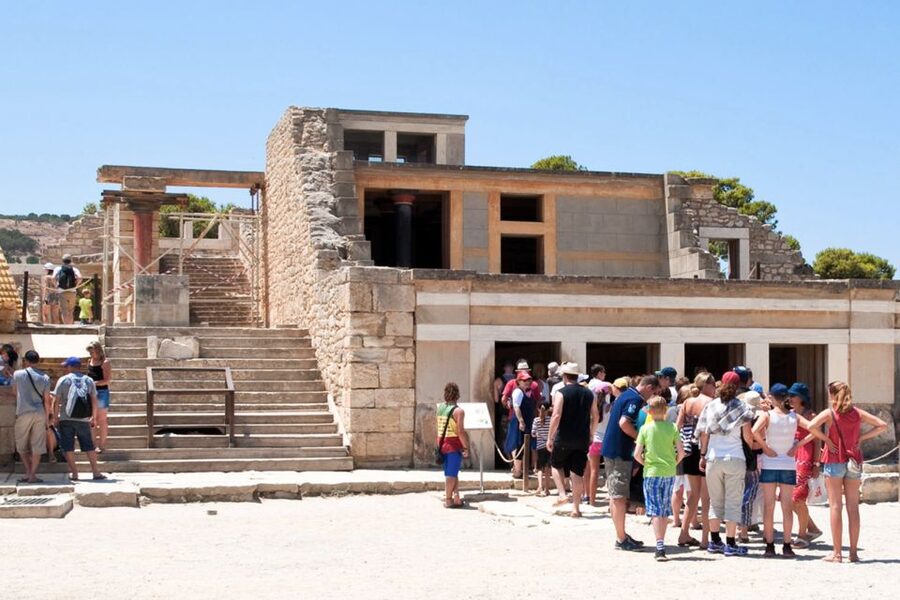
This is a phone-based audio tour, and the tech requirements are part of the experience. You’ll need:
- a compatible Android (version 5.0+) or iOS device
- headphones (not included)
- enough storage space: about 100–150 MB
- a charged smartphone before you leave your accommodation
It’s not compatible with Windows phones, and it won’t work on older iPhones/iPods/iPads (like iPhone 5/5C or older, and certain older iPad models). If you’re traveling with a lower-end phone or plan to rely on an old device, double-check compatibility before you go.
Also, keep in mind that some people reported difficulty getting downloads to work for certain phone setups. If everyone in your group needs audio, plan to manage it—one device can carry multiple tickets if your provider confirms it for your situation.
How long should you stay? (1 to 5 hours, and what that means)
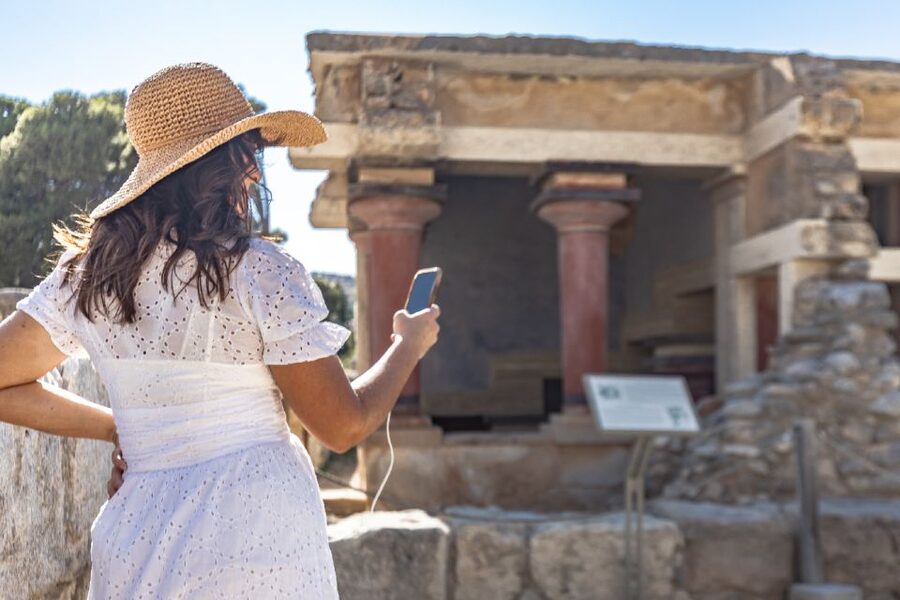
The duration is flexible: 1 to 5 hours depending on your starting time and how much extra you add. For most people, 1.5 to 3 hours is a sweet spot because Knossos is large and the best parts are spread out.
If you only do a quick circuit, you’ll miss the payoff of hearing why certain spaces mattered. If you go long, you’ll benefit from the audio being there while you connect frescoes, architecture, and everyday life.
My suggestion: treat it like a walking museum with breaks. Listen in chunks—press play when you arrive at a major area, then take a minute to look before the next segment begins.


South Propylaeum and procession frescoes: where the story gets human
One of the most compelling parts of Knossos is how busy some spaces look, even as ruins. The South Propylaeum is a key stop in the audio track, with fresco scenes that include cupbearers and procession imagery.
What I like about this segment is that it doesn’t just show you art. It helps you picture a “public moment”—ceremonial activity layered on top of daily routine. You’ll also hear about how aesthetic ideals show up in details like fashion and hairstyles.
You can expect the audio to connect the frescoes to what ancient Cretans might have cared about: appearance, social ritual, and how public spaces could communicate status.
Practical note: Knossos includes reconstructed areas, and some sections can be closed depending on maintenance or heat. If you can’t access what the audio expects, don’t force it. Let the narrative carry you for the areas you can stand in front of.
West Magazines: bureaucracy, early writing, and trade networks
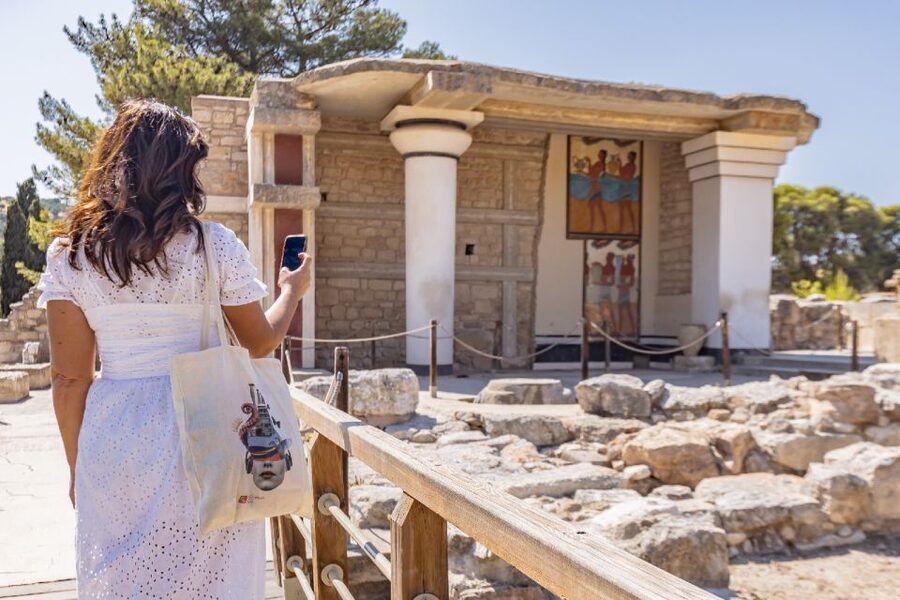
Knossos isn’t only about kings and myths. The audio guide puts a spotlight on the West Magazines—the storage facilities that helped the palace function like an organized economic center.
This is where the experience gets more “systems” and less “spectacle.” You’ll learn about the palace’s organization and how early forms of linear writing connect to administration. The audio also references Minoan economy and trade networks, which is a useful shift if you’ve mostly been thinking about mythology.
Why this matters for your visit: when you understand the palace as an engine for storage and records, the architecture makes more sense. It’s not just rooms—it’s infrastructure.
If you’re the type who likes ideas you can carry forward, this is one of your best listening moments.
South Entrance Corridor: the Prince of the Lilies and a perfect Mount Juktas frame
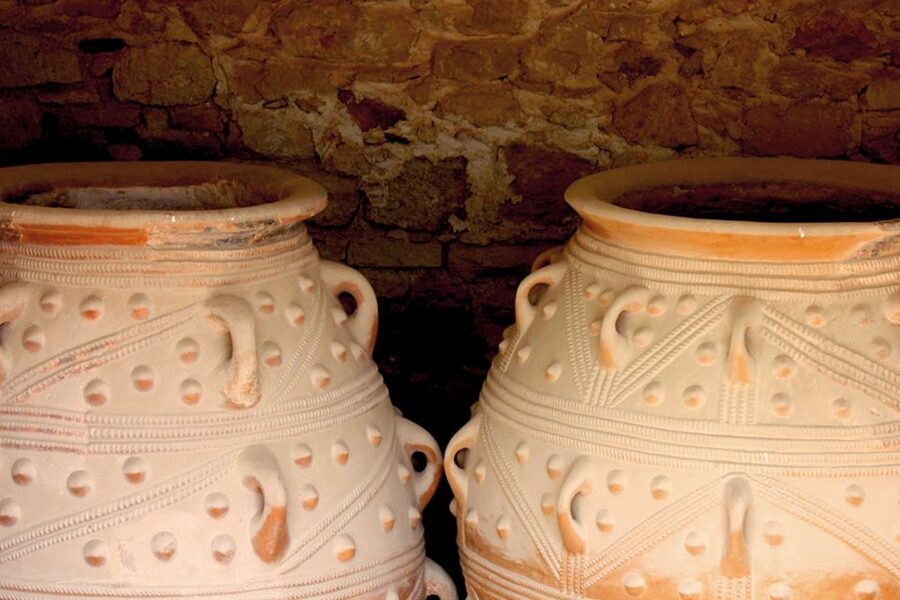
The South Entrance Corridor is another audio stop that adds texture. The experience highlights a copy of the Prince of the Lilies, and it’s paired with a view that you’ll want to see yourself.
The audio also points you toward a framed gaze of Mount Juktas through the eroded walls of the palace. Even if you’re not an expert in landscape composition, the framing is easy to notice once you’re in the right place.
This is a great moment to pause your phone for a second. Look first, then listen. You’ll get more from the audio because your eyes already know where the story is pointing.
Queen’s Megaron: blue dolphins, toilets, and bath habits
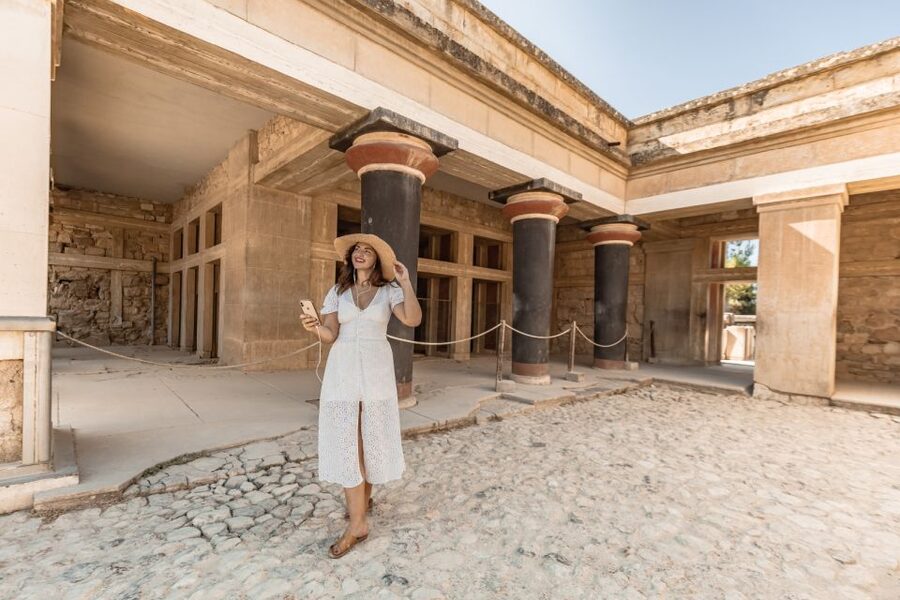
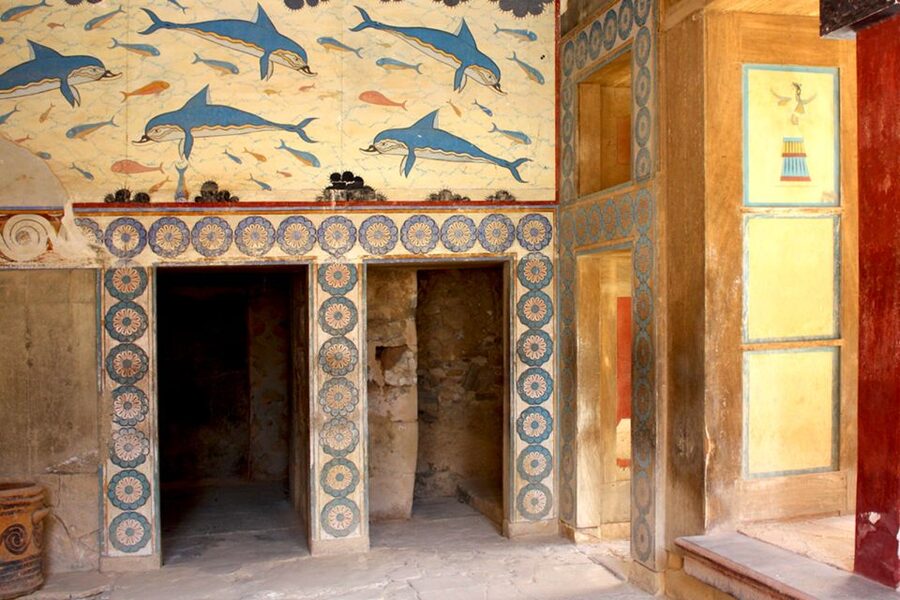
If you want proof that daily life is more interesting than you expect, the Queen’s Megaron section delivers. The audio focuses on the famous blue dolphins fresco and also mentions the presence of a bathroom/toilet room.
It’s a rare treat at an archaeological site: instead of only hearing about power or religion, you get practical hints about personal routines. The audio explains bath habits in the Minoan era, turning the palace from a grand ruin into a place where people likely had real needs.
I like this stop because it balances the palace mythos with something physical and human. You can stand in front of the room, then hear about what might have happened there.
Heraklion Archaeological Museum (optional): what it adds to the Knossos story
You can add optional entry to the Heraklion Archaeological Museum, plus audio for Heraklion City. The museum option is valuable if you want to see more objects that help explain what you’re hearing at Knossos.
Without inventing anything, here’s the logic: Knossos gives you space and layout; the museum typically gives you artifacts and context. Pairing them helps you connect the frescoes and themes you hear in the audio with physical finds you can look at more closely.
Keep an eye on your energy and time. If you’ve already had a long day in the sun, skip the museum and focus on the palace plus an audio walk through Heraklion City.
Phaistos Palace audio add-on: how to build a bigger arc
There’s also an option for audio related to Phaistos Palace. This can be a smart choice if your goal is more than one highlight.
Audio for a second palace site helps you compare what you saw at Knossos: similar themes, different layout, and different ways stone tells stories. Even if you only listen to parts, it can give you a sense of what changed across time and place.
The main thing is pacing. Don’t cram the add-ons so hard that you’re listening while rushing. That’s where the audio timing issues become more annoying.
Making the audio guide work for you (even when directions slip)
Several people noted that the audio can be tricky to sync with the site marking, especially when you move faster than the narrator expects. Some described a need to pause and re-check where the next stop is.
Here’s how to handle that without losing the experience:
- Use the map to anchor yourself before you start a listening segment
- Listen in short blocks, then look around first
- If the audio’s directions don’t match instantly, pause and rely on on-site signs to locate the next area
- When parts are closed, let the audio guide you conceptually rather than forcing the exact sequence
Also, remember that Knossos has reconstructed areas and signage isn’t always the same as museum labeling. The audio is excellent at explaining themes, but you still do the navigation with your eyes.
Crowds, heat, and a practical survival kit
Knossos is outdoors, and the site can feel intense—sun, walking, and limited shade. The experience is best if you show up ready to last.
Bring:
- comfortable shoes
- sunglasses and a sun hat
- a charged smartphone
- headphones
- a passport or ID card
Water isn’t listed in the essentials you were given, but it’s smart to plan for it anyway. The site gets hot, and even an hour feels longer when you’re dehydrated.
For timing, early helps. One person arrived around 8am and left around 10am, and described the exit as a mob at later hours. So if you can, start early and finish before the busiest wave.
Who this Knossos e-ticket and audio tour is best for
This is a strong fit if you:
- want to explore at your own pace
- like learning from narration while you walk
- don’t want to coordinate with a group schedule
- travel with a compatible smartphone and headphones
It may be less ideal if you need step-by-step directions that perfectly match each marker every time, or if you’re dependent on older devices not listed as compatible.
Also, it’s not suitable for wheelchair users, based on the information provided.
Should you book this Knossos e-ticket and audio tour?
Book it if you want an organized way to experience Knossos without a live guide—and you’re comfortable doing some navigation yourself. The price makes sense when you value entry efficiency plus an on-phone story you can replay or pause. The Palace highlights—South Propylaeum frescoes, West Magazines, the Queen’s Megaron, and the Mount Juktas framing—work best when the explanation is with you as you stand there.
Skip or rethink it if you’re expecting directions that always line up perfectly with every on-site marking, or if you can’t guarantee headphone use and a compatible smartphone. In those cases, a different guide format may save you frustration.
If you want a smooth, meaningful Knossos visit, this combo is one of the simplest ways to get there.
FAQ
How long does the Knossos e-ticket and audio guide take?
The duration is listed as 1 to 5 hours, depending on the option and starting time. You can spend more or less time based on how long you want to listen and explore.
Is a live guide included?
No. This experience includes a pre-booked entry ticket and a phone audio guide if that option is selected. A live guide is not included.
What do I need to bring?
You should bring a passport or ID card, comfortable shoes, sunglasses, a sun hat, headphones, and a charged smartphone. The audio needs storage space.
Which languages are available for the audio guide?
The audio is available in English, German, French, Spanish, and Italian.
Can I use this on a Windows phone or older iPhone models?
No. The audio guide is not compatible with Windows phones, and it also won’t work on older iOS devices such as iPhone 5/5C or older and certain older iPad/iPod models listed in the requirements.
Are pets allowed inside Knossos?
No, pets are not allowed.
Is this tour suitable for wheelchair users?
No. It is not suitable for wheelchair users.