REVIEW · HERAKLION
Knossos Palace and Plateau of Lassithi from Heraklion Region
Book on Viator →Operated by Status MLB Travel Agency · Bookable on Viator
Knossos in one day? That is the real pull here. You get a coach tour that strings together major Cretan sights—Knossos Palace for myth and masonry, plus the Lassithi Plateau for mountain views and old-school irrigation. I also like that hotel pickup is handled, so you are not white-knuckling a rental car on unfamiliar roads. The main thing to watch: this is a group day with a big pickup window, so you may spend a chunk of time on the bus before you see the first ruins.
I found the pace is very workable if you go in with the right expectations: some standing and steps, a long drive through the countryside, and extra entrances you’ll pay on-site. The trade-off is that you’ll cover far more than a half-day “greatest hits” loop, and you’ll come away with a clear picture of Crete’s layers—ancient city life, mountain farming, and monastery calm.
In This Review
- Key Things You Should Know Before You Go
- A One-Coach Day That Links Cretan Myths to Mountain Life
- Entering Knossos Palace Without Getting Surprised by the Ticket
- Lassithi Plateau: Wind-Pumps, Mountain Air, and Panoramic Stops
- Kera Kardiotissa Monastery: Stone Church, Old Frescoes, and a Quiet Break
- Dikteon Cave: A Different Kind of Cretan Attention to Detail
- Coach Logistics from Heraklion: Why the Morning Feels Long
- The Cretan Tavern Finish: Where the Day Becomes a Break
- Price and Value: What You Really Pay for at $57.32
- Who Should Book This (and Who Should Skip It)
- Should You Book This Knossos and Lassithi Day Tour?
- FAQ
- How long is the Knossos and Lassithi full-day tour?
- Is hotel pickup included?
- Are entrance tickets included for Knossos and Kera Kardiotissa Monastery?
- What main places will we visit during the day?
- Is this tour physically demanding?
- How many people are on the tour at most?
- What languages are offered on different days?
- Is WiFi available on the bus?
- What happens if the weather is bad?
- Can I cancel for a full refund?
Key Things You Should Know Before You Go
- Air-conditioned coach + certified guide means the day flows without self-planning.
- Knossos is the centerpiece, but you must budget for the on-site entrance ticket.
- Lassithi Plateau is high-country Crete at about 840 m, with classic wind-pumps and sweeping views.
- Kera Kardiotissa Monastery adds a quieter, church-and-frescoes stop near the Dikti Range road.
- Dikteon Cave is part of the mix, so wear shoes that handle uneven, possibly damp stone.
- Group size can be large (up to 150), which can affect how relaxed things feel at each stop.
A One-Coach Day That Links Cretan Myths to Mountain Life
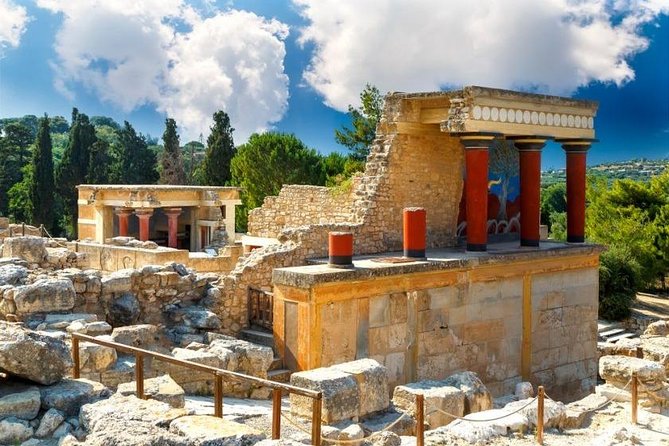
This is one of those Heraklion-area day trips that actually earns its long hours. You start with Knossos Palace, the big-name Bronze Age site tied to stories of the Minotaur. Then you move east into the Lassithi Plateau, where Cretans farmed in the mountains using wind-powered pumping systems. After that, the day shifts again with the Kera Kardiotissa Monastery and the Dikteon Cave, so you are not bouncing between just “ruins, ruins, ruins.”
I like the structure because it gives you context. You see the famous palace complex, then you climb toward the plateau where people traditionally managed water for fields. It is easier to understand Crete when you watch how the land works, not just how legends look on postcards.
The main drawback is bus time. Even with hotel pickup, expect a period of gathering people from multiple areas, which can stretch the early part of the day. If you hate waiting in lines—or on a coach—this is the part that will try your patience.
You can also read our reviews of more tours and experiences in Heraklion.
Entering Knossos Palace Without Getting Surprised by the Ticket
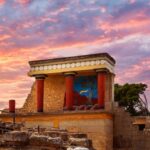
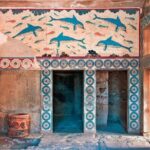
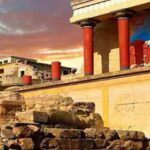
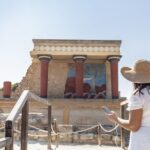
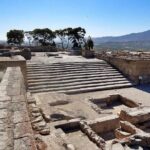
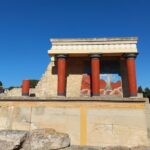
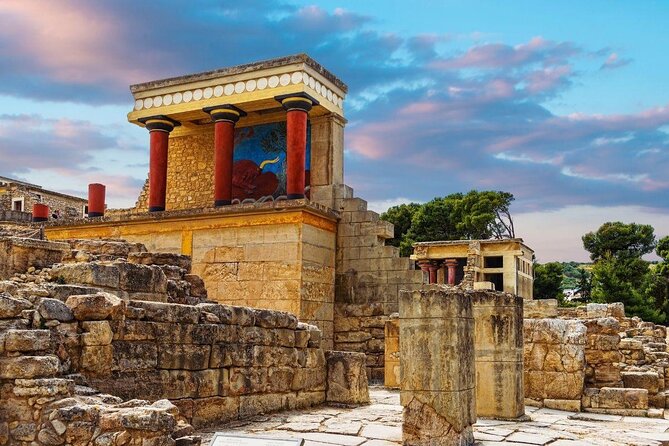
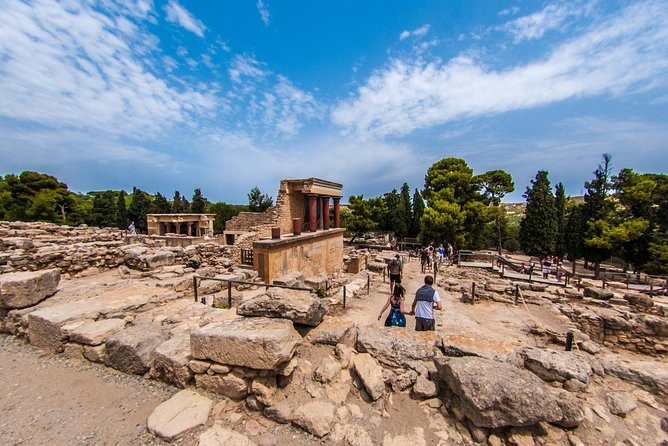
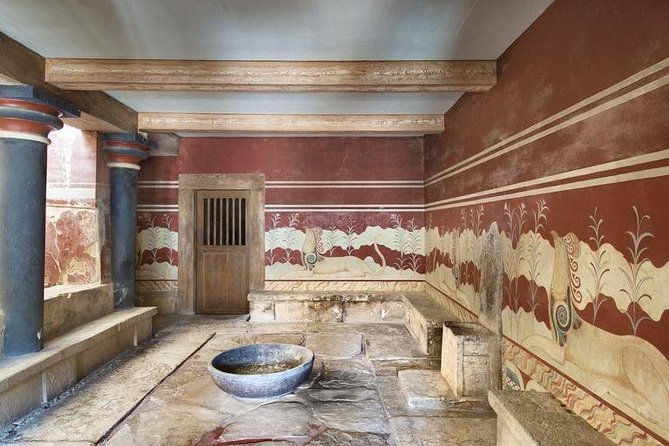
Knossos Palace is the largest Bronze Age archaeological site on Crete, and it is often described as Europe’s oldest city. Whatever phrasing you’ve heard before, the scale matters when you’re standing there. You’re looking at a complex of rooms, courtyards, and architectural planning that makes the myths feel grounded instead of random.
You’ll get time to explore, guided by the certified tour-guide. The biggest value here is interpretation: how the palace layout connects to Cretan life long ago, and how the later stories about the Minotaur got layered onto the site people can still visit today.
Two practical notes for your budget and timing:
- The Knossos entrance ticket is not included (with some free entry ages noted on the tour details).
- Plan for about 1 hour at Knossos. That is enough for a first pass with guidance, but not enough to go super-slow if you want to linger in every corner.
If you want the most out of the time, don’t try to photograph every wall section. Pick the key zones the guide points out, then use your remaining minutes to soak in the bigger picture—courts, corridors, and how the palace functions as a hub.
Lassithi Plateau: Wind-Pumps, Mountain Air, and Panoramic Stops
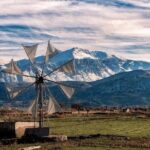
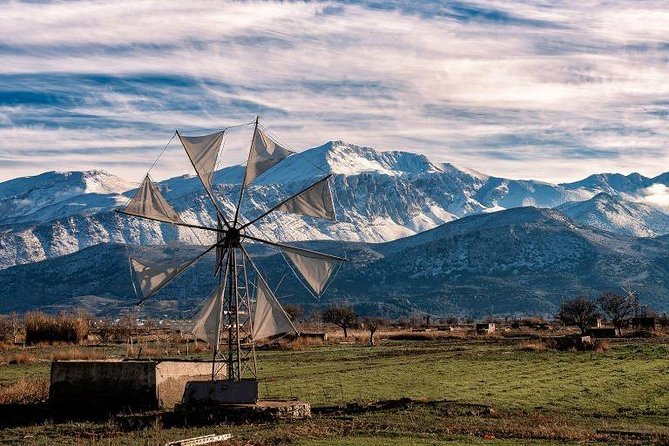
After Knossos, the day climbs into Lassithi Plateau territory. This is not a small village detour—it is a wide mountain plain, about 840 m high on average, roughly 70 km east of Heraklion. The plateau stretches about 11 km east-west and 6 km north-south, so even when you’re only seeing part of it on this tour, you’re still looking at true highland space.
What makes it special is the wind technology. The plateau is famous for white-sailed windmills, but locals use a more accurate term: wind-pumps. These were designed to irrigate farmland, used since the early 20th century. That means the scenery is not just pretty; it’s functional history.
On the tour, you’ll get about 30 minutes here, plus a short stop with views before you arrive at the main area. That time is brief, but it is enough to:
- take in the panorama from a good viewing point,
- understand why the wind-pumps made sense for the plateau,
- and grab photos without rushing through everything.
One consideration: the plateau is high and exposed. Even in good weather, conditions can feel brisk. I recommend a light layer you can pull on and off, plus sun protection, since you’ll likely spend time outdoors.
Kera Kardiotissa Monastery: Stone Church, Old Frescoes, and a Quiet Break
Kera Kardiotissa Monastery sits in a wooded area near the North Dikti Range, in the direction of the Lassithi Plateau. This stop is less about crowds and more about feeling the slower rhythm of Cretan religious life.
The monastery’s stone-built church is dedicated to the Nativity of Mary (celebrated on September 8). The current church is built in four phases, and it helps to understand that it evolved over time rather than appearing all at once. There is also mention of older frescoes from the 14th century, though they are quite damaged by age.
You’ll spend about 1 hour here. Entrance into the monastery costs €2 for most visitors (with free entry for certain ages noted). Since this is not a long stop, treat it like a chance to reset your brain between the bigger “wow” sites.
How to make this hour count:
- Look closely at the church structure and how additions changed the space over time.
- Take a slower walk around the area rather than rushing straight to the entrance.
- If you’re sensitive to church photography rules, watch what others do—some sites can be strict, even when you’re outdoors.
Dikteon Cave: A Different Kind of Cretan Attention to Detail
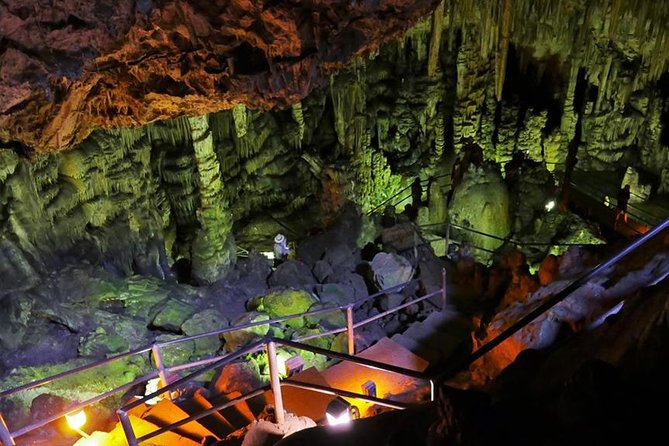
Your day also includes Dikteon Cave, one of the legendary cave sites tied into Crete’s myth world. Cave time is different from palace time. You are trading open-air views for a cooler, enclosed environment where the ground can be uneven and steps can be part of the route.
Based on tour feedback, this is one area where shoes matter. If you plan to wear light slippers or anything that slips easily, you’ll likely wish you didn’t. Bring footwear you trust on stone steps.
Also, expect it to feel more structured than the “wild cave” fantasy. Some visitors find parts of the cave experience more developed than they anticipated. Still, it is worth going because it adds variety to the story of Crete that the rest of the day tells. You’ll see how mythology and local tradition connect not just to palaces and villages, but to dramatic natural spaces.
The cave stop can be a good mental breather. After walking through ruins and plateau viewpoints, you’ll get a totally different sensory scene—cooler air, different lighting, and lots more listening to your guide’s explanations.


Coach Logistics from Heraklion: Why the Morning Feels Long
Here’s the honest part: this is a pickup-and-route tour. Even if the tour itself is a solid full day, the early hours can be the least fun part.
The pickup is offered from many areas in the Heraklion region, with two grouped service zones listed for different villages and resort areas. Pickups are described as happening at specific tourist bus stops outside your hotel. After you book, the operator contacts you to arrange pickup, but they also note that pickup can’t be guaranteed if details aren’t provided within a certain window.
What this means for you:
- Start your day early.
- Keep breakfast simple and carry a bit of water if you tend to get thirsty.
- Plan for possible waiting time if your hotel is one of the last on the route.
A few reviews mention that pickup could take a while, especially when the first stop happens after multiple hotel shuttles. That is normal for large group routing, but it still feels long when you’re sitting still.
One more practical note: WiFi is not listed as included. If you rely on internet for maps or messaging, don’t plan your day around having it on the coach.
The Cretan Tavern Finish: Where the Day Becomes a Break
The tour wraps up with dining at an authentic Cretan tavern. This part matters more than people think. A long day of history stops and mountain air can drain you, and tavern food is where you recharge with something local rather than grabbing random snacks.
The tour details don’t specify the menu, so your best move is to treat this like a chance to eat normally and enjoy being done with logistics for the day. If you have dietary needs, you’ll want to check in before you go, because the details aren’t spelled out here.
Even if you’re not a huge food person, I recommend you use this meal time well. A sit-down lunch or dinner (depending on timing) can keep you from turning the final drive into survival mode.
Price and Value: What You Really Pay for at $57.32
At $57.32 per person, this tour is priced like a classic Heraklion “big sites in one day” deal. The value comes from what’s included:
- Hotel pickup from designated areas
- Air-conditioned coach
- Certified tour-guide
What’s not included is equally important:
- The Knossos Palace entrance ticket (with free entry for certain ages)
- Kera Kardiotissa Monastery entrance noted as €2 (with free entry for certain ages)
So your actual all-in cost depends on your age and which entrances you pay. Still, even with those add-ons, you’re usually saving time versus trying to coordinate multiple sites yourself. The coach handles the driving and route rhythm, and the guide helps you make sense of what you’re seeing.
One more value point: this tour is built around variety. You’re not paying for four hours of ruins. You’re getting plateau views, monastery architecture and fresco context, and cave exploration. For many people, that kind of “full day story” beats a cheaper half-day shortcut.
Who Should Book This (and Who Should Skip It)
I think this tour fits best if you:
- want multiple highlights in one day from Heraklion,
- enjoy guided context (my guess is you’ll like the way the guide connects myths to places),
- and are comfortable with a moderate physical level due to walking and cave stairs.
It might be less ideal if you:
- hate long coach time and early pickups,
- get annoyed by large-group pacing (maximum is listed as 150 travelers),
- or are expecting a low-key, quiet experience at every stop.
If you’re the type who wants lots of time per site and zero waiting, you might be happier with a smaller private tour. But for many first-timers to Crete’s inner stories, this style of day trip is a practical win.
Should You Book This Knossos and Lassithi Day Tour?
Book it if you want a well-rounded Crete day—Knossos, mountain Lassithi Plateau, a monastery reset at Kera Kardiotissa, and the myth-heavy stop at Dikteon Cave—without renting a car. The guide and coach solve the hardest part: logistics.
Don’t book it if you know you’ll be miserable with an early pickup and a lot of time on the road. This is a group-day structure. If that is your biggest stress point, consider a different format.
If you do book, go prepared: bring comfortable shoes for cave steps, wear layers for the plateau, and accept that the morning can be slow before the scenery gets good.
FAQ
How long is the Knossos and Lassithi full-day tour?
The tour runs about 8 to 9 hours.
Is hotel pickup included?
Yes. Pickup is included from the hotel area using specific tourist bus stops outside hotels.
Are entrance tickets included for Knossos and Kera Kardiotissa Monastery?
No. The Knossos Palace entrance ticket is not included, and Kera Kardiotissa Monastery has an entrance fee (with free entry for certain ages).
What main places will we visit during the day?
You’ll visit Knossos Palace, the Lassithi Plateau, Kera Kardiotissa Monastery, and Dikteon Cave, plus you’ll have a meal at an authentic Cretan tavern.
Is this tour physically demanding?
It asks for a moderate physical fitness level.
How many people are on the tour at most?
The maximum group size is listed as 150 travelers.
What languages are offered on different days?
English, German, and French are offered on Mondays and most days; some days add Russian as well.
Is WiFi available on the bus?
WiFi is not listed as included, so you should not count on it.
What happens if the weather is bad?
The tour requires good weather. If it’s canceled due to poor weather, you’ll be offered a different date or a full refund.
Can I cancel for a full refund?
Yes. You can cancel up to 24 hours in advance for a full refund.