REVIEW · AMMAN
Day Tour To Desert Castles & Cave of the Seven Sleepers
Book on Viator →Operated by R&H VIP Transportation Services · Bookable on Viator
Desert castles feel like a secret you can visit. This private day trip threads together three Umayyad-built ruins—Qsar al-Azraq, UNESCO-listed Qusayr Amra, and Qasr al Kharrana—then adds Ashabul Kahf (the Cave of the Seven Sleepers). It’s an easy way to swap Amman streets for desert fort architecture and a Roman-era legend in one push.
I really like the practical, no-drama setup: door-to-door pickup by private chauffeured vehicle, plus bottled water and on-board WiFi during the ride. The only real watch-out is that most site time is self-guided, and admissions (and lunch) cost extra unless you’ve selected entry fees.
In This Review
- Key highlights to know before you go
- Why these desert castles beat the usual day trip from Amman
- Getting there smoothly: private pickup, ride comfort, and realistic timing
- Stop 1: Qsar al-Azraq and the Umayyad desert-castle remains
- Stop 2: Qusayr Amra’s UNESCO frescoes and the zodiac ceiling
- Stop 3: Qasr al Kharrana’s courtyard fortress and the mystery of its purpose
- Stop 4: Ashabul Kahf (Cave of the Seven Sleepers) and the legend that won’t fade
- Price and value: what $83.57 really buys you
- What makes this tour feel good (and what can feel short)
- Who should book this: the best match for your travel style
- Should you book this desert-castles-and-cave day trip?
- FAQ
- How long is the tour from Amman?
- What sites are included in the tour?
- Is hotel pickup and drop-off included?
- Is the tour private?
- Are admission fees included in the price?
- Is lunch included?
- Is there a local guide on the sites?
- Do you get bottled water and WiFi?
- Can I cancel for free?
- Is it easy to get tickets?
Key highlights to know before you go
- Three Umayyad desert castles in one day: Qsar al-Azraq, Qusayr Amra, and Qasr al Kharrana, each with a different feel
- Qusayr Amra’s fresco ceilings: hunting scenes, animals, portraits, and zodiac imagery in the hot room
- Qsar al-Azraq’s Lawrence of Arabia connection: the site was once a headquarters tied to him
- Ashabul Kahf’s legend setting: seven Christian men and their dog, sleeping for 309 years by the story
- Short, focused stops: about 30 minutes per site keeps the schedule tight and photography-focused
Why these desert castles beat the usual day trip from Amman
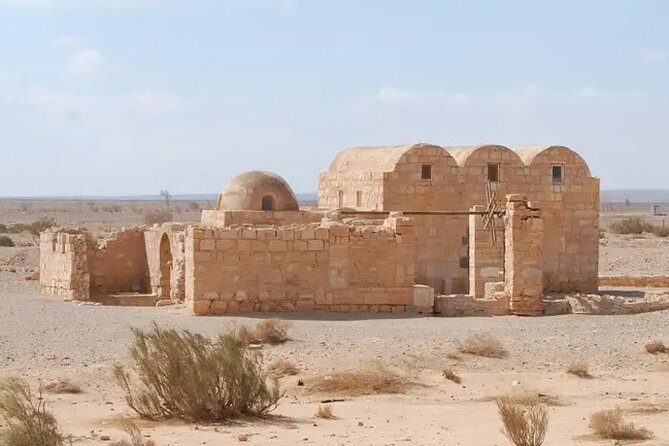
Most Amman day trips tilt toward cities and churches. This one takes you the other direction: out to the desert forts of eastern Jordan, built during the early Islamic centuries (7th and 8th) when trade routes and cultural exchange were reshaping the region.
What I like about the mix is that you’re not seeing one type of monument. You move from Umayyad castle remains, to a UNESCO World Heritage site known for art on walls and ceilings, to a fortress with a puzzling purpose, and then you finish with a cave tied to a story that still matters today.
You can also read our reviews of more tours and experiences in Amman.
Getting there smoothly: private pickup, ride comfort, and realistic timing
You’re picked up from your hotel and driven in a private, air-conditioned vehicle. The package includes bottled water, an English-speaking driver, and even on-board WiFi—small perks that matter when the day is long and the road time adds up.
The trip runs about 5 to 8 hours. Site stops are short (around 30 minutes each), so you’ll want to treat this as a “see it, understand it fast, take photos, move on” day—not a slow ramble with long explanations at every wall.
Stop 1: Qsar al-Azraq and the Umayyad desert-castle remains
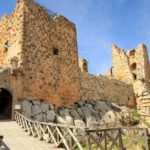
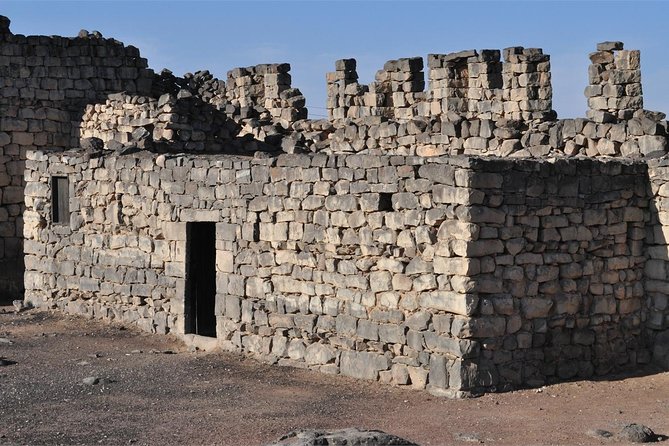
Qsar al-Azraq is part of what people call Jordan’s desert castles: ruins spread across the eastern deserts that include forts, baths, towers, and fortified remains. This area reflects the Umayyad period, when architecture flourished during the 7th and 8th centuries thanks to cultural exchange and major trade routes.
You also get a specific, modern connection: Qsar al-Azraq was once headquarters to Lawrence of Arabia. That link gives the ruins an extra layer for anyone who enjoys history with a “how did this connect to the modern world?” thread.
What to expect in the time you have: you’ll get independent time to walk the remains and absorb the scale. Since the focus is quick context plus exploration, go in ready to look for details—fortification shapes, how the buildings sit in the dry terrain, and how the site reads as a functioning complex rather than just broken stone.
Stop 2: Qusayr Amra’s UNESCO frescoes and the zodiac ceiling
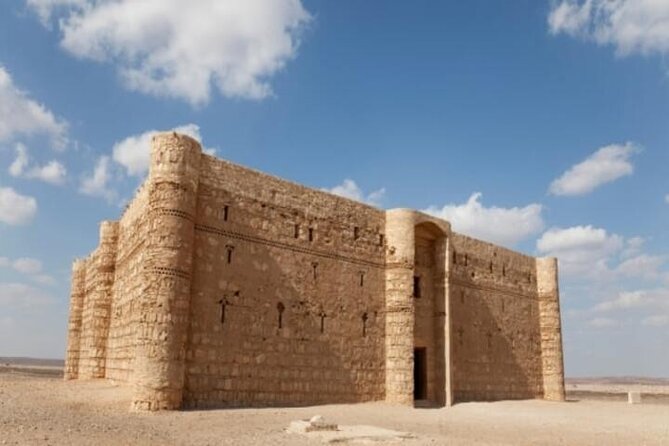
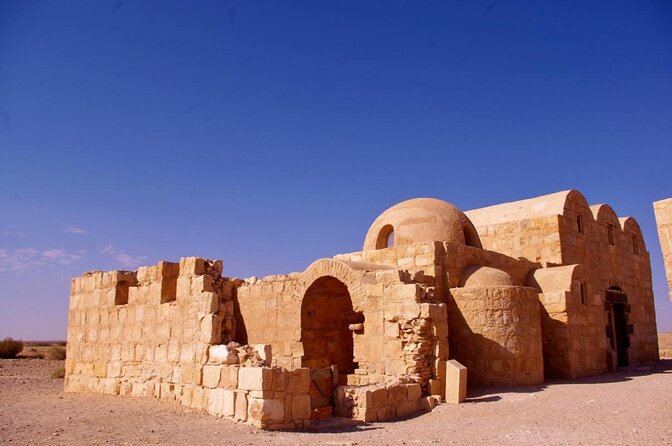
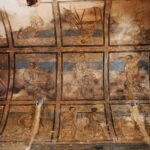
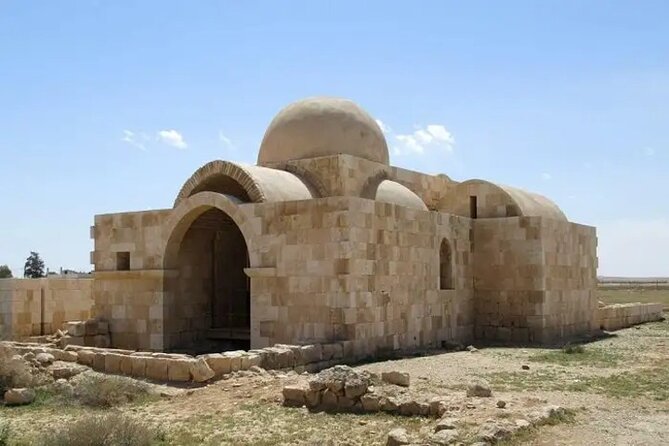
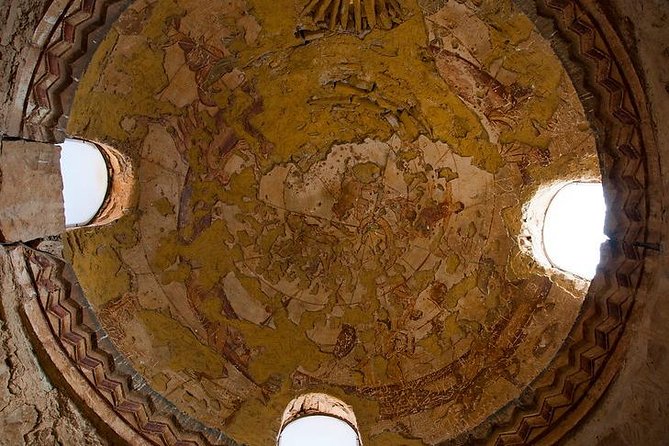
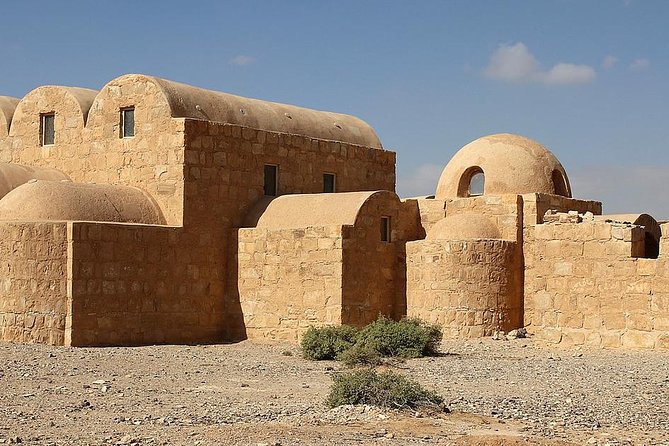
Qusayr Amra is the headliner on many Jordan trips for a reason. It’s UNESCO-listed and famous for the frescoes that cover ceiling and interior walls—hunting scenes, animals and birds, and portraits. If you love art and archaeology together, this stop is your payoff.
The hot room’s domed ceiling is where the story gets even better: the zodiac imagery is described as one of the earliest surviving portrayals of a map. Even better, Qusayr Amra isn’t portrayed as a military outpost; what remains today is more like a small country cabin from a larger complex.
How to make the 30 minutes work: use your first minute to find the main ceiling features and then circle back for wall scenes. The art works best when you let your eyes move slowly—especially the way scenes repeat across the interior spaces.
Possible downside to factor in: because time here is limited, you may wish you had more space to study the artwork. It’s not a slow museum visit; it’s a focused UNESCO hit.
Stop 3: Qasr al Kharrana’s courtyard fortress and the mystery of its purpose
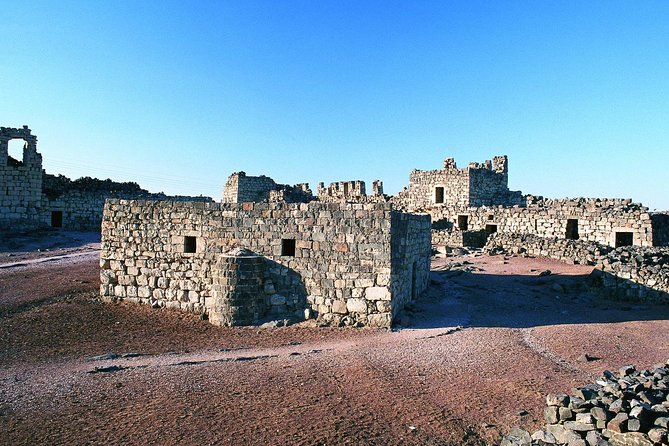
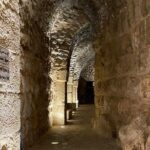
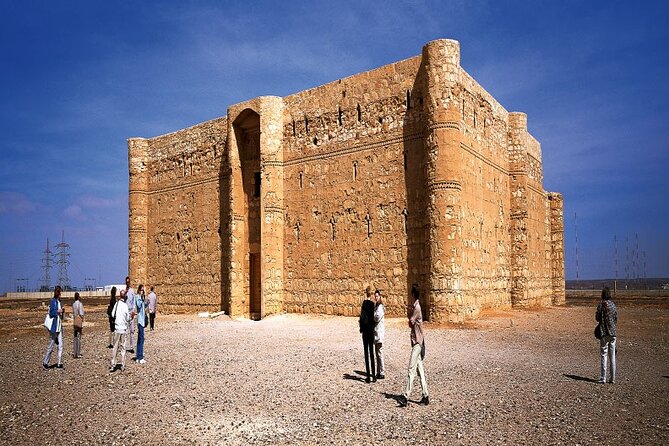
After Qusayr Amra, you head to Qasr al Kharrana, a squared fortress with rounded turrets and a central courtyard. The building still feels remarkably “there,” because rooms remain inside, opening around the courtyard.
This is also the stop that leans hardest into the historical question mark. The site is described as an enigma: some historians see it as defensive, while others think it served travelers—possibly as a resting place, meeting spot, or caravanserai tied to movement through desert routes.
Inside, look for ornamental niches and pilasters that frame the rooms around the courtyard. Those details help you understand why people call it one of Jordan’s most beautiful and atmospheric ancient buildings. Even with only about half an hour, the geometry of the courtyard and the surrounding chambers can make the site feel like a functioning space rather than a pile of ruins.
What you should watch for: if your goal is a deep archaeological lecture, this tour won’t be that. You’ll likely get more from what you can read on-site and what your driver shares en route.

Stop 4: Ashabul Kahf (Cave of the Seven Sleepers) and the legend that won’t fade
Finally, you reach the Cave of the Seven Sleepers (Ashabul Kahf). The legend says seven Christian men and their dog took refuge in the cave after being persecuted by Roman Emperor Trajan. By the story, they slept for 309 years and woke when persecution had ended.
Today, it’s a religious and historic site surrounded by ruins. Inside the cave area, you can see the tombs of the men and some remains still visible in the cave space.
Why this stop lands for many people: castles and forts are one kind of history. Here you get a story that lives across centuries and still shapes how people think about faith, survival, and time.
The cave’s practical reality: it’s described as small compared to the sites before it. That can be a plus if you want a gentle ending. Just don’t expect a giant cavern—expect meaning, legend, and a compact space that feels closer and more personal than the open desert forts.
Price and value: what $83.57 really buys you
At $83.57 per person, the value mostly comes from the logistics: private chauffeured transportation, hotel pickup and drop-off, an English-speaking driver, and convenience features like bottled water and on-board WiFi.
You’re also buying efficiency. Seeing three desert castle sites plus a cave in one day is hard to pull off smoothly on your own without planning transportation and routing carefully. This tour gives you that structure, and the stops are timed so you don’t spend half your day in the car wondering what comes next.
Two cost items to plan for upfront:
- Admissions are at your own expense unless you choose entry fees during booking
- Lunch isn’t included
So if you’re a value-first planner, you’ll get the best deal by bringing snacks or planning where you’ll eat after the tour. If you want everything handled—food and guided interpretation at each site—this price may feel a bit more “transport-first” than “full experience” depending on your expectations.
What makes this tour feel good (and what can feel short)
The most praised part of this kind of day trip tends to be pacing plus context. A strong driver can turn the ride between sites into a story about Umayyads and Roman-era legend, and keep the day organized. When the day stays on schedule, the desert stops feel like a connected timeline instead of four random photos.
The other big win is how uncrowded it can feel compared with city attractions. These are not the kind of sites where you’re fighting a crowd. In short stops, you’ll often get a calmer experience at each location—especially when you time your photos during the quieter windows.
The main “short” factor is built in: each stop is about 30 minutes. That doesn’t mean it’s shallow; it just means you’re sampling. If you’re the kind of person who likes reading every detail and walking slowly, you may want extra time at one site you love most—usually Qusayr Amra.
Who should book this: the best match for your travel style
This tour fits you best if:
- you want a one-day Amman getaway with desert castles you can’t easily stitch together without transport
- you like history that connects architecture to the people who lived, traveled, and ruled here
- you enjoy UNESCO sites but don’t need a slow art-history seminar to enjoy them
It may feel less ideal if:
- you want a professional local guide at each site (this isn’t included)
- you prefer long guided time at fewer locations instead of fast, focused sampling
- you’re sensitive to extra costs for admissions and lunch
Should you book this desert-castles-and-cave day trip?
I’d book it if you want a clean, structured day outside the city, with three distinct Umayyad-era sites and a legend-powered finale. The private transport and hotel pickup make it feel low-stress, and the sites are varied enough that the day doesn’t get repetitive.
I’d hesitate only if you’re expecting an in-depth guided tour at every stop, with all meals and admissions baked in. With the short stop times, the experience is best when you go in curious and ready to read signs and look closely at architectural details.
If that sounds like your style, this is a strong way to see a side of Jordan that many people skip.
FAQ
How long is the tour from Amman?
It runs about 5 to 8 hours, depending on the day’s schedule and driving time.
What sites are included in the tour?
You’ll visit Qsar al-Azraq, Qusayr Amra, Qasr al Kharrana, and the Cave of the Seven Sleepers (Ashabul Kahf).
Is hotel pickup and drop-off included?
Yes. The tour includes hotel pickup and return drop-off in Amman.
Is the tour private?
Yes. It’s a private tour/activity, so only your group participates.
Are admission fees included in the price?
Entry fees are not included by default, though they can be included if you select entry fees during booking. Otherwise, admissions are at your expense.
Is lunch included?
No. Lunch is not included.
Is there a local guide on the sites?
A local guide is not included. You do have an English-speaking driver.
Do you get bottled water and WiFi?
Yes. Bottled water is included, and the vehicle offers on-board WiFi.
Can I cancel for free?
Yes, free cancellation is offered up to 24 hours in advance for a full refund.
Is it easy to get tickets?
You’ll receive a mobile ticket.