REVIEW · MARRAKECH
Marrakech Highlights : Majorelle , Bahía Palace , Mellah & Souks :Private Tour
Book on Viator →Operated by Sara Morocco Private Tours · Bookable on Viator
Marrakech in 3.5 hours, without getting lost. You get picked up and driven around in comfort, then guided through the city’s headline sights, from Majorelle Garden to the souks, with skip-the-line style fast access that keeps queues from eating your afternoon.
I like how this tour pairs famous monuments with street-level stops, so you’re not only looking at pretty walls—you’re also hearing what those spaces meant in everyday life. Two standout strengths for me are the Majorelle Garden with the Berber Culture Museum and the guided flow through the Mellah and markets, where context actually changes what you notice. One thing to consider: the souks and craft areas can bring pushy selling, so you’ll want to set firm boundaries if you’re not in buying mode.
In This Review
- Key highlights worth planning around
- How the 3.5-hour route works (and what pace to expect)
- Jardin Majorelle: color with a story, not just a photo stop
- Koutoubia Mosque: the skyline rule you can literally see
- Mellah (Jewish Quarter): old commerce and a changing population
- Bahía Palace: cedar ceilings and zellige tile you’ll want to slow down for
- Medina food culture stops: bakery, hammam elements, and produce
- Souk Haddadine: blacksmith workshops and photo angles that actually work
- Jemaa el-Fnaa: the famous square, explained like a local landmark
- Souk Semmarine: maze-shopping north of the main square
- Guide and driver: why this tour feels smoother than DIY
- Price and logistics: whether $186.10 is fair value
- Should you book this Marrakech highlights tour?
- FAQ
- What’s the duration of the Marrakech highlights private tour?
- Is pickup included?
- Is this tour private or shared?
- Are entry tickets included for Jardin Majorelle and Bahía Palace?
- What’s included besides the guide and vehicle?
- Is food included?
- What parts of the tour involve admission fees?
- Do I need good weather?
- Is there free cancellation?
- Will I be doing a lot of walking?
Key highlights worth planning around
- Fast access strategy at major sites so your limited time doesn’t vanish in lines
- Jardin Majorelle + Berber Culture Museum in the same visit, so color has meaning
- Bahía Palace details like cedar ceilings and zellige tilework that you’ll actually have time to see
- Mellah stop with historical context tied to the Jewish Quarter and old commerce
- Souks with specific themes: blacksmiths at Haddadine and shopping lanes around Semmarine
- Jemaa el-Fnaa orientation so you know what you’re looking at when it gets loud and busy
How the 3.5-hour route works (and what pace to expect)
This is a half-day tour, but it doesn’t feel like a hurried blur—more like a well-shot montage. You’ll spend time in the biggest sights first, then shift into the medina where walking is part of the deal. Expect short breaks between stops, and plan on comfortable shoes, because the souks and old lanes add up.
The private setup matters here. A driver and guide mean you’re not spending your energy figuring out turns, bargaining for directions, or waiting for a taxi when the day is moving. It also means the route can bend a bit if something changes at a monument.
You can also read our reviews of more tours and experiences in Marrakech.
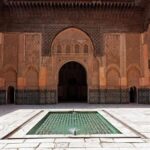


Jardin Majorelle: color with a story, not just a photo stop
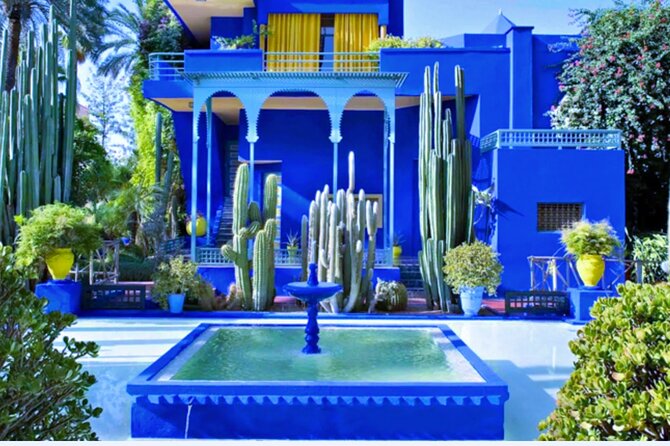
The Jardin Majorelle is where your camera gets a workout, but the payoff is deeper when you understand how it was shaped. The garden began in 1923 with Jacques Majorelle, a French painter who built a villa and expanded the property while collecting plants from around the world. After his death, the place fell into neglect until it was restored by Yves Saint Laurent and Pierre Bergé, who brought the garden and villa back to life.
Inside the villa area, you’ll find the Berber Culture Museum, housed in the Studio. It displays items tied to YSL’s own collection of Berber culture, including authentic handmade silver jewelry, antique ceramics, rugs, and other works of art. It’s a smart pairing: you’re looking at botanical beauty and then seeing how craftsmanship connects to identity in Morocco.
Two practical tips help you get the most out of this stop. First, you’ll want your Majorelle timing tight, because ticket availability can be tight, and fast-track help only goes so far if you arrive late. Second, if you care about details, spend a little extra time looking at plant variety and tile or design accents around the villa buildings instead of only chasing the brightest viewpoints.
Koutoubia Mosque: the skyline rule you can literally see
Koutoubia is the kind of landmark that anchors your mental map of Marrakech. The minaret, attached to the late 12th-century mosque, looks small in height compared to modern towers—but it towers over the medina because a long-standing law limits other buildings from rising above it.
This stop is short, so don’t treat it like a long museum visit. Instead, use it for orientation: note the minaret in the distance, then imagine how the medina developed around one dominant vertical reference point. It’s also a useful reset after the garden’s enclosed calm.
Admission is free here, so the value is mostly time and perspective. You’re paying with schedule, not ticket money.
Mellah (Jewish Quarter): old commerce and a changing population
The Mellah is where Marrakech history starts to feel political, not just picturesque. It was created by decree of Sultan Abdallah al-Ghalib of the Saadian dynasty in 1558, outside the walls of El Badi Palace. In the 16th and 17th centuries, it served as a major commercial area in the old Medina.
The community there included Jews who had been expelled from the Iberian Peninsula after the Reconquista. That mix of law, displacement, and economic role is what makes the Mellah stop more than a quick walk through another neighborhood.
In practice, you’ll benefit from having a guide explain what you’re seeing as you move—because from the street, it can be hard to tell which buildings or lanes connect to the era of the Saadians and later commerce. If you want Marrakech to make more sense historically, this is the stop that helps most.
Bahía Palace: cedar ceilings and zellige tile you’ll want to slow down for
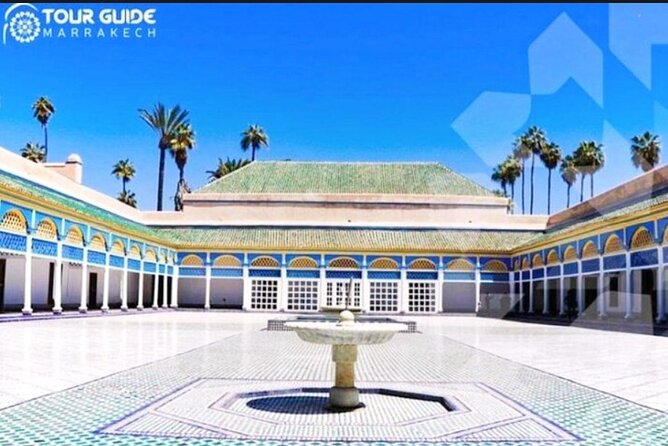
Bahía Palace is famous for decoration, and the specific materials are part of the reason. Its walls feature stucco carved with Arabic calligraphy, geometric patterns, and arabesque designs. The ceilings use carved cedar wood sourced from the Middle Atlas Mountains, which gives the interiors warmth and texture even when the palace isn’t packed.
The floors and surfaces are also a big deal. Expect hand-made zellige tiles—small pieces set to form colorful patterns—made from natural materials like minerals and plants. This is the kind of place where “pretty” becomes “impressive” once you notice the craft.
Timing is important because the palace can be closed on certain days. In one case, a guide adjusted quickly when Bahía Palace wasn’t accessible and switched to another equivalent historic stop. That’s exactly the kind of contingency you want from a private tour setup.
Entry tickets aren’t included, so budget for it separately. The upside is that the monument itself is worth planning for: the craftsmanship rewards patient viewing.
Medina food culture stops: bakery, hammam elements, and produce
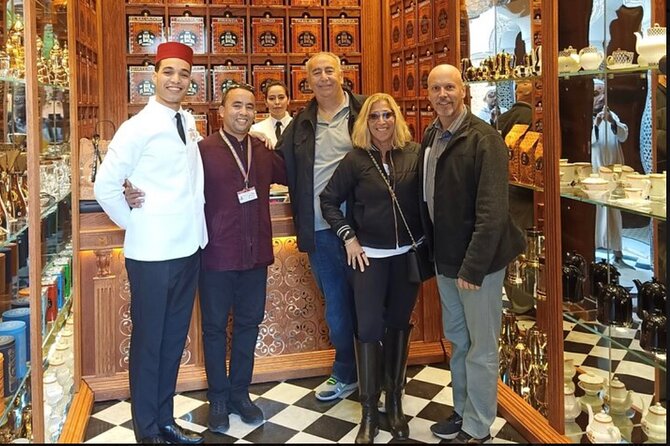
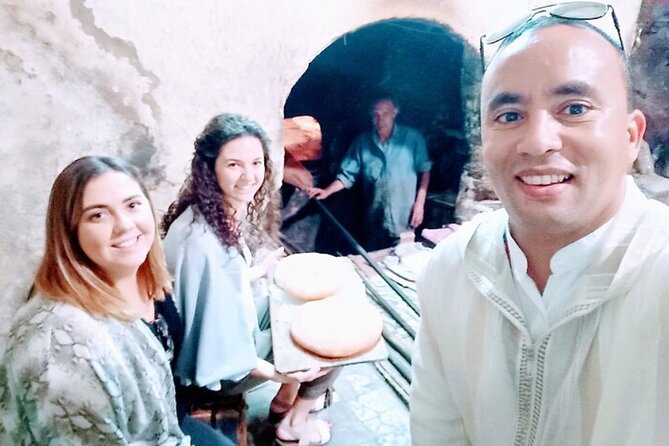
One of my favorite parts of this tour is that it doesn’t treat the Medina as a theme park. You’ll include small stops that connect to daily life: a communal oven (bakery), a Farnachi (part of a Moroccan hammam), and local produce shopping like fruits and vegetables. There’s also an olives market stop.
These sections are short, but they’re high value because they show how people once organized food, water rituals, and neighborhood routines. Even if you don’t buy anything, you’ll see how the city feeds itself and how public bathing culture shows up in architecture and objects.
A practical note: these stops can be sensory. Plan for strong smells from spices and food, and expect crowds or tight spaces depending on the hour. If you’re sensitive to dust, perfumes, or loud noise, pace yourself and ask your guide where to stand for easier viewing.
Souk Haddadine: blacksmith workshops and photo angles that actually work
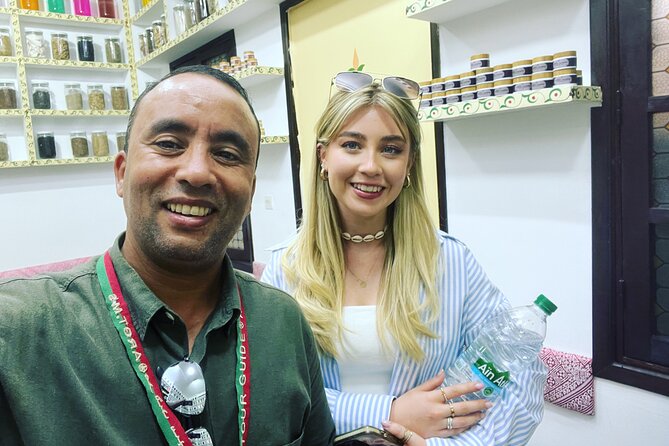
Souk Haddadine focuses on blacksmithing—one of Marrakech’s most visually interesting trades. You’ll pass through workshops where metalwork is the main show, and you’ll get time for panoramic photos.
This stop is brief, so the trick is to look at process, not only finished products. Watch how tools are arranged, how workspaces are organized, and how the craft is displayed in the shop front. It’s also a good contrast after the palace stops: palace decoration is about design at rest, while blacksmith work is design in motion.
Admission here is included, so you can spend your energy looking instead of calculating ticket costs for yet another venue.
Jemaa el-Fnaa: the famous square, explained like a local landmark
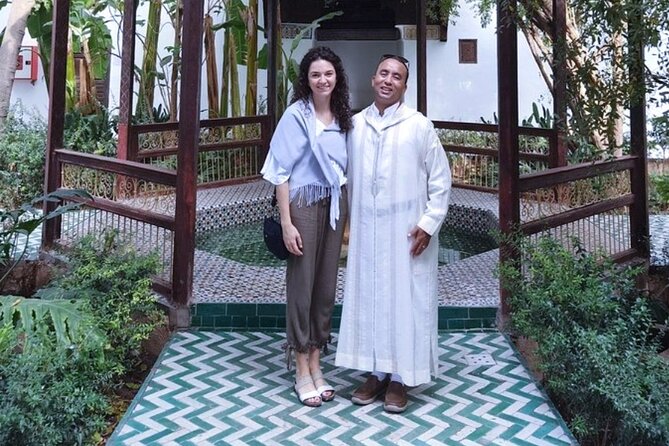
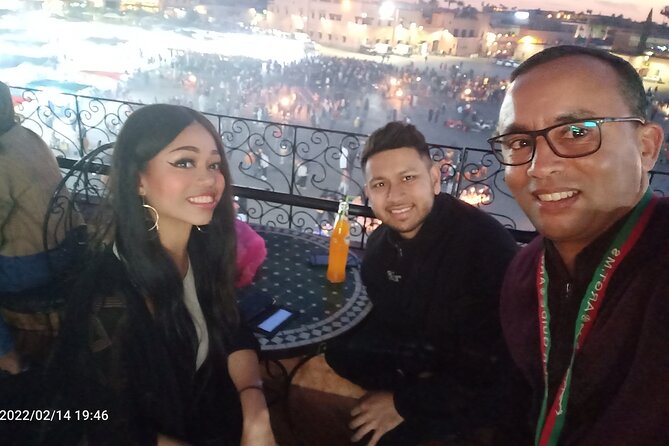
Jemaa el-Fnaa is where Marrakech turns into performance. It’s a traditional meeting point for caravans, and today it’s known for street life that can change minute to minute.
Your guide’s job here matters because the square can overwhelm you. With a bit of orientation, you learn what to look for and what the flow means—what’s staged, what’s part of routine, and why the area became the city’s crossroads. You also get walking time and an explanation of the square’s secrets and history.
This stop is free entry, but it’s not free attention. If you come expecting only one kind of scene, you’ll miss other details. Think of it as a living stage: watch movement, not just performers.
Souk Semmarine: maze-shopping north of the main square
After the main square, the tour shifts into the souks area around Semmarine, where alleys branch into narrow lanes of shops. The sheer concentration is the point—there are said to be around 100 shops in 100 yards, and each section tends to specialize.
This is where you’ll see commerce in overdrive: spices, ironwork, and ingredients related to traditional practices. The upside of having a guide is not that you avoid shopping—it’s that you understand what each lane is “for,” which makes the maze feel navigable.
If you’re shopping, this stop is a good time window. If you’re not shopping, you can still enjoy it by focusing on signage, materials, and product categories rather than browsing everything door to door.
Guide and driver: why this tour feels smoother than DIY
The best thing a private guide does in Marrakech is time-saving with intelligence. They handle routing, manage the order of sights so you’re not overheating in the wrong place, and explain the meaning behind the stones. That matters because Marrakech rewards pattern recognition—especially in the Medina, where identical-looking lanes can lead to very different kinds of places.
You’ll also notice that guides named across experiences—like Hassan, Rachid, Rashid, Abdullah, and even Mustafa—get singled out for keeping the visit moving and for handling questions with confidence. Some guides also help with contingencies, like when a planned monument is temporarily closed.
The driver role is equally practical. With an air-conditioned vehicle, you get a breather between clusters of walking. It helps when you want your day to stay fun, not just exhausting.
One caution comes from a less positive scenario: some guests reported that certain shopping stops can lead to pushy sales behavior, including pressure to finalize prices. That doesn’t mean every tour goes that way, but it does mean you should be clear early: tell your guide you want sightseeing and you will not be rushed into buying.
Price and logistics: whether $186.10 is fair value
At about $186.10 per person for an approximately 3 hours 30 minutes private tour, you’re paying for three things: a guide, a private vehicle with air-conditioning, and fast access so your time stays concentrated. You’re also paying for someone to translate Marrakech into something you can read.
The biggest cost add-ons are entry tickets for Jardin Majorelle and Bahía Palace, plus any food you choose. That means you should treat the listed price as the foundation, not the full budget. Even so, fast access is valuable when queues stack up and when ticket availability can be tight—Majorelle in particular.
If you plan to buy souvenirs, there’s a practical perk: free delivery of products to your hotel. That turns a common Marrakech hassle—carrying bags through the medina—into less stress. It’s a real value if you’re shopping for items like rugs, ceramics, or metalwork.
If you’re not buying and you mostly want monuments, you’ll still get value from skip-the-line help and from the guide’s ability to connect stops. If you’re trying to avoid any shopping pressure entirely, I’d set expectations right at the start and stick to your plan.
Should you book this Marrakech highlights tour?
Book it if you want a tight, guided route through Marrakech’s top sights—especially if you’re short on time and you don’t want to spend hours figuring out how to connect Majorelle, palace rooms, the Mellah, and the souks in one smooth afternoon.
Skip it (or adjust your expectations) if your top priority is wandering freely with zero sales pressure. Even with a great guide, the souks are sales-heavy by nature, and some market stops can involve aggressive conversations. If that would stress you out, tell the guide up front that you’re not buying.
This is also a strong pick for first-timers who want more than “see and go.” The tour structure—monuments plus neighborhood stops—helps Marrakech make sense fast, and that’s what turns a good day into a memorable one.
FAQ
What’s the duration of the Marrakech highlights private tour?
It’s listed at about 3 hours 30 minutes.
Is pickup included?
Yes. Pickup is offered, and the guide will meet you at your hotel or riad, or at the airport.
Is this tour private or shared?
It’s a private tour/activity, meaning only your group participates.
Are entry tickets included for Jardin Majorelle and Bahía Palace?
No. Entry tickets for Majorelle and Bahía Palace are not included. The tour provides skip-the-line or fast access support.
What’s included besides the guide and vehicle?
You get a private guide and vehicle with air-conditioning, free delivery of products to your hotel, and fast access/skip-the-line at monuments.
Is food included?
No. Food is not included.
What parts of the tour involve admission fees?
Souks/entries like Souk Haddadine are marked as admission ticket included, while Jardin Majorelle and Bahía Palace are not included. Jemaa el-Fnaa and Koutoubia are free based on the tour info provided.
Do I need good weather?
Yes. The experience requires good weather. If it’s canceled due to poor weather, you’ll be offered a different date or a full refund.
Is there free cancellation?
Yes. You can cancel up to 24 hours in advance for a full refund.
Will I be doing a lot of walking?
You will walk through the Medina and the souks, so comfortable shoes are a good idea.