REVIEW · NICE
Nice walking tour: Old City and Castle Hill
Book on Viator →Operated by Mobilboard Nice · Bookable on Viator
Nice teaches you to look up and taste.
This 1.5-hour walk strings together sea-front landmarks, Old Town streets, and that big hillside viewpoint over the Bay of Angels—so you leave with the city’s look, not just its facts. You’ll be guided in English, with a route built for photos and quick context as you move.
I love the easy pace and the fact that guides like Francisco and Elena keep things lively without dumping a textbook on you. I also like the food angle—from Cours Saleya market bites to the kind of end-of-tour snack some guides add, depending on the day and group.
One thing to consider: it’s a public tour, so if your group includes French speakers, you may hear some information bilingual. And with only about 90 minutes, you’re seeing a lot of outdoors, but not lingering long in any one place.
In This Review
- Key takeaways before you go
- Promenade to Castle Hill: what this walk feels like
- Starting at Rue Halévy and ending at Cours Saleya
- The best opening act: La Chaise Bleue and Neuf Lignes Obliques
- La Chaise Bleue de SAB
- Neuf Lignes Obliques
- Why the Statue of Liberty in Nice is worth a pause
- Classic British winter cottages: a quirky Nice detail
- Cours Saleya: where to eat like you actually live here
- Palais de la Préfecture and the Old Town power center
- Place Rossetti: trompe l’oeil, ice cream, and St. Réparate’s zone
- A church with bar inside: the Piedmontese Baroque twist
- #ilovenice: the viewpoint that makes the walk click
- Price and group size: is $42.05 worth it?
- Guides you might meet: Francisco, Nicolas, Tessa, Elena, Helena
- Who should book this walk (and who should skip it)
- Should you book Nice’s Old City and Castle Hill walk?
- FAQ
- How long is the walking tour?
- What does it cost?
- Is the tour offered in English?
- Where does the tour start and end?
- How big is the group?
- Can I get a refund if plans change?
Key takeaways before you go
- Public-art stops along the Promenade: La Chaise Bleue, Neuf Lignes Obliques, and even a small Statue of Liberty reference the city’s modern side.
- Old Town landmarks in a tight loop: Place Rossetti, St. Réparate’s Cathedral area, and photogenic walls for quick wins.
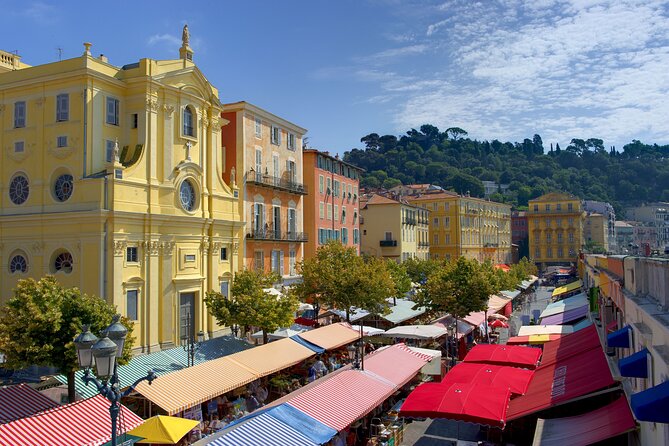
- Cours Saleya is the foodie anchor: Socca, pissaladière, pan bagnat—this is where you learn what locals actually grab.
- Castle Hill views without the marathon: the #ilovenice viewpoint gives you the Bay of Angels angle without needing a long hike.
- Small-group feel: a maximum of 15 people keeps the pace friendly.
- Guides matter: Francisco, Nicolas, Tessa, and Elena all come up as energizing and helpful, with room for questions.
Promenade to Castle Hill: what this walk feels like
This is a “get your bearings fast” style tour. You start on the sea-front, work your way through the Old Town core, and end with a viewpoint that makes Nice feel like Nice. The time is tight—about 1 hour 30 minutes—so you’re not wandering for hours. You’re moving, pausing, and learning enough to make the rest of your trip make sense.
What makes it work is the balance. You get art and symbolism (the kind you’ll notice again later on postcards and store fronts), then you get daily-life places like Cours Saleya. By the time you reach the hilltop viewpoint, the city’s layout is suddenly obvious.
And yes, you’re mostly outside. If you’re visiting in intense sun or heat, plan for shade when you can and bring water. The tour covers a lot of ground, but the pace is designed to stay comfortable.
You can also read our reviews of more tours and experiences in Nice.

Starting at Rue Halévy and ending at Cours Saleya
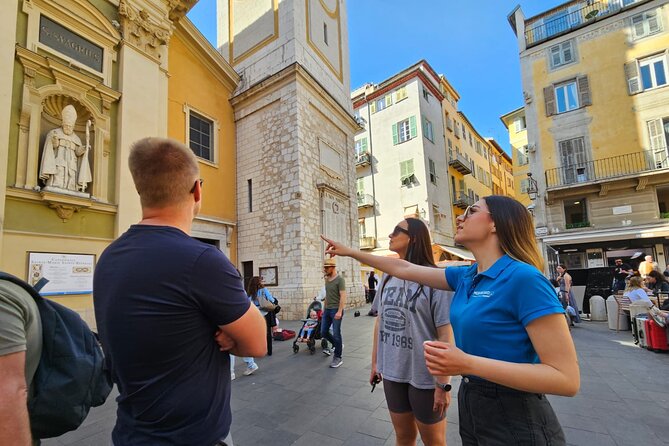
The meeting point is at 2 Rue Halévy near the Mobilboard Nice bike/electric scooter area. The walk ends at Cours Saleya (right by the famous market area).
That end location is practical. After the tour, you’re already in the zone where you can keep exploring: wander the market lanes, grab lunch or a snack, or just take your time with the sights you now understand.
The tour uses a mobile ticket, which is convenient if you don’t want to hunt for paper. It’s also near public transportation, so you can tie it into the rest of your day without much hassle.
The best opening act: La Chaise Bleue and Neuf Lignes Obliques
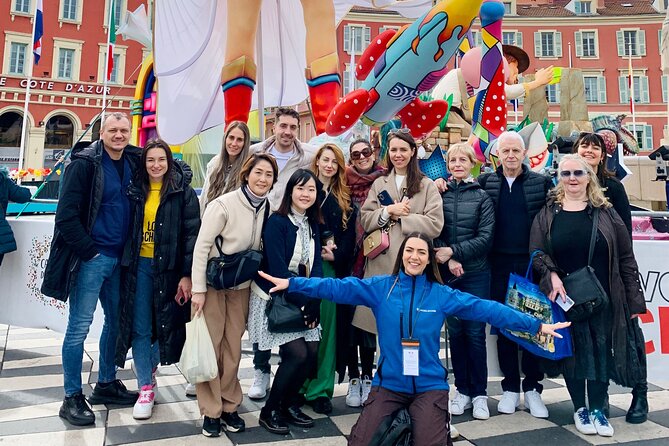
Nice has a way of stamping its identity onto the waterfront, and this walk starts there.
La Chaise Bleue de SAB
La Chaise Bleue is one of those instantly recognizable Nice symbols. You’ll see it referenced everywhere—from postcards and gifts to the real chairs lined along the Promenade. During the stop, it’s less about the object itself and more about why it’s everywhere: it’s part design, part local branding, and part “this is what Nice looks like” shorthand.
If you like spotting details you can later recognize on your own, this stop is a strong start. It sets you up to notice patterns—how the city presents itself to visitors and locals alike.
Neuf Lignes Obliques
Right near it, Neuf Lignes Obliques brings in a different side of Nice: modern commemoration. The monument was placed along the Promenade in 2010 to mark 150 years since Nice was attached to France—an easy reminder that this city’s story didn’t always match what you assume today.
Practical tip: this stop is short, but it’s a good one for photos. The angle from the Promenade helps you capture both the art and the sea-front energy around it.


Why the Statue of Liberty in Nice is worth a pause
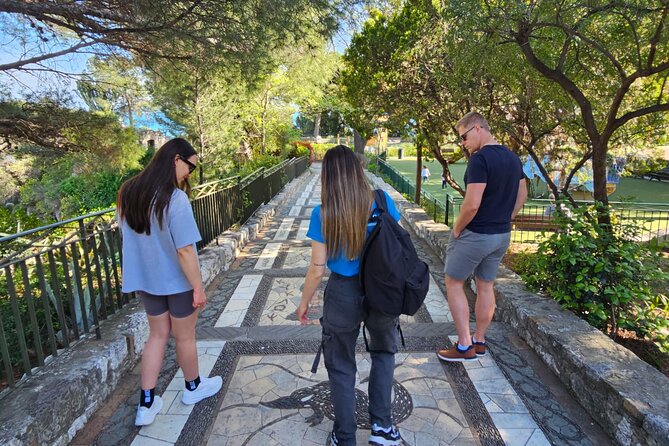
After New York, Paris, Colmar, and Tokyo, Nice has its own Statue of Liberty reference. Here, it’s smaller—but the point is the authenticity of the symbol and its connection to Auguste Bartholdi, the sculptor associated with the original.
This stop works because it’s a conversation starter. You’ll start asking why symbols get copied, re-sized, and placed in different places—and what that says about identity. It also reinforces a recurring theme in Nice: the city constantly mixes old layers with new ways to frame itself for visitors.
Even if you’re not a statue person, take 2 minutes. The view from this stretch of the Promenade is part of the payoff.
Classic British winter cottages: a quirky Nice detail
One of the stops is devoted to those one-storey cottages with roof terraces—past housing that became popular with British winter visitors strolling the area.
This detail is fun because it breaks the usual script of Nice as just a modern summer party spot. It hints at an older rhythm: people coming for the climate, wandering slowly, and leaving their footprint on the architecture and the way the city developed.
If you’re the type who enjoys small historical clues, you’ll appreciate this pause. It also helps you read the neighborhoods later, because you’ll start noticing the style differences as you walk.
Cours Saleya: where to eat like you actually live here
Now you hit the foodie center of gravity: Marche aux Fleurs Cours Saleya.
This market area is known for being tied to the idea of an early flower market, but today it’s the working local marketplace scene. That means you’re not just looking—you’re learning what to order and why.
You’ll get mentions of classic local treats such as:
- Socca
- Pissaladière
- Pan bagnat
Even if you’re not sure what you’ll like, the value here is the guidance. A guide can help you choose without fear, so you don’t accidentally buy the wrong thing for your tastes. And because this stop is timed for the walk, it’s easier than trying to plan a full market meal from scratch.
One consideration: Cours Saleya is busy at peak hours. If you’re sensitive to crowds, aim to do your shopping and tasting as the tour suggests, rather than lingering until later when the lines and crowds spike.
Palais de la Préfecture and the Old Town power center
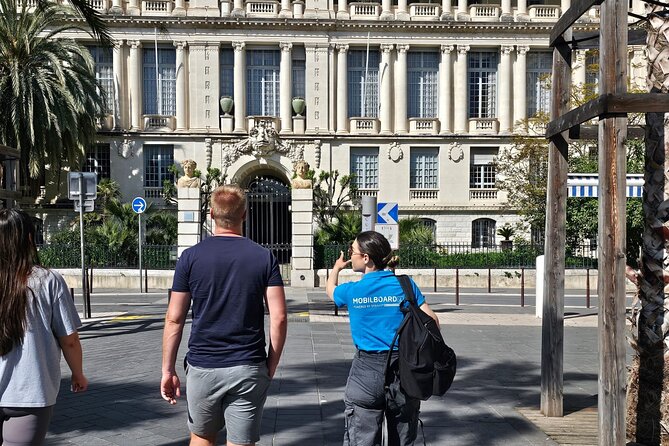
A short stop at Palais de la Préfecture gives you a sense of governance and scale. This building is now a government site, but it used to be the residence of the town’s former lords.
It’s a good stop for context because it quietly explains who used to run Nice and how power left physical traces. You don’t need long explanations here—you just need to connect what you’re seeing with what you’re learning. It makes later Old Town wandering feel more grounded.
Place Rossetti: trompe l’oeil, ice cream, and St. Réparate’s zone
Place Rossetti is described as the heart of the old town, and that feels right when you’re there. It’s the kind of square where the small things matter.
During the stop, you’ll see:
- Trompe l’oeil art effects (the trick that makes surfaces look like something else)
- St. Réparate’s Cathedral area
- A top ice-cream spot mentioned as one of the best nearby
This stop is ideal if you like mixing culture with casual wandering. You’ll take photos, but you’ll also understand why this square works as a hub: it’s central, scenic, and full of things to do right around it.
If you’re hungry, this is also the right moment to remember that Nice is a “walk and snack” city. The tour route is designed so your curiosity and your appetite can move together.
A church with bar inside: the Piedmontese Baroque twist
There’s a charming religious building stop tied to Piedmontese Baroque in Nice. The detail that makes it memorable: there’s a bar inside.
I love stops like this because they prevent the common mistake of treating churches as only solemn spaces. The tour frames it as part of daily life and artistic influence, not as a dead-end detour. Even if you’re not a baroque-detail nerd, you’ll likely enjoy the surprise factor—and the chance to look at the interior once you know what to expect.
#ilovenice: the viewpoint that makes the walk click
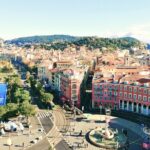
Near the end, you reach #ilovenice, a photo spot that overlooks the Bay of Angels.
This is where the route pays off. Once you’ve walked the Promenade and threaded through the Old Town, the panorama makes everything feel connected. You start seeing how the hillside and streets relate to the coastline. It’s a “now I get it” moment.
If you want a strong photo, come prepared. Midday sun can flatten contrast, so if possible try for slightly earlier or later light. Either way, use this moment to slow down and breathe—ninety minutes of walking goes fast.
Price and group size: is $42.05 worth it?
At $42.05 per person for about 1 hour 30 minutes, the best way to think about value is this: you’re paying for a guided thread through a compact area, plus the tastings and photo-friendly pacing that keep you from wandering aimlessly.
A few things support that value:
- The group size is capped at 15, which helps the tour stay manageable.
- Multiple high-recognition stops are included, from sea-front icons to the old-town square center.
- You get a food-focused market experience at Cours Saleya, with local items like socca and pissaladière mentioned, plus the chance of an end snack depending on the guide.
Also, you don’t need to buy entrance tickets for the listed stops—many are free to visit. That means your money mostly goes to interpretation, pacing, and helping you choose what to eat and where to look.
One caution: if you expect a museum-style deep dive or long interior time, this tour is not built that way. It’s a walking orientation with highlights.
Guides you might meet: Francisco, Nicolas, Tessa, Elena, Helena
One of the most consistent strengths is the guides’ energy and how they handle questions.
- Francisco is praised for being flexible and for sharing a lot of useful information while keeping the pace just right.
- Nicolas gets credit for being very informative, handling questions well, and adding a surprise snack at the end.
- Tessa is noted for fun facts, smart photo stops, and local delicacies to taste.
- Elena stands out for strong energy, staying engaging without turning into a lecture, and finishing on time with good practical recommendations for where to eat afterward.
- Helena is described as pleasant and cultured, but one review also flags a concern about bilingual delivery taking time when people expected a single language.
If you want English-only as a strict requirement, consider that public tours can run bilingual when groups are mixed. Still, the tour is offered in English, and the overall feedback leans strongly positive on communication.
Who should book this walk (and who should skip it)
This tour is ideal for you if:
- It’s your first time in Nice and you want the “main sights + how they connect” route
- You like walking with a plan, but still want time to wander on your own after
- You want a light food experience at a real market (not just a restaurant sampler)
- You care about photo stops and details you can recognize later
You might consider a different option if:
- You hate bilingual info in a group setting
- You prefer slow, museum-level exploration where you can spend 30–60 minutes in one interior
- You only want art or only want food (this is a blend, not a single-theme tour)
Should you book Nice’s Old City and Castle Hill walk?
Yes, I’d book it if your goal is to get oriented quickly and enjoy the city through the places you’ll actually return to later. The route has a logical flow: Promenade icons → Old Town squares → market flavors → viewpoint payoff. And with a small max group size, it stays human-scale.
Skip it only if you’re looking for long interior time or a purely single-language experience. Otherwise, this is a solid way to spend 90 minutes in Nice—especially if you want both views and taste without over-planning.
FAQ
How long is the walking tour?
It lasts about 1 hour 30 minutes.
What does it cost?
The price is $42.05 per person.
Is the tour offered in English?
Yes, it’s offered in English.
Where does the tour start and end?
It starts at 2 Rue Halévy, 06000 Nice, France, and ends at Cours Saleya, 06300 Nice, France.
How big is the group?
The tour has a maximum of 15 travelers.
Can I get a refund if plans change?
You can cancel for free up to 24 hours in advance for a full refund.