REVIEW · CARDIFF
Private Day Tour of South Wales, including Cardiff & Caerphilly Castle.
Book on Viator →Operated by Tours Of The UK · Bookable on Viator
South Wales has a way of stacking big sights close together. This private day plan turns Cardiff into your base and adds two heavyweight castles plus a National Museum taster, all with a guide driving so you can just look out the window.
I like two things most: first, the hotel or central pickup and drop-off means you spend less time figuring out meeting points. Second, the day hits three castle styles in one go—Caerphilly’s medieval muscle, Castell Coch’s fairy-tale Victorian flair, and Cardiff Castle’s layered, Roman-to-WWII story.
One consideration: the schedule is packed, so the National Museum Cardiff stop is short. If you’re the type who could happily lose an hour to one painting, plan to come back for a longer museum visit later.
In This Review
- Key Things I’d Plan Around
- Pricing and What You’re Really Paying For
- The Flow of the Day: How It Feels in Real Life
- Caerphilly Castle: Medieval Power With a Lean That Steals the Show
- Castell Coch: Neo-Gothic Fairytale With Real Views
- Llandaff: Cathedral Damage, Roald Dahl, and a Neighborhood Tour in Passing
- Lunch at the Welsh House: Order Welsh Food, Not a Generic Menu
- Cardiff Castle: Roman Foundations, Norman Shifts, and WWII Shelters
- Cathays Park: Portland Stone, Coal Money, and Cardiff’s Civic Centre
- National Museum Cardiff in 45 Minutes: Impressionists Fast, Then Welsh Art
- Cardiff Market and Streets Around St Mary’s: Old Cardiff, New Energy
- St John the Baptist Church: Medieval Roots and Doctor Who Stained Glass
- Principality Stadium Views Near Urban Tap House (Plus a Beer Option)
- Guides Matter: Dewi and Dai Bring It to Life
- Who This Private South Wales Tour Fits Best
- Should You Book This Private South Wales Day?
- FAQ
- How long is the private South Wales tour?
- What’s included in the ticket price?
- Is lunch included?
- Where does pickup happen?
- Which days can you visit National Museum Cardiff?
- Is this tour private?
Key Things I’d Plan Around
- Hotel/central pickup and drop-off so you don’t hunt for the start point
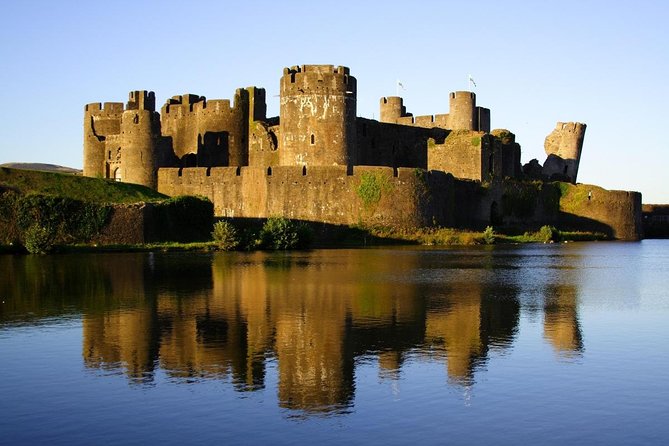
- Caerphilly Castle’s leaning tower and lake setting, with an included ticket
- Castell Coch’s Neo-Gothic rooms and views (also included)
- Cardiff Castle with WWII shelters and the Firing Line Museum inside the walls
- Cardiff Market and old-town church stops for that street-level Cardiff feel
- Short National Museum Cardiff time for impressionists and Welsh art without the slow pace
Pricing and What You’re Really Paying For
At $591.83 per person for a 9-hour private tour, this isn’t a budget day out. The value comes from what you don’t have to organize yourself: you get guided time at major stops, and the big-ticket castle entrances are included.
You also get pickup from anywhere in Cardiff City Center or Cardiff Bay (including Cardiff Central Station, Cardiff Bus Station, and Cardiff Queen Street Station). That matters more than it sounds. In a city like Cardiff, starting and ending from where you’re already located cuts stress and keeps the day moving.
The included admissions are to Cardiff Castle, Castell Coch, and Caerphilly Castle. Lunch and refreshments are not included, so you’ll want to budget for ordering at the restaurant stop later. There’s also group discount potential, which can help if you’re traveling with friends or family.
Finally, this tour’s popularity is reflected in booking timing. If you want a specific date, don’t treat it like a last-minute whim—this one averages about 74 days in advance.
You can also read our reviews of more tours and experiences in Cardiff.



The Flow of the Day: How It Feels in Real Life
This starts at 9:00am and is designed as a steady day of getting from one must-see to the next, with short windows to wander.
Because it’s private, you’re not squeezed into a huge group. You also have flexibility to follow your guide’s pace—especially at the castle stops where there’s a mix of guided explanation and time to look around on your own.
Expect a moderate walk and stair moments, especially around castle areas. If you have mobility limits, the good news is you’re in control of your pace within the stop times. Still, you should be comfortable with uneven ground and some standing.
Caerphilly Castle: Medieval Power With a Lean That Steals the Show
Your first big hit is Caerphilly Castle, often described as the largest castle in Wales, with only Windsor Castle larger across the UK. It was built to protect Norman/English interests, so it’s not the “romantic ruin” you might picture—this place was meant to be hard to take.
The setting does half the work for you. The castle is surrounded by water (though reduced from its heyday), so the structure looks like it rises straight from the lake. Then you hit the feature most people talk about: a tower that leans more dramatically than the Leaning Tower of Pisa.
What I’d do when you arrive: slow down at the most open sightlines first. The castle’s scale is easier to understand once you can take in how the walls, water, and tower relate. You get about 1 hour here, with an admission ticket included, which is a solid chunk for seeing the main points without feeling rushed.
A final practical note: Caerphilly is described as having been restored over 174 years, tied to work by the Marquises of Bute and William Burgess. If you like when guides connect architecture to people and purpose, this stop should click.
Castell Coch: Neo-Gothic Fairytale With Real Views
Next is Castell Coch, the Red Castle. This is the one that feels like it belongs in a storybook—built in a Neo-Gothic style that can trick you into thinking it’s fantasy. It’s also heavily used in film and TV, which helps explain why kids (and adults) usually find it instantly fun.
William Burgess designed it for the Marquis of Bute. The current castle includes striking decoration, and you’ll get time to see interiors rather than just admire the outside.
The best payoff here is the view. From multiple rooms, you can look out toward Cardiff. So even though you’re touring a castle retreat conceptually, it becomes a practical viewpoint too—good photos, good skyline orientation, and a clearer mental map of where Cardiff sits in the wider region.
You’ll have about 1 hour with an included admission ticket. That’s enough time to catch the look and feel, but not enough to study every detail like an architecture student. If you’re that type, you’ll want a return trip later.
Llandaff: Cathedral Damage, Roald Dahl, and a Neighborhood Tour in Passing
You’ll drive through Llandaff, an important Christian area of Cardiff centered around the cathedral. It was heavily damaged by a German landmine during the Second World War. That WWII fact gives the place extra weight beyond just being pretty.
This stop also carries a strong literary thread. Roald Dahl grew up in the area, and your guide points out the Cathedral School, where Dahl studied as a young student.
Then there’s the local name-check for fans of Dahl-style storytelling: the site of Mrs Pratchett’s sweet shop on Llandaff High Street, said to have inspired elements in stories including Matilda and Charlie and the Chocolate Factory.
This is not a long wandering stop, but it’s a smart one. It adds context to Cardiff that you don’t get from just castles and museums. It turns a drive-by neighborhood into a quick, meaningful detour.


Lunch at the Welsh House: Order Welsh Food, Not a Generic Menu
Lunch is built in as a 1-hour stop at The Welsh House Cardiff Restaurant & Bar, one of the places in Cardiff serving traditional Welsh food.
Since the tour doesn’t include lunch or refreshments, you’ll pay your own bill. Still, this is a useful setup: you’ll be eating where the menu matches the theme of the day.
Typical Welsh choices mentioned include lamb cawl (a hearty soup), shepherd’s pie, and Welsh rarebit. If you want a simple “I ate Welsh food” moment without guessing where to go, this is the easiest path on the schedule.
My tip: if you’re picky about timing, treat lunch as your buffer meal. This tour keeps moving, so a filling lunch helps you avoid the mid-afternoon energy dip after castles and museums.
Cardiff Castle: Roman Foundations, Norman Shifts, and WWII Shelters
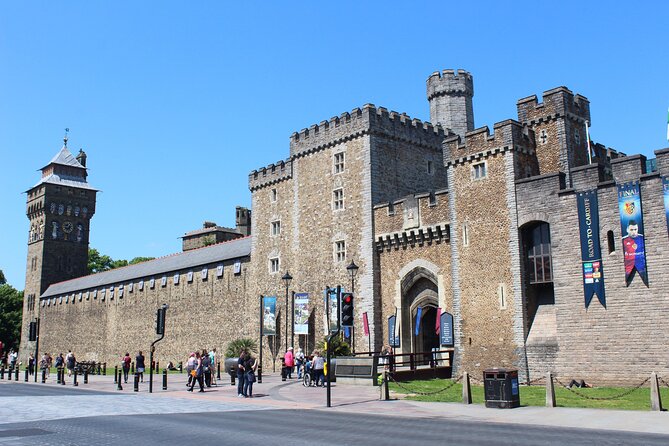
Cardiff Castle is the city’s big anchor, and it’s unusual in how many eras you can read at once.
It started as a Roman fort, and the very word for Cardiff is tied to that origin. In Welsh, Caerdydd is described as translating to “Fort on the river Taff,” linking the city name to the Roman-era fort on the river.
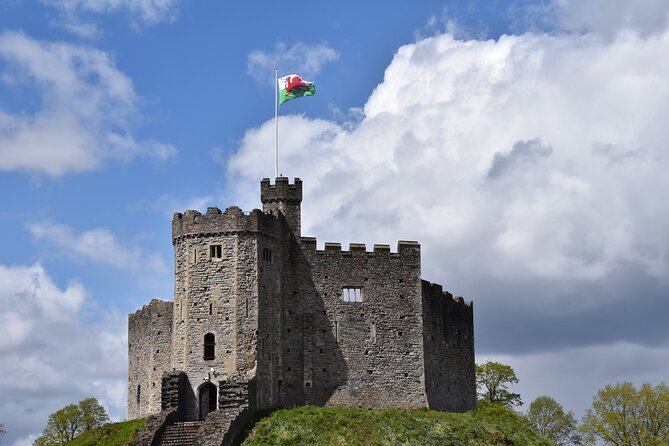
Then you get Norman development, later marcher lord additions, ruin in the 16th century, and a later revival tied to the Marquises of Bute. The version you see today traces to the 3rd Marquis and is described as a Victorian escapist dream—very film-friendly, which is why production crews love the setting.
Here’s the practical reason I like this stop: your guide shows you the castle and the features, including the Firing Line Museum and the Second World War Shelters inside the castle walls.
That WWII connection changes the vibe. Instead of only playing with medieval grandeur, you also see how Cardiff defended itself and preserved spaces for survival. It’s an effective contrast within the same building.
You get about 2 hours, with entry included. That’s enough time to enjoy guided storytelling and still have breathing room to walk the spaces and choose where you want to linger.
Cathays Park: Portland Stone, Coal Money, and Cardiff’s Civic Centre
After the castles, you’ll head to Cathays Park for about 20 minutes.
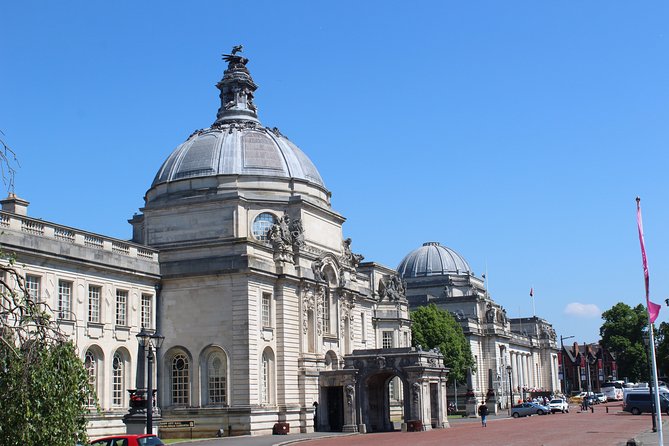
This area is known as an early 20th-century civic centre built on land previously owned by the Bute family. The buildings are constructed using Portland Stone, the same type of stone associated with St Paul’s Cathedral.
Why this stop matters: it explains how Cardiff got the money and the confidence to build these major public spaces. The story is tied to wealth from the coal trade from the 18th century through the mid-20th century. Then your guide connects the dots to today’s Cardiff, including filming and creative tourism helping fill gaps left by de-industrialisation.
Even in a short visit, this is worth it because it gives Cardiff’s modern face a cause-and-effect backbone. You’re not only seeing pretty architecture. You’re seeing why it exists.
National Museum Cardiff in 45 Minutes: Impressionists Fast, Then Welsh Art
Your next major stop is the National Museum Cardiff, with about 45 minutes of guided time.
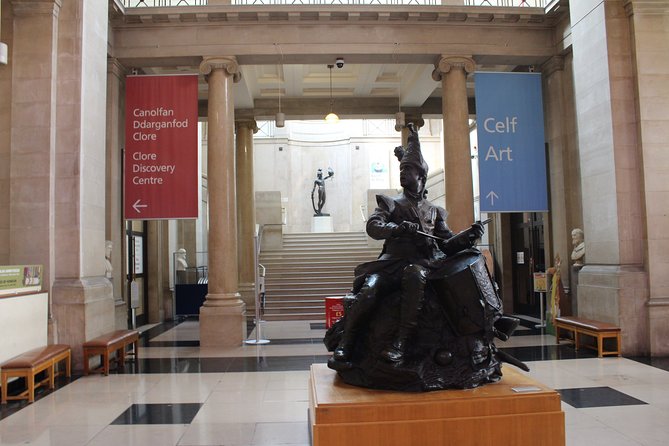
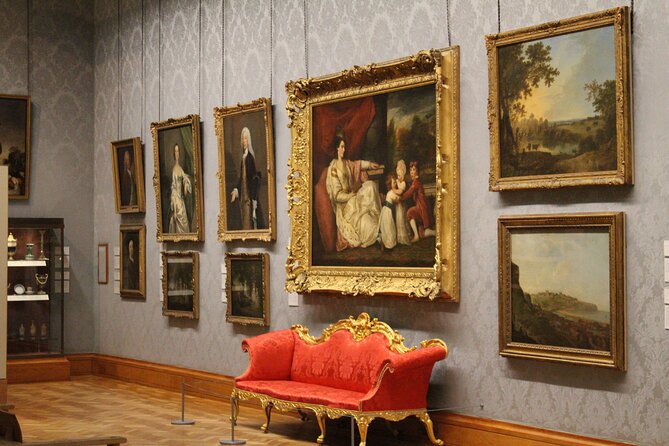
This museum is especially strong for Impressionist and Post-Impressionist art. Highlights mentioned include works by Monet, Cézanne, Renoir (including La Parisienne, often linked to the Blue Lady nickname), and Rodin (The Kiss). It also has Welsh art—modern and historic—on permanent display.
The tour time here is a taster, not a full museum day. The idea is that your guide brings you “up close and personal” with several of the best-known works, and explains how the museum managed to assemble such a standout collection.
One practical heads-up: the museum is closed on Mondays. If you book for a Monday, this tour can’t visit the interior. The guide will add other locations on the day to compensate, so you still get a full itinerary feel.
If you’re an art lover, treat this stop like a sampler platter. You’ll leave wanting more detail, and that’s a good reason to plan a second visit on another day.
Cardiff Market and Streets Around St Mary’s: Old Cardiff, New Energy
Cardiff changes from grand buildings to everyday life around the markets and inner streets, and this tour gives you a taste.
You’ll spend time around St Mary’s Street, a main shopping and hospitality area named after a now-demolished St Mary’s Church, destroyed in a typhoon. The street is also associated with iconic shops and leads right toward Cardiff Market.
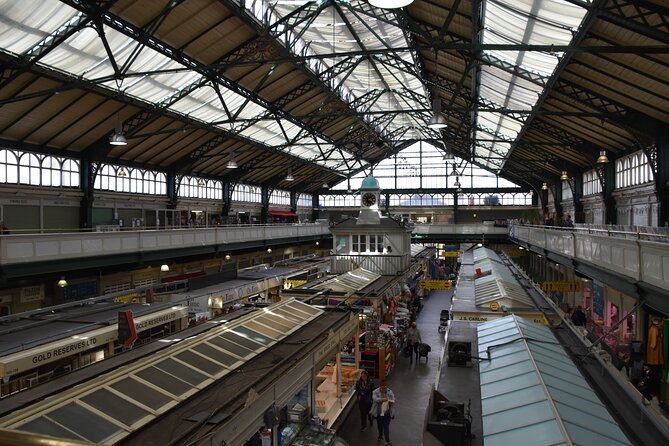
Cardiff Market is a Victorian covered market, and it’s described as one of the best examples of its kind in the UK. This is the kind of place you feel even if you don’t buy anything: locals come for produce and everyday essentials, not just photo ops.
What you’ll likely notice: cakes, vinyl records, second-hand books, and fresh fruit and veg. Cardiff Market has also appeared in TV projects including A Discovery of Witches and Torchwood, so it’s already got that cinematic vibe.
Your guide points out the “old Cardiff” texture: a 100-year-old family business trading from the same stall since 1928, plus a fishmonger who has traded there since 1866. You’ll also hear about the site’s earlier use as a prison/gaol and a famous miscarriage of justice tied to what happened there—your guide explains the story, which gives the market a deeper, human layer.
You’ll have about 30 minutes here. That’s just enough time to browse a little and soak up the atmosphere without turning it into an all-day shopping detour.
St John the Baptist Church: Medieval Roots and Doctor Who Stained Glass
One of the easiest “wow” stops is St John the Baptist City Parish Church.
This church is described as one of the oldest buildings left in Cardiff and the only building that remains from the old medieval walled town. It dates back to around 1180, with redesign work in the 15th century after Owain Glyndŵr sacked the city in 1404.
If you’re a pop-culture fan, this church is linked to Doctor Who—it’s mentioned for use in the episode The Runaway Bride starring David Tennant and Catherine Tate.
The interior is where the story payoff lands: Victorian stained glass created by leading pre-Raphaelites, including William Morris. Your guide points this out as part of the tour, so you’re not just walking into a church and hoping you spot the interesting bits.
Time is tight—about 10 minutes—but even a short stop is enough if you know what to look for.
Principality Stadium Views Near Urban Tap House (Plus a Beer Option)
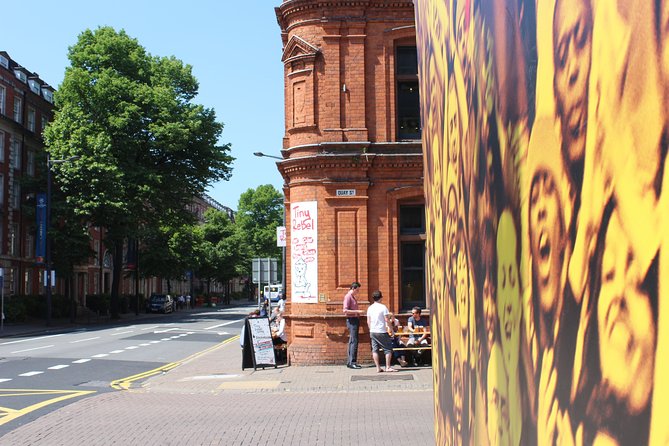
The last practical “look around” segment is around The Urban Tap House, owned by Tiny Rebel Brewing.
From the exterior, you’ll also see the Principality Stadium, formerly the Millennium Stadium, home to Welsh Rugby. The guide connects it to the importance of rugby in Wales.
There’s also an interesting detail: it’s described as Europe’s first stadium with a retractable roof. And your guide mentions it has hosted big entertainment names, adding to the sense that Cardiff is a live events city, not just a heritage stop.
If you’re over 18 and want a drink as part of the day, you can let the operator know—then you might stop for a beverage at Urban Tap House.
This portion is more about location context and optional atmosphere than a deep tour, so it fits well at the end of a full day.
Guides Matter: Dewi and Dai Bring It to Life
What really made this sound fun on the day is the guide reputation. Reviews specifically call out guides such as Dewi and Dai Hill.
The consistent theme: they explain history and details in a way that feels friendly and paced, not like a lecture. One comment praises how the guide was accommodating and made sure the person got what mattered to them. Another notes the guide knew his stuff and kept things enjoyable and fun through the whole day.
That matters because this route includes castles, art, churches, and street history. If a guide can connect the dots without dumping facts, the day feels like a story you can follow.
Who This Private South Wales Tour Fits Best
This is a strong match for you if:
- You want a one-day Cardiff plus two castles plan without driving yourself.
- You like guided context at big sights like Cardiff Castle and National Museum Cardiff.
- You value convenience: pickup/drop-off and included castle entry.
- You don’t mind a schedule that keeps moving.
It’s also a good choice if you’re traveling with mixed ages or interests, because the day blends medieval drama, Victorian architecture, museum art, and street-level Cardiff.
If you’re the type who wants long, slow museum time or deep research at every stop, you may feel a bit time-crunched. This is designed as a smart sampler day.
Should You Book This Private South Wales Day?
I’d book it if you want maximum “South Wales highlights” in one day with minimal logistics. The included castle admissions, the pickup convenience, and the range—Caerphilly’s leaning tower, Castell Coch’s Red Castle character, Cardiff Castle’s Roman roots plus WWII spaces, and a taste of impressionists—make the price feel less like a markup and more like a bundled day plan.
Skip it if you’re chasing a slow, unhurried art day in the museum. Here, the National Museum Cardiff stop is short, and Monday closures could affect interior time.
If you’re deciding today: check your date (especially if it’s a Monday), and plan for lunch costs since meals aren’t included. On the upside, you can cancel for free up to 24 hours in advance, so you’ve got some flexibility if your schedule changes.
FAQ
How long is the private South Wales tour?
The tour runs for about 9 hours.
What’s included in the ticket price?
You get entry to Cardiff Castle, Castell Coch, and Caerphilly Castle.
Is lunch included?
No. Refreshments and lunch aren’t included, though you do stop at The Welsh House Cardiff Restaurant & Bar for about 1 hour.
Where does pickup happen?
Pickup is offered from any location within Cardiff City Center or Cardiff Bay, including Cardiff Central Station, Cardiff Bus Station, and Cardiff Queen Street Station.
Which days can you visit National Museum Cardiff?
The National Museum Cardiff is closed on Mondays. On tours booked for Monday, the interior visit isn’t possible and the guide adds other locations instead.
Is this tour private?
Yes. It’s a private tour/activity, and only your group participates.