REVIEW · CARDIFF
From Cardiff: Caerleon, Tintern Abbey and Three Castles Tour
Book on GetYourGuide →Operated by Wales Outdoors · Bookable on GetYourGuide
Castles, Roman ruins, and abbey quiet all in one day. I really like two things here: Andy the guide is excellent at turning stones and dates into stories, and you get real time at each stop (about an hour, sometimes a touch more). One thing to plan for: there’s leisurely walking, plus optional spiral staircases at the castles, so bring shoes you can trust.
This is a full-day outing that heads east and north of Cardiff into classic Welsh-history territory. You’ll ride in a modern, fully electric minivan with Wi‑Fi onboard, and you’ll have chances to wander on your own as well as ask questions. It runs rain or shine, so your best accessory is a light rain layer and a flexible attitude about views.
If you want a day where you can cover a lot without feeling rushed, this works. It’s especially good for families who want answers that don’t sound like a textbook, and for history lovers who enjoy a guide with energy and patience.
In This Review
- Quick hits on this Cardiff-to-the-castles day
- How the day works from central Cardiff (and why that matters)
- Tintern Abbey: how to get your selfies without missing the meaning
- Chepstow Castle on a limestone cliff: battlements, courtyards, and river drama
- Caerleon’s Roman world: where the amphitheatre feels loud even now
- Caerphilly Castle: medieval engineering and the famous leaning tower
- Caldicot Castle vs Castell Coch: one castle stop you should confirm
- Lunch in Caerleon: plan to spend on food, not on admissions
- The value question: is $219 a fair deal for eight hours?
- Who should book this tour (and who might find it tiring)
- Should you book this Cardiff-to-the-castles day trip?
- FAQ
- What’s included on the tour?
- How long is the tour and how big is the group?
- Do I have time to explore on my own at each site?
- Is the tour rain or shine?
- What should I bring for the walking and staircases?
- Where do we meet in Cardiff?
- Is lunch provided?
- Is the guide available in English?
Quick hits on this Cardiff-to-the-castles day
- Small group (up to 7) so Andy can actually talk to you, not just the loudest person
- All attraction admissions included, which makes the $219 price easier to swallow
- Electric vehicle with Wi‑Fi, a small comfort that matters when you’re on the road all day
- About an hour at each major site, enough time for photos and a slow look, not a drive-by
- Castle staircases are optional, but expect some climbing and plan footwear
- Andy’s Welsh and outdoor credentials give the day a sharper, local feel
How the day works from central Cardiff (and why that matters)
Your day starts at the National Museum Cardiff. You’ll meet on the steps at the front entrance, and you’re looking for an electric minivan with the Wales Outdoors logo on the back. Aim to arrive about 10 minutes early so you’re not sprinting with your coat half-on.
Once you’re aboard, the tone is relaxed. You’ll be on the move most of the day, but the stops aren’t a frantic checklist; you’ll get time with the guide and then space to self-explore. That structure is a big deal on castle days, where the fun is in noticing small things—archways, battlements, viewpoints—at your own pace.
The max group size (seven passengers) also changes the vibe. You can ask Andy questions, and he can answer without the awkward “next!” feeling. If you’re traveling with kids, that matters even more, because the best moments often start with one curious question.
You can also read our reviews of more tours and experiences in Cardiff.


Tintern Abbey: how to get your selfies without missing the meaning
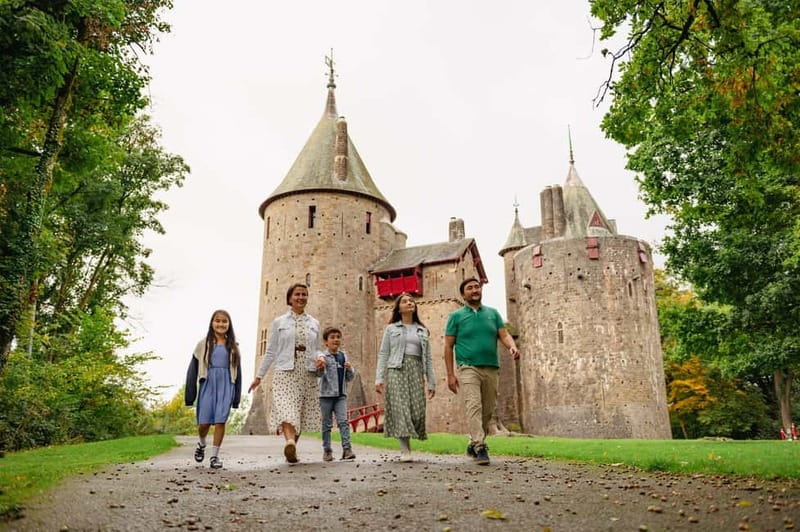
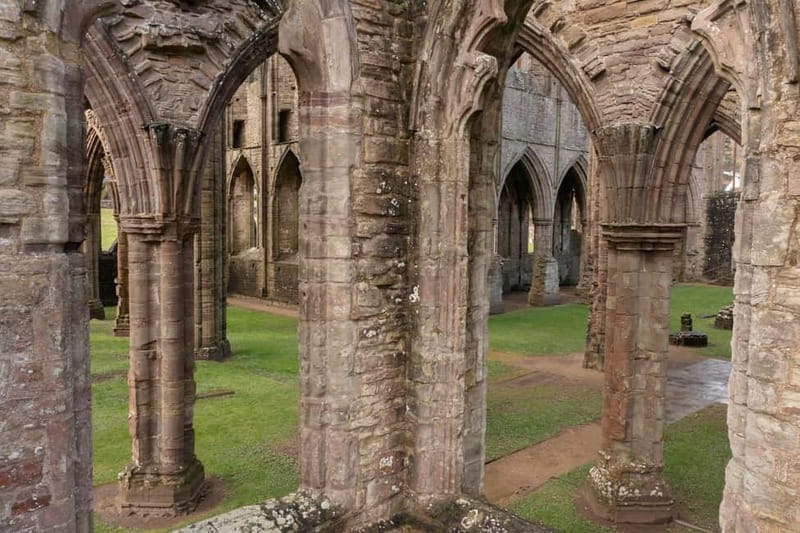
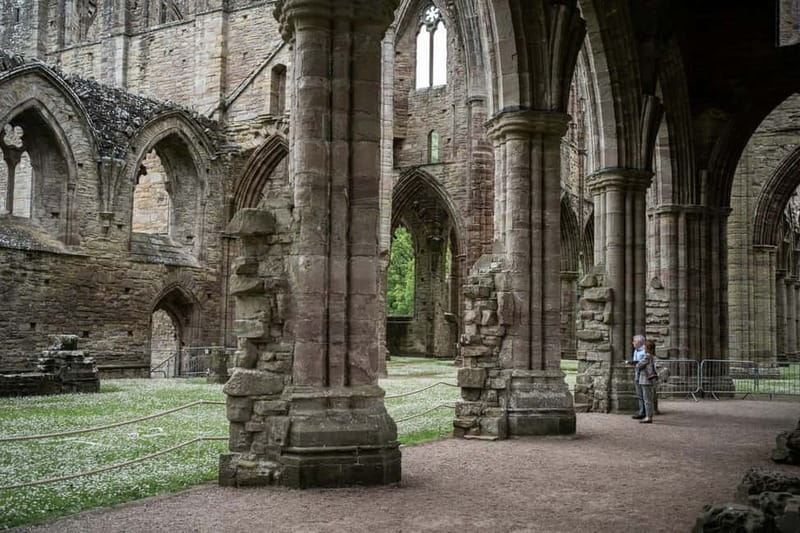
Tintern Abbey is where the day sets its mood. You’ll spend about an hour here, and it’s the kind of place where the ruins feel romantic—but still very real. The Abbey sits in the Wye Valley area, and the stonework rises from the surroundings in a way that makes you stop looking for the next photo and start looking at the details.
This is a good first stop because it’s slower. You’ll have time for the classic view shots, plus time to understand what you’re seeing: how religious life shaped the area, and how a ruined site can still feel powerful in the open air. Andy’s explanations help you connect the place to the wider story of Wales.
Practical note: it’s a historic site with walking surfaces that can feel uneven depending on weather. Wear shoes with grip, and if you want the spiral-staircase option at later castles, save your energy for those.
Chepstow Castle on a limestone cliff: battlements, courtyards, and river drama
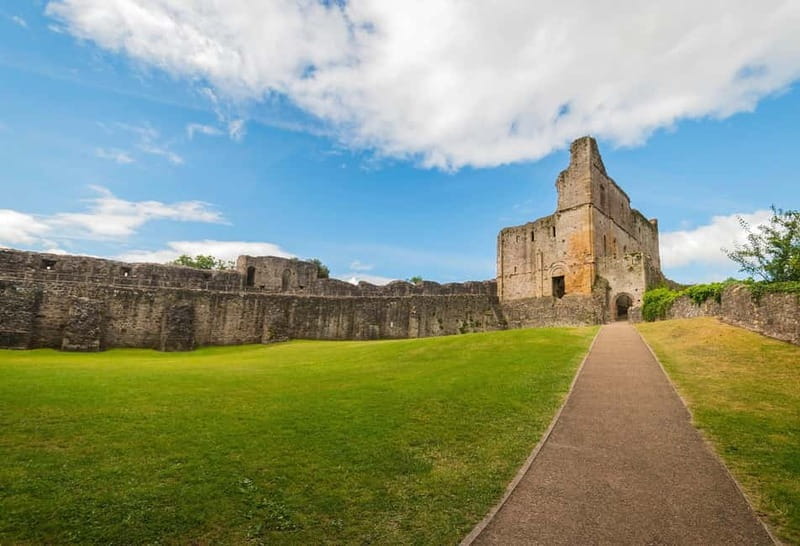
Next up is Chepstow Castle, dramatically perched above the River Wye. You’ll have around an hour to explore, and you’re not just looking at walls—you’re walking through gateways and courtyards where the scale hits you. The castle stretches along a limestone cliff, and once you’re there, it’s easy to imagine how strategic these heights were.
Andy’s storytelling is what makes Chepstow more than architecture spotting. He brings the layers to life: the idea of medieval life moving through these spaces, the sense of defense, and the feel of a place built for both power and control. It’s also one of the best stops for viewpoints and photos, because the castle position does a lot of the work for you.
Watch your footing. Castles are never built for museum slippers. Even in a “leisurely walking” day, you’ll be on stone paths and up-and-down bits.
Caerleon’s Roman world: where the amphitheatre feels loud even now
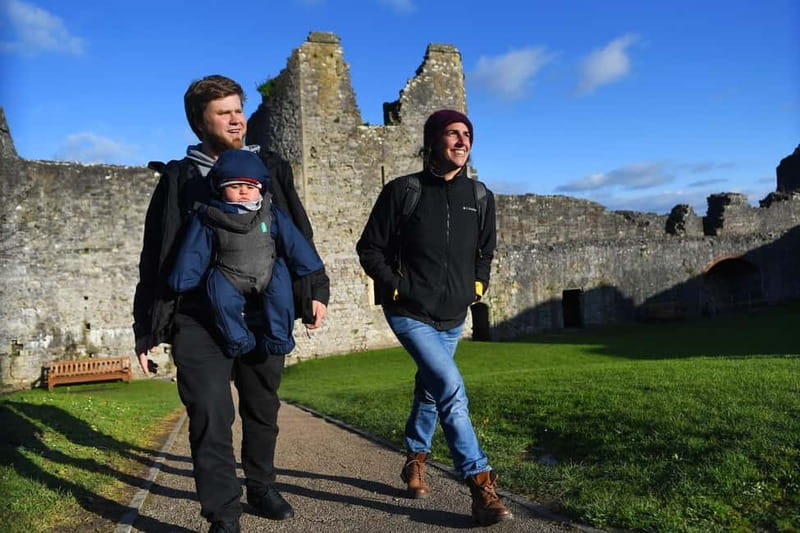
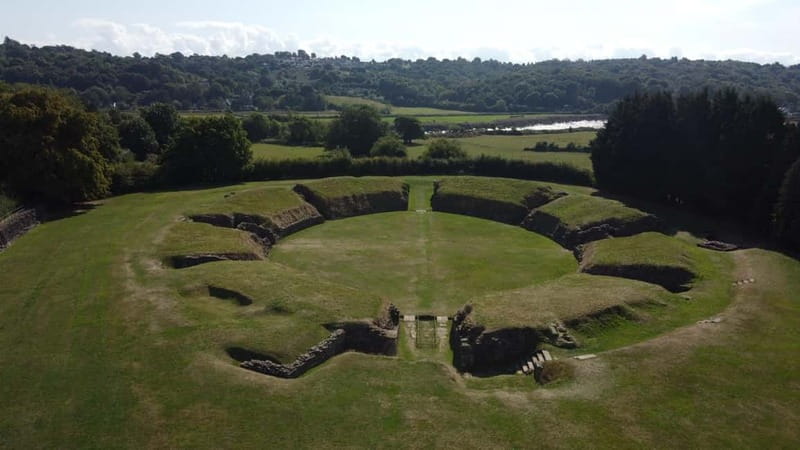
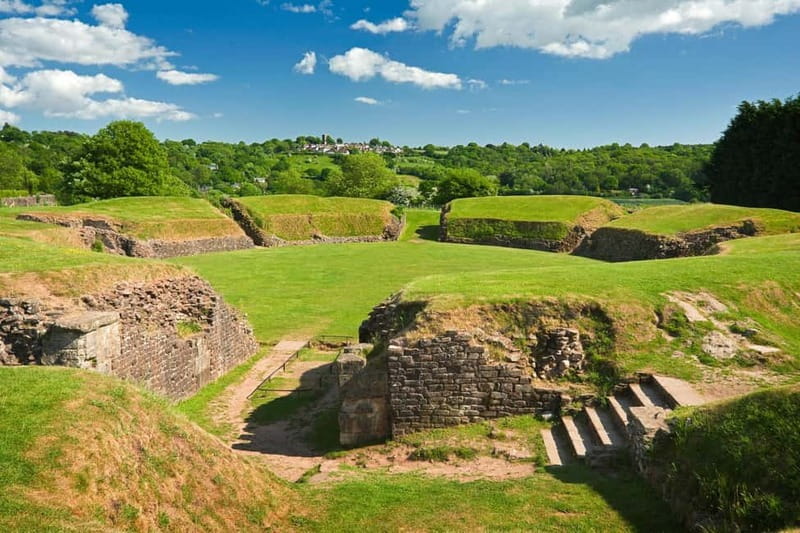
Caerleon is where ancient Britain becomes immediate. You’ll visit the Roman amphitheatre first, with a guided focus and about an hour of time at the stop. The amphitheatre setting makes it easy to picture contests and public entertainment—so you’re not just reading about the Romans, you’re standing where they staged events.
Andy also connects the site to a popular legend tied to King Arthur’s Round Table. The key word here is “legend”—not hard fact—but it’s a fun way to see how stories stick to places over centuries.
After the amphitheatre, the day includes the National Roman Legion Museum and the Roman Baths. This combination is smart because it hits two sides of Roman life: public spectacle (amphitheatre) and everyday routines (baths and soldier life). If you like archaeology and you like human details, this is the stop that tends to stick with you.
If you’re bringing kids, this is also the easiest moment for them to ask questions. There’s visual stuff to point at, and you can bounce between “what was this?” and “what would it feel like?”
Caerphilly Castle: medieval engineering and the famous leaning tower
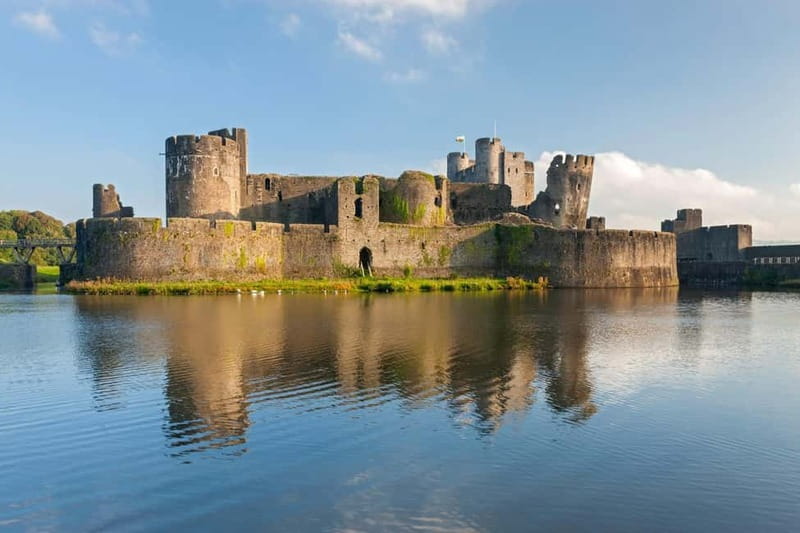
Caerphilly Castle is a strong finale. You’ll get about an hour at this site, and it’s famous for a huge moat, soaring towers, and its leaning tower—yes, Wales has one too. Even if you’ve visited other big European castles, Caerphilly still delivers because it feels like engineering meant to last.
Andy’s guidance helps you read the castle’s choices. Fortresses like this weren’t built only for drama; they were built for survival, and the structure tells you what mattered—control of approaches, defensibility, and the ability to hold out.
This is also where the optional extra climbing might show up. Some parts can involve steps, and one review note in the real world was that there’s more climbing than people expected. So if stairs aren’t your friend, plan your pace. You can still enjoy the views and key features without chasing every stair detail.


Caldicot Castle vs Castell Coch: one castle stop you should confirm
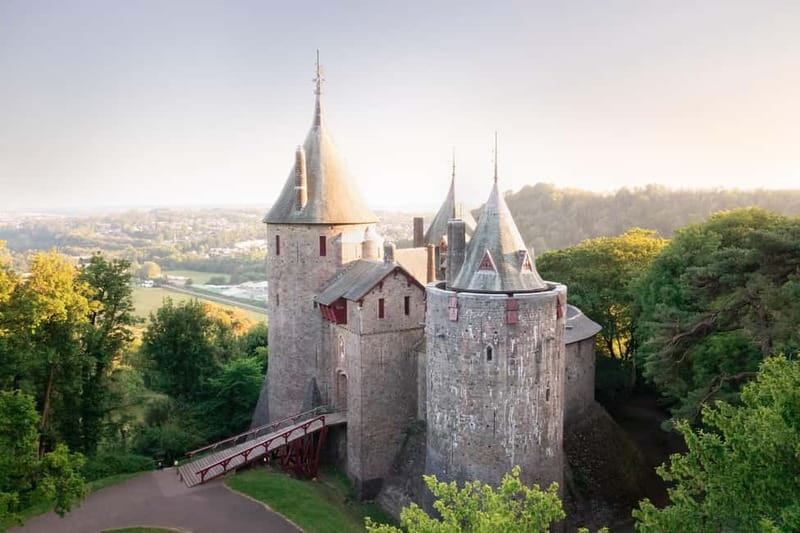
Here’s where you’ll want to pay attention. The trip description highlights Caldicot Castle in gardens and a wooded country park, with time to explore its medieval fortress. But the day plan also includes a stop called Castell Coch for about an hour.
Since both are listed as part of the overall experience, the practical move is simple: when you book, confirm which of those castle stops is included on your departure. Either way, you’re getting castle time, and Andy will still connect the stop to the bigger story of Wales’ border history.
If you have strong preferences—like you’re especially drawn to garden settings—checking ahead saves disappointment. And yes, in a day of castles, one hour feels like plenty until you realize how much stone there is to see.
Lunch in Caerleon: plan to spend on food, not on admissions
Admissions are included, but food isn’t. The tour uses a small cafe in Caerleon as the lunch location, which means you’re not picking a random restaurant alone—you’re eating where the schedule expects you to. That’s convenient, but you should expect to pay for your meal yourself.
I like this setup because it keeps you moving at a steady pace. You’re not losing time hunting for something that’s open or easy to reach. Just treat lunch as your flexible budget item: bring cash/card, and if you’re picky about specific diets, plan accordingly.
If weather turns, you’ll still want to eat somewhere warm and not spend half the hour looking for cover. This is one reason group tours work: the hard parts get solved for you.
The value question: is $219 a fair deal for eight hours?
At $219 per person for a full-day program, this isn’t a “quick and cheap” excursion. But it’s priced like a day that saves you the usual headaches: transportation, guide time, and entry fees.
The big value lever is this: all attraction admissions are included. When you stack up multiple major sites—abbey ruins, a cliff-top castle, Roman amphitheatre plus museum and baths, and more fortress time—ticket costs add up fast. So you’re paying mainly for access, the guide, and the comfort of a small electric vehicle.
The other value lever is Andy himself. He’s not just narrating; he’s interpreting. He’s a Mountain Leader and a Green Badged Tourist Guide and is a Visit Wales Pro, with deep involvement in Welsh tourism leadership and protection work. That mix shows in how he frames stories: what mattered locally, why places were built the way they were, and how the region fits into broader history.
You’ll still want to manage expectations about food costs and some walking. But if castles and Roman sites are your thing, this one is likely to feel like good use of your time in Wales.
Who should book this tour (and who might find it tiring)
This is a strong pick for you if you want:
- A guided day that turns sites into a story, not a series of solo photos
- A small-group setting where questions are welcome
- A mix of Roman Britain, medieval castles, and Wye Valley atmosphere
It might be less ideal if you dislike stairs or uneven stone paths. The tour is described as leisurely, and you can choose optional spiral staircases, but it’s still a castle-heavy day. One real-world caution: expect more climbing than you might imagine from the word leisurely.
Also, if you hate group logistics and prefer totally free wandering, you may feel boxed in by a schedule. Here, the rhythm is guided and timed—though there’s still time to self-explore.
Should you book this Cardiff-to-the-castles day trip?
Yes, if you want a well-paced day that packs in major sights without turning into a sprint. The combination of Tintern Abbey, Chepstow Castle, Caerleon’s Roman sites, and a castle finale at Caerphilly is a winning one, and Andy’s guide style is the reason it feels connected instead of random.
Before you book, do one simple check: confirm whether your departure includes Caldicot Castle or Castell Coch, since both are referenced in the overall description. If you’re happy with either medieval stop, you’re set.
For most visitors, this tour is an efficient way to experience Monmouthshire’s history with comfort, admissions covered, and a guide who can explain what you’re seeing in plain language—plus the fun of asking questions when the day sparks your curiosity.
FAQ
What’s included on the tour?
All attraction admissions are included, along with a guide, roundtrip transportation from central Cardiff, and Wi‑Fi on board. Food and drinks are not included.
How long is the tour and how big is the group?
The tour runs for about 8 hours. It’s a small group limited to a maximum of seven participants.
Do I have time to explore on my own at each site?
Yes. You’ll have guided time with the guide at each location, and you’ll also be able to self-explore and take your own time for photos.
Is the tour rain or shine?
Yes, it takes place rain or shine.
What should I bring for the walking and staircases?
You should wear comfortable shoes since there’s leisurely walking and optional spiral staircases in the castles.
Where do we meet in Cardiff?
You meet at the steps at the front entrance of the National Museum Cardiff. Look for an electric minivan with the Wales Outdoors logo on the back.
Is lunch provided?
Lunch itself is not included. The tour uses a small cafe in Caerleon as the lunch location, and you’ll need to buy your food there.
Is the guide available in English?
Yes, the live tour guide is English, and the driver guide Andy provides commentary during the day.