REVIEW · VENICE
Venice Walking Tour and Doge’s Palace Guided Visit
Book on GetYourGuide →Operated by Venetoinside - Insidecom · Bookable on GetYourGuide
Venice moves fast. In just 3 hours, you get a guided stroll through the center—Mercerie shopping lanes, key squares, and a smart overview of St. Mark’s—then you step into Doge’s Palace, where Venice’s political power is on display room by room. It’s an easy way to connect the street-level Venice you see outside with the walls and secrets you learn about inside.
What I like most is the way the walk ties together several “must-see” stops without feeling like random wandering. I also love that the Doge’s Palace visit is guided, so you’re not just moving through rooms—you’re getting the story behind the Opera Museum, Doge’s Apartments, and the prison spaces that people remember.
One drawback to plan around: the tour is a collective format, so timing can feel a bit rigid. In some cases, there may be waiting time around St. Mark’s Square, and at least one booking reported a rushed palace section—so it’s worth going in with realistic expectations about pacing in a busy, high-demand site.
In This Review
- Key things you’ll notice on this tour
- Where this tour starts: the Turive kiosk behind the Correr Museum
- The walking loop: Santa Maria Formosa, Campo Santi Giovanni e Paolo, and the Marco Polo area
- A practical note about energy
- Mercerie: the old trade street behind today’s shopping
- Why this matters before St. Mark’s
- St. Mark’s Square overview: basilica, towers, Doge’s Palace, and Procuratie
- Tip for making that time useful
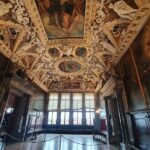
- Inside the Doge’s Palace: rooms that explain power
- What you’ll visit in the palace
- Review signal on pace (good and bad)
- Bridge of Sighs: 1614 and the last sound before prison
- How to get more from this moment
- Languages, guide style, and what “guided” really means here
- Group size can change your feel
- Price and value: what $111 buys in this combo
- When the value feels lower
- Who should book this Venice walking tour + Doge’s Palace visit
- Quick planning tips before you go
- Should you book this tour?
- FAQ
- How long is the tour?
- What is included in the price?
- Where do I meet the guide?
- What sights are part of the walking route?
- What will I see inside Doge’s Palace?
- Do we cross the Bridge of Sighs?
- What languages are available?
- Is the tour accessible for limited mobility?
- Is this a group tour?
- What’s the cancellation policy?
Key things you’ll notice on this tour

- Mercerie route: You walk the old shopping street that once fed Venice’s trade web.
- St. Mark’s Square overview: Your guide points out the biggest names from the square, not just the basilica facade.
- Doge’s Palace guided rooms: You see more than the headline areas, including arms and old prison spaces.
- Bridge of Sighs crossing: You get the 1614 connection story between palace and prisons.
- Small timing quirks: Collective group flow can mean pauses, especially around St. Mark’s.
Where this tour starts: the Turive kiosk behind the Correr Museum
You meet at the TURIVE kiosk on Calle larga de l’ Ascension, near the post office and behind the Correr museum. That location matters because it gets you set up in the Venice center fast, without long transfers through the lagoon maze. If you’ve never navigated Venice before, plan to arrive a few minutes early with your map ready. Streets look similar; directions change often.
Also note this is a collective tour, which means you’ll likely share the itinerary with other people. That doesn’t automatically ruin the experience, but it does affect pacing. Think “guided flow” rather than “private pace.”
The tour runs 3 hours, with live guidance in Spanish, English, French, and German. If you’re choosing a language, I’d match it to the way you prefer to understand details—this is the kind of visit where good explanations help you connect what you see.
You can also read our reviews of more tours and experiences in Venice.



The walking loop: Santa Maria Formosa, Campo Santi Giovanni e Paolo, and the Marco Polo area
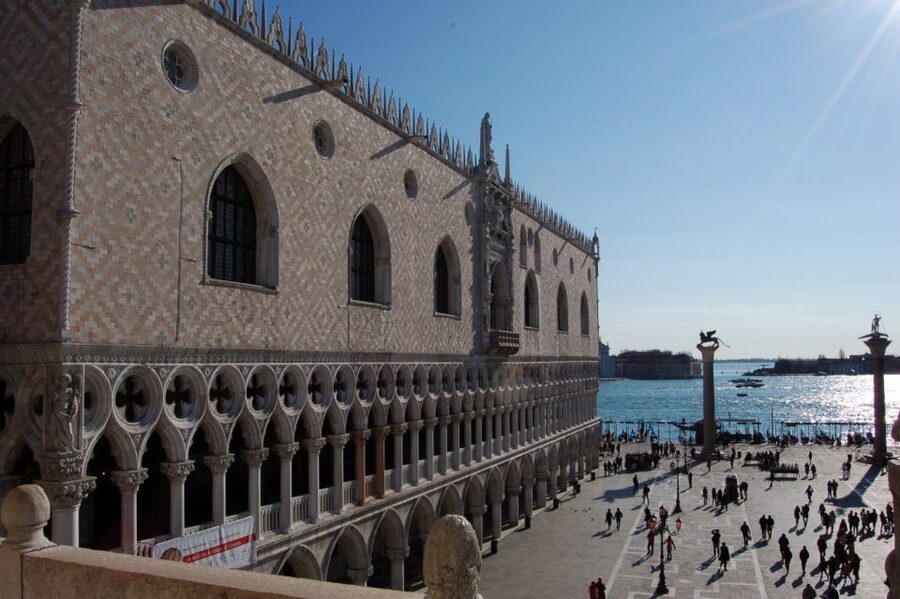
The route focuses on a central Venice loop with big architectural moments and a few story-heavy sites. Early on, you head toward Santa Maria Formosa, where you’ll admire the church and the nearby square. This is a nice choice for first-time Venice visitors because Formosa is the kind of place where you can see the city’s scale without the giant-St-Mark’s crowds swallowing the scene.
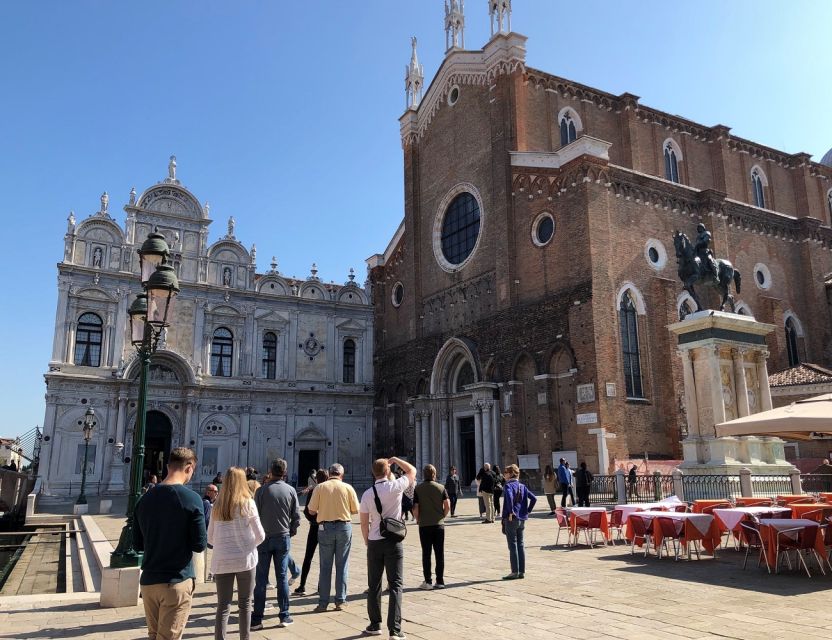
From there, the tour includes Campo Santi Giovanni e Paolo. This square helps you reset your eyes. Even if you’ve already seen “famous Venice” postcards, Campo squares like this show you how Venetians lived and gathered in a place that still feels like a working city.
You’ll also pass through areas where history and myths tangle. One example on the plan is the site linked with Marco Polo’s house. Another is the exterior of the Malibran Theater, described as the most extravagant theater in Venice. Even if you’re not a theater person, this kind of stop works because it breaks up the palace-focused part of your day with something more human: buildings with personality.
A practical note about energy
Venice walking adds up. You’re covering center-city sights and then switching mental gears for a museum-style interior. If you’re sensitive to standing time, bring water and plan for at least a decent amount of waiting that comes with crowd control. One of the reviews also flagged a long bridge time around St. Mark’s Square, so I’d treat the schedule as structured—but not always perfectly back-to-back.
Mercerie: the old trade street behind today’s shopping
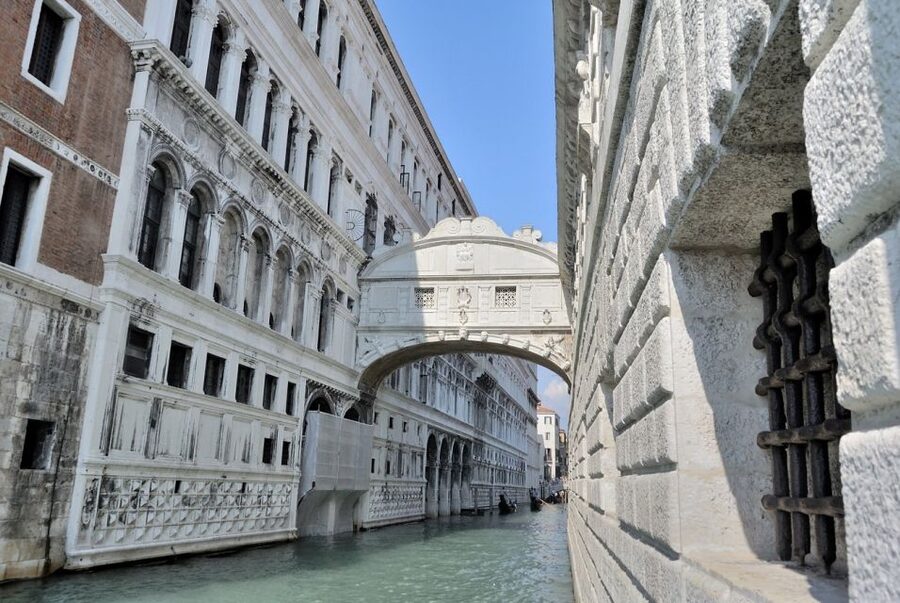
As you move toward St. Mark’s Square, you’ll visit the Mercerie, Venice’s main shopping street. The big idea here isn’t shopping itself—it’s what the street meant. The route is built around the fact that precious goods from faraway markets once sold here, which helps you understand why this city grew rich and powerful.
I like this stop because it turns a “walk-by street” into a short lesson in how commerce shaped Venice’s look and layout. You get historic buildings along the route and a sense that the city’s wealth wasn’t just in palaces and ships—it was also in the everyday corridors where trade passed hand to hand.
Why this matters before St. Mark’s
St. Mark’s Square can feel like a visual wall: basilica, towers, palaces, and crowds. If you don’t have context, it can turn into photo-making. The Mercerie segment gives you story context first, so when you finally reach St. Mark’s, you’re more likely to notice details instead of just scanning for big landmarks.





St. Mark’s Square overview: basilica, towers, Doge’s Palace, and Procuratie
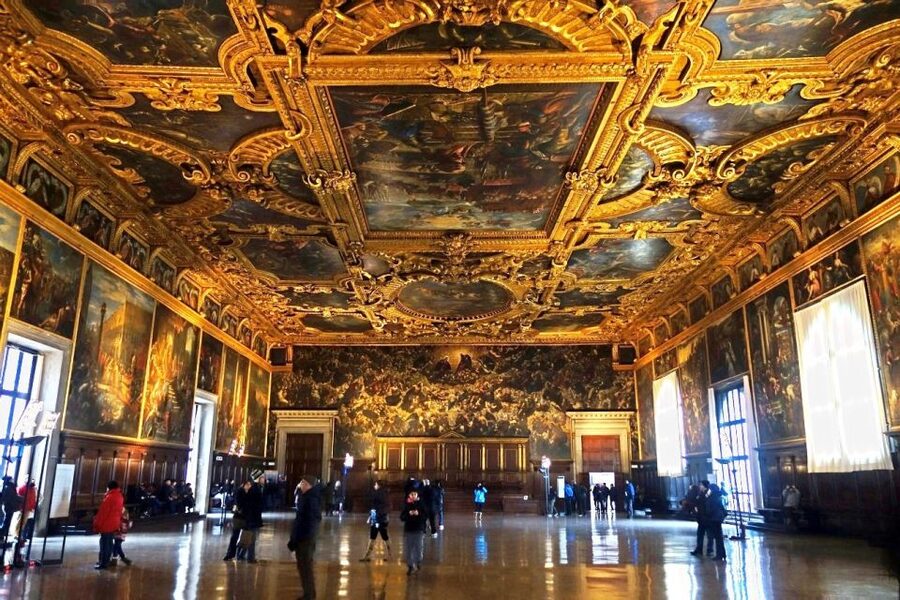
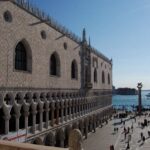
In St. Mark’s Square, your guide gives an overview of the main monuments and palaces looking out on the square. On this itinerary, that includes St. Mark’s Basilica, the Bell Tower, the Clock Tower, the Doge’s Palace, and the Procuratie.
The value of an overview is simple: it helps you “map” what you’ll see next. Even if you’re heading to the palace right after, you benefit from understanding the relationship between the square’s power-symbol architecture and the palace across the water/edge.
This is also where timing can become a factor. One account reported about 40 minutes of bridging time at St. Mark’s due to the activities not running immediately one after another. Another note mentioned waiting for a second group because of delays. That’s not something you can control, but you can reduce frustration by entering St. Mark’s prepared to stand, take photos, and accept a bit of crowd choreography.
Tip for making that time useful
Use the square overview to do two quick things: pick one spot for photos and then listen for what your guide says about the palace landmarks you’re heading to. If you do both, you won’t feel like the waiting time is wasted.
Inside the Doge’s Palace: rooms that explain power
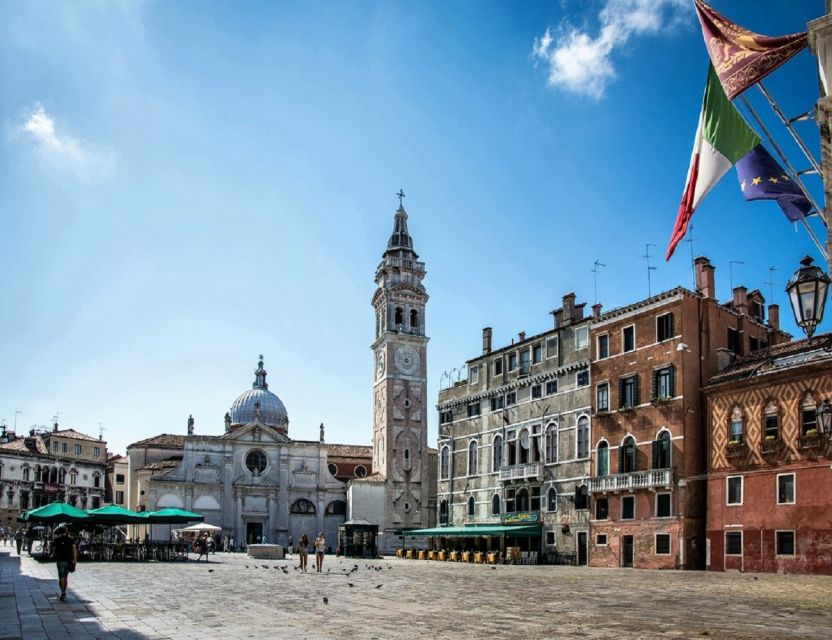
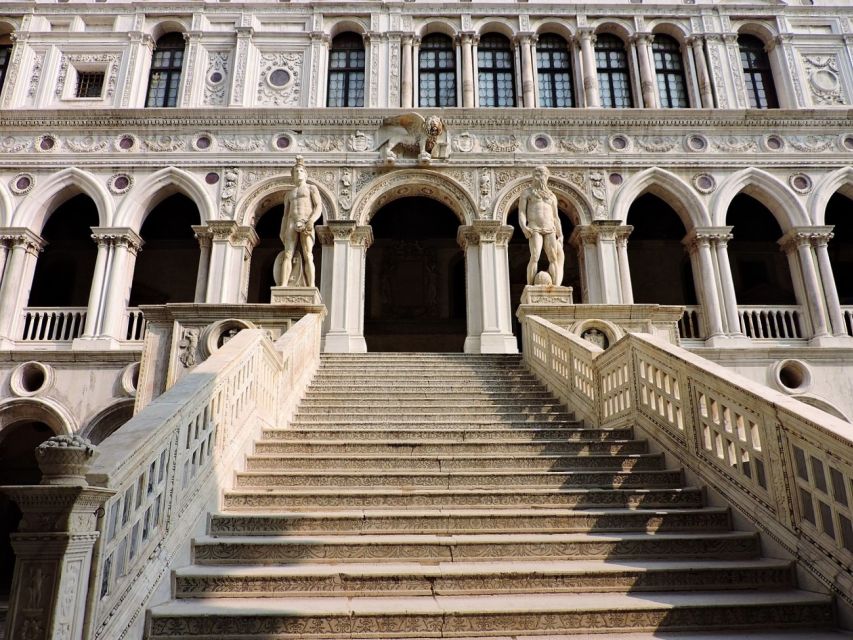
The second half focuses on Doge’s Palace, described as a symbol of Venice and for centuries the headquarters of its political power. This is where the guided component becomes worth it. Without a guide, it’s easy to feel like you’re touring beautiful rooms that all blur together.
What you’ll visit in the palace
Your guided visit includes several named areas:
- Opera Museum
- Doge’s Apartments
- Institutional Chambers
- Arms Room
- Old Prisons
That combination is smart. You’re not only seeing “fancy rooms.” You’re also seeing the institutional and enforcement side: arms and prisons. It makes the palace feel like a machine of governance rather than a single grand residence.
Doge’s Apartments: power at a personal scale
The Doge’s Apartments help you connect political authority to daily life. Even when the palace looks like a stage set, guided explanations help you understand it as a place where decisions were made and identities were displayed.
Institutional Chambers: where decisions happened
The Institutional Chambers are the backbone of the story. This is the part that helps you see Venice not just as a tourist city, but as a government that ran on systems and ceremony.
Arms Room and Old Prisons: the other side of authority
I especially like that you don’t stop at the decorative parts. The Arms Room and Old Prisons give you contrast. If you want the darker edge of Venice’s power—what enforcement looked like—these rooms point you in that direction.
Review signal on pace (good and bad)
Most feedback highlights friendly, explanatory guides, and one person specifically praised the guide Barbara for being passionate. At least one booking, though, called out a palace visit that felt poorly organized and rushed to about 45 minutes. That doesn’t mean every tour goes that way, but it’s a reason to pay attention to your own tolerance for speed. If you want a slow, detailed palace experience, treat the tour duration as a cap, not a guarantee of deep time in every room.
Bridge of Sighs: 1614 and the last sound before prison
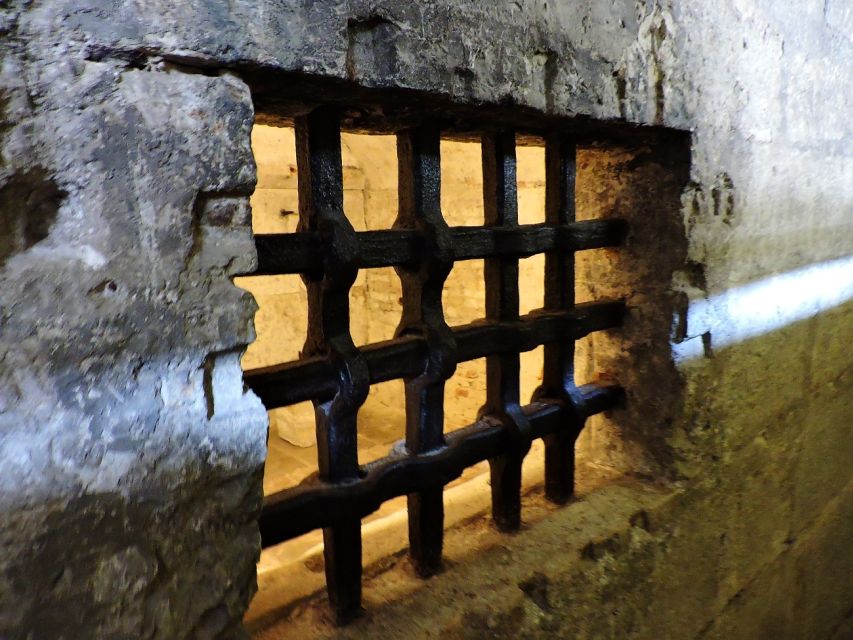
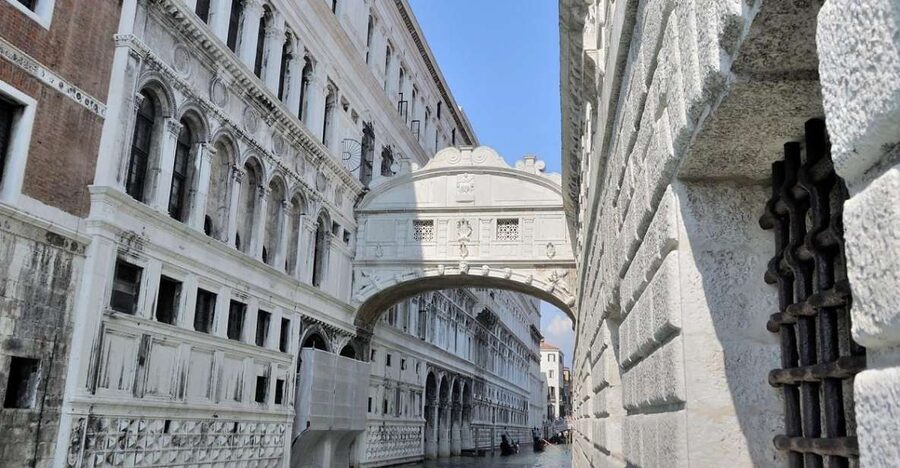
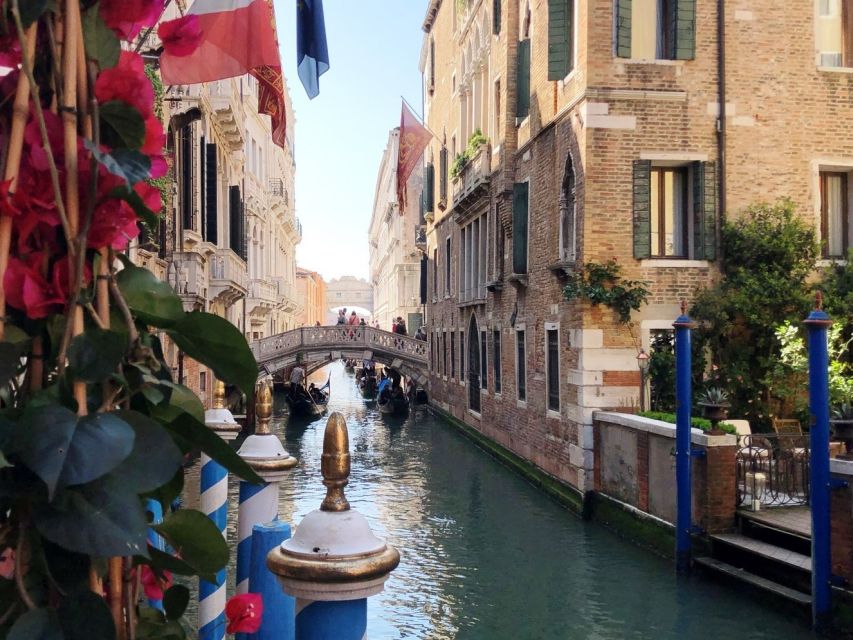
Finally, you get the chance to cross the Bridge of Sighs, built in 1614 to join the Doge’s Palace to the New Prisons. The tour’s explanation includes the nickname’s origin: the name comes from the last sigh heard from convicts before they were locked up forever.
This stop works because it’s short but emotionally loaded. You’re not hunting for details; you’re getting a single narrative beat that ties palace governance to prison reality.
How to get more from this moment
When you cross, look back once, then face forward. It’s easy to focus only on the bridge itself. But the story is about connection—how the palace and prisons were linked physically, and symbolically, by the path people took after sentencing.
Languages, guide style, and what “guided” really means here
The tour offers live guides in Spanish, English, French, and German. That matters because the best value in this experience is the explanations you get while walking and inside the palace.
In the feedback you’re likely to see strong comments about guide friendliness and clarity. One French review highlighted a Venetian guide who explained perfectly. A German review also praised friendliness and depth, and described luck with a very small group—so the experience felt more individualized.
Group size can change your feel
One booking noted only three people in the group, which made the whole day feel more personal. That’s a reminder that “collective” doesn’t always mean “crowded.” If you can, choose a start time that fits your tolerance for crowds. One review mentioned a 9:00 start being great for seeing St. Mark’s Square with fewer people.
Price and value: what $111 buys in this combo
This tour costs $111 per person and includes a Doge’s Palace admission ticket plus a guided tour. That price has two parts:
1) You pay for the palace entry and structured access.
2) You pay for someone to connect the dots between exterior Venice landmarks and interior palace rooms.
In my view, the value is best if you want a guided “story track.” If you love architecture but prefer to wander on your own, you might resent paying for guidance you won’t fully use. But if you want the palace to mean something beyond pretty rooms, the guide component is exactly what you’re paying for.
When the value feels lower
If the itinerary forces long pauses around St. Mark’s Square, some of that paid guide time can feel less satisfying. And if a group schedule pushes palace viewing into a rushed block, you might not get the slower understanding you hoped for. That’s the main reason I suggest going into this with flexibility.
Who should book this Venice walking tour + Doge’s Palace visit
This is a good match if:
- You’re visiting Venice for a short time and want the center covered in a single morning/afternoon block.
- You like guided storytelling that links street scenes to political power inside the palace.
- You’re comfortable with crowds and short waiting moments common to St. Mark’s and major museums.
You might want to skip or consider another option if:
- You need a slower, unbroken pace through Doge’s Palace.
- You’re sensitive to waiting around key hubs like St. Mark’s Square.
- You have limited mobility needs. The tour notes it can’t guarantee full accessibility due to Venice’s physical structure.
Quick planning tips before you go
- Wear shoes you can stand in. This itinerary is about walking plus interior time.
- If you’re arriving early, use that time to get oriented before the group gathers. Venice streets are a maze in disguise.
- Bring a little patience for crowd movement. The square and palace are high-demand spaces, and group timing can affect your day.
Should you book this tour?
If you want a guided “Venice center to palace” experience in 3 hours, I’d say this tour is a solid booking—especially because it includes Doge’s Palace entry and a guided route through key palace rooms plus the Bridge of Sighs crossing. The best versions of this day seem to hinge on guide quality and pacing. And the feedback you’re given strongly suggests friendly, explanatory guiding is the norm.
I’d book it if your priority is story and structure. I’d think twice if you’re the type who hates schedule gaps or you need long, unhurried time in every palace room. In Venice, that fine line between “efficient” and “rushed” is the real deciding factor.
FAQ
How long is the tour?
The experience lasts 3 hours.
What is included in the price?
You get admission to Doge’s Palace and a guided tour.
Where do I meet the guide?
Meet at the TURIVE kiosk on Calle larga de l’ Ascension, near the post office behind the Correr museum.
What sights are part of the walking route?
You’ll walk through the center and visit stops including Santa Maria Formosa, Campo Santi Giovanni e Paolo, the Mercerie, and an overview of key monuments around St. Mark’s Square.
What will I see inside Doge’s Palace?
The guided visit includes the Opera Museum, Doge’s Apartments, Institutional Chambers, the Arms Room, and the Old Prisons.
Do we cross the Bridge of Sighs?
Yes. The tour includes the opportunity to cross the Bridge of Sighs.
What languages are available?
The live guide is available in Spanish, English, French, and German.
Is the tour accessible for limited mobility?
The activity notes that due to Venice’s physical structure, it cannot guarantee that the whole tour is accessible for people with limited mobility.
Is this a group tour?
Yes, it’s a collective tour, so there may be other participants.
What’s the cancellation policy?
You can cancel up to 24 hours in advance for a full refund. No credit or refunds apply for no-shows.