REVIEW · BANGALORE
Bangalore: Palace, Temples, Fort & Markets Walking Tour
Book on GetYourGuide →Operated by Bangalore and Beyond · Bookable on GetYourGuide
Old Bangalore moves fast. This walk gives you the plot.
In just 3 hours, you’ll see how Bengaluru grew from old royal power centers to today’s “Silicon Valley of India” story, with stops tied to Kempegowda through Tipu Sultan and later British influence. Two things I like a lot: the opening Tipu Sultan’s Summer Palace built from teak, and the market time at KR Market where the sights, smells, and daily trade feel real and close. The main drawback is the practical one: you’ll be dealing with crowded, narrow streets and a lot of walking, so plan for your feet and your patience.
You also need to follow the temple dress rules. Since the route includes a Jain temple, you’ll want clothing that covers legs and shoulders, plus a headscarf (spare socks can be helpful). Temple entry times can shift with the season, so a perfect, step-by-step schedule depends on what’s open that day.
In This Review
- Key things that make this tour worth your time
- Tipu Sultan’s Summer Palace: teak, power, and a focused start
- Bangalore Fort: a 16th-century landmark with layers of rule
- KR Market: fruit, flower, vegetables, and the real sound of the city
- Vishnu temple prayers: living faith you can respect in motion
- Jain temple time: quiet carvings, and the dress code that keeps it respectful
- Walking pace, group size, and how the guide keeps the day smooth
- Price and value: what $32 buys in 3 hours
- Who this walking tour suits best
- Should you book this tour of Palace, Fort, Temples & KR Market?
- FAQ
- What’s included in the tour price?
- How long is the tour?
- Where does the tour start and end?
- Is the tour guided in English?
- Do I need to cover up for the temples?
- Are temples guaranteed to be open?
- Is transport from my hotel included?
Key things that make this tour worth your time

- Teak-built Tipu Sultan’s Summer Palace gets the tour off to a strong start
- Bangalore Fort connects the city to centuries of rule and renovation
- KR Market fruit and flower chaos turns into a guided feast for your senses
- Vishnu temple prayers show living religion, not just architecture
- Jain temple carvings and inlay work reward you if you slow down and look
Tipu Sultan’s Summer Palace: teak, power, and a focused start
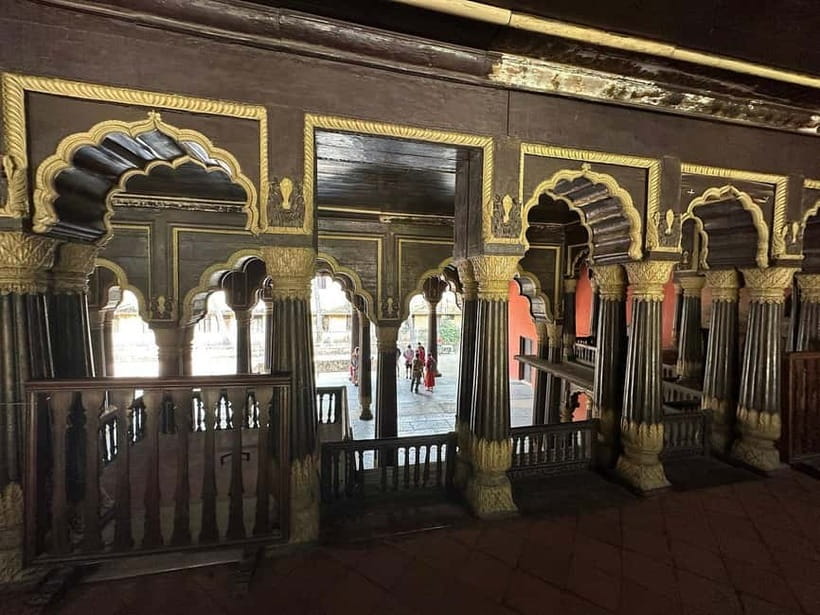
Your tour meets at the gates of Tipu Sultan’s Summer Palace, and that matters. You’re not wandering in circles trying to find the right spot—you start where the story begins, with a site that signals seriousness.
The palace itself is described as about 230 years old and built from teak wood. That detail isn’t just trivia. Teak was used because it’s durable and suited to long lifespans of buildings, so you’re standing in a material choice that helped the structure survive through changing rulers and eras. Your guide also sets context for the broader arc: old Bengaluru, the families and kingdoms that shaped it, and how the city’s political center kept shifting over time.
What you’ll actually feel here: a change in pace. At the palace, you get to look, listen, and absorb. Then you head outward into the street life, and suddenly the history has somewhere to live.
You can also read our reviews of more tours and experiences in Bangalore.
Bangalore Fort: a 16th-century landmark with layers of rule
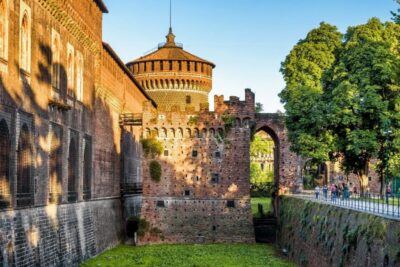
Next comes Bangalore Fort, a 16th-century structure that later received renovations. Forts can feel like vague “big walls” if you only see them from the outside. Here, the value is in the way the stop is framed: the guide ties the fort to the changing rulers and the city’s strategy—who needed defense, who needed control, and why a city forms around those needs.
Because you’re walking, the fort isn’t an isolated photo stop. You’re also seeing the surrounding neighborhood rhythms and realizing the fort isn’t just a monument; it’s part of a living urban patchwork.
A quick note on expectations: you’ll spend about 30 minutes on this stop. That’s long enough for meaningful storytelling and photos, not long enough to linger for hours on one section. If you like architecture, show up with curiosity and ask your guide what to notice.
KR Market: fruit, flower, vegetables, and the real sound of the city
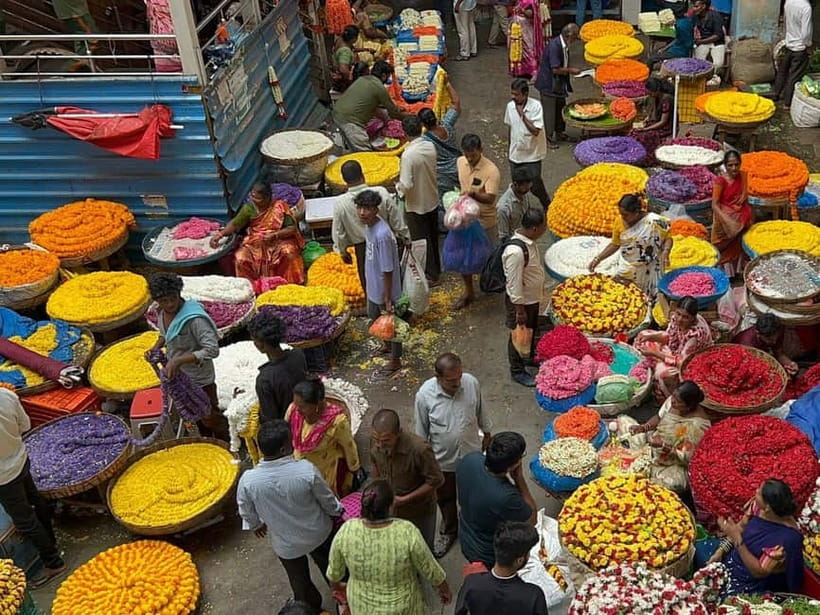
Then you hit KR Market, and this is where the tour earns its reputation as “ringside” viewing of daily life. KR Bengaluru is the place where trade is visible, and guided walking helps you make sense of it all.
Here’s what I find useful as a mindset: treat the market like a living system. You’ll move past stalls and crossings where people buy, sell, arrange, carry, and negotiate, all while vehicles and pedestrians flow around each other. The tour description even points out the mix of street characters—buyers, sellers, workers, walkers, and people just watching. That’s not chaos for chaos’s sake. It’s how the market stays efficient in a dense city.
You can also expect a strong sensory hit: fruits, flowers, and vegetables with the associated smells and sound. It’s the kind of place where you stop thinking like a tourist and start thinking like a human being on the street.
One practical thing: the market stop is about 30 minutes, so you won’t have unlimited time to browse. Bring a plan for what you want to see. If you’re shopping, you may want to keep it light and focus on small items or easy-to-carry spices and giftable goods—many guides are used to helping people figure out what’s worth it.
Vishnu temple prayers: living faith you can respect in motion
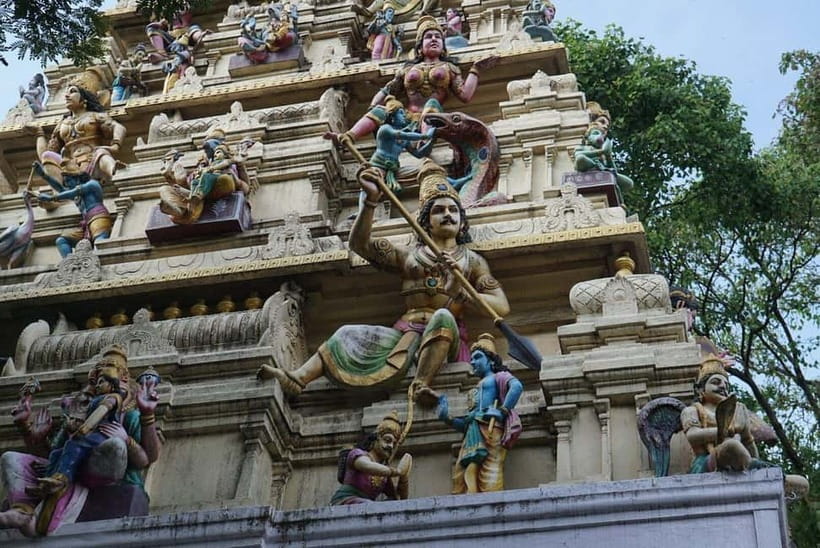
The tour includes time at a Vishnu temple that’s described as about 320 years old, with Hindu devotees offering prayers during the visit. This is the part that shifts you from sightseeing to observing.
The practical value here is simple: you’ll see religion as something people do daily, not just something preserved behind glass. You’ll also learn how to behave in a sacred space without turning it into a performance.
If you’re the kind of person who likes to understand what you’re looking at, ask your guide what’s happening in the moment—timing matters in temples, and your guide can connect the worship routine to the larger cultural story of the city.
Jain temple time: quiet carvings, and the dress code that keeps it respectful
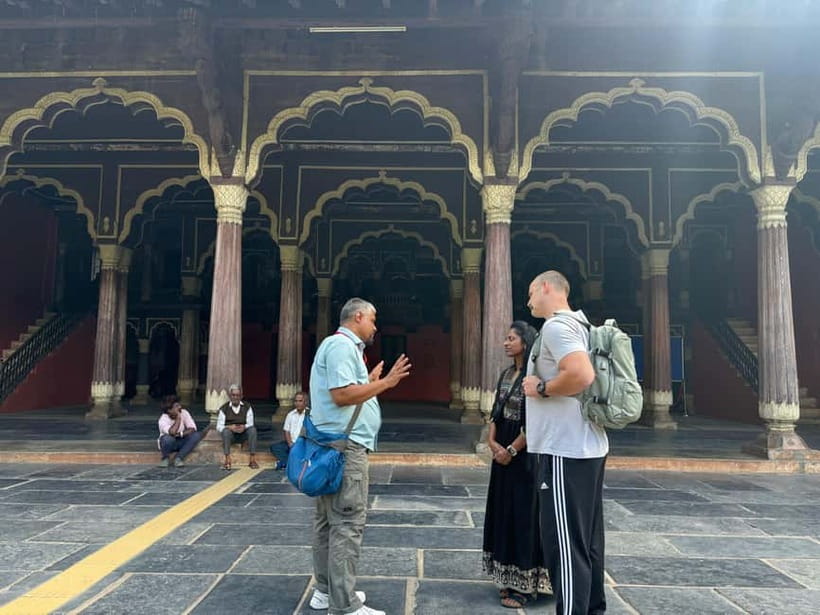
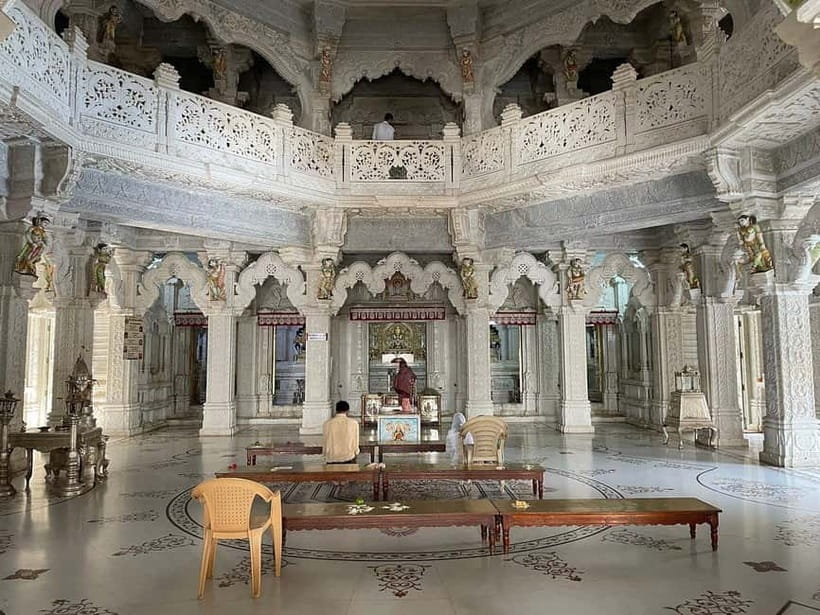
The tour finishes at Shri Adinath Jain Shwetamber Mandir. This is where the experience gets visually detailed and emotionally calmer. The route description calls out the quietude, plus the carvings and inlay work—that’s the kind of craftsmanship that rewards slow looking.
But the biggest factor for your visit is etiquette, and the tour is direct about it: you should wear clothing that covers your legs and shoulders because you’re visiting a Jain temple. You’ll also want a headscarf. The tour notes that certain clothing types aren’t allowed, including short skirts and sleeveless shirts, and it asks you to avoid see-through clothing.
Bring practical backup gear too. The tour suggests carrying spare socks, which makes sense when you’re walking a lot and you may need comfort during indoor/outdoor transitions.
Also remember: temple entry and working hours can change with the season, so don’t assume every part of every site will be accessible at every time. Your guide can adjust where possible.
Walking pace, group size, and how the guide keeps the day smooth
This is a small group tour, limited to 10 participants. That size is more than a comfort detail. It changes the whole experience. In crowded streets, smaller groups stay together better, move more predictably, and feel safer.
The duration is 3 hours, and the route is built around short, focused segments: palace, fort, market, temple stops. You’ll be doing plenty of walking, and the tour explicitly warns you to expect crowded and narrow streets. It’s not the kind of day for sandals and wishful thinking.
Good guides on this route are also tuned to real-world issues: keeping the group together in busy market conditions, explaining what you’re seeing so you’re not just staring, and pointing out photo angles. In the past, guides like Vasuki, Vijay, Vanaja, Raghu, Ramesh, and Varun are described as friendly, patient, and careful about safety. That’s the kind of professionalism that makes you relax instead of worry.
If you tend to get overwhelmed in big crowds, this tour can still work well. The structure helps: you’re never just dropped into the middle of confusion—you have a plan and a person who knows how to move through it.
Price and value: what $32 buys in 3 hours
At $32 per person for a 3-hour guided walk, the value is in the mix: major historical sites, temple entries, and market time, all packed into one compact itinerary.
You’re not only paying for the guide’s voice. The tour includes entry to Tipu Palace, the Vishnu Temple, Bangalore Fort, and the Jain Temple, plus time for a local markets experience. That combination matters because entrance fees and guided access can add up quickly if you plan it yourself.
It also helps that the tour is conducted in English, and you get live guidance throughout. Add in the “skip the ticket line” note, and you save time that you can spend actually looking.
Two things that are not included: foods and beverages, and transport. You can add transport from your hotel to the walk venue and back for an additional fee, if that would make your day easier.
Who this walking tour suits best
This tour is ideal if you want:
- A quick, high-impact way to understand old Bengaluru in a short window
- A mix of royal history, temple culture, and modern market life
- A guided route through crowds without losing your bearings
- A small-group format capped at 10 people
It’s also a great pick for a first visit to the city—especially if you only have a few hours and want more than one kind of experience in that time.
If you hate walking, this isn’t your best match. The day is designed for moving. And if you don’t want to follow the temple dress rules, you’ll feel stressed instead of comfortable.
Should you book this tour of Palace, Fort, Temples & KR Market?
Yes, you should consider booking if you want a dense cultural sampler that still feels grounded. For the money, you’re getting multiple major stops with temple entries, plus guided market time that’s hard to replicate on your own without spending extra effort figuring out what you’re looking at.
One last deciding tip: read the clothing and etiquette notes before you go. If you show up prepared—with a headscarf and covered shoulders/legs—you’ll walk into the Jain temple experience feeling respectful and ready, not scrambling.
FAQ
What’s included in the tour price?
The tour includes a guided walk of old Bangalore, entry to Tipu Palace, the Vishnu Temple, Bangalore Fort, and the Jain Temple, and an experience of the local markets. Foods and beverages are not included.
How long is the tour?
The tour lasts 3 hours.
Where does the tour start and end?
You start at Tipu Sultan’s Summer Palace (the guide waits at the gates) and finish at Shri Adinath Jain Shwetamber Mandir.
Is the tour guided in English?
Yes, the live tour guide speaks English.
Do I need to cover up for the temples?
Yes. You should wear clothes that cover your legs and shoulders since the route includes a Jain temple. A headscarf is also required, and the tour notes that short skirts and sleeveless shirts are not allowed.
Are temples guaranteed to be open?
Entry to temples and monuments, plus working hours, can vary with the season.
Is transport from my hotel included?
Transport is not included, but the tour offers an optional transport service to and from the walk venue for an additional fee.