REVIEW · BANGALORE
Tipu Palace + Koté Vishnu + Fort + KR Market + Jain Temple = Bengaluru Pété Walk
Book on Viator →Operated by Bangalore and Beyond · Bookable on Viator
Bengaluru’s old town hits your senses fast. This 2.5–3 hour Bengaluru Pété walk strings together Tipu Sultan’s teak palace, a Vishnu-linked temple, fort remains, the noisy KR Market, and a Jain mandir in one efficient loop. I especially like the contrast between Islamic-style palace architecture and the lived-in market chaos, and I like how the licensed guide ties religion and local history into stories you can actually follow. The main consideration is that temple access depends on hours and the time of day, so you might not get into every space.
Plan your outfit before you go. You’ll want legs and shoulders covered, and for the Jain temple a scarf for ladies may be required, while bringing an extra pair of socks can make the walking much more comfortable. With a max group size of 10 and a mobile ticket, the whole thing stays organized and low-stress.
In This Review
- Key Highlights You’ll Notice Right Away
- Why This 3-Hour Loop Works So Well for First-Timers
- Tipu Sultan’s Summer Palace: Teak Walls and Islamic Architecture
- Kote Vishnu (Kote Venkataramana Temple): Carved Stone and Myth on Walls
- Bangalore Fort Remains: The Mud-to-Stone Story in What’s Left
- KR Market: Where You’ll Feel Bengaluru at Full Volume
- Shri Adinath Jain Shwetamber Mandir: A Spiritual Pause That Needs the Right Clothes
- Price and What You’re Actually Getting for $33.55
- Timing, Temple Hours, and the One Thing You Should Not Ignore
- Getting There, Getting Out, and Why the Route Ends Near Metro
- What the Best Guides Add (Beyond the Facts)
- Who Should Book This Walk (and Who Might Skip It)
- Should You Book the Bengaluru Pété Walk?
- FAQ
- How long is the walking tour?
- What does it cost, and what’s included in the price?
- Are meals included on this walk?
- Is transport included?
- What should I wear for this tour?
- Is this tour physically demanding?
- How large is the group?
- Will I get a guide in my language?
- What if a temple is closed?
- Is there a cancellation policy?
Key Highlights You’ll Notice Right Away
- Tipu Sultan’s palace details built in old-school teak and Islamic-inspired design
- Kote Venkataramana Temple with carved stone sculptures nearby
- Fort history in small remnants you can still visit today
- KR Market sensory overload (flowers, vendors, and everyday work)
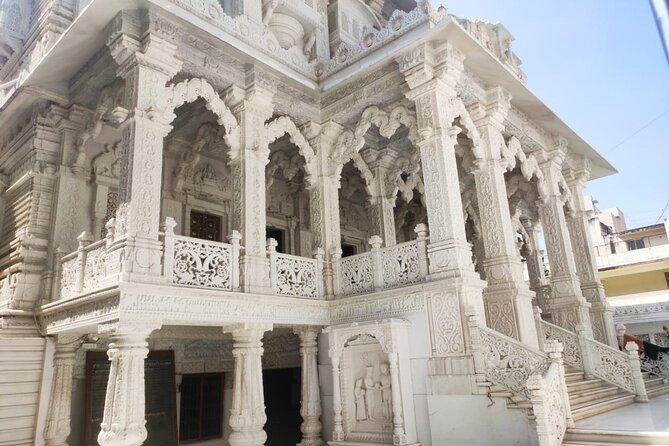
- Shri Adinath Jain Shwetamber Mandir as a calmer spiritual stop at the end
- Short, well-paced route built for seeing a lot without rushing you
Why This 3-Hour Loop Works So Well for First-Timers
This walk is built for people who want the “real Bengaluru” feeling without spending an entire day getting from one thing to the next. You get a tight mix of big names (Tipu Sultan), living streets (KR Market), and religious sites in a route that moves on foot.
I like that the schedule is short but not shallow. You spend about 30 minutes at each stop, which means you can look closely, ask questions, and still keep your energy for the market side of the experience.
The value is also solid. At about $33.55 per person, you’re paying for a guided route, a small group, and entry fees at all monuments are included. Since many sites on the itinerary don’t charge or are listed as free at that stop, the included admission makes the math easier than you might expect.
You can also read our reviews of more tours and experiences in Bangalore.
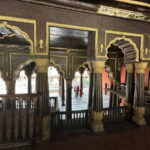
Tipu Sultan’s Summer Palace: Teak Walls and Islamic Architecture
Your walk starts at Tipu Sultan’s Summer Palace, right on Tippu Sultan Palace Rd in Kamalanagar (Chamrajpet). This first stop sets the tone: it’s historical, visual, and quiet enough to get your bearings before the city noise kicks in.
Tipu’s palace is described as about 230 years old and built in teak wood, with Islamic architecture that shows up in the design language. Even if you’re not a hardcore architecture nerd, teak wood is one of those materials you feel in the details, like the way the spaces and structure look meant to last.
Practical note: you’ll need an admission ticket for this stop (it’s included in the tour price). If you’re visiting in hotter months, this early start helps because you hit the most air-conditioned-feeling portion before the walking heat and street energy.
Kote Vishnu (Kote Venkataramana Temple): Carved Stone and Myth on Walls
Right after the palace, the walk moves to Kote Venkataramana Temple, a site adjoining Tipu Palace. It dates to 1690 AD, built by Chikkadevaraja Wodeyar, and it’s known for stone sculptures of Indian mythological characters carved into its walls.
What I like here is the “small but meaningful” feeling. The temple is close by, so you don’t waste time traveling. And the carvings give you something to look at even if you’re not ready to go deep into religious symbolism on the first hour.
If your tour is in the afternoon, keep one reality in mind: temple hours can affect access. Some people doing an afternoon slot find that entry to the Hindu temple may be limited, so don’t build your whole plan around only one stop.
Dress rule stays important. Shoulder-and-leg coverage matters here too, since you’ll be visiting temple spaces all along the route.
Bangalore Fort Remains: The Mud-to-Stone Story in What’s Left
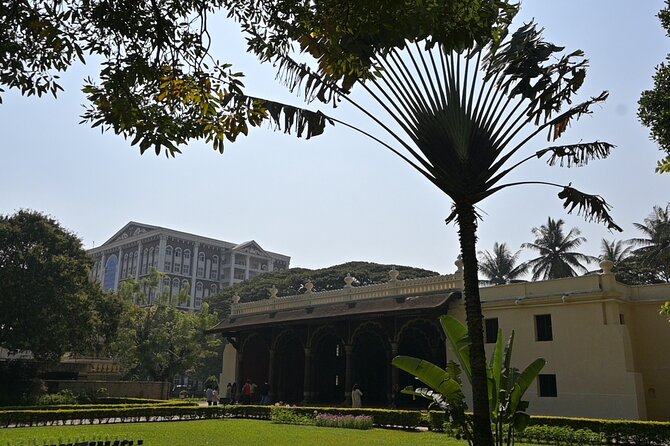
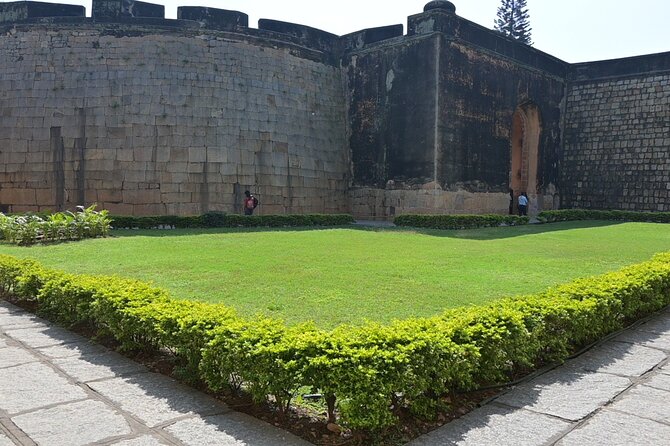
Next comes Bangalore Fort. This is the “you can’t see everything, but you can still understand the place” stop. The fort traces back to Kempegowda, the founder of Bangalore, who built a mud fort in the 16th century. Later, it was rebuilt in stone by Hyder Ali in the 1760s.
Only about 5% of the fort remains and it’s now neatly maintained for visitors. That small physical footprint is exactly why this stop is useful. It shows you that cities grow in layers, and you’re seeing a fragment of a bigger story.
Here’s the consideration: because so little remains, it rewards the tour with context. If you’re the kind of person who likes explanations, this stop will click. If you’re looking for a grand monument you can photograph from every angle, adjust expectations.
KR Market: Where You’ll Feel Bengaluru at Full Volume
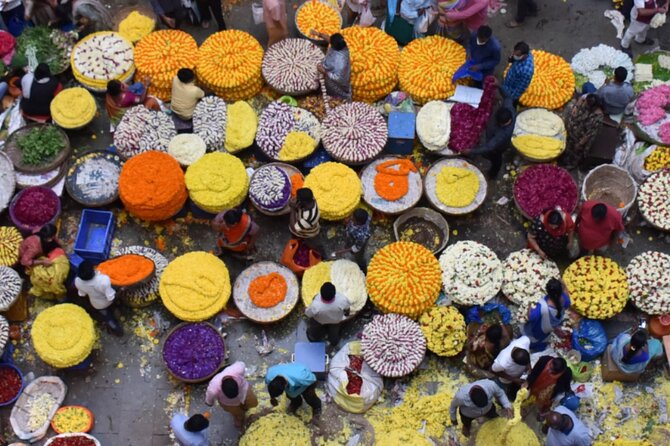
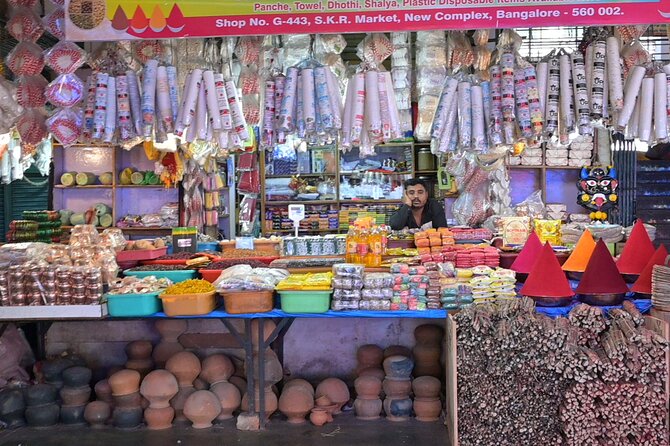
If Tipu’s palace is about form and stone, Sri Krishnarajendra Market (KR Market) is about life. This stop is a sensory education: vendors, workers, hawkers, buyers, and general street activity roll together in one place.
The itinerary frames KR Market as a spot where your sensory organs get involved all at once. You’ll see the motion of commerce up close, and you’ll notice how many people and animals share the same lanes and routines.
I especially like this stop because it changes the pace of the whole tour. After temples and architecture, you get to watch Bengaluru in action: the kinds of conversations happening, the way goods move, and how quickly you can lose track of time looking at what people are buying.
And yes, it can be intense. Noise, crowds, and close quarters are part of the point. If you’re sensitive to crowds, come mentally ready for street-level energy.
A nice detail: guides sometimes arrange a break such as tea (and in some cases coffee) when the group starts to feel the afternoon stretch. That small reset can make the market stop feel less like endurance and more like a pleasant detour.
Shri Adinath Jain Shwetamber Mandir: A Spiritual Pause That Needs the Right Clothes
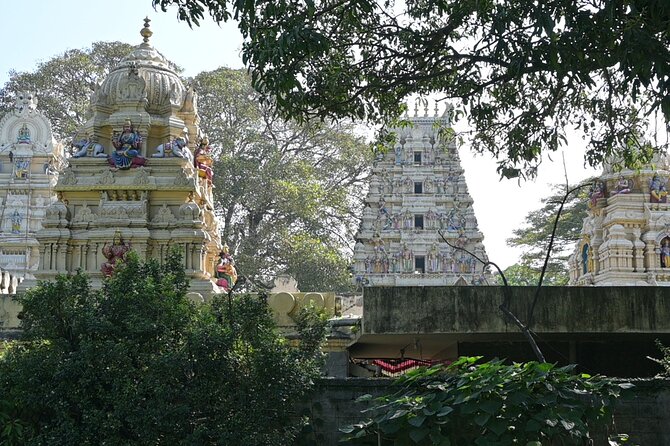
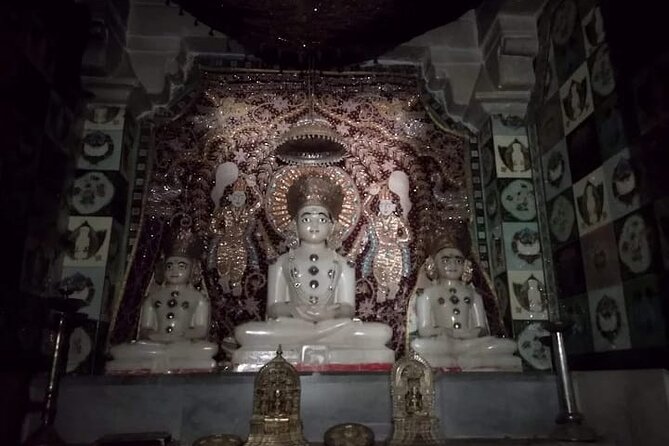
The walk ends at Shri Adinath Jain Shwetamber Mandir, near Chickpet metro station (Chickpet Rd, Ragipet, Mamulpet). This final stop is a strong counterpoint to the market.
Jainism is presented as one of the world’s oldest religions, with origins in India and at least 2500 years of history, contemporary to Buddhism. The guide typically connects the core themes you should understand before you enter: non-violence and other guiding tenets that shape everyday behavior.
For you, the most practical part is etiquette. The tour states that dresses should cover legs and shoulders, and for ladies, a scarf may be required at the Jain temple. It’s also worth bringing an extra pair of socks, because you may be on your feet longer than you expect once the market and side streets start pulling you in.
This is also a good moment to slow down. Even if you don’t know Jain symbols, you’ll feel the shift from busy commerce into a quieter, more inward space.
Price and What You’re Actually Getting for $33.55
At $33.55 per person, this walk isn’t trying to compete with “cheap taxi-and-ticket” sightseeing. It’s paying for a licensed, India-approved guide, a route designed around specific stops, and entry fees at all monuments.
Duration matters too. With about 2 hours 30 minutes to 3 hours, you’re getting multiple major stops in one go. That’s ideal when your schedule is tight, and you don’t want to gamble on navigating the old-town streets alone.
Small-group size is another quiet advantage: the tour lists a maximum of 10 travelers. That’s big enough for a lively vibe, but small enough for real questions and easy regrouping when you hit the market lanes.
Also, the tour uses mobile tickets, so you’re not scrambling for printed paper in a city where finding the right lane is the real adventure.
Timing, Temple Hours, and the One Thing You Should Not Ignore

This itinerary includes religious sites, and the tour information is clear: entry to temples & monuments depends on working hours and seasonal variations. That means flexibility is part of the deal.
If you book an afternoon slot, keep in mind that at least one Hindu temple stop may be closed for entry on some days. The safest approach is to treat this walk as a window into the area, not a guaranteed checklist where everything opens.
You can reduce disappointment by going in expecting to learn even if you can’t step inside every space. The exterior architecture, the nearby carvings, and the surrounding street life still give you plenty to read and understand.
Getting There, Getting Out, and Why the Route Ends Near Metro
The meeting point is Tipu Sultan’s Summer Palace (42, Tippu Sultan Palace Rd, Kamalanagar, Chamrajpet). The end point is Shri Adinath Jain Shwetamber Mandir, close to Chickpet metro station.
I like this ending because it gives you an easy next move. Instead of feeling stuck in a neighborhood where you’re not sure how to leave, you can typically use metro connections from Chickpet.
If you’d rather not rely on transit, the tour offers an optional transport service from your hotel to the walk venue and back for a small additional fee. The tour information specifically says the provider can offer that if you let them know your hotel in advance.
And after the walk, the guide can help with what to see next in Bengaluru, plus where to shop for silk or other souvenirs. That’s a real bonus if you want practical shopping advice without wandering around blindly.
What the Best Guides Add (Beyond the Facts)
One of the most praised parts is the quality of the guiding itself. Many people highlight that guides are friendly, warm, and willing to answer questions, not just read off a script.
Names show up in feedback too. Guides like Vijay, Raghu, Phaneesh, Varun, and Vasuki get specific credit. People also mention guide support for practical moments, like helping someone find their way to the metro or suggesting where to eat afterward.
That matters because this area is the type where local navigation makes the difference. You’ll move through maze-like market streets and temple-adjacent lanes. A guide keeps you from turning the day into a guessing game.
Who Should Book This Walk (and Who Might Skip It)
You should book this if you want:
- A fast introduction to central Bengaluru old-town culture
- A guided way to see temples plus everyday markets in one afternoon
- A route that feels manageable at 2.5–3 hours with a max of 10 people
You might skip it if:
- You hate crowds and noise. KR Market can be loud and packed.
- You need a fully guaranteed “enter every site” plan. Temple hours can change.
- You want only major monuments. This walk includes smaller remnants like the fort portion.
If you’re a solo traveler, I also like that the tour is structured and safety-conscious. The route is guided, you’re not wandering alone, and guides can help you plan how to leave the area at the end.
Should You Book the Bengaluru Pété Walk?
I think this is a strong booking when you want value, variety, and local texture in a short window. For the price, you’re getting a guided route through major cultural beats: Tipu’s palace, a carved temple stop, fort history, the working market scene, and the Jain mandir.
If you can be flexible with temple access and you’re okay with sensory overload at KR Market, you’ll likely love it. If your idea of a perfect afternoon is quiet museums and wide-open sightlines, you may find the market part more stressful than fun.
My call: book it if you want to feel Bengaluru in motion and come away with a clearer picture of why the city looks the way it does.
FAQ
How long is the walking tour?
The duration is approximately 2 hours 30 minutes to 3 hours.
What does it cost, and what’s included in the price?
The price is listed as $33.55 per person. Entry fees at all monuments are included.
Are meals included on this walk?
Lunch is not included, and you should plan to find food separately.
Is transport included?
Transport is not included. There is an optional transport service available from your hotel to the walk venue and back for a small additional fee.
What should I wear for this tour?
Dresses should cover legs and shoulders for temple visits. Ladies may need to carry a scarf for the Jain temple, and an extra pair of socks can help.
Is this tour physically demanding?
It’s recommended for people with moderate physical fitness.
How large is the group?
The tour has a maximum of 10 travelers.
Will I get a guide in my language?
French, Italian, and German speaking guides are subject to availability.
What if a temple is closed?
Entry to temples & monuments depends on working hours and seasonal variations, so you may not be able to enter every site at every time.
Is there a cancellation policy?
Free cancellation is available up to 24 hours in advance for a full refund.