REVIEW · BUDAPEST
Budapest: Buda Castle Walk with Saint Stephen’s Hall
Book on GetYourGuide →Operated by Buda Castle Walks · Bookable on GetYourGuide
That hilltop view always hits. This 1.5-hour English walk threads Buda Castle’s courtyard life with 800 years of Hungarian drama, then lands you in the restored St. Stephen’s Hall. I especially like how the route mixes outdoor sights with a focused indoor stop, and how the guide ties stories to what you’re seeing in front of you. One thing to plan for: the district has ongoing reconstruction, so expect occasional noise and heavy vehicle traffic as you walk.
What I like most is the combination of practical navigation and story depth. You’ll cover the Castle District’s courts (including Hunyadi Court and the Lion Courtyard) and get panoramic views from Várhegy Hill, then spend time inside St. Stephen’s Hall, which has been restored to its former royal splendor. Another plus: you wear headsets, so you’re not fighting the sound of the courtyard.
The main drawback is the physical setting. The tour is outdoor for about an hour and rain or shine, and it’s not suitable for children under 12, people with mobility impairments, or wheelchair users. If you’re sensitive to uneven surfaces and stairs, you’ll want to think twice.
In This Review
- Key things I’d prioritize on this walk
- Savoyai Terrace start: finding your group fast in a busy reconstruction zone
- Buda Castle courtyards and royal stories: how the route makes 800 years make sense
- A practical note on the setting
- Várhegy Hill panoramas: when the history becomes geography
- St. Stephen’s Hall: the restored royal interior that changes how you read the building
- What you’re walking away with
- Headsets, ticket access, and why $29 can feel like a fair deal
- Who this tour fits, and who should adjust plans
- Practical tips that make your day smoother
- Should you book Budapest: Buda Castle Walk with Saint Stephen’s Hall?
- FAQ
- How long is the Buda Castle Walk with Saint Stephen’s Hall?
- Where exactly is the meeting point?
- Is the tour offered in English?
- What part of the palace do we enter?
- Does the tour run in bad weather?
- Is it suitable for kids or wheelchair users?
- What’s included in the price?
Key things I’d prioritize on this walk
- English guide + headsets: you’ll hear the story clearly as you move
- Buda Castle courts in a tight loop: less wandering, more meaning per step
- Várhegy Hill views: the city opens up below you at the right moments
- St. Stephen’s Hall interior (30 minutes): one of the most faithfully restored royal spaces
- Context from Golden Age to WWII and beyond: history is explained in sequence, not random facts
Savoyai Terrace start: finding your group fast in a busy reconstruction zone
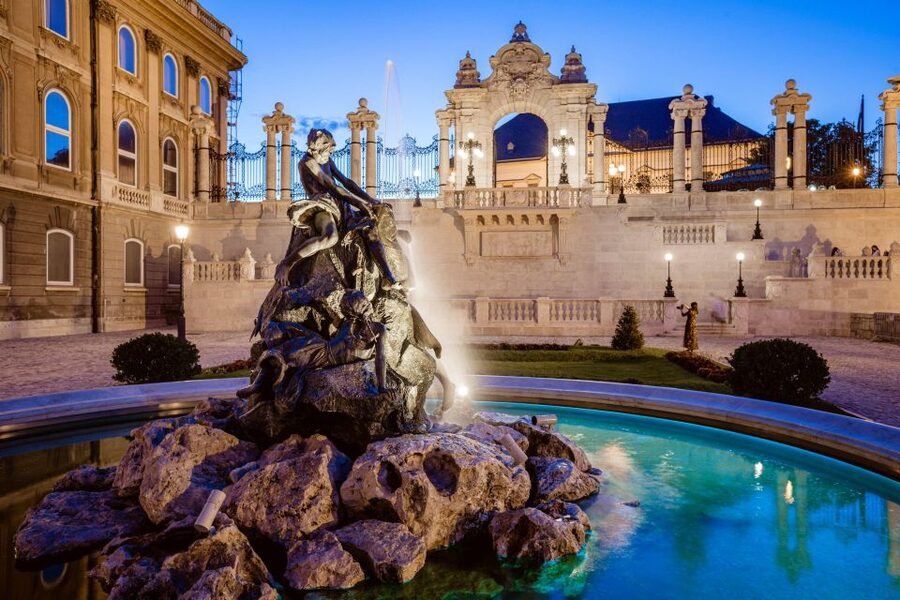
The tour begins at Savoyai Terrace, right in front of the Hungarian National Gallery at Szent György Square 2 (1014 Budapest). Look for a turquoise umbrella with the Buda Castle Walks logo, because the area can feel like a maze if you arrive late or without a plan. Your best move: get there about 15 minutes early. With construction, closures, and changes in levels, it’s easier to start calm than to sprint.
Once you’re with the group, you’ll get headsets. That matters in the Castle District, where wind and street noise can make casual listening miserable. Here, you can actually follow the guide’s storyline while you walk, and it keeps the tour from turning into “what did they say?” at every stop.
Timing is strict. The walk starts on time, and latecomers can’t be accommodated. If you’re connecting from another sight, build in buffer time because you’re going uphill and through active building work.
You can also read our reviews of more tours and experiences in Budapest.


Buda Castle courtyards and royal stories: how the route makes 800 years make sense

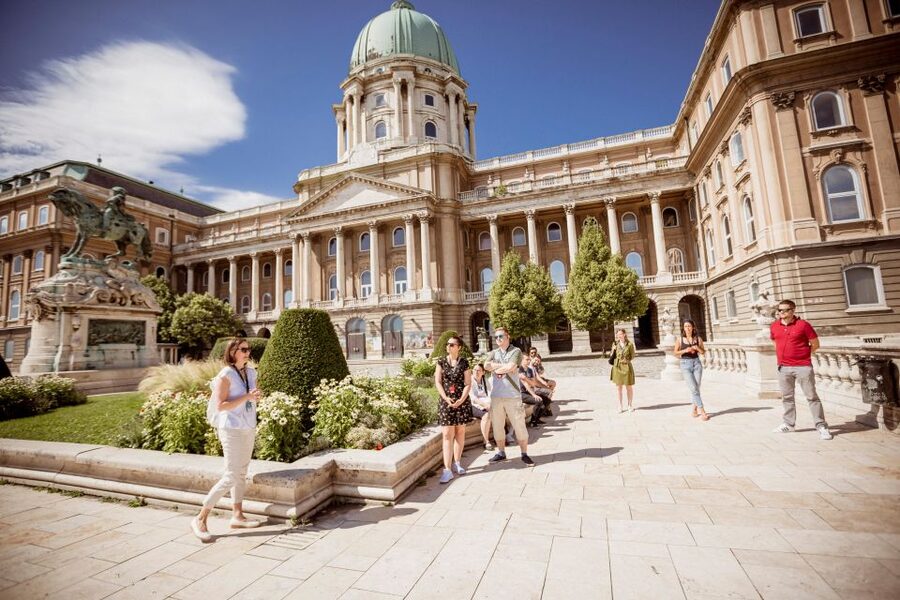
After you start at Savoyai Terrace, you’ll move through Szent György tér 2 and into the outdoor courts that give the Castle District its character. This is one of those places where it’s easy to look at walls and miss the plot. The guide’s job is to attach names, dates, and turning points to the physical space you’re standing in.
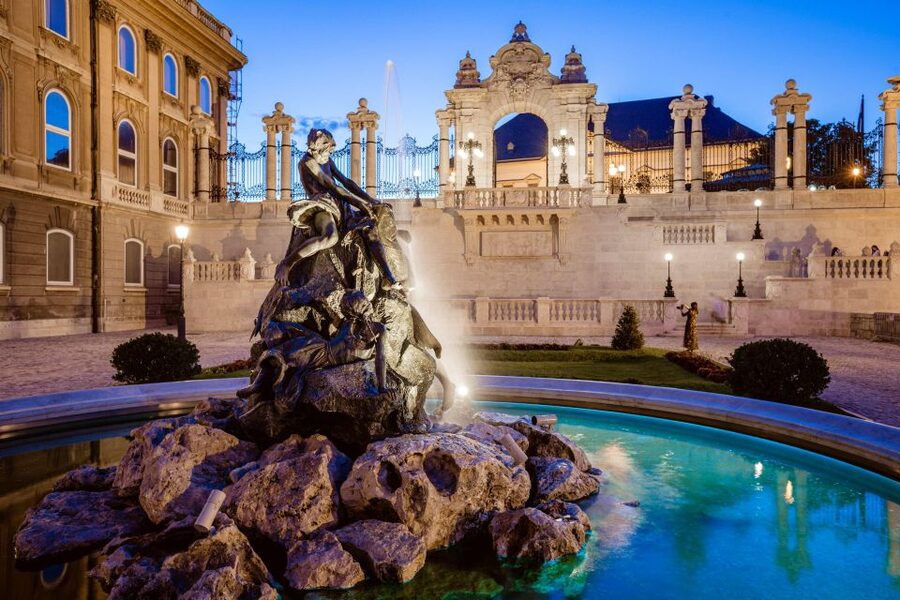
You’ll spend time at Hunyadi Court and Lion Courtyard, walking through areas filled with statues and fountains. Even if you don’t read every inscription, the guide explains what each setting meant to the royal world that shaped Budapest’s identity. Expect stories that run from a kind of “Golden Age” framing, through wars and sieges, then forward into the communist era and the rebuilding that followed.
What makes this approach work for you is the pacing. Instead of one long lecture, you get repeated “look here, then think about this” moments. When the guide talks about conflict and destruction, you’re already in the spaces connected to those chapters, so it lands more clearly than a museum explanation alone.
A practical note on the setting
The Castle District has reconstruction work underway. That means occasional noise and heavy vehicle traffic can show up while you’re walking between points. It’s not constant, but it’s real. If you’re someone who hates distraction, earplugs might even help on the walk—though the headsets are designed to keep you connected to the guide’s voice.
Várhegy Hill panoramas: when the history becomes geography

At some point on the route, the tour swings toward Várhegy Hill for panoramic views over Budapest. This is where the geography stops being abstract. You can see how the city spreads out below, and you start understanding why rulers cared about controlling this vantage point.
For most people, the best photos happen when you pause at the “just right” angle. The guide helps you get there efficiently, so you’re not guessing where the view will open. You’ll also learn how the hill position played into the city’s defensive and political logic, not just the pretty skyline.
Even in cold or rainy weather, the viewpoints still deliver. The Castle District air can be brisk, so dress for it. Outdoor clothing really matters here because you’re exposed at times and moving at others.
St. Stephen’s Hall: the restored royal interior that changes how you read the building
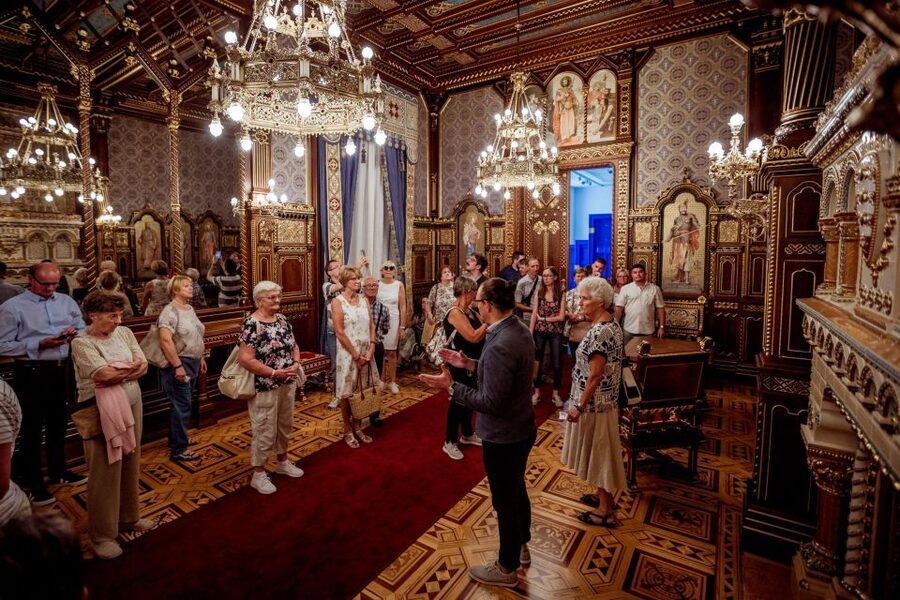
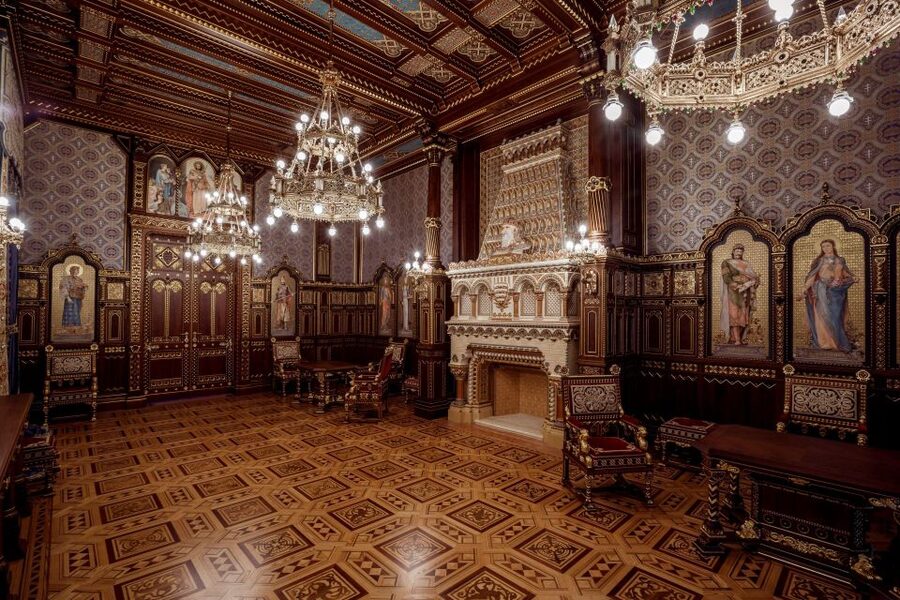
The tour’s indoor heart is St. Stephen’s Hall, with about 30 minutes inside. This is the part of the palace interior that has been fully and faithfully restored to its former royal splendor after looting and destruction during WWII.
This stop is valuable because it’s not just decoration. The hall works like a time machine for craftsmanship and state power. When you’re inside, the guide points out what the space communicates—how design signals authority and how restoration affects what you can understand today.
You’ll spend enough time to slow down. That’s important because a lot of visitors treat palace interiors like quick photo backdrops. Here, the schedule gives you breathing room to actually notice details in the architecture and the feel of the room, not just the ceiling line.






What you’re walking away with
By the end of the hall visit, the tour’s story arc clicks. You’ve seen the outdoor courts and heard about the Golden Age, the wars, and the postwar shifts. Then you step into a space that was rebuilt with the past in mind. That contrast helps you understand why restoration in this district isn’t only about looking pretty—it’s about recovering meaning.
Headsets, ticket access, and why $29 can feel like a fair deal
At around $29 per person for about 1.5 hours, this isn’t a “sip coffee while someone tells you facts” tour. You’re getting several things that add up:
- A live English guide
- St. Stephen’s Hall entry
- Headsets so you can follow during the walk
- A “skip the ticket line” advantage
When you factor in the entry ticket and the guided structure, the price starts to feel reasonable, especially if you’re trying to do more than one Castle District stop in a limited time window. You also avoid the time cost of sorting out where to go first and when you can enter.
One more detail I appreciate: the pace supports photo moments. Guides tend to keep the group moving, but you’ll still have chances to stop, look, and frame shots—especially at the viewpoint and courtyard edges.
Who this tour fits, and who should adjust plans

This walk is best if you want a guided way to understand the Castle District without spending hours piecing it together yourself. It’s also a strong choice if you like history told in sequence—kings and queens, love and war themes, then WWII and the postwar restoration—while you’re standing in the real spaces tied to those chapters.
It’s not the right fit if you’re bringing very young kids. It’s not suitable for children under 12. It’s also listed as not suitable for people with mobility impairments or wheelchair users, which I’d take seriously given the outdoor movement, uneven surfaces, and changes in levels.
If you’re traveling in winter or shoulder season, this is still doable because the tour runs rain or shine. Just plan for cold wind on the hills and wet ground in the courtyards. Comfortable shoes aren’t optional here.
Practical tips that make your day smoother

A few things I’d do before you go:
- Bring comfortable shoes for cobbled courtyards and outdoor stretches.
- Pack outdoor clothing because it’s weather-dependent.
- Arrive 15 minutes early so you can locate the meeting point even with closures and construction changes.
- Use the on-site visit planner map at https://webapp.budavaripalotanegyed.hu/en. It shows real-time traffic and closures in the Palace District, which can help you choose the easiest walking route up to Savoyai Terrace.
Also, remember the strict start time. Latecomers can’t be accommodated, so don’t gamble with a tight connection.
If you enjoy travel details beyond just dates, you’ll probably like the style of the guides who have led this tour—multiple names show up with reports of clear English and an engaging sense of humor (for example, guides named Rita, Ester, Kopp, Josie, Eszter, and Istvan). If your guide leans into storytelling, you’ll feel the Castle District come alive fast. And yes, one guide’s style even included a Netflix-type Hungarian recommendation for after the tour, which is a fun way to keep the mood going.
Should you book Budapest: Buda Castle Walk with Saint Stephen’s Hall?
Book this tour if you want the fastest route to understanding why Buda Castle matters. The guided loop through the courtyards and the city views gives you context, but the real reason to book is St. Stephen’s Hall: a restored interior that lets you see what “royal splendor” looks like in a space rebuilt with care.
Skip it (or choose another option) if you can’t handle uneven, outdoor walking or if cold, construction noise, and strict start times would stress you out. And if you’re the type who only wants ticketed museum time, know that this is a walking-and-story experience, not a long indoor museum day.
For most first-time visitors, this is a smart use of limited time: you get clear orientation, memorable views, and one of the most meaningful interior stops in the palace complex.
FAQ

How long is the Buda Castle Walk with Saint Stephen’s Hall?
The tour lasts about 1.5 hours, with roughly 1 hour outdoors and 30 minutes inside St. Stephen’s Hall.
Where exactly is the meeting point?
Meet at Savoyai Terrace, in front of the Hungarian National Gallery at Szent György Square 2 (1014 Budapest). The guide will be marked by a turquoise umbrella with the Buda Castle Walks logo.
Is the tour offered in English?
Yes, it’s a live English-language walking tour, and an English audio component is included.
What part of the palace do we enter?
You visit St. Stephen’s Hall, including an entry ticket and guided time inside (about 30 minutes).
Does the tour run in bad weather?
Yes. The tour takes place rain or shine, and it includes both outdoor and indoor components.
Is it suitable for kids or wheelchair users?
It’s not suitable for children under 12, and it’s also not suitable for wheelchair users or people with mobility impairments.
What’s included in the price?
You get the walking tour with a live guide, St. Stephen’s Hall entry ticket, and headsets to hear your guide (plus the ability to skip the ticket line).