REVIEW · BUDAPEST
Budapest Castle District Walking Tour
Book on Viator →Operated by Triptobudapest.hu - Free Budapest Walking Tours · Bookable on Viator
This Castle District walk is short, steep, and story-heavy. You’ll cover the “Buda side” on foot with a local guide who ties big landmarks to the everyday lives around them, so the place feels lived-in, not just photographed. I love that it’s organized for questions as you go, not a one-way lecture. I also like the mix of famous stops (Matthias Church, Fisherman’s Bastion, Buda Castle) with the less-obvious corners like a Jewish prayer house and the Hospital in the Rock bunker museum.
Two things I especially like: you get a small-group pace (max 30) with multiple breaks built into the route, and you’re shown how to read what you’re seeing—down to details like the cross patterns and the meaning behind symbols. One drawback to plan for: expect stairs and uphill walking, plus parts of Fisherman’s Bastion can get crowded, which can limit photo time and quiet viewpoints.
In This Review
- Key highlights worth your time
- A practical introduction to Budapest’s Castle Hill walk
- How the meeting point sets you up for an easy start
- Stop 1: Batthyány Square and the “map in your head”
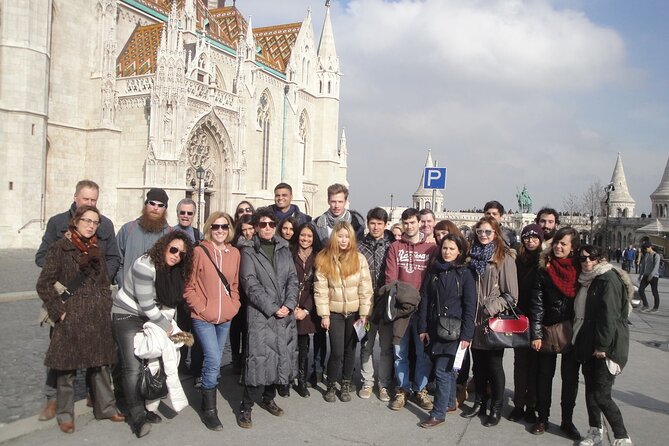
- Stop 2: Matthias Church area without going inside
- Stop 3: Fisherman’s Bastion viewpoints, plus Walt Disney and cross symbols
- Stop 4: The Medieval Jewish Prayer House and the Baroque neighborhood feel
- Stop 5: National Archives of Hungary and WWII memory in plain sight
- Stop 6: Hospital in the Rock nuclear bunker museum
- Stop 7: Buda Castle—where power, myth, and rebuilding collide
- Stop 8: Prince Eugene of Savoy’s equestrian statue and Pest-side panorama
- Price and value: why $3.62 can still be worth it
- Who this tour suits best (and who should skip it)
- Tips to make your walk easier and more enjoyable
- Should you book this Castle District walking tour?
- FAQ
- How long is the Budapest Castle District walking tour?
- Where do I meet the guide?
- What’s included in the tour price?
- Does the tour include entry into Matthias Church?
- Is the tour suitable for people who get tired on uphill walks?
- What are some of the major stops on the route?
- Is the tour in English?
- What should I know about crowds?
- Where does the tour end?
Key highlights worth your time
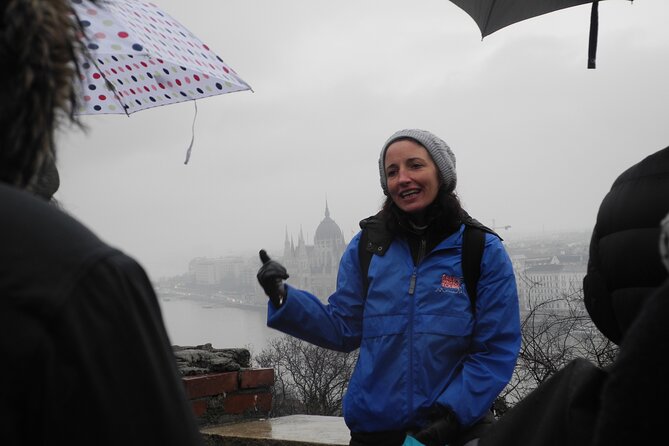
- Buda Castle District, on foot: You’ll connect the Royal Palace area to viewpoints without wasting time finding your way.
- Matthias Church details without entry: You learn context around the church while keeping the walking smooth.
- Fisherman’s Bastion symbolism lessons: You’ll hear what the different cross strip designs mean.
- A WWII-and-bunker stop that changes the mood: Hospital in the Rock turns Castle Hill into defense history.
- Practical ending: You finish with direction and time for remaining questions.
A practical introduction to Budapest’s Castle Hill walk
The Castle District can be confusing when you’re on your own. Streets twist, terraces rise, and the big sights are separated by short-but-steep climbs. This tour is designed to solve that problem: you start at Batthyány tér and walk a tight loop in about 2 hours, with frequent “what you’re looking at and why it matters” explanations along the way.
You’ll also get a realistic feel for what it’s like to move around Castle Hill. Reviews mention guides like Dóra, Zsófia, Rita, Esther, and Andy, and the common thread is how they keep the tour moving while still making room for questions. If you want the Castle District to click fast, this format helps.
Also: the route works best when you’re comfortable with short climbs. The tour specifically notes a moderate fitness level and asks you to consider your ability for at least a 10-minute uphill walk.
You can also read our reviews of more tours and experiences in Budapest.


How the meeting point sets you up for an easy start
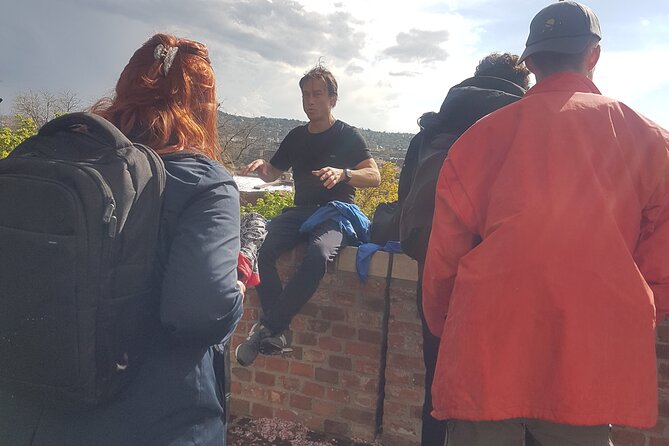
Start here: Batthyány tér 1, 1011 Hungary. You meet at the metro exit in the park at Batthyányi ter. If you like a clear beginning, this one is pretty direct—no long waiting in the wrong square.
You’ll also want the mobile ticket ready. The tour is offered in English, and the group size is capped at 30, which makes it easier to hear the guide at busy stops (at least compared with bigger bus tours).
One more thing I’d do: dress for wind. Reviews include cold, windy conditions, with guides like Dóra keeping everyone engaged even when the weather tried to ruin the mood. Castle Hill can feel exposed, so layers matter.
Stop 1: Batthyány Square and the “map in your head”
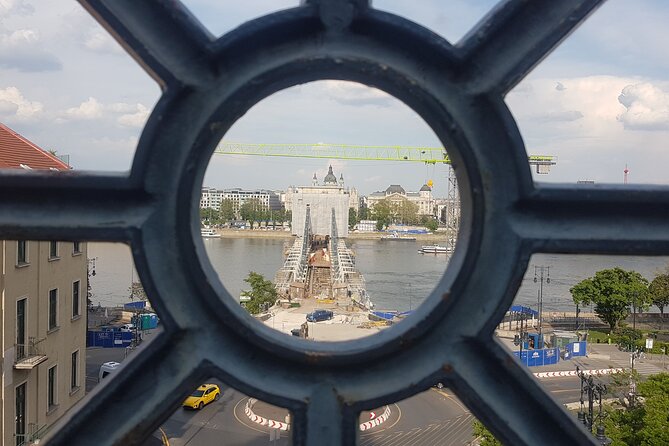
Your first stop is Batthyany Square, where your guide lays out what you’ll see across the Castle District. This matters more than it sounds. When you later reach Buda Castle and Matthias area, you won’t just be thinking, I’m looking at a building—you’ll be thinking, this is how the district connects historically and visually.
Your guide (fully licensed and local-born) also frames the big idea: the Castle District is not only the Royal Palace and the major churches. It also includes urban public art mini-monuments, lookout terraces, and even references to the underground cave system in Castle Hill. That sets expectations early, so the later stops feel like they belong to one story.
Stop 2: Matthias Church area without going inside
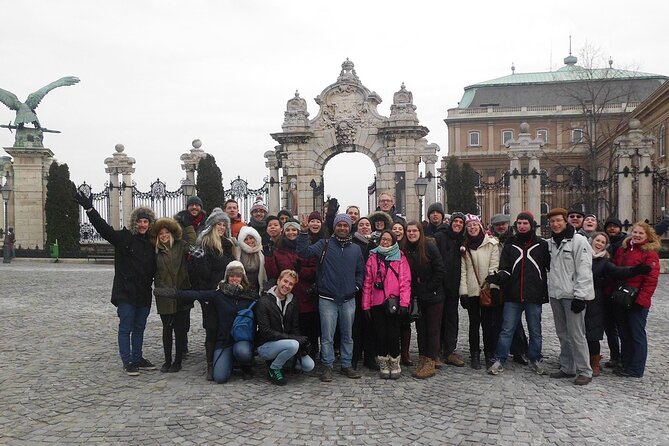
At Matthias Church, you’ll get the 800-year sweep of the area—wars, occupations, and the everyday life shaped by different communities. The tour doesn’t include entering the church, so you’re not paying time or energy for admission lines. Instead, you focus on the context and what surrounds it.
What I like about this approach: it keeps the tour moving while still giving you the historical lens. And it’s practical for first-timers who don’t want a long, sit-and-stare museum plan before they’ve even reached the views.
Stop 3: Fisherman’s Bastion viewpoints, plus Walt Disney and cross symbols
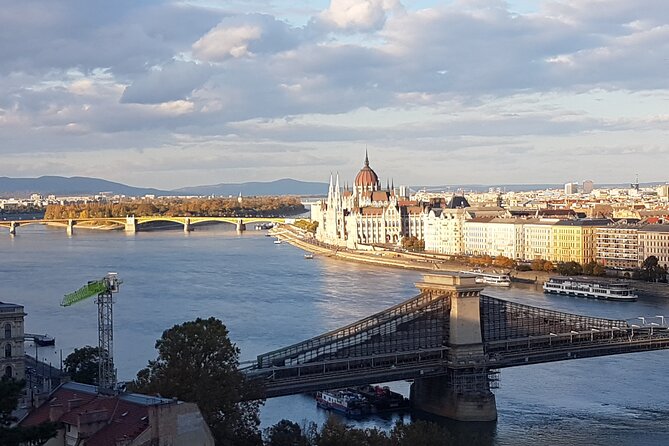
Fisherman’s Bastion is where the tour shifts from “history lecture” to “why this place looks the way it does.” You’ll hear the connection between Walt Disney and Fisherman’s Bastion, which is the kind of surprising detail that makes people remember landmarks after the trip ends.
Then you’ll get a small-but-fun lesson on a visual detail many people overlook: the difference between a cross with one, two, or three strips. That’s the kind of thing you’ll never learn from standing in front of the stone alone.
The tour also flags that you can enjoy a free view from Castle Hill. One caution: this spot can be crowded. If you’re coming at a peak time, don’t expect constant space for photos—plan to accept a few moments, then move. Your guide can help you time where to stand.






Stop 4: The Medieval Jewish Prayer House and the Baroque neighborhood feel
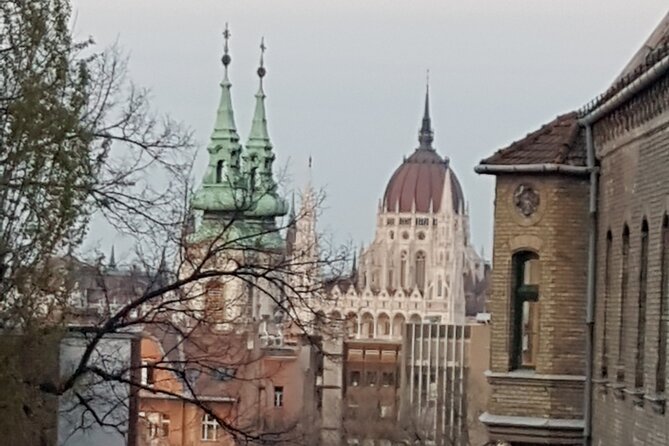
At the Medieval Jewish Prayer House, you’ll get a quieter, more human-scale lesson. This stop is less about dramatic vistas and more about how communities lived around the Castle District’s religious and residential spaces.
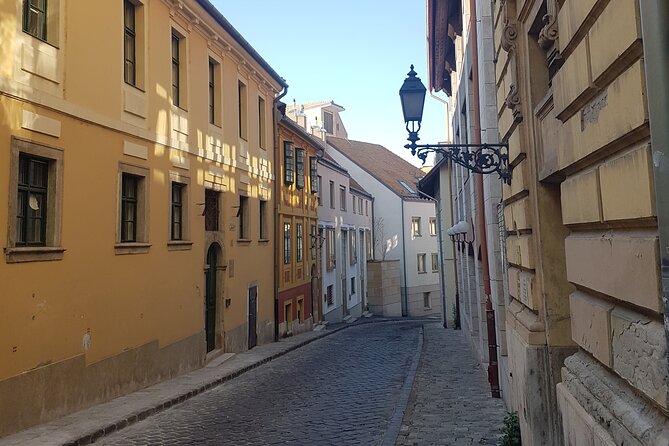
You’ll also see the beautiful baroque residential buildings around it. That combination helps you understand the district as a neighborhood, not just a monument parade.
If you care about full-spectrum history—who lived here, not only who ruled here—this is a key stop.
Stop 5: National Archives of Hungary and WWII memory in plain sight
Next comes National Archives of Hungary, and the tone shifts. You’ll see reminders of WWII destruction and hear about where the Nazi stronghold was located. This is heavy material, but the tour keeps it connected to place, so it doesn’t feel abstract.
You’ll also learn where rich Hungarians live (as context for the district today) and a specific Ottoman-era pilgrimage connection: Gül Baba, described here as an Ottoman Turkish monk and soldier.
This stop is valuable because it grounds the Castle District in the 20th century. A lot of people come for medieval and royal stories, but Budapest’s Castle Hill also carries modern scars—and the tour helps you notice them.
Stop 6: Hospital in the Rock nuclear bunker museum
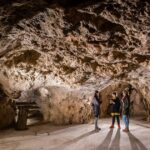
If one stop changes your perspective, it’s Hospital in the Rock Nuclear Bunker Museum. Castle Hill usually feels like romance and views. Here, it turns into underground survival and defense.
You’ll learn about life in the underground Castle Hill, the labyrinths, and the role the area played for defense over the centuries. Reviews also mention the “funniest public statues in Budapest,” which sounds like a joke—until you realize how humor can exist next to fear and engineering. That balance is very Budapest.
You’ll also hear about “huszar,” described here as light cavalry fighters—and specifically as womanizer-type figures. Even if you don’t remember every detail, you’ll remember the way the bunker stop makes the district feel layered: kings above, mechanisms below.
Stop 7: Buda Castle—where power, myth, and rebuilding collide
At Buda Castle, you’ll take in the massive complex that served as a residence for Hungarian kings. The tour explains how it was rebuilt multiple times after war destruction, so it doesn’t come across as a single “finished” monument.
You’ll also get story anchors you can connect later when you explore more on your own: the mythical bird associated with Hungarians, plus the idea of where key government offices are located in the present day (including president and prime minister offices).
A practical note I’m glad the tour brings up: there are bathrooms at Buda Castle, and you can refill water bottles there. On a hot day—or a cold one—that makes a real difference in how enjoyable your last stretch feels.
Some tours rush the palace area. If your guide times it well, you’ll have enough to look, orient, and grab photos without feeling like you’re being herded. One piece of feedback from the experience is that time at the castle can feel a bit rushed for photos, so if photos are your main priority, keep your camera ready and don’t wait for the “perfect” moment.
Stop 8: Prince Eugene of Savoy’s equestrian statue and Pest-side panorama
The final stop is Prince Eugene of Savoy’s Equestrian Statue, where you get a terrace panorama over the Danube toward Pest. This is a classic payoff moment: you’ve walked the hills, learned the layers, and now you see how the two sides of the city relate.
If you’re lucky, your guide tests your memory with tricky questions about major Castle Hill landmarks and life in the city—small, playful, and surprisingly effective at making things stick.
The tour finishes with practical information and time to answer remaining questions. That matters because Budapest can be confusing fast once you leave Castle Hill. A good guide helps you turn what you just learned into a next step.
Price and value: why $3.62 can still be worth it
The price shown for the tour is $3.62 per person, which sounds almost too low. Here’s the practical way to think about it: the booking price covers administration (including a booking fee), while the guide’s earnings depend on donations at the end. So the real cost to consider is your donation amount, not just the headline price.
What makes this good value is how much you get packed into two hours:
- major landmarks plus smaller-but-meaningful stops,
- explanations that help you interpret what you see,
- and a small-group experience that’s designed to keep you moving without losing the story.
If you already like walking tours and you want your sightseeing to feel connected, this is an efficient use of time. If you only want to photograph buildings and you hate stairs, you might find the pace better suited to someone who’s okay slowing down briefly to listen.
Who this tour suits best (and who should skip it)
This Budapest Castle District Walking Tour fits best if you:
- want a fast orientation to Castle Hill,
- enjoy guides who make you ask questions,
- and can handle stairs and uphill walking.
It’s less ideal if you:
- need a fully flat route,
- or you’re likely to struggle with the uphill climbs and long stair sections.
One review explicitly mentions lots of stairs and notes it is not wheelchair accessible, which is exactly what you should plan around if mobility is limited.
Tips to make your walk easier and more enjoyable
- Wear shoes with real grip. Castle District paths can be uneven, especially with steps.
- Bring a bottle. Buda Castle has places to refill water bottles.
- Expect busy moments around Fisherman’s Bastion. If you care about photos, be ready to move quickly and take shots in short bursts.
- Bring curiosity. The tour is built for questions, and your guide will adjust when you ask.
Also, if you’re traveling in cold or windy weather, dress for it. Several guide-focused reviews highlight how they kept things fun even in freezing conditions, but your comfort still drives your enjoyment.
Should you book this Castle District walking tour?
Yes, I’d book it if you want to understand Budapest’s Castle Hill in one focused hit. The route is efficient, the stops connect to both medieval and modern stories, and the best guides here (people like Dóra, Zsófia, Rita, Esther, and Andy show up in the guide lineup) tend to keep a lively pace while staying open to questions.
Skip it only if you strongly prefer low-walking sightseeing or you know the uphill and stair sections will be tough for you. If you’re comfortable with steps, this is a smart, high-value way to turn a pile of famous sights into a real sense of place.
FAQ
How long is the Budapest Castle District walking tour?
The tour lasts about 2 hours.
Where do I meet the guide?
You meet at Batthyány tér 1, 1011 Hungary, at the Batthyányi ter metro exit in the park.
What’s included in the tour price?
The price includes the booking fee. Tips or donations to the guide are not included.
Does the tour include entry into Matthias Church?
No. You’ll learn about Matthias Church, but you do not enter the church.
Is the tour suitable for people who get tired on uphill walks?
The tour notes a moderate physical fitness level and asks you to consider your health and ability for about a 10-minute uphill walk. There are also stairs.
What are some of the major stops on the route?
Key stops include Matthias Church, Fisherman’s Bastion, the Medieval Jewish Prayer House, National Archives of Hungary, Hospital in the Rock, Buda Castle, and Prince Eugene of Savoy’s Equestrian Statue.
Is the tour in English?
Yes, it’s offered in English.
What should I know about crowds?
Fisherman’s Bastion can be crowded, so your photo time and viewpoint comfort may vary by time of day.
Where does the tour end?
It ends at the Statue of Prince Eugene of Savoy in Budapest, 1013 Hungary, and the conclusion point is about a 30-minute walk from where you started.