REVIEW · BUDAPEST
Castle District tour with Matthias Church Ticket & Cake & Coffee
Book on Viator →Operated by Budapest Urban Walks · Bookable on Viator
Budapest looks best from above—and this tour takes you there. You’ll get an efficient Buda Castle District walking route with the inside visit that most DIY plans fumble: Matthias Church. It’s paced for real people, not a race, and you’ll learn the stories behind the scenery while still having time to look around.
I especially like the private guide part. In my experience with Budapest walks, this is the difference between “I saw buildings” and “I get what I’m looking at,” and the guides here consistently shape the tour to your pace and interests. I also love the built-in break: coffee and Hungarian cake, which keeps energy up on the hill.
One thing to plan for: parts of the castle area can be under renovation. The sights remain worth it, but some views and facades may be wrapped or temporarily blocked while work is underway.
In This Review
- Key highlights to look for
- A smarter way to see Budapest’s Castle District in 3 hours
- Fisherman’s Bastion: the best views, with the right context
- Matthias Church: included ticket and a real sense of place
- Buda Hill Funicular: shifting height without wearing out your legs
- Holy Trinity Column: a short stop with a heavy reason
- Buda Castle: the palace complex and why it’s more than one building
- Matthias Fountain: your photo stop with a nickname in practice
- Sándor Palace: meeting a modern Hungary landmark
- Coffee and cake: a pause that improves the whole tour
- Private tour pacing: why your guide names matter
- Price vs value: what you’re really paying for
- Should you book the Castle District tour with Matthias Church and cake?
- FAQ
- How long is the Castle District tour?
- What’s included in the tour price?
- Do I need to buy a ticket for Matthias Church?
- Where does the guide meet the group?
- What language is the tour offered in?
- Is the tour private?
- Will the tour run in bad weather?
- Are there any additional entrance fees?
- How do I get the tickets?
- What’s the cancellation policy?
Key highlights to look for
- Matthias Church ticket included so you’re not stuck timing entry on your own
- Coffee and traditional Hungarian cake stop built into the route
- Hotel pickup from your address, which saves time on a steep, busy area
- Fisherman’s Bastion viewpoints with explanations that make the panorama mean something
- A funicular segment to help you get height without all the extra walking
A smarter way to see Budapest’s Castle District in 3 hours
The Buda Castle District can be a bit of a maze when you’re doing it alone. Streets curve, viewpoints pop up, and then you’re stuck asking your phone where the next stop is. This tour works because it’s designed as a connected route with a human guide doing the heavy lifting: where to stand, what to notice, and what stories to listen for.
At about 3 hours, it’s also a realistic chunk of time. You’re not trapped for a half-day, and you’re not pressured to sprint through everything. Plus, it’s offered in English, with mobile tickets and a guide who meets you at your requested address.
There’s also a quality factor that shows up again and again in how the guides work. Names you might get include Leslie/Laszlo, Adam Katai, Ferenc, László, Norbert, and Ray, and the consistent theme is the same: prompt meeting, clear explanations, and a tour that feels personal rather than scripted. One guide even helped with local transport logistics beyond the walking portion, which is the kind of practical bonus that makes the rest of your day easier.
The price is $126.03 per person. For a short private walking tour, that can sound steep—until you add up what’s included: Matthias Church admission, coffee/tea, traditional Hungarian cake, and hotel pickup. You’re paying for time saved and for a guide to translate the place while you’re standing in it. If you’d otherwise spend time hunting tickets, figuring directions, and taking multiple “almost the right way” detours, the value starts to make sense fast.
You can also read our reviews of more tours and experiences in Budapest.


Fisherman’s Bastion: the best views, with the right context
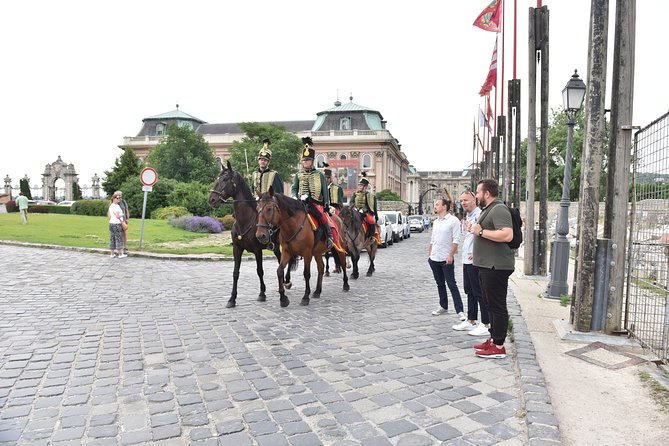
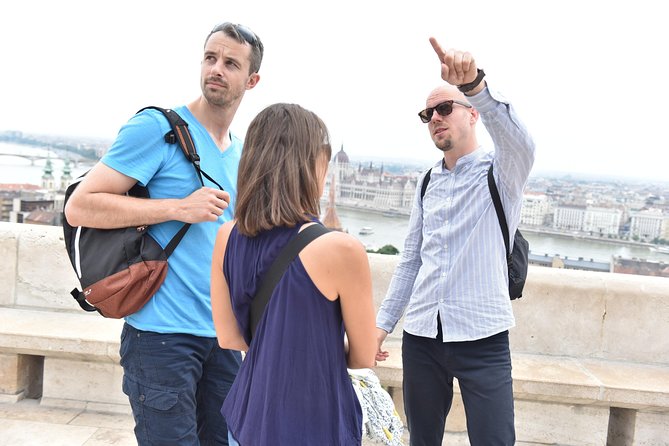
You start at Fisherman’s Bastion (Halászbástya), one of the most recognized viewpoints in Budapest. The terraces are famous for a reason: from here, you look out over the Danube and the wider city, with the architecture arranged for maximum photo impact.
What makes the stop work on a guided tour is the story layer. You’re not just seeing postcard angles—you’re also hearing why this lookout became a symbol of Buda and how the surrounding area developed into the heart of the castle quarter. When you understand what you’re looking at, the viewpoint becomes more than a backdrop.
Plan for a quick stop—this is listed at about 10 minutes—so you’ll want to decide early what you want most: photos, reading details, or just soaking in the angle. If your group is heavy on photos, you’ll appreciate a guide who nudges timing so you don’t miss the best light or the easiest walking path to the next stop.
A small practical note: this area is exposed. Weather matters here, and the tour operates in all weather conditions, so bring a jacket even when the forecast looks friendly.
Matthias Church: included ticket and a real sense of place
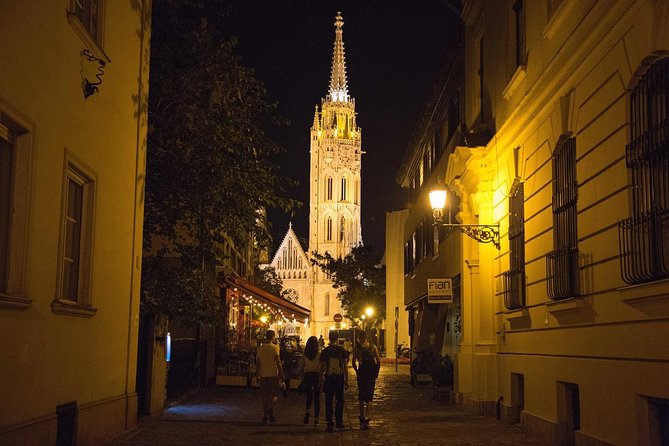
Next is Matthias Church, formally the Church of the Assumption of the Buda Castle. It’s often called Mátyás-templom, and it’s located in Holy Trinity Square, right at the heart of the Castle District action—very close to Fisherman’s Bastion.
This is the anchor stop for many people, and it’s included in a way that helps: tickets to Matthias Church are part of the tour, and the visit is listed at about 30 minutes. That time is usually enough to appreciate the main interior features and understand what makes this church different from a generic “pretty cathedral” stop.
The practical win is avoiding the common DIY frustration: showing up, waiting in the wrong line, or losing time negotiating entry while the rest of the district moves on around you. When the ticket is already handled, you can focus on what’s inside.
Also, Matthias Church isn’t just a building; it’s a symbol tied to rulers and the political story of Hungary over time. A good guide makes that clear while you’re there, and the guides in this tour tend to bring that connection to life. If you’re the kind of person who asks why things look the way they do, this is where your guide’s explanation payoff is usually highest.
Buda Hill Funicular: shifting height without wearing out your legs
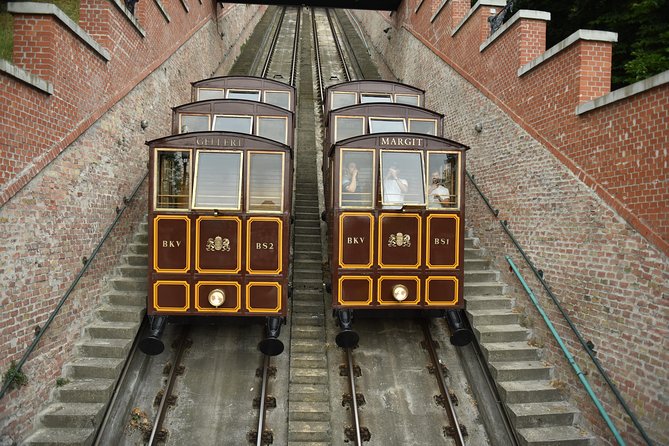
After Matthias Church, the route includes a ride on the Buda Hill Funicular (Budavári Sikló). This funicular links the river-level area near the Chain Bridge up toward Buda Castle, which means you get altitude with less punishment than doing everything on foot.
The itinerary notes it as a short 10-minute segment and lists admission as free in the stop details. Even if you’re just treating it as a quick transit beat, it matters because it keeps the day comfortable—especially if you’re visiting in hot weather or you’re not eager to climb every step.
This is one of those details that can be easy to overlook when you plan your own day. With the guide, it becomes part of the route rather than a separate activity you must figure out.
Holy Trinity Column: a short stop with a heavy reason
Next you’ll see the Holy Trinity Column near Matthias Church and Fisherman’s Bastion, located in the middle of Trinity Square. It commemorates people of Buda who died during two outbreaks of the Black Plague.
It’s a small stop—about 10 minutes—but it adds meaning. The Castle District can feel like architecture and views first, history second. This column brings the history front and center, reminding you that this area’s story isn’t only kings and churches—it’s also loss, recovery, and the way cities remember tragedy.
If your group likes a mix of spectacle and serious context, this is a good balancing point. If your group is strict on time for photos only, you might want to keep an eye on the clock here so you still have enough energy later at the fountain and palace area.




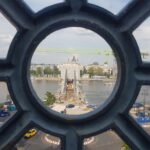

Buda Castle: the palace complex and why it’s more than one building
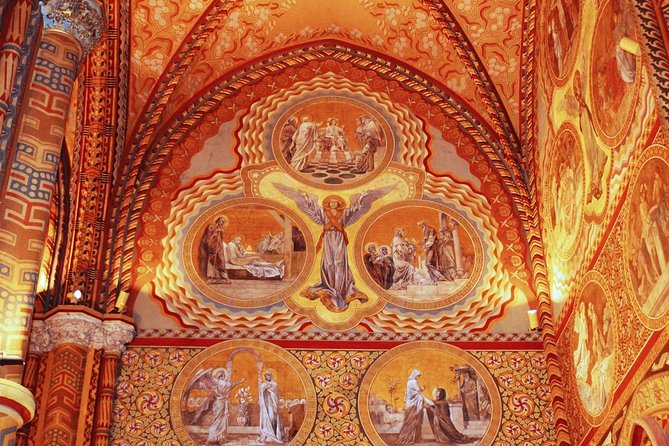
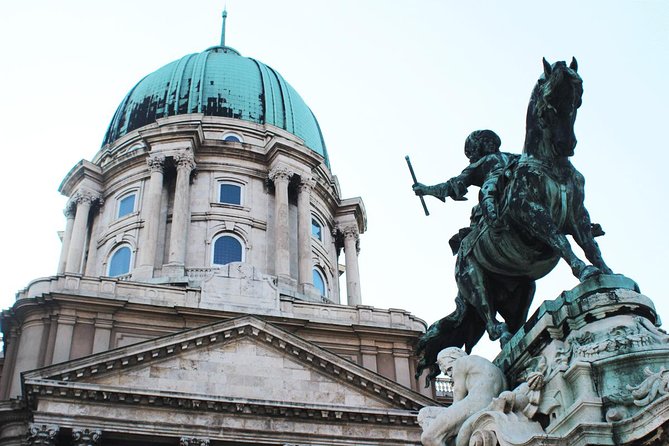
Then you move into the bigger sweep of the Buda Castle complex, listed as about 20 minutes. The official history is layered: the castle site has been around since the medieval period, but the large Baroque palace visible today was built primarily between 1749 and 1769.
That matters because when you visit, you’re not looking at a single time period. You’re looking at a complex that has been rebuilt, reshaped, and repurposed over centuries. A guide helps you make sense of the different architectural “eras” you’re standing in front of.
What you’ll do here depends on the pacing of your specific group. In many Castle District tours, this kind of stop works best if you’re looking for orientation. You’re learning where you are in the big picture, and you’re getting a set of landmarks you can recognize later if you keep exploring on your own.
One caution based on real-world conditions: some buildings or parts of the area may be under refurbishment. You can still expect a good understanding of the site, but the visual experience might be partly blocked by work zones at times. If that would stress you out, it’s wise to keep expectations flexible and focus on the overall route and viewpoints.
Matthias Fountain: your photo stop with a nickname in practice
On the western forecourt, you’ll get to the Fountain of King Matthias (Mátyás kútja), listed around 15 minutes. The design is by Alajos Stróbl and is often photographed—one reason is that it gives you a “foreground anchor” while you’re surrounded by palace scenery.
It’s sometimes called the Trevi Fountain of Budapest, and the comparison is practical. Like Trevi, it’s the kind of landmark where people want to stand, look up, frame the shot, and move on. The tour gives you the structure to do that without wandering aimlessly around the edges.
If you’re the type who likes to read inscriptions or understand what you’re photographing, this is usually where guides can turn a simple photo moment into something more interesting. And if you just want the classic snapshot, the timing is short enough that you won’t feel trapped.
Sándor Palace: meeting a modern Hungary landmark
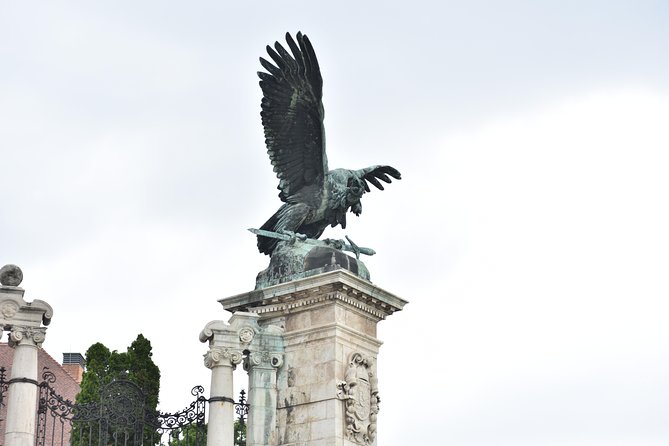
Your final stop is the Sándor Palace, about 10 minutes. It’s beside the Buda Castle complex and has served as the official residence and workspace of the President of Hungary since 2003.
This is a good way to close the loop. The day starts with old-world viewpoints and a church tied to Hungary’s rulers, and then you end at a site that shows how the Castle District isn’t only preserved history—it’s still used.
Even if you don’t spend time on the inside (the tour timing is short), the guide’s framing helps you connect the district’s medieval and Baroque story to today’s political life. It turns the castle area into a living neighborhood rather than a museum set.
Coffee and cake: a pause that improves the whole tour
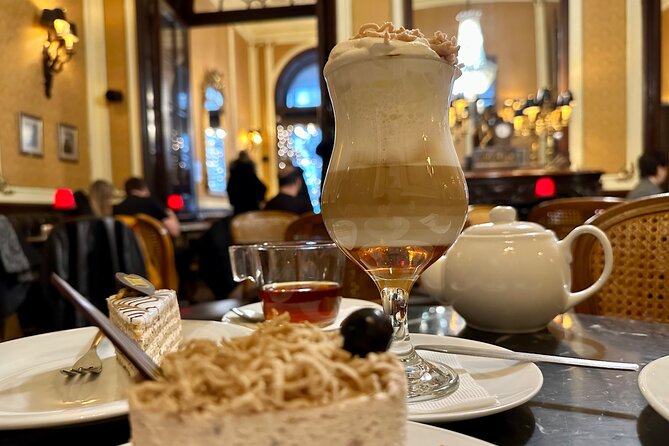
One of the smartest inclusions here is the mid-tour break with coffee/tea and traditional Hungarian cake. You’re not forced to run between viewpoints like an overcaffeinated pigeon. You sit for a moment, reset your legs, and let the information from the earlier stops land.
In tours like this, the food stop also becomes a low-pressure way to ask questions. That’s where good guides often add extra context in an informal way—something you might miss if you only focus on monuments. If you’re the type who likes personal recommendations, this is a natural moment to ask what to see next or where to walk after the tour ends.
It also helps for the practical side of Budapest: the Castle District can mean uneven pavement, stairs, and sun—or wind—depending on the day. A sit-down break keeps the pacing comfortable for most people.
Private tour pacing: why your guide names matter
This is a private tour, meaning it’s only your group. That matters more than people expect. When the guide isn’t managing strangers, they can slow down where you need it and speed up where your group wants motion.
Across the guides you might get—Ferenc, László, Norbert, Ray, Reka, Adam Katai, and Leslie/Laszlo—a common pattern shows up: prompt pickup, clear storytelling, and humor mixed into the historical explanations. One guide even guided someone on how local public transportation works, which is extra helpful if you’re new to the city and want to avoid spending your first day guessing.
There’s also flexibility in how the tour gets paced. One account described a tour that ran longer than booked when everything was going well. That’s not something you should count on, but it hints at the guide style: if you’re engaged and your group is moving comfortably, the experience can feel less “clock-driven” and more “you’re here to see Budapest.”
Price vs value: what you’re really paying for
Let’s be honest: $126.03 per person is not the cheapest way to see the Castle District. But it’s also not just “a guide walking behind you.”
You’re paying for:
- Hotel pickup from your address (huge time saver in a place with hills)
- Matthias Church tickets included
- Coffee/tea and traditional Hungarian cake
- A private route that keeps you oriented around the district highlights in about 3 hours
If you were doing this yourself, you’d likely spend time coordinating tickets, figuring out transport up and down the hill, and backtracking when you take the wrong turn. The guide compresses all of that into a single plan.
And if you care about learning meaning—not just taking photos—this tour is a strong fit because the guide adds the stories that make the architecture make sense.
Should you book the Castle District tour with Matthias Church and cake?
If your goal is a smooth, high-yield Castle District day without wasting time, yes, this is a smart booking. It’s especially good if:
- You want Matthias Church handled without entry hassles
- You like guided context that explains why landmarks matter
- You want a comfortable pace with a coffee and cake break
- You’d rather have someone handle routing than play map roulette on steep streets
I’d think twice if your top priority is wandering for hours at your own tempo with zero structure. This tour is efficient. It’s designed to hit the big anchors and related sights, not to turn into a long, meandering explore session.
If your schedule allows it, though, this tour is a great way to start on the Buda side with momentum—then you can continue exploring afterward with a much better sense of where everything fits together.
FAQ
How long is the Castle District tour?
It runs for about 3 hours.
What’s included in the tour price?
You get hotel pickup, coffee and/or tea, traditional Hungarian cake, and tickets to Matthias Church.
Do I need to buy a ticket for Matthias Church?
No—the Matthias Church ticket is included.
Where does the guide meet the group?
The guide meets you at your requested address for pickup.
What language is the tour offered in?
The tour is offered in English.
Is the tour private?
Yes. It’s a private tour/activity with only your group participating.
Will the tour run in bad weather?
It operates in all weather conditions, so dress appropriately.
Are there any additional entrance fees?
Additional entrance fees are not included unless specified, but Matthias Church is included.
How do I get the tickets?
The tour uses a mobile ticket.
What’s the cancellation policy?
Free cancellation is available up to 24 hours in advance for a full refund.