REVIEW · BUDAPEST
Palace District Evening Culinary, Wine, and History Walk
Book on GetYourGuide →Operated by Taste Hungary · Bookable on GetYourGuide
Three wines and six tastings, with history on foot. I really like the sommelier-led wine tasting plus the way the guide turns food stops into Palace District storytelling, from grand museum gardens to 1956-era landmarks. One consideration: you’ll cover a lot of ground on foot in about four hours, so comfortable shoes matter.
You start at The Tasting Table near the National Museum and ease into the night with charcuterie and local cheeses, then keep grazing your way across the neighborhood. Expect plenty to drink along the route, including Hungarian pálinka and a classic gulyás stop, with dessert at an old-style coffeehouse to close things out.
This is a small-group, English-led “progressive dinner” format, capped at 8 people. If you want a first-night plan that mixes great flavors with real neighborhood context (and you like moving at an evening walking pace), this one fits.
In This Review
- Key things I’d mark on your mental map
- Palace District dinner-walk: why this feels different from a normal tour
- Your 4-hour route in plain terms (6 stops, lots of drinking, real walking)
- Stop 1: The Tasting Table start with 3 wines, cheese, and charcuterie
- The bakery stop: pogácsa and stangli, plus a sense of time
- Courtyard bar and pálinka: the Hungarian spirit stop
- Gulyás and appetizers at a neighborhood bistro: comfort food with context
- Ruin-bar–style atmosphere: more than a drink, a Budapest mood
- Dessert at an old coffeehouse: finish sweet, then head out
- The history walks between tastings: palaces, parliaments, and the 1956 siege
- Neo-Baroque palace to public library: Franz Joseph’s ballroom moment
- Who should book this Palace District night walk
- Who should skip it
- Price and value: is $145 reasonable for 6 stops and a sommelier?
- The guide factor: English storytelling that keeps pace and answers questions
- Should you book the Palace District Evening Culinary, Wine, and History Walk?
- FAQ
- What is the duration of the Palace District evening walk?
- How many tasting stops are included?
- What drinks are included?
- Where do we meet for the tour?
- How big is the group?
- Is the tour suitable for vegans or wheelchair users?
- Can I cancel and get a refund?
Key things I’d mark on your mental map
- Six tasting stops built into a single 4-hour loop, not a sit-and-listen tour
- Wine flight with a sommelier featuring sparkling, white, and red
- Pálinka stop in a fun courtyard bar for a proper Hungarian spirit moment
- Bakery goodies from a family business since 1870, including pogácsa and stangli
- History stops you can’t get from a brochure, including courtyards and palatial architecture
Palace District dinner-walk: why this feels different from a normal tour
Budapest has plenty of food tours. This one feels more personal because it’s focused on one neighborhood you can actually walk through and start recognizing. The Palace District (Palotanegyed) isn’t just pretty buildings and postcard views; it’s a layered area where aristocratic grandeur, university life, and modern creativity all overlap.
I also like that the structure is built around tastings, not just narration. You eat, you drink, you pause, then you move again. That keeps the evening from getting heavy, and it makes the history land in a very practical way.
The best version of this tour is for someone who wants to understand Budapest beyond the main highlights. You’re not only learning what happened here—you’re sampling the kind of everyday food culture that survived all those changes.
You can also read our reviews of more tours and experiences in Budapest.



Your 4-hour route in plain terms (6 stops, lots of drinking, real walking)
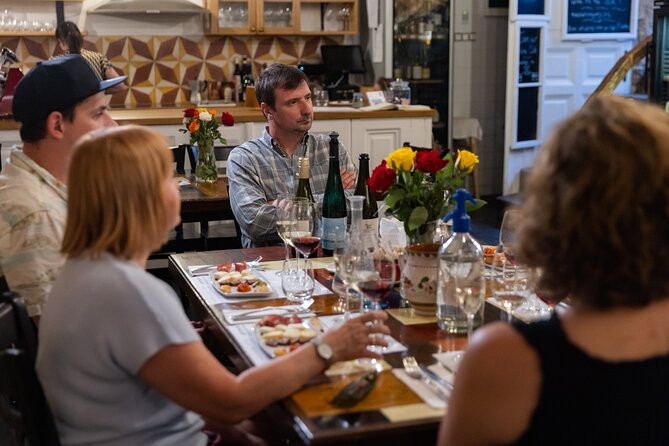
The tour runs about four hours, led in English, and designed for small groups (maximum 8). You meet at The Tasting Table, Bródy Sándor utca 9 (District VIII), and from there you spend the night doing a slow parade of tastings across the Palace District.
You’ll get a “progressive dinner” rhythm: a start with cheese and wine, then a string of bites and drinks, and finally dessert. The walking is part of the point, since the neighborhood tour goes between the inner and outer ring roads, with time for stops among gardens, courtyards, and elegant streets.
Here’s the pacing to expect:
- You’ll start with wine + cheeses.
- Then you’ll graze through bread-and-snack territory (pogácsa and stangli).
- You’ll hit a pálinka moment.
- You’ll move into a hearty gulyás and appetizer stop.
- You’ll include a drink/atmosphere stop in a ruin-bar–style setting.
- You’ll close with coffeehouse dessert.
If you’re the type who gets hangry while walking, plan to eat the included food. Everything is set up so you don’t have to hunt for meals on your own.
Stop 1: The Tasting Table start with 3 wines, cheese, and charcuterie
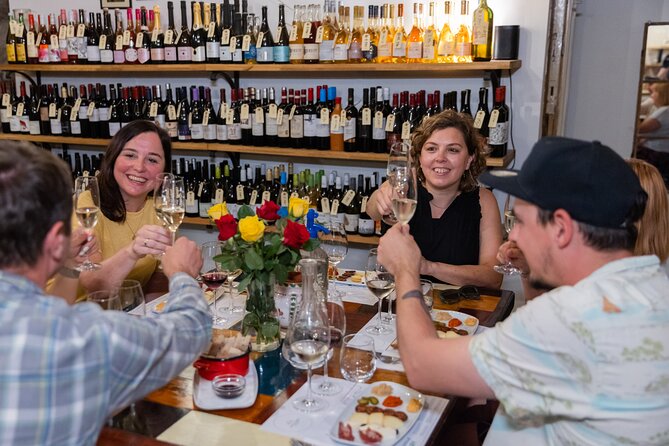
Everything begins at The Tasting Table (and shop), about a 150-meter walk from the National Museum. It’s also close to Astoria (M2) and Kálvin tér (M3), which makes it easy to reach on tram or metro when your day gets messy.
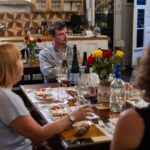
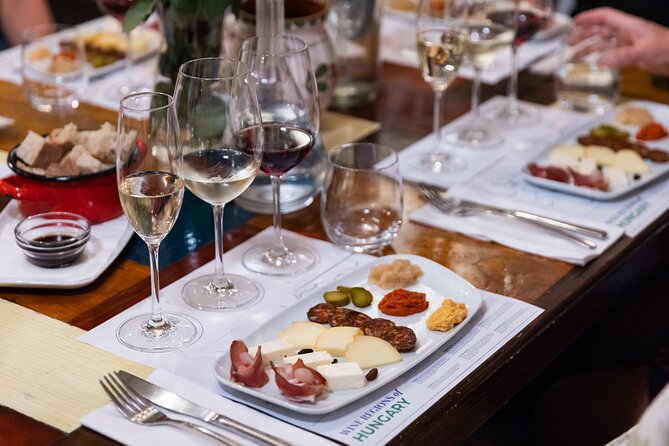
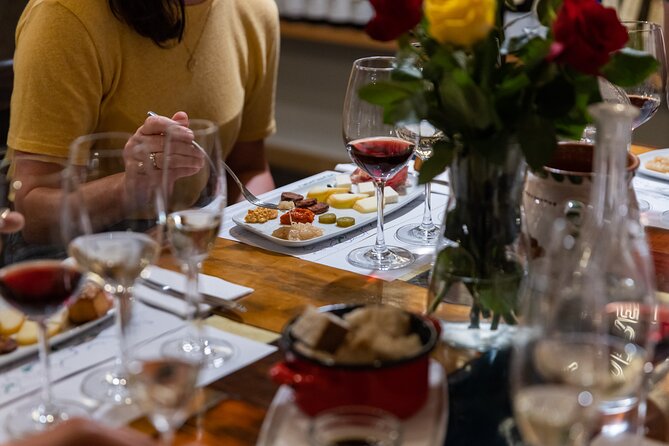
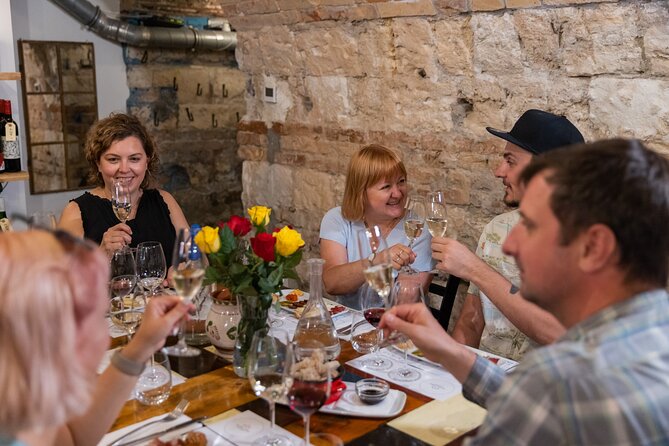
At the start, the sommelier introduces a Hungarian wine tasting featuring three wines: sparkling, white, and red. Alongside the pours, you get platters of charcuterie and local cheeses—exactly the kind of beginning that helps you taste more confidently later.
This first stop does two important jobs:
- It sets the flavor tone for the evening, so the later foods make sense.
- It gives you a relaxed moment to ask questions before the pace picks up.
And because you’re starting in a place that’s been operating in this neighborhood for years, the feel is less showy and more grounded in local life.
The bakery stop: pogácsa and stangli, plus a sense of time
One of the practical joys of this tour is that not every stop is about alcohol. You also get baked goods—specifically pogácsa and stangli—at a bakery run by a family that’s been in business since 1870.
Why this matters: old-bakery food is a fast way to understand what local taste meant before trends took over. It also breaks up the evening so you can reset between heavier pours and meatier dishes.
If you’re wondering what to expect in texture and vibe, think savory baked bites designed to be eaten while you’re standing and walking. This is food that fits the street pace of the Palace District.
Courtyard bar and pálinka: the Hungarian spirit stop
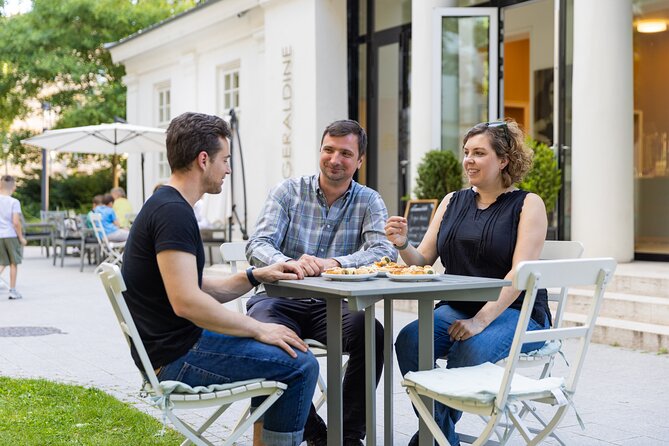
Next comes the pálinka moment, served at a courtyard bar that adds some personality to the night. Pálinka is Hungary’s fruit brandy, and the point of this stop isn’t just drinking—it’s trying it in a setting that feels like an evening out, not a formal tasting room.
This is also where I’d pay attention to how you’re feeling. If you go hard early, the later stops can feel like a blur. If you pace yourself, the flavors tend to make more sense.
The tour’s “grazing” style helps here. You’re not suddenly facing one massive course; you’re sampling and continuing, which makes pálinka easier to digest and enjoy.





Gulyás and appetizers at a neighborhood bistro: comfort food with context
After the spirit stop, you move into a bistro-style meal featuring gulyás soup plus other local dishes (including goose liver pâté). This is the point where the tour shifts into proper comfort-food mode.
I love this part because gulyás is one of those dishes that can look simple but carries a lot of identity. Eating it here, on foot around palace-era streets and courtyards, gives it more meaning than if you’d had it somewhere generic.
A drawback to consider: this is the stop where the evening becomes more filling. If you tend to eat quickly when you’re excited, slow down and let the rest of the route stay fun.
Ruin-bar–style atmosphere: more than a drink, a Budapest mood
At one of the later tastings, you also visit a ruin bar-style stop. The Palace District has its share of strong contrasts—classic architecture beside creative nightlife—and this atmosphere helps you feel the neighborhood as it exists today.
The food-and-drink setup here keeps the evening from turning into museum mode. Instead of spending four hours in a story bubble, you get a night-out feeling with just enough structure to keep learning moving.
If you don’t love bar noise, aim to stand where you can still hear the guide. The group size stays small, so there’s usually room to find a comfortable spot without turning it into a power struggle.
Dessert at an old coffeehouse: finish sweet, then head out
The final stop is dessert at an old coffeehouse. It’s an ideal ending for two reasons: coffeehouse-style sweets match the neighborhood mood, and dessert feels like closure after a tour that’s been part tasting, part walking, part history.
This is also where I’d expect you to slow down. By now you’ve had wine, spirits, baked goods, savory dishes, and soup—so the ending should feel like a gentle cooldown rather than another heavy hit.
The history walks between tastings: palaces, parliaments, and the 1956 siege
The food is half the deal. The other half is the Palace District story, told while you move between the inner and outer ring roads.
You’ll walk past the gardens of the National Museum, where aristocrats built palatial homes in the 19th and early 20th centuries—Budapest’s so-called golden age of grand architecture. The vibe here is very different from newer districts: you get streets that feel planned, built, and meant to last.
Then the tour zooms into major political and social moments:
- Hungary’s first parliament connection is part of the neighborhood narrative.
- The failed Hungarian Revolution of 1956 comes up directly, including the siege of the Hungarian Radio building.
- You’ll hear about an Italian community that played a role in this part of town.
I like how this history is woven into what you can see. You’re not only hearing dates; you’re learning which buildings held power, which spaces hosted communities, and which areas were shaped by conflict.
Neo-Baroque palace to public library: Franz Joseph’s ballroom moment
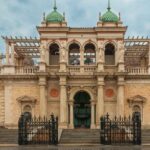
One of the best “wait, what is that?” stops is a former neo-Baroque palace that now functions as one of Budapest’s most beautiful public libraries. This is where the tour adds a little extra drama without turning it into a show.
Inside, you’ll hear about a ballroom where Franz Joseph attended events. It’s one of those details that makes the building feel alive—like the walls remember a different tempo.
The tour also notes skip-the-line access through a separate entrance, which matters because it helps keep your evening on schedule. When a tour respects time, you get more enjoyment and less waiting.
Who should book this Palace District night walk
This tour is a strong match if you:
- Want a first-night plan that gets you oriented fast without needing to navigate alone.
- Like food tours that include history tied to real streets and buildings.
- Prefer small groups (up to 8) where you can ask questions and keep the pace comfortable.
It’s also a good pick for food lovers who enjoy progressive tasting formats, where you don’t have to decide on one restaurant and hope it’s perfect.
Who should skip it
This one isn’t for everyone. It’s marked not suitable for vegans, and the included foods explicitly lean into dairy and meat choices (charcuterie, local cheeses, gulyás, goose liver pâté). If you avoid those foods, you’d likely be disappointed.
It also isn’t wheelchair accessible, and the tour covers a lot of ground on foot. So if mobility is a concern, you’ll want an alternative option.
Price and value: is $145 reasonable for 6 stops and a sommelier?
At $145 per person for about 4 hours, you’re paying for more than a walking guide. You’re getting:
- Six tasting stops
- A Hungarian wine tasting featuring three wines with a sommelier
- Local cheeses and charcuterie
- Included dishes like gulyás and goose liver pâté
- Pálinka
- Bakery goodies (including pogácsa and stangli)
- Dessert at an old coffeehouse
So the value isn’t just that there’s food. It’s that the evening combines alcohol service, multiple venues, and guided context in one package. If you tried to recreate this yourself, it would mean coordinating restaurants, tastings, and timing—plus paying for a guide to add the historic connections.
It’s also capped at 8 participants, which usually makes the experience more personal. And you’ll be in English, so you aren’t playing guessing games with the history or the tasting notes.
The guide factor: English storytelling that keeps pace and answers questions
This tour is led by a specialist food and history guide, and the English narration seems to matter. Recent feedback highlights guides like Aniker, Anaku, Andrea, Daniel, Sarah, Sophia, and Franc—with praise focused on how fun they made the night and how well they explained what you were eating and seeing.
In practice, that’s what you want: a guide who can talk about why a dish fits the neighborhood and why that library ballroom matters, without lecturing the group into boredom.
Should you book the Palace District Evening Culinary, Wine, and History Walk?
If you want one evening in Budapest that feels like a guided night out—with wine, snacks, and history you can actually point at—I’d say book it. The format is efficient: you get six stops, drinks included, and a route that turns the Palace District into a story you can walk through.
But if you’re vegan, have limited mobility, or hate walking, look for another option. This is a “taste and stroll” evening, not a sit-down meal with minimal movement.
If you’re deciding for your first night in town, it’s especially hard to beat: you’ll leave with both full taste buds and a better sense of where the neighborhood’s big moments happened.
FAQ
What is the duration of the Palace District evening walk?
The tour lasts about 4 hours.
How many tasting stops are included?
You’ll make 6 tasting stops during the evening.
What drinks are included?
The tour includes Hungarian wine tasting with three wines (sparkling, white, and red) led by a sommelier, plus pálinka.
Where do we meet for the tour?
Meet at The Tasting Table (and Shop), Bródy Sándor utca 9, 1088 Budapest (District VIII). It’s near the National Museum, and a short walk from Astoria (M2) and Kálvin tér (M3).
How big is the group?
It’s a small group limited to 8 participants, with a minimum of 2.
Is the tour suitable for vegans or wheelchair users?
No. The tour is not suitable for vegans and it is not wheelchair accessible.
Can I cancel and get a refund?
Yes. There is free cancellation up to 24 hours in advance for a full refund.