REVIEW · KRAKOW
Kraków: Old Town & Wawel Castle Walking Tour in English
Book on GetYourGuide →Operated by Walkative Tours · Bookable on GetYourGuide
Krakow’s history is on your feet. This walking tour threads you through the UNESCO-listed core of Krakow, then up to Wawel Hill to connect the landmarks into one clear story. You’ll hear how rulers, religions, and everyday city life shaped Central-Eastern Europe, from medieval walls to royal courtyards.
What I like most is the way the route is built like a narrative, not a slideshow: you pass St. Mary’s Basilica, Main Market Square, and the Collegium Maius area with context that actually clicks. Another big plus is the guide energy. I’ve seen names like Big Tom, Chris, Maciek, and Victoria associated with this tour style, and the common thread is clear explanations with humor that keeps a big group from tuning out.
One drawback to plan for: it’s still a walking tour. If your pace is slower, you may miss some of the spoken details, since the group keeps moving and there’s only limited time to stop and reset.
In This Review
- Key things I’d watch for on this Krakow Old Town & Wawel Castle tour
- Krakow’s UNESCO Old Town, explained street by street
- The Barbican, city walls, and the Royal Route rhythm
- Main Market Square and Cloth Hall: the center of power and trade
- St. Mary’s Basilica trumpeter and Collegium Maius courtyards
- Archbishop Palace, John Paul II’s papal window, and the meaning of views
- Wawel Hill: courtyard time, cathedral focus, and the Wawel Dragon
- Price and value: what $26 buys you in Krakow time
- Who should book this English walking tour?
- Should you book this Kraków Old Town & Wawel Castle tour?
- FAQ
- How long is the Kraków Old Town & Wawel Castle walking tour?
- What is the price per person?
- Is the tour in English?
- Where does the tour meet?
- What is included in the tour?
- Are snacks included?
- Is there free cancellation?
- Can I reserve and pay later?
- Is the tour wheelchair accessible?
- What should I expect in terms of walking?
Key things I’d watch for on this Krakow Old Town & Wawel Castle tour
- UNESCO Old Town focus: You spend your time in the preserved medieval core that shaped Krakow’s rise
- Royal Route landmarks: Main Market Square, St. Mary’s, and Wawel Hill are tied together with why they matter
- Legend included: You’ll get the Wawel Dragon story in the same breath as the royal power behind it
- Courtyards, not a long indoor marathon: You visit the courtyards of Collegium Maius and the Wawel Royal Palace
- A story-led guide: Expect humor and fast clarity, often built around big historical themes
- About 150 minutes on foot: Plan comfortable shoes and a steady pace
Krakow’s UNESCO Old Town, explained street by street
This is the kind of tour that helps you stop seeing Krakow as a list of sights and start seeing it as one connected place. The “why” matters here: the Old Town survived the Second World War with much of its historic fabric intact, which is exactly why it’s on the first-ever UNESCO Heritage List. When you walk through it with a guide, the streets stop feeling like background and start feeling like evidence.
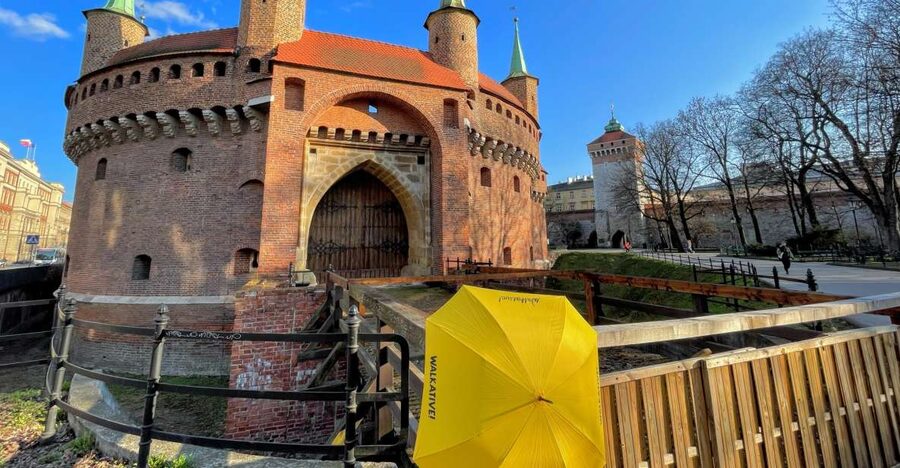
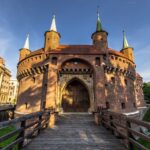
You begin with the medieval edge of the city. The meeting spot is a small area between the Barbican and St. Florian’s Gate, two parts of Krakow’s early defense system. That matters because the tour keeps returning to how power and protection shaped the city: gates, walls, and ceremonial routes weren’t just practical. They were political.
The tour duration is 150 minutes. That’s long enough to connect dots, but not so long that you’re trapped in constant motion forever. Still, this isn’t “sit and listen.” You’ll be outdoors for most of it, and you’ll keep moving between major points on the Royal Route.
You can also read our reviews of more tours and experiences in Krakow.
The Barbican, city walls, and the Royal Route rhythm
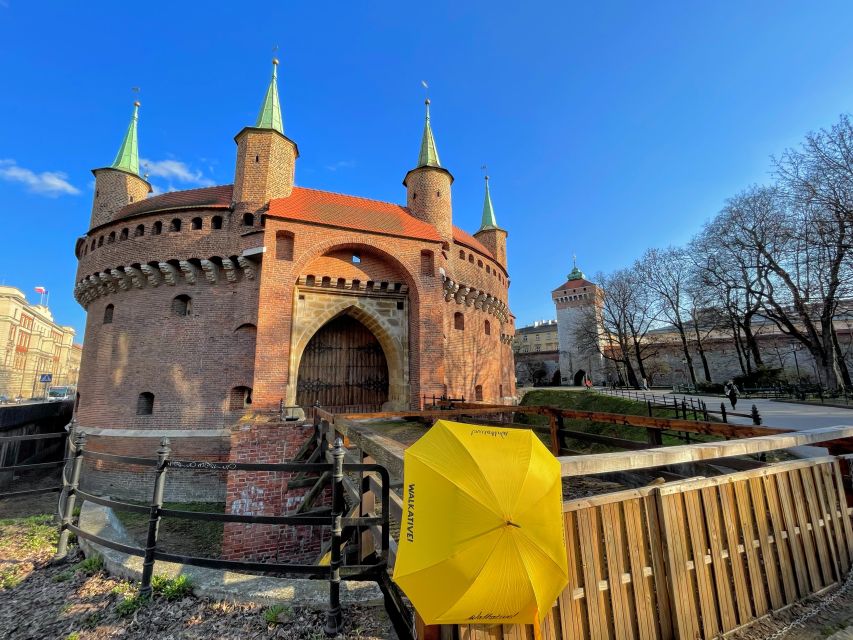
The opening stretches set your bearings fast. The medieval city walls and the Barbican put you in the right frame: Krakow wasn’t only a cultural center; it was a city that had to defend itself and control who entered.
Then you start the Royal Route approach, where the tour naturally “aims” you at the main ceremonial center. Along the way, you’ll see how architecture works as a map of history. Styles don’t just look pretty. They’re fingerprints of wealth, changing rulers, and shifting influences across Central-Eastern Europe.
One practical note: because the route is built for flow, the guide will likely speak while you walk and cluster by key angles for photos. If you’re traveling with limited mobility or you need extra time to catch up, the tour may feel a bit demanding. One experience described missing information because the group moved ahead before an elderly parent could keep up.
Main Market Square and Cloth Hall: the center of power and trade
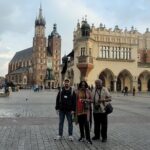
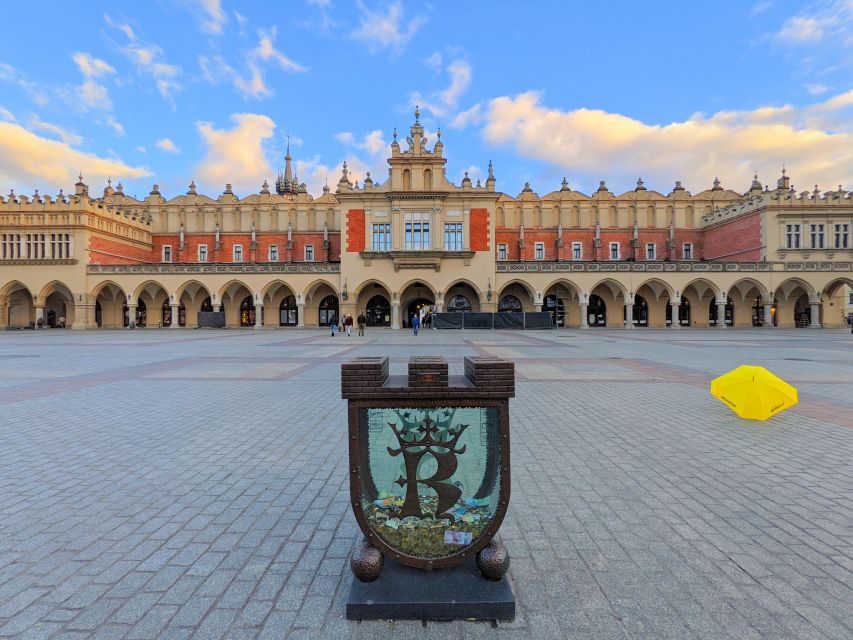
You’ll spend time at Main Market Square, and the tour doesn’t treat it like a single stop. It’s more like a hub that explains how Krakow ran. The Cloth Hall (Sukiennice) is part of that story because it links the square to trade and civic life, not just royal pageantry.
What makes this useful for you is how it changes your photos. Instead of “big square with pretty buildings,” you start noticing:
- where the important buildings face
- how the square functions as a stage for public life
- how wealth and commerce helped fund the grand structures you see today
This is also a strong moment for first-time orientation. If you do this early in your trip, you’ll come back to the area with better instincts for where things are and why they’re arranged the way they are.
St. Mary’s Basilica trumpeter and Collegium Maius courtyards
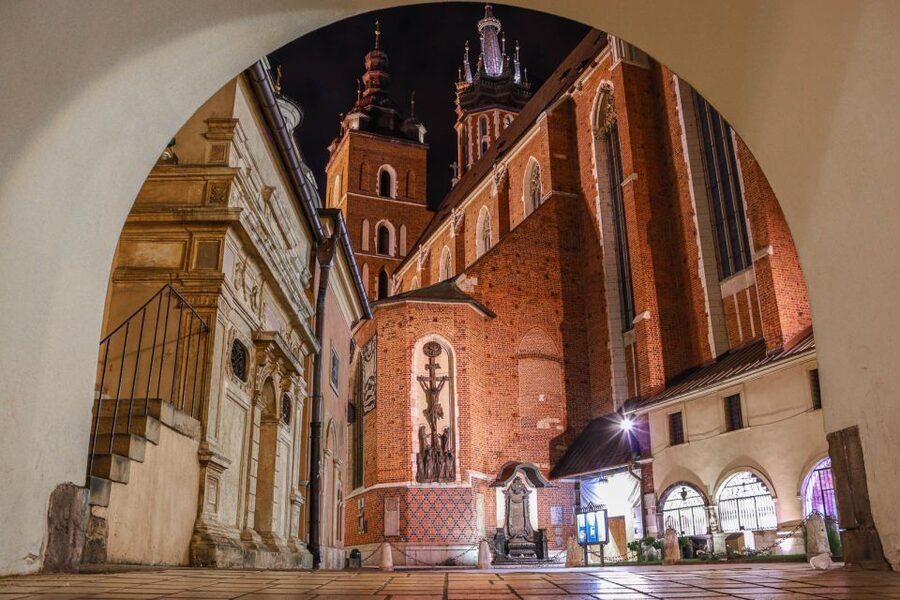
A major highlight is St. Mary’s Basilica, including the famous trumpeter. Even if you don’t know the details yet, the guide’s job is to explain why these visual symbols mattered to city identity. Churches here aren’t isolated monuments. They’re part of the daily rhythm and the political story of Krakow.
After that, you move into the academic layer of the city at Collegium Maius, described on this tour as the oldest building of the oldest university in Central-Eastern Europe. The tour includes the courtyards of Collegium Maius, which is a nice compromise. You get the atmosphere of the university complex without trying to compress too many interiors into a short window.
This is also one of those stops where humor helps. When guides put people in the shoes of students, professors, and city thinkers, Krakow starts feeling like a living place rather than a set of ruins. And since you’re walking, the “learning” sticks because you’re moving through the spaces being discussed.
Archbishop Palace, John Paul II’s papal window, and the meaning of views
The tour continues toward the ecclesiastical and political center, including the Archbishop Palace and the John Paul II papal window. This is a stop where the details make the difference. The window isn’t just an interesting object. It ties together the idea of leadership, public visibility, and the ways religious authority interacted with the public square and ceremonies.
If you like history that connects to real human moments, this is one of the better portions. You’re not only hearing about rulers and legends. You’re getting a sense of how people watched events from specific places and how leaders projected presence.
Practically, this part of the route also helps you understand Krakow’s vertical layering: you’re slowly climbing and shifting perspectives toward Wawel Hill, so by the time you reach the castle area, your viewpoint feels earned rather than random.
Wawel Hill: courtyard time, cathedral focus, and the Wawel Dragon
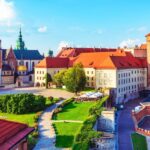
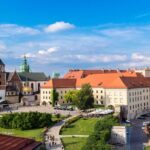
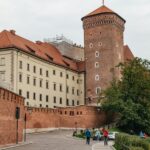
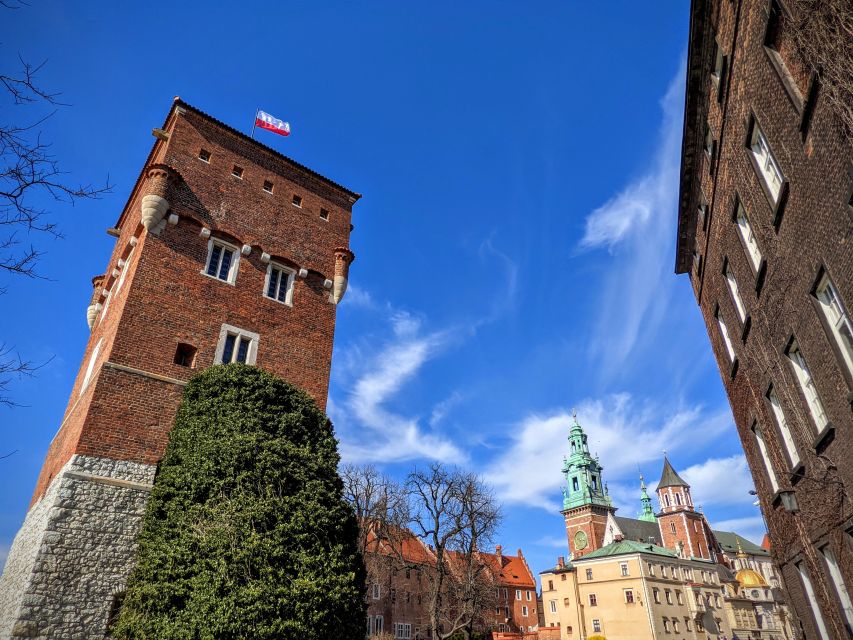
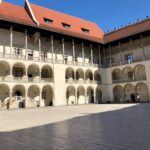
Then comes Wawel Hill, the dramatic end of the line. The tour includes time at the cathedral area and the Wawel Royal Palace courtyard. That courtyard access is important: it gives you scale and mood without forcing a long indoor schedule where you’d be stuck waiting behind groups.
You’ll also hear the story of the Wawel Dragon. This is where folklore becomes useful. Legends like this weren’t just entertainment. They carried moral messages and helped explain cultural identity in a way people remembered. Getting the dragon story in the same place as the royal and religious complex turns a myth into a lens.
One consideration: you’re visiting courtyards and key areas, not doing a long, fully inside-the-castle tour. If you’re hoping for extended interior time, you might feel the limitation. One traveler wished there was more time seeing Wawel from inside. So go in knowing the tour is built around the hill’s core spaces and the story connections, not a deep museum-style walkthrough.
Price and value: what $26 buys you in Krakow time
At $26 per person for 150 minutes, this is priced like an efficient city introduction. The value isn’t only the duration. It’s the structure: you get an expert local guide, a thoroughly constructed narrative, and courtyard access to both Collegium Maius and Wawel Royal Palace.
Also worth noting: the tour uses a pay-as-you-wish model. The amount you pay covers a reservation fee and the guide’s payment. That means your guide’s work is already part of what you’re paying for, and you can choose an extra reward level based on how the tour lands for you.
For me, the best value signal is simple: you’re spending time in the places that make Krakow recognizable—UNESCO Old Town core, Royal Route landmarks, and Wawel Hill—while someone connects the dots so the city doesn’t stay confusing. If you only have a short time window or you hate wandering without direction, this helps you get to understanding faster.
Who should book this English walking tour?
I’d book this if you want:
- a clear first pass through Krakow Old Town and Wawel Hill
- stories that mix kings, architecture, and legends into one thread
- a guide style that keeps moving but still answers the “so what does it all mean” questions
It’s also a solid fit for people who like walking and photo stops and don’t mind short stretches of standing. English is the tour language, and it’s marked as wheelchair accessible, so it’s designed with at least some mobility needs in mind.
If you’re traveling with very slow-moving family members or you need frequent long pauses, consider that one report pointed out how the guide started speaking before the whole group caught up. In that case, you might want to plan extra buffer time for your own pace, or be upfront with your expectations at the start.
Should you book this Kraków Old Town & Wawel Castle tour?
Yes, if you want a smart, story-driven way to understand Krakow without spending your limited time on guesswork. The core draw for me is the combination of UNESCO Old Town walking plus a guided push up to Wawel Hill, with courtyards included and legends folded into the royal-religious setting.
Skip it only if you know you want long interior time inside Wawel’s buildings, or if walking 150 minutes with a moving group doesn’t match your comfort level. Otherwise, this is an efficient way to leave Krakow feeling like you actually “get” it.
FAQ
How long is the Kraków Old Town & Wawel Castle walking tour?
The tour lasts 150 minutes.
What is the price per person?
It is listed at $26 per person.
Is the tour in English?
Yes, the tour is in English.
Where does the tour meet?
Meet in a small space between the Barbican and St. Florian’s Gate.
What is included in the tour?
You get an expert local guide, a constructed narrative, and visits to the courtyards of Collegium Maius and the Wawel Royal Palace.
Are snacks included?
No, snacks are not included.
Is there free cancellation?
Yes. You can cancel up to 24 hours in advance for a full refund.
Can I reserve and pay later?
Yes. You can reserve now & pay later and book your spot without paying immediately.
Is the tour wheelchair accessible?
The tour is marked as wheelchair accessible.
What should I expect in terms of walking?
It’s a walking tour with plenty of major Old Town stops, so you should expect to walk for about 150 minutes and keep up with the group’s pace.