REVIEW · KRAKOW
Krakow’s Essential Tour of the Old Town and Wawel Castle
Book on Viator →Operated by Krakow Explorers · Bookable on Viator
Two hours can change how you see Krakow. This private guided route threads together St. Mary’s Basilica, Krakow’s central square, and Wawel Castle into one logical walk, with stories that explain what you’re looking at and why it matters. I especially like the way the guide handles the navigation, so you can focus on the sights, not street hunting.
I also like the strong storytelling focus on big turning points in Polish history, including WWII and communist-era Poland, plus the guide’s knack for answering questions without making the tour feel like a lecture. One thing to consider: this is a walking tour with several short stops, and many entrances are not included, so you may still need to buy museum or church tickets along the way.
In This Review
- Key things to know before you go
- Price and tickets: the real cost behind a $3 booking fee
- Start at St. Mary’s Basilica: unequal towers and the hourly trumpet
- Rynek Główny and Slowacki Theatre: medieval square scale and the city’s priorities
- Barbican gates and the 500-year-old entrance: fortifications you can walk through
- Cloth Hall and Town Hall Tower: medieval shopping and why only part survived
- Jagiellonian University and Collegium Novum: Poland’s oldest-school vibe plus WWII answers
- Bishop’s Palace window and Wawel Cathedral: Pope John Paul’s window and Poland’s coronations
- Walking pace, group size, and where you’ll end up
- Should you book this Krakow Old Town and Wawel tour?
- FAQ
- Where is the meeting point?
- How long is the tour?
- What’s the maximum group size?
- What’s included in the price?
- What’s not included?
- Does the tour cost more than the listed $3?
- Is any part of the tour free?
- Is the ticket mobile?
- Can I cancel and get a refund?
Key things to know before you go
- Donation-based value: you pay a small booking fee, then the tour runs on what you choose to give
- Old Town to Wawel in one shot: major sights plus Wawel Cathedral without piecing together a self-guided route
- Story-driven stops: WWII-era stories and communist-era history come up at the right places
- Hourly St. Mary’s Basilica trumpet lore: you’ll learn why the trumpeter plays each hour
- Small group size: up to 30 people, with frequent stops and a steady pace
- Ease perks: mobile ticket and sanitizers are included
Price and tickets: the real cost behind a $3 booking fee
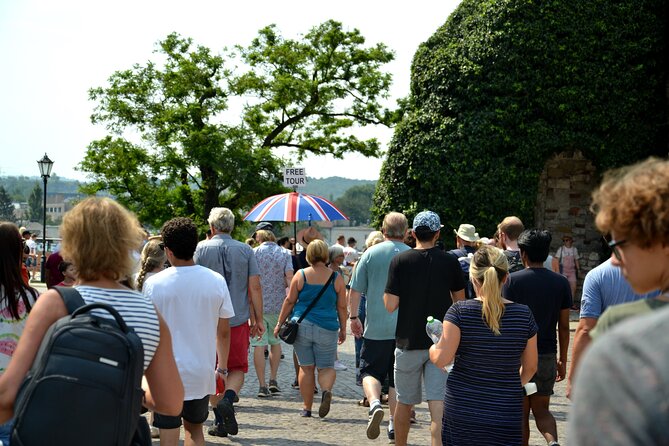
That $3 price is misleading if you think it’s the full tour. Based on how this experience works, you’re paying a booking fee, while the tour itself is donation-based. In other words, you’re buying the guide’s time and route planning, not just a fixed-price “product.”
For me, the value comes from how much ground you cover in 2.5 hours. You’re not just looking at buildings. You’re learning what to notice when you’re outside them: tower design, civic space, university history, wartime details, and why Wawel is treated like a national stage.
The catch is entrances. Museum and church fees are not included in the price, so you’ll want a bit of cash or card ready. The one clearly marked free stop is Bishop’s Palace.
You can also read our reviews of more tours and experiences in Krakow.
Start at St. Mary’s Basilica: unequal towers and the hourly trumpet
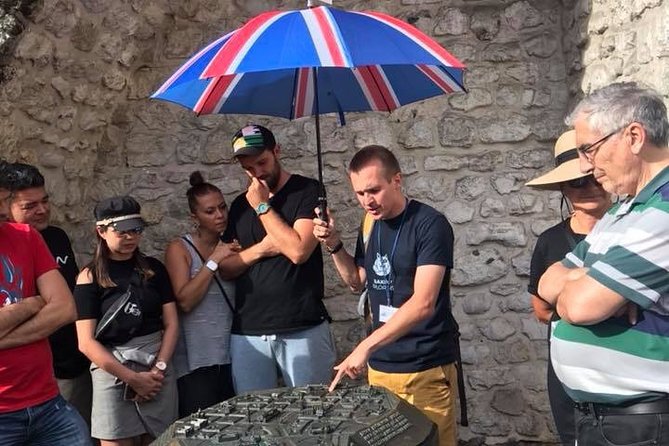
Your walk begins close to Rynek Główny, Krakow’s main square, but the first real “wow” happens at St. Mary’s Basilica. This is where the guide shines, because you learn the visual clues you might otherwise miss: why the basilica has two unequal towers and what’s behind the tradition of the hourly trumpet signal from the tower.
You also get the “highest point” idea for figuring out how the sound and the timing work. It’s not just trivia. It teaches you how to watch the building like a timepiece, not just a photo backdrop.
Important practical note: you’ll likely need your own ticket if you want to go up for the top views connected to the hourlies. Admission is not included for this stop.
Rynek Główny and Slowacki Theatre: medieval square scale and the city’s priorities
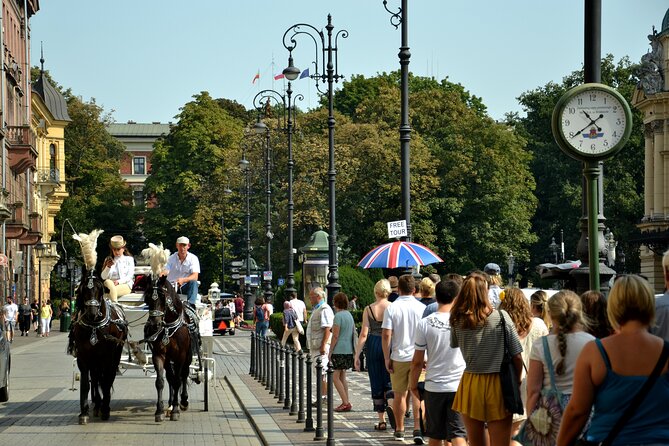
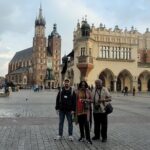
From the basilica, you head into Rynek Główny, described as the biggest medieval square in Europe. Even if you’ve seen big squares before, Krakow’s scale hits you fast. The guide helps you connect the dots between the buildings around the square and the role this space played in daily life.
Then you move to Slowacki Theatre for a short stop. Here the story angle matters: you’ll hear how it was possible that the theatre wasn’t built in Poland, and why, in local priorities, it mattered even more than clean water at the time. That sounds like a strange comparison until you hear the reasoning tied to what the city wanted to project and protect.
This stop is brief (about 10 minutes), so don’t count on deep theatre history. Use it as a mental teaser for how Krakow thought about culture, power, and public life.
Barbican gates and the 500-year-old entrance: fortifications you can walk through
Next comes defensive Krakow: the Barbican area and the Museum of Krakow. You get a short look tied to a “martial art” theme from the 15th century. The wording can sound odd until you realize this is about showing how weapons training, self-defense, and civic identity overlapped in the medieval world.
Right after, you pass through a main entrance to medieval Krakow that’s described as about 500 years old. This is one of those moments where your body helps your understanding. Walking a surviving gate area makes the city feel less like a map and more like a place people actually lived inside.
Admission is not included here, so if a museum ticket is required for the particular room or display your guide points out, plan for that extra cost.
Cloth Hall and Town Hall Tower: medieval shopping and why only part survived
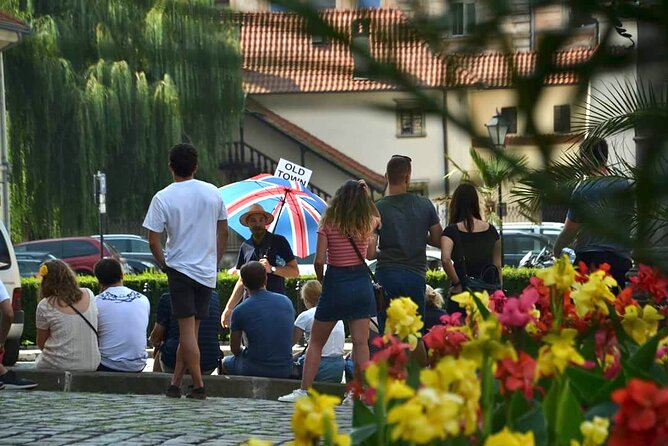
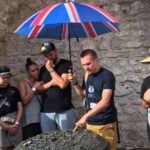
Your route then shifts from “defense” to “commerce” at Sukiennice (Cloth Hall). This wasn’t just a pretty building. It functioned like a medieval shopping hub. The guide will point out the secrets behind the space, including what’s underneath and how the building worked as a system.
Next you visit the Museum of Krakow Town Hall Tower area. You’ll hear why only a smaller part of the old town hall remains and what the place was famous for back in its prime. This is one of the best “history with a reason” stops on the route: it explains how civic life changed after destruction, rebuilding, and political shifts.
These are short stops, but that’s part of the tour’s strength. It’s built to give you a confident overview, so later, if something sparks your curiosity, you know exactly what to revisit on your own.
Jagiellonian University and Collegium Novum: Poland’s oldest-school vibe plus WWII answers
At Jagiellonian University (Collegium Iuridicum), you get inside one of Poland’s most prestigious universities and one of the oldest in the world. Even if you’re not a campus person, the guided stop helps you connect the university to the city’s identity. This is where Krakow stops feeling like just a medieval postcard and starts feeling like a living education center with deep roots.
Then the tour moves to Collegium Novum, where WWII becomes personal. You’ll hear what happened to a professor in Krakow at the beginning of the war and whether Krakow was destroyed. The point isn’t to turn the walk into a history class. It’s to show how global events played out locally, in specific institutions with named places.
Admission is not included for these university-linked stops, so expect that some access areas may require tickets depending on what’s open at the time.
Bishop’s Palace window and Wawel Cathedral: Pope John Paul’s window and Poland’s coronations
This is where the tour’s emotional weight lands.
First, Bishop’s Palace for about 15 minutes. You’ll see the most famous window tied to Pope John Paul and learn the dramatic history associated with Poland during communism. This stop is marked as free, which is a nice bonus after several ticketed areas earlier in the walk.
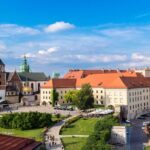
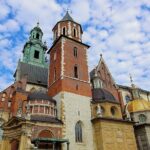
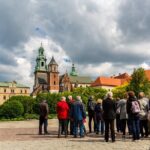
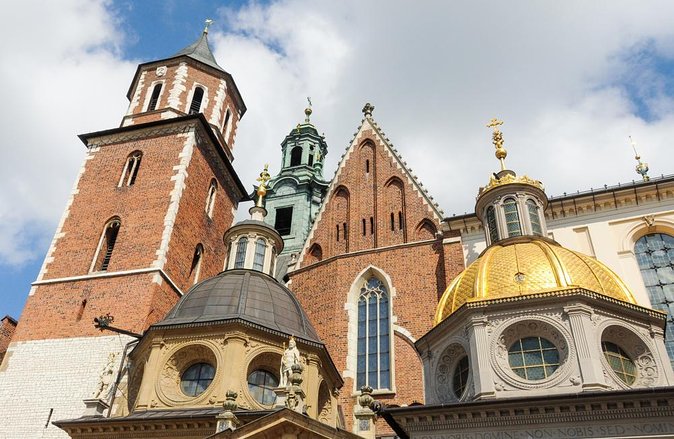
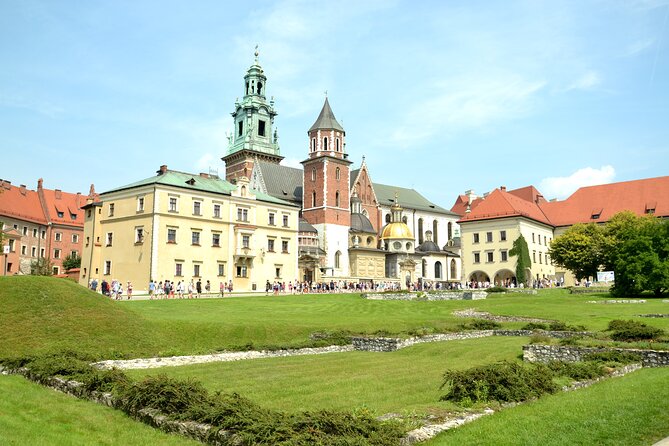
Then you reach Wawel Cathedral, the national pantheon of Poland and the place associated with coronations and burials of Polish rulers. The guide keeps it practical: you learn what to notice inside the cathedral’s role as a symbol of state power and continuity.
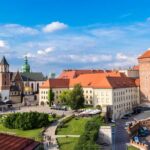
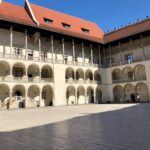
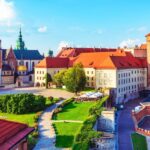
You’ll also spend a second short block of time in the Wawel complex area focused on rulers’ living spaces and why one part of the castle differs from the rest. This helps you understand that Wawel is not one uniform building. It’s layered, rebuilt, and repurposed across centuries.
Admission is not included at these Wawel cathedral stops, so again, keep your ticket budget in mind.
Walking pace, group size, and where you’ll end up
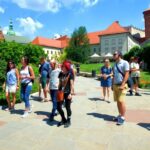
Expect a steady walking route with frequent short stops. The duration is about 2 hours 30 minutes, and the group size tops out at 30. That’s big enough to meet other people, but small enough that the guide can keep an eye on the flow.
What I like about the pacing is that it’s designed for getting oriented. You won’t see every room in every building, but you will get your bearings fast: you’ll understand how Krakow’s Old Town layout connects to Wawel’s dominance at the city’s edge.
The tour starts at Rynek Główny 4 and ends at Wawel Castle–State Art Collection (Wawel 5). The end point is about 10 minutes from Main Market Square, which makes it easy to continue on your own for dinner or a second round of sightseeing.
A small but real comfort detail: sanitizers are included, and you’ll use a mobile ticket. Service animals are allowed, and the area is near public transportation.
Also, guides on this route have a strong reputation for personality and humor. Names that often come up include Slavik/Slavick, Bart, Fran, and Chris (Krzysztof), and the common thread is a friendly, question-friendly style with a consistent pace.
Should you book this Krakow Old Town and Wawel tour?
Book it if you want an efficient first-day strategy: Old Town highlights plus Wawel in one guided sweep, with stories that explain what you’re seeing at St. Mary’s, the squares, the university, and the cathedral. The donation-based setup also makes it flexible if your travel budget is tight, as long as you’re comfortable deciding what’s fair for the guide at the end.
Skip it or plan differently if you’re hoping for long museum time inside buildings. This tour is built for orientation with short, meaningful stops, and most entrances are not included. If you already know you’ll want hours at Wawel interiors or specific exhibitions, treat this as the map that tells you where to go next, not the final visit.
FAQ
Where is the meeting point?
You meet at Rynek Główny 4, 33-332 Kraków, Poland.
How long is the tour?
The tour lasts about 2 hours 30 minutes.
What’s the maximum group size?
The group size is limited to a maximum of 30 travelers.
What’s included in the price?
A licensed tour guide and sanitizers are included.
What’s not included?
Food and drinks are not included, and museum entrance fees are not included. Admission tickets for several stops are also not included.
Does the tour cost more than the listed $3?
The $3 is described as the booking fee. The tour is based on donations, so you pay as much as you want.
Is any part of the tour free?
Yes. The stop at Bishop’s Palace is listed as free.
Is the ticket mobile?
Yes, you’ll receive a mobile ticket.
Can I cancel and get a refund?
Free cancellation is available up to 24 hours in advance for a full refund. If you cancel less than 24 hours before the start time, the amount you paid is not refunded.