REVIEW · FLORENCE
Pitti Palace & Boboli gardens tour with a Local Guide
Book on Viator →Operated by Slow Tour Tuscany · Bookable on Viator
Florence’s Medici power lives inside these rooms.
This guided experience combines Palazzo Pitti and the Boboli Gardens behind it, starting near Piazza de’ Pitti and moving you through the kinds of spaces Florentines built to impress—state rooms, private collections, and a Renaissance garden that later inspired Versailles. You’ll cross the Arno as part of the pacing and set-up, then spend the bulk of the time inside Palazzo Pitti’s major highlights, with time outdoors at the gardens.
I especially like the way the tour ties together multiple faces of the same family story: Medici court life through art in the Palatine Gallery and through court luxury in the treasury. I also like that you don’t just get art lectures—you get tickets across several collections, plus earphones so the guide’s explanations stay clear even when you’re shifting rooms and viewpoints.
One possible drawback: this tour involves a lot of walking and steps, so it’s smart to wear supportive shoes and plan for a slower rhythm on steep or crowded sections. If you’re sensitive to stairs, you may want to ask your guide what parts are most step-heavy before you commit your energy.
In This Review
- Key things that make this tour worth your time
- Palazzo Pitti: crossing the Arno and entering Medici rooms
- Galleria Palatina: Renaissance and Baroque art in a 17th-century display style
- Treasury of the Grand Dukes: silverware, jewels, and frescoed luxury
- Galleria d’Arte Moderna on the top floor: Italian art from Neoclassicism to the early 1900s
- Costume and Fashion in the Palazzina della Meridiana: style as cultural power
- Boboli Gardens: Renaissance garden planning and the Versailles connection
- Steps, time pressure, and what to wear on a Palazzo day
- Price and value: $234.80 for multiple ticketed collections
- Small-group touring: what a guide does for you in practice
- Should you book this Pitti Palace and Boboli tour?
- FAQ
- What language is the tour offered in?
- How long is the Palazzo Pitti and Boboli Gardens tour?
- What’s included in the ticket price?
- Is the tour group size small?
- Where does the tour start and end?
- Are refreshments included?
- Is there a free cancellation option?
Key things that make this tour worth your time
- Medici art in real court rooms rather than a quick museum walk-through
- Palatine Gallery, arranged for visual harmony, not just chronology
- Treasury stop with silver, jewels, vases, and rock crystal in frescoed spaces
- Fashion and Costume museum in a separate Palazzo building (not a generic gift-shop stop)
- Boboli Gardens as an open-air design lesson, including famous water features and grottos
- Small group size (max 9) with a certified guide and earphones
Palazzo Pitti: crossing the Arno and entering Medici rooms
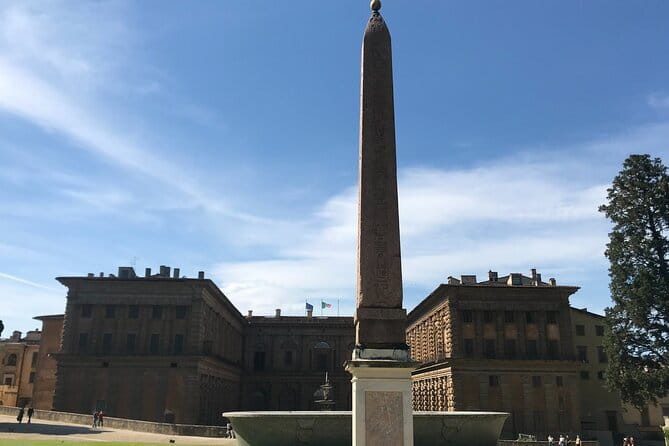
Palazzo Pitti is one of those places where you quickly understand why Florence looked like a command center for European taste. It isn’t just a building full of famous names—it’s a set of carefully staged interiors that once served as residence and display space. The tour starts at Palazzo Pitti (Piazza de’ Pitti, 1) and then gets you into the heart of the collections without you having to puzzle through what to prioritize once you’re inside.
Because the tour is guided in English and capped at a maximum of 9 people, you usually get a more coherent flow than you’d get with a self-guided visit. You’ll hear the context behind why these rooms matter, how the collections reflect shifts between Medici, Lorraine, and Savoy ownership, and why the art is displayed the way it is.
A practical note: the big payoff here is pacing. You cover multiple ticketed spaces in about 2 hours 30 minutes, which is long enough to slow down in key rooms, but short enough that you’re not stuck for a full museum day. If you’re juggling Florence sightseeing logistics, this is a nice “heavy hitters” format.
You can also read our reviews of more tours and experiences in Florence.



Galleria Palatina: Renaissance and Baroque art in a 17th-century display style
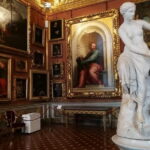
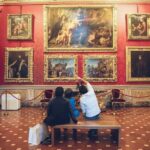
Your first major stop is the Galleria Palatina in Palazzo Pitti. This is where the tour really proves it’s more than a stamp-collecting exercise. The Palatine Gallery is famous not only for what’s inside, but for how it’s arranged: it’s presented in the 17th-century gallery style, meaning the works aren’t shown in simple chronological order. Instead, they’re placed for visual and decorative harmony—so you experience the room as a unified statement.
Inside, you’ll move through lavish state rooms tied to the Medici, later the Lorraine, and then the Savoy families. That lineage matters because it changes how you interpret the art. These weren’t blank-wall displays; they were living environments for rulers who collected to project power and taste.
Expect a concentration of major names and familiar masterpieces, including works by Raphael (such as Madonna della Seggiola and La Velata), Titian, Rubens, Caravaggio, Andrea del Sarto, and the painter-ceiling-fresco team of Pietro da Cortona, who created the magnificent ceiling frescoes. The guide’s job is to connect the dots—how different artists and movements fit the court’s taste, and how the ceiling and interiors frame what you see.
One more thing I value: because the rooms are ornate, it’s easy to get overwhelmed fast when you’re on your own. With a guide, you know where to look first, what details matter, and when to step back for the full composition.
Treasury of the Grand Dukes: silverware, jewels, and frescoed luxury
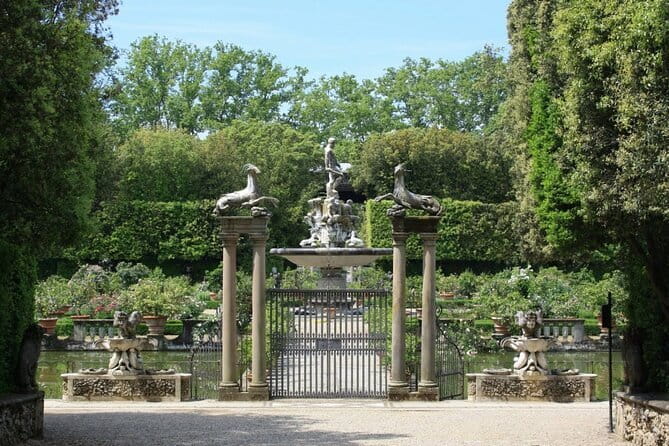
Next up is Tesoro dei Granduchi, the Treasury of the Grand Dukes on the ground floor. This is a fast stop by museum standards—about 20 minutes—but it’s designed to hit hard. The collection is historically tied to the old idea of a silverware museum, and that shows in the mix of items: silverware, jewels, vases set in semi-precious stones, rock crystal objects, and other luxury pieces associated with the Medici and Lorraine families.
What makes this stop feel different from a typical “things behind glass” museum is the environment. The treasury rooms are richly frescoed and date from the 17th century, and that décor turns the collection into something closer to a display of status than a random assortment of precious objects.
For you, this stop works especially well if you like material culture—objects as evidence of how people lived and how wealth was presented. It’s also a good contrast to the Palatine Gallery, because you shift from paintings and themes to craftsmanship and scale. The guide helps you read what you’re looking at, including what’s Medici versus Lorraine, and how these objects fit into court life.
Galleria d’Arte Moderna on the top floor: Italian art from Neoclassicism to the early 1900s
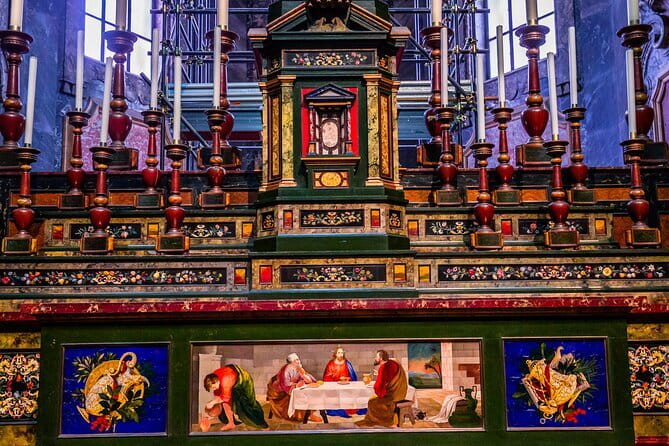
On the top floor, the tour moves to Galleria d’Arte Moderna, the Gallery of Modern Art in Palazzo Pitti. This is where the pace changes again: rather than focusing only on the Renaissance/Baroque court world, you trace the evolution of Italian art from Neoclassicism to the early 20th century.
The gallery sits in former royal apartments of the Lorraine and later the Savoy families, so the setting still matters. These rooms keep the royal connection alive, but the artworks shift toward different styles and artistic goals—light, realism, and modern movements.
You’ll see work by artists including Canova and Hayez, plus painters connected to Florentine modern tendencies such as those associated with the Macchiaioli movement (for example Fattori and Signorini). This is a smart inclusion on a two-and-a-half-hour tour because it prevents the experience from becoming one-note. You get to understand how Florence kept changing artistically without losing its sense of display and refinement.
The time here is short—about 20 minutes—so don’t expect to absorb every brushstroke. Instead, aim to catch the big stylistic shifts and the names the guide highlights so you leave with a framework for what you might want to see later.
Costume and Fashion in the Palazzina della Meridiana: style as cultural power

Fashion lovers will be pleased: Museo della Moda e del Costume is the only museum in Italy entirely dedicated to the history of fashion and dress. It’s located in the Palazzina della Meridiana of Palazzo Pitti, which means you’re not just switching floors—you’re moving to a different part of the complex.
This stop runs around 20 minutes and focuses on garments, accessories, and theatrical costumes from the 18th century to the present day. The exhibits pull from fashion houses, historical collections, and royal wardrobes. If you care about design history, this is where the tour can surprise you. Court fashion isn’t just pretty clothing; it’s a visual language for identity, rank, and changing tastes.
You’ll also see Medici-related pieces among other precious items. The exhibits are periodically renewed, so if you’ve been to Palazzo Pitti before, there’s a chance the fashion content may feel different depending on when you go. (That’s one reason I like the inclusion: it makes your ticket feel less like a one-time routine.)


Boboli Gardens: Renaissance garden planning and the Versailles connection

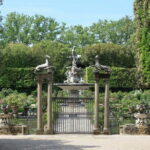
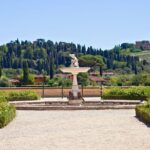
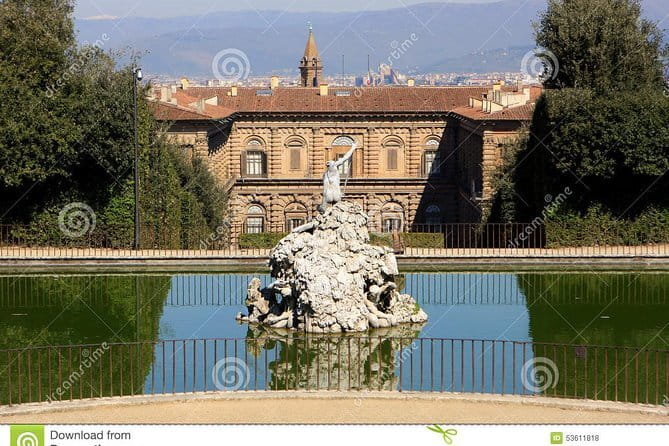
After the interior stops, you shift to the outdoor highlight: Giardino di Boboli behind Palazzo Pitti. This is not just a break from galleries—it’s part of the story. Boboli is considered one of the first major examples of the Italian Renaissance garden, and it later inspired landscapes like Versailles.
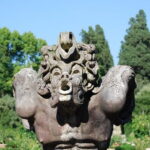
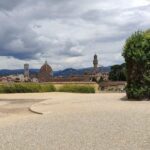
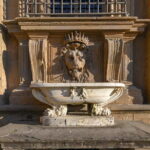
Expect a designed walk with tree-lined avenues, fountains, statues, grottos, and panoramic terraces looking back over Florence. It’s easy to underestimate a garden until you start noticing the architecture of the space: viewpoints are placed, water features are timed for impact, and pathways guide you from one “stage” to another.
The tour’s garden time is about 30 minutes, which is enough to hit the main set pieces without rushing. The guide will point you toward major attractions such as the Amphitheatre, the Fountain of Neptune, and the Buontalenti Grotto. These names matter because they anchor what you see to a larger design concept: this is an outdoor museum where art direction happens in three dimensions.
Because it’s outdoors, it’s also where you’ll feel the biggest day-to-day variability. On sunny days, the views reward you. On hot days, you’ll want to pace yourself and conserve energy for stairs and uneven ground.
Steps, time pressure, and what to wear on a Palazzo day

This tour runs about 2 hours 30 minutes, and in that time you’re covering multiple museums in one complex plus a garden circuit. The upside is efficiency. The tradeoff is that it can feel like a sprint if you’re used to slow wandering.
The most consistent heads-up is physical: there are a lot of steps. Even if the tour is described as suitable for most people, the real-world experience depends on your comfort level with stairs and crowded interiors. Wear supportive shoes with grip. If you’re traveling in summer, plan for heat and dehydration since refreshments aren’t included.
One more practical detail: in real life, guides sometimes manage the pace based on conditions. On very hot days, you might be guided toward a place to pause for drinks, even if the ticket itself doesn’t include them. So it helps to carry a little cash or a refillable bottle.
If you’re short on mobility or know you’re going to slow down, you’ll get more from the tour if you talk to your guide at the start about where you should take extra breaks.
Price and value: $234.80 for multiple ticketed collections
At $234.80 per person, this isn’t the cheapest Florence option. But for what you get, it can be good value if you want guidance and multiple collections in one shot.
Your ticket bundle includes entrances to Palazzo Pitti, the Treasury, the Gallery of Modern Art, and the Museum of Costume and Fashion, plus a guided visit through the Palatine Gallery and the Boboli Gardens. You also get earphones, which makes a difference when sound bounces around ornate rooms and when you’re trying to hear explanations over other tour groups.
Here’s how to think about it: if you tried to plan all of these stops on your own, you’d spend time sorting entry points, deciding what to see in which order, and figuring out which rooms connect to the bigger Medici-and-royal story. This tour compresses that planning into a single route with interpretation.
The price still might not make sense if your style is to wander and read at your own pace. But if you want the context so the names and rooms click—especially in the Palatine Gallery—this can feel like buying back your time.
Small-group touring: what a guide does for you in practice
The tour is led in English and limited to up to 9 people, and you’ll wear a set of earphones. That combination matters because the experience is location-specific. Palazzo Pitti is big, and the magic is in how the guide connects a painting or object to the room it sits in.
In the real-world examples shared by guide names like Tina and Ellena, the common thread is interpretation that ties scenes and objects together rather than treating each room as a separate checklist. That’s especially helpful for the Palatine Gallery, where the 17th-century display style can confuse you if you’re expecting a simple timeline. With a good guide, you understand why the arrangement is done that way.
On a tough day—heat, crowding, or last-minute changes—your guide’s flexibility can also help you keep the experience enjoyable, as seen when guides had to step in under unusual circumstances. Just remember: timing is tight on a tour like this, so if anything goes off-script, your best bet is to stay calm and work with your guide on priorities.
Should you book this Pitti Palace and Boboli tour?
Book it if you want a focused, high-value Florence day that mixes major palace art, royal luxury objects, and a garden designed for views—all with guidance and earphones. It’s a strong fit for first-timers who want the Medici story to feel coherent, and for repeat visitors who like variety without adding planning stress.
Skip it or reconsider if stairs and fast pacing are a problem for you. Also consider it carefully if you prefer self-guided museum time so you can linger without structure—because this itinerary moves efficiently and doesn’t allow for long stays in every room.
If you do book, do it with the understanding that it’s popular (it’s often reserved about 39 days in advance). A guided route with multiple ticketed collections is one of those experiences that sells out when you want it most.
FAQ
What language is the tour offered in?
The tour is offered in English.
How long is the Palazzo Pitti and Boboli Gardens tour?
The duration is about 2 hours 30 minutes.
What’s included in the ticket price?
Your tour price includes entrance tickets for Palazzo Pitti and several of its collections (Treasury of the Grand Dukes, Gallery of Modern Art, Museum of Costume and Fashion), guided tours of the Palatine Gallery and Boboli Gardens, earphones, and a certified guide.
Is the tour group size small?
Yes. The maximum group size is 9 travelers.
Where does the tour start and end?
It starts at Palazzo Pitti, Piazza de’ Pitti, 1, 50125 Firenze FI, Italy, and ends back at the meeting point.
Are refreshments included?
No, refreshments are not included.
Is there a free cancellation option?
Yes. You can cancel for a full refund up to 24 hours in advance of the experience start time.