REVIEW · FLORENCE
Medici’s Mile Walking Tour plus Pitti Palace or Boboli Gardens Ticket
Book on Viator →Operated by CAF Tour and Travel · Bookable on Viator
Florence feels different when you’re tracing Medici footprints. This Medici’s Mile walking tour strings medieval power, Renaissance patronage, and court drama into one clear route, plus Vasari Corridor intrigue along the way. You get short stops where you can actually look, listen, and connect names to buildings.
Two things I really like: first, the stops zero in on the Medici’s story at Basilica di San Lorenzo and the Cappelle Medicee mausoleum, where art and politics are literally side by side. Second, the tour ends with included entry to either Palazzo Pitti or Boboli Gardens, so you’re not just hearing history—you’re stepping into it.
One drawback to plan for: don’t assume you’ll be able to walk inside the Vasari Corridor itself, and your palace/gardens ticket can be scheduled for a specific time. In other words, check your voucher so you’re not stuck waiting for a later entry slot.
In This Review
- Key highlights you’ll care about
- What you’re really buying for $79
- Start at Via de’ Martelli, end at Palazzo Pitti
- Basilica di San Lorenzo: the Medici’s church stop that anchors everything
- Cappelle Medicee: where the mausoleum becomes a museum
- Palazzo Medici Riccardi to Piazza San Giovanni: Renaissance stage dressing
- Piazza della Signoria, Santa Felicita, and Ponte Vecchio: politics and art in motion
- Vasari Corridor stories: expect the route, not a secret walkthrough
- Palazzo Pitti or Boboli Gardens: choose the ending that matches your day
- Palazzo Pitti (plus several museum areas)
- Boboli Gardens (plus Porcelain Museum and Bardini Gardens)
- Why some guides shine: storytelling beats reciting dates
- Practical tips so your day doesn’t get snagged
- Who this tour is best for (and who should skip it)
- Should you book Medici’s Mile with Pitti or Boboli?
- FAQ
- How long is the Medici’s Mile walking tour?
- What’s included in the $79 price?
- What does the Palazzo Pitti ticket include?
- What does the Boboli Gardens ticket include?
- Where do I meet the tour and where does it end?
- Can I cancel for free?
Key highlights you’ll care about
- Small group size (max 20) means less time herding and more time hearing the story.
- Earpieces help when Florence gets crowded and you want to keep up without craning your neck.
- Focused Medici stops hit the big names fast: San Lorenzo, Cappelle Medicee, Palazzo Medici Riccardi.
- Landmarks with real context: Piazza San Giovanni (Brunelleschi dome, Giotto bell tower) and Piazza della Signoria (Loggia dei Lanzi, Neptune).
- Vasari Corridor is treated as a route/story, not a guarantee of entry.
- Real ticket time at the end: choose Pitti Palace or Boboli Gardens with admission included.
What you’re really buying for $79
At $79, this isn’t just a “walk and look” tour. You’re paying for a guided story that ties Florence’s Medici era to specific sites—then adding an included entry option to one of the city’s biggest Medici-era attractions.
The math works best if you’re the type who enjoys making connections. When you hear why the Medici mattered, it’s easier to understand why Florence looks the way it does: religious power, civic power, and then the grand showpieces where art and status meet. And that last step—Pitti Palace or Boboli Gardens—gives you time to explore on your own after the walk.
If you already know Florence very well and want only top-tier “access,” your mileage may vary. A few reviews point to expectations around the Vasari Corridor that didn’t match what’s actually possible.
You can also read our reviews of more tours and experiences in Florence.


Start at Via de’ Martelli, end at Palazzo Pitti
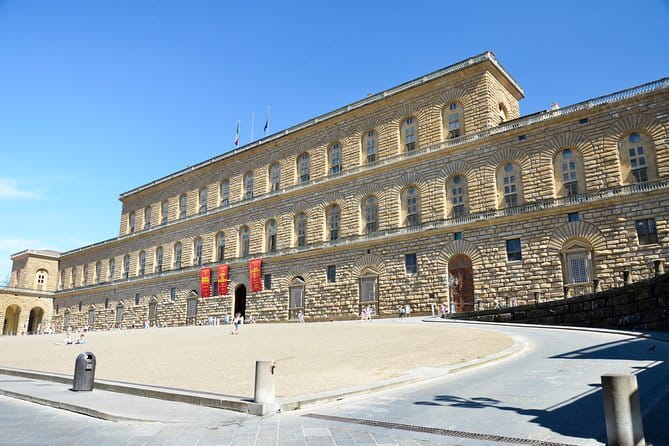
You begin at Via de’ Martelli, 50 and your walk finishes near Palazzo Pitti at Piazza de’ Pitti, 1. That end point matters because it sets you up to continue with the included ticket (either palace or gardens) without backtracking across town.
The route is also very doable on foot. The tour suggests comfortable shoes, and since the whole experience is roughly 2 hours, it’s designed to be paced for sightseeing rather than marathon walking.
One more practical detail: this area is well connected by public transit, which helps if you’re pairing this with museum time later. And if you’re visiting places of worship, plan on dressing appropriately; you’ll be near churches during the tour.
Basilica di San Lorenzo: the Medici’s church stop that anchors everything
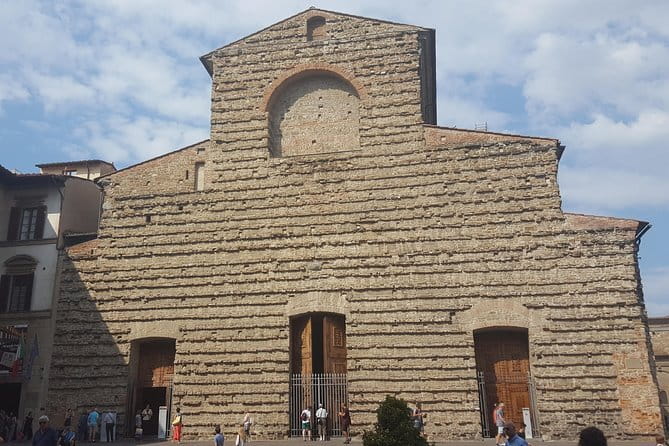
The first big anchor is Basilica di San Lorenzo, the famed church tied to the Medici family. Even with a short visit window, it’s a powerful way to start because it frames the Medici not just as art patrons, but as rulers who shaped religious life too.
I like this early stop because it sets a baseline. If you start at the “tombs and titles” end of Medici life, the later civic squares (where they displayed power) feel more logical. You’re not just learning dates—you’re watching a pattern form.
Expect a quick, focused look. The tour time here is about 10 minutes, and the admission is listed as free for this stop.
Cappelle Medicee: where the mausoleum becomes a museum
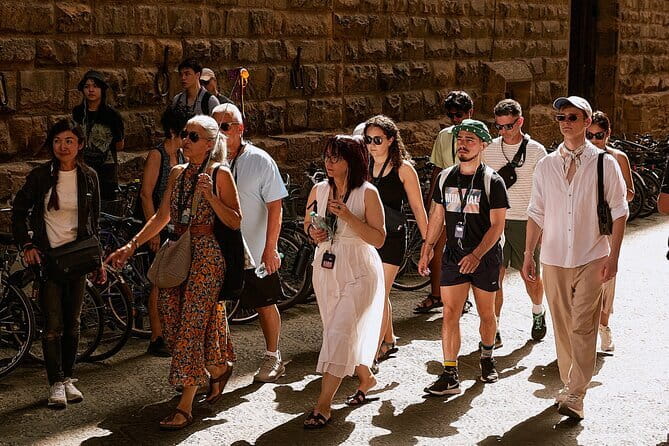
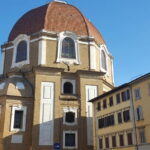
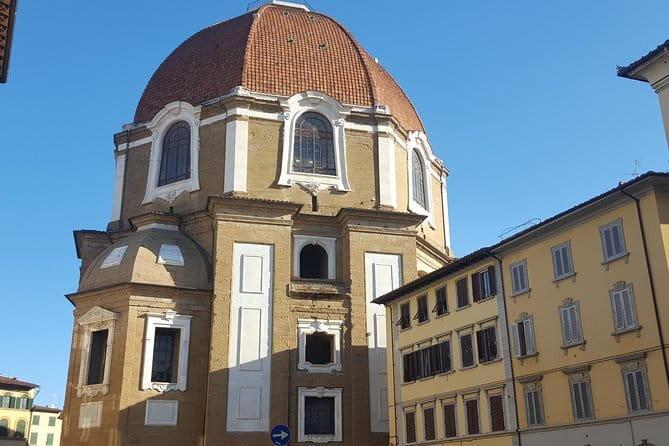
Next comes Cappelle Medicee, the Medici chapels that function as a mausoleum and now operate as a museum. This is the moment where the Medici story turns tangible: the family legacy isn’t abstract—it’s arranged, preserved, and displayed.
This stop works especially well if you enjoy art-as-identity. The Medici weren’t only collecting works; they were also manufacturing a public memory of who they were and what they deserved. Seeing that idea in the same place you’d expect funerary symbolism makes the Renaissance feel less like a separate “art period” and more like a political strategy.
Again, the tour lists this as a short 10-minute stop with admission free as part of the experience.
Palazzo Medici Riccardi to Piazza San Giovanni: Renaissance stage dressing
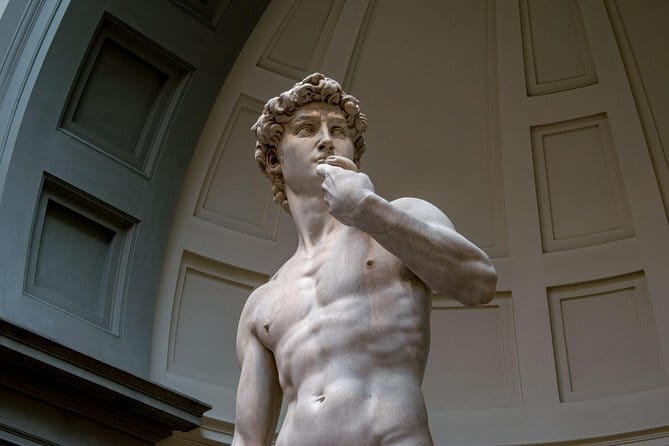
Then you move to Palazzo Medici Riccardi, described as the first residence of the Medici family. This is the kind of stop that helps you read the city like a map: you can picture where a ruling family lived, not just where you happened to see them named on plaques.
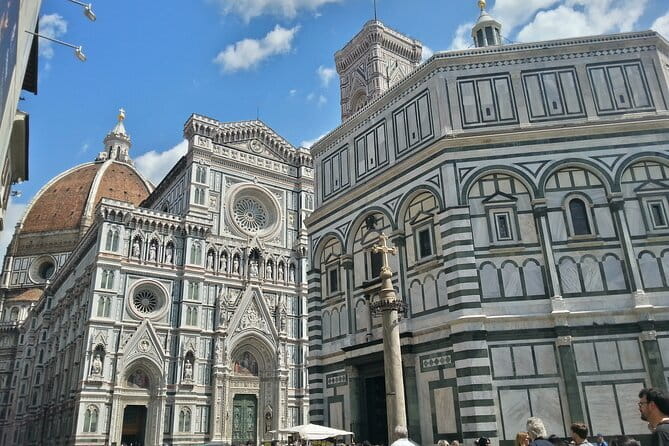
From there, the tour heads into Piazza San Giovanni, where you get the iconic cluster around Florence’s religious center. You’re meant to admire the Cathedral with Brunelleschi’s dome, the Giotto bell tower, and the Baptistery—all in one sweep.
I like this because it’s scenic without being random. The tour uses the square to show how Florence’s major civic/religious images became part of the Medici’s world. And you’re seeing the skyline features you’ll recognize later when you’re exploring on your own.


Piazza della Signoria, Santa Felicita, and Ponte Vecchio: politics and art in motion
Piazza della Signoria is next, and it’s basically Florence’s open-air power center. Here you’ll pause at Palazzo Vecchio, the Loggia dei Lanzi, and the Fountain of Neptune. These aren’t just “pretty things”—they’re the backdrop to how families like the Medici could project authority in public spaces.
Next is Church of Santa Felicita, known for masterpieces by Pontormo. That’s a smart pivot. The tour keeps moving between civic spectacle and serious art inside a church setting.
Finally, you reach Ponte Vecchio, called the oldest and most famous bridge in Florence. I like ending this stretch with a crossing because it’s a natural reset. It also helps you feel how the city connects districts—an important theme when you’re hearing about families moving through Florence, sometimes in secrecy.
Vasari Corridor stories: expect the route, not a secret walkthrough
This is the part that can make people either love the tour or feel misled—mostly because expectations are high. The experience is framed around the Vasari Corridor and how dukes and duchesses used it to travel incognito.
Here’s the reality to plan for: this tour focuses on the corridor’s presence in the city and the stories around it. Based on how the experience is described, you should treat it as a route and viewpoint experience, not a guarantee that you’ll be walking the corridor interior.
If you’re booking specifically for access inside the corridor, pause and read your ticket details carefully. A few customers reported confusion when they expected more direct access than what was actually possible. So my advice is simple: go for the story, and don’t count on a walk-through.
Palazzo Pitti or Boboli Gardens: choose the ending that matches your day
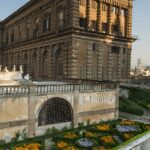
Your last segment is the real “pick your own adventure” moment. You finish the guided walk at Palazzo Pitti, then you use the included admission ticket to explore on your own at either:
Palazzo Pitti (plus several museum areas)
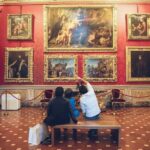
With the Pitti option, the included entry lets you visit the Palatine Gallery, Gallery of Modern Art, Museum of Fashion and Costume, and the Treasure of the Grand Dukes. That’s a strong set if you want a museum-heavy finale.
I think this option is best when you want variety under one roof: paintings, costume history, and collections tied to the grand-ducal world. It also tends to be a good choice if the weather turns.
Boboli Gardens (plus Porcelain Museum and Bardini Gardens)
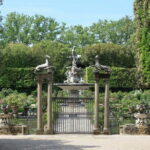
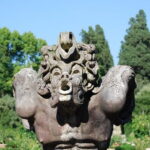
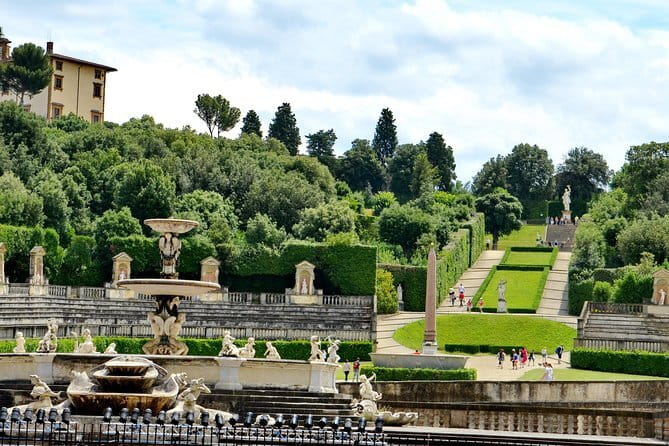
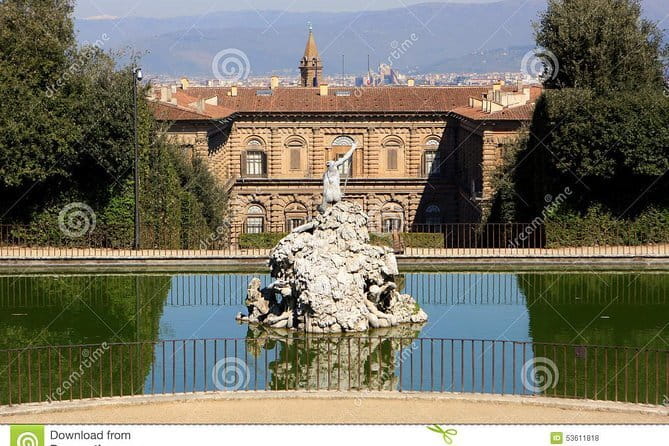
With the Boboli option, you get admission to the Boboli Gardens, including the Porcelain Museum and Bardini Gardens. This is your choice if you want open-air space and classic Medici-era garden drama.
One heads-up from real-world experience: your Boboli entry may be scheduled for later than you expect, so the timing shown on your voucher matters. If your gardens slot is hours after the walk ends, you’ll want a plan for what to do in the meantime—otherwise it’s easy to feel like you paid for waiting time.
Why some guides shine: storytelling beats reciting dates
A lot of the positive energy in this experience comes from guide style. Names that popped up in feedback include Marcello, Andrea, Mata, and Elise P—and the common thread is that strong guides turn Medici history into street-level drama.
For example, customers praised guides for humor and for connecting architectural details to the bigger political story. That’s the difference between a tour that rattles off facts and one that helps you see what you’re looking at.
If you’re booking for a “learn while walking” kind of day, I’d take that as your cue. The route gives you the stage; the guide decides whether it feels like a play or a lecture.
Practical tips so your day doesn’t get snagged
A few small habits make a big difference with this kind of Florence itinerary.
First, keep your shoes comfortable. The tour is mostly walking, and the stops are spread across several central sights.
Second, dress for churches. The experience notes appropriate clothing is recommended for places of worship, so don’t show up in flip-flops and a bare-shoulder “oops.”
Third, plan around your hearing. Earpieces are used, and that helps a lot in crowded conditions. It’s not just comfort; it’s how you catch details without shouting over the street.
Fourth, confirm your language needs. The experience notes Spanish language is confirmed from November 1, 2024 to March 31, 2025, with a minimum of 4 participants. Outside that window, language availability isn’t described here, so it’s worth checking when you book.
Who this tour is best for (and who should skip it)
This is a good fit if you:
- Want a guided route that connects Medici power to Florence’s key sights.
- Prefer a manageable 2-hour walk with museum time at the end.
- Like civic history as much as art history—Piazza della Signoria and the bridge stop help.
It may not be the best fit if you:
- Are only interested in strict access to the Vasari Corridor itself and need a ticketed interior visit.
- Already know Florence so well that the walking portions feel repetitive.
For first-time visitors, the “Medici through major landmarks” structure is a strong way to get your bearings fast.
Should you book Medici’s Mile with Pitti or Boboli?
I’d book this if you’re aiming for value that combines walking context plus an included ticket. At $79, the best-case scenario is exactly what this tour is built for: a story-guided walk plus an actual place to spend time afterward—Palazzo Pitti for indoor museum depth or Boboli Gardens for views and atmosphere.
But I’d also book it with eyes open. Check your voucher for the exact entry time for your chosen ending, especially if you’re choosing Boboli Gardens. If you want the Vasari Corridor experience, go for the narrative and outside views, not a guaranteed interior walk.
If you do those two things—pick the right ending and verify timing—you’ll get a rewarding Florence day that feels connected, not random.
FAQ
How long is the Medici’s Mile walking tour?
The duration is listed as about 2 hours.
What’s included in the $79 price?
You get the guided walking tour plus an included admission ticket to either Palazzo Pitti or Boboli Gardens.
What does the Palazzo Pitti ticket include?
With the Palazzo Pitti option, the ticket allows you to visit the Palatine Gallery, Gallery of Modern Art, Museum of Fashion and Costume, and the Treasure of the Grand Dukes.
What does the Boboli Gardens ticket include?
With the Boboli Gardens option, the ticket allows you to visit the Boboli Gardens plus the Porcelain Museum and Bardini Gardens.
Where do I meet the tour and where does it end?
The meeting point is Via de’ Martelli, 50, 50122 Firenze FI, Italy. The tour ends at Palazzo Pitti, Piazza de’ Pitti, 1, 50125 Firenze FI, Italy.
Can I cancel for free?
Yes. You can cancel for a full refund if you cancel up to 24 hours in advance of the experience start time.