REVIEW · VIENNA
Vienna: Imperial Treasury in the Hofburg Palace
Book on GetYourGuide →Operated by Kunsthistorisches Museum · Bookable on GetYourGuide
Vienna’s treasure rooms move fast, in the best way. In the oldest part of the Hofburg Palace (the Swiss Wing), you get one tight route through Habsburg power, church relics, and jaw-dropping gems without needing a whole day.
I especially love seeing the Austrian Imperial Crown up close and the way the display connects royalty, religion, and politics in the same breath. The other big win for me is the mix of famous regalia plus stranger-than-fiction objects, like legendary relics that make you stop reading and just stare.
The one consideration: because it’s a compact exhibition, you’ll want to plan enough time to actually look. If you rush, the details (and the best pieces) can blur together.
In This Review
- 6 Key Highlights That Make This Treasury Worth It
- Imperial Treasury in Vienna’s Swiss Wing: A Small Space With Big Drama
- The Crown Jewels Route: Austrian Imperial Crown and Holy Roman Regalia
- Empress Elisabeth Jewelry: The Human Touch in a Room of Thrones
- Legendary Relics: Holy Lance, Holy Grail (Agate Bowl), and Unicorn Horn
- Emeralds, Golden Fleece, and Habsburg Wealth in Stone
- Burgundy Collection and Napoleon II: Power Across Europe
- How Long You Need: Plan 60 to 90 Minutes, Not Four Hours
- Price and Value: What $18 Buys You in Real Terms
- Ticketing, Lines, and What to Bring So You Don’t Lose Time
- Who This Experience Suits Best (and Who Might Skip)
- Should You Book the Imperial Treasury in the Hofburg Palace?
- FAQ
- Where is the Imperial Treasury located?
- How much does it cost?
- How long is the visit?
- What’s included in the ticket?
- Is an audio guide or a guided tour included?
- Do I need anything specific to enter?
6 Key Highlights That Make This Treasury Worth It
- A crown you’ll recognize instantly: the Austrian Imperial Crown, designed to project authority in metal and stone
- Holy Roman Empire regalia: the display includes the Imperial Crown of that tradition
- Empress Elisabeth pieces: you can see parts of her original jewelry, not just copies
- Gems with world-record energy: including one of the largest emeralds in the world
- Legendary objects on the route: the Holy Lance, the Holy Grail (agate bowl), and a unicorn horn
- A practical visit length: plan roughly 1 to 1.5 hours if you’re reading and taking breaks
Imperial Treasury in Vienna’s Swiss Wing: A Small Space With Big Drama
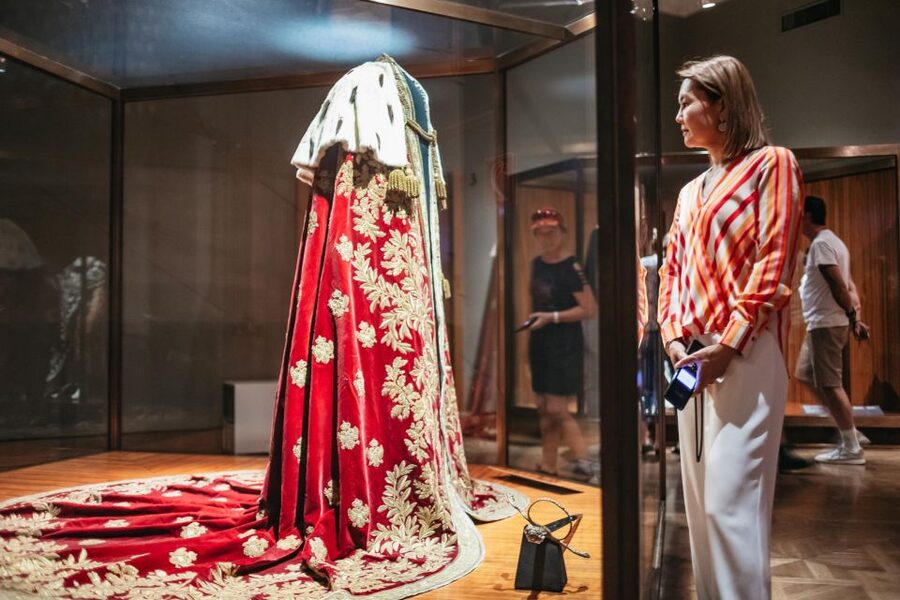
The Imperial Treasury is housed in the oldest part of the Hofburg, in the Swiss Wing. That alone matters: you’re not bouncing around a huge complex. You’re going into a purpose-built treasure chamber feeling like court life paused mid-sentence.
What I like is how the collection is presented as a story you can follow with your eyes. Crowns and relics are not random. They’re placed to show how the Habsburgs used luxury and faith as one combined message: rule by lineage, back it with symbols, and keep it visible.
Small group size is also part of the appeal. Limited to 10 participants, it tends to feel less like a cattle chute and more like you can pause when something grabs your attention. (And yes, there are moments when you will pause.)
You can also read our reviews of more tours and experiences in Vienna.



The Crown Jewels Route: Austrian Imperial Crown and Holy Roman Regalia
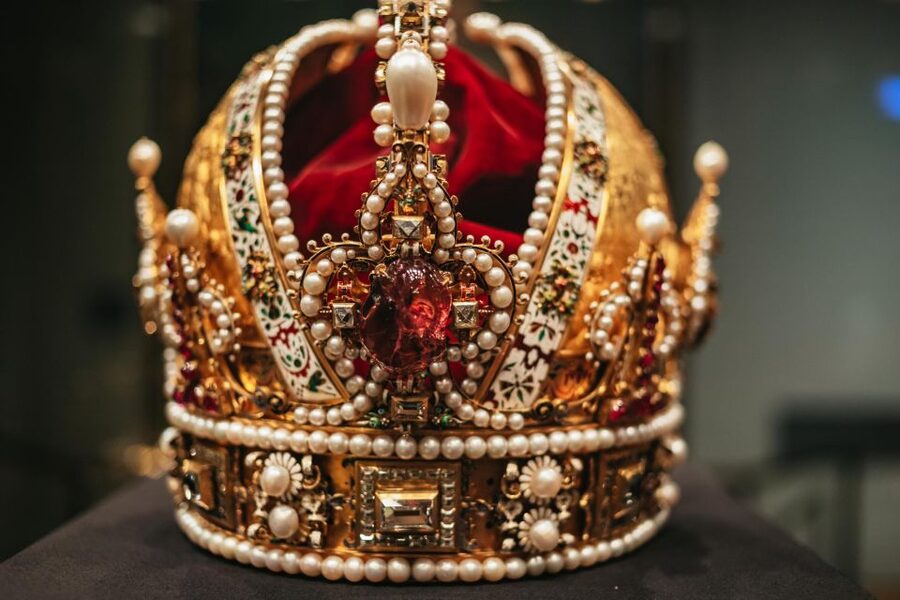
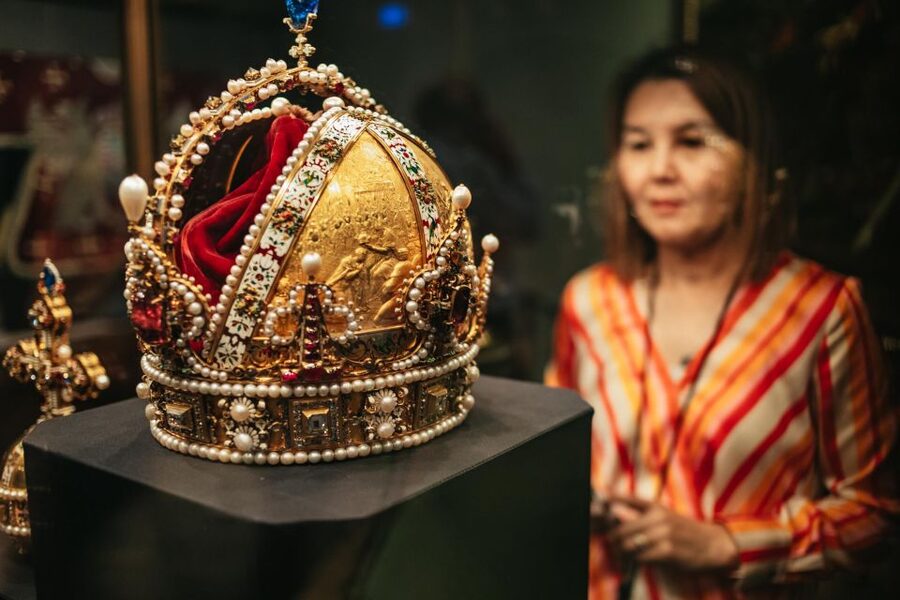
If you’re here for one thing, make it the crown section. The Austrian Imperial Crown is the obvious star, and it earns the hype. Even before you read the labels, you’ll see why it’s described as one of the most beautiful crowns in the world: the scale, the structure, and the way the gemstones are arranged all scream power.
Right beside that vibe is the crown jewel context of the Holy Roman Empire. Seeing the Imperial Crown of the Holy Roman Empire next to the Habsburg crown material helps you understand what these objects were for. This wasn’t jewelry made for a private collection. These were tools of authority, built to be seen and to last.
A practical tip for your visit: don’t try to read everything at once. Look first—then read. When you do it the other way around, you spend your time hunting for meaning instead of letting the objects hit you.
Empress Elisabeth Jewelry: The Human Touch in a Room of Thrones
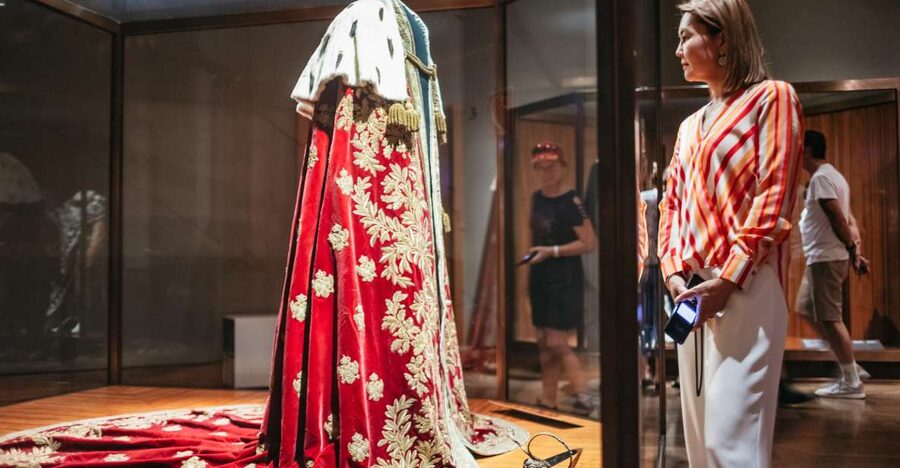
One of my favorite parts of this treasury is the section that connects to individual people—especially the Habsburg women. The display includes parts of the original jewelry of Empress Elisabeth, which shifts the feeling from dynasty to person.
It’s a small change, but it lands. Crowns are about the state. Jewellery on Elisabeth is about taste, identity, and the kind of glamour that can feel personal even when it’s protected behind glass. You get the sense that the Habsburgs weren’t only building symbols—they were curating how they appeared in public.
If you like fashion history, court portraits, or just the idea that luxury has a “language,” spend extra time here. This is where your brain slows down.
Legendary Relics: Holy Lance, Holy Grail (Agate Bowl), and Unicorn Horn
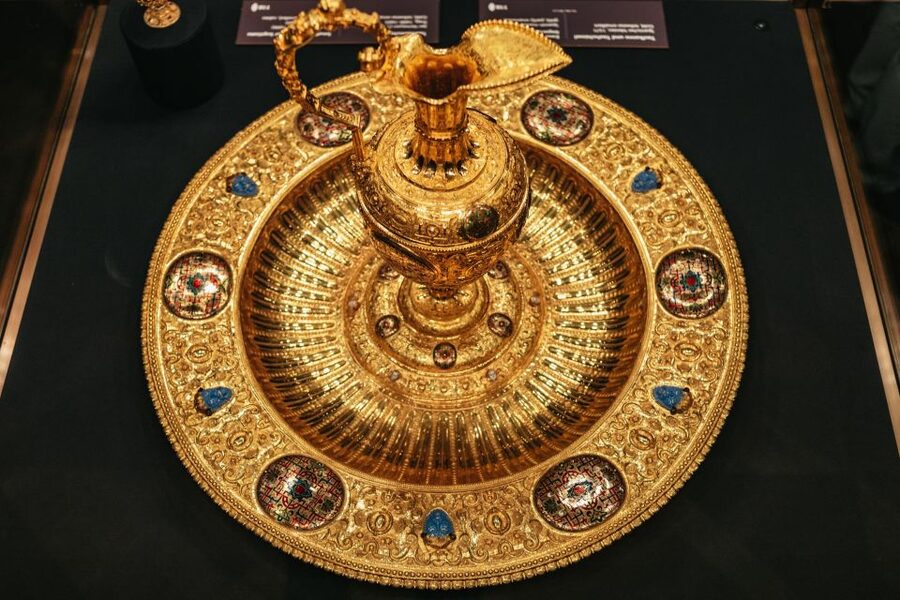
Now for the fun part—the section that feels like someone mixed a cathedral with a fairy tale. You can see legendary treasures, including the Holy Lance from the 8th century, the Holy Grail (described as the world’s largest agate bowl), and the horn of a unicorn.
Even if you’re not thinking about relic claims, you should still pay attention to the display logic. These objects show how the Habsburgs treated story and belief as serious political capital. Whether you believe every legend or not, the point is the same: people built meaning around objects. This treasury preserves that mindset like a snapshot.
One drawback to know: the room moves logically, but your interest might pull you off rhythm. If you start with the legendary objects and then try to sprint to the gems, you might miss the transitions. I’d rather you pick a lane—either start with crowns and go outward, or start with relics and then let the gems surprise you.
Emeralds, Golden Fleece, and Habsburg Wealth in Stone
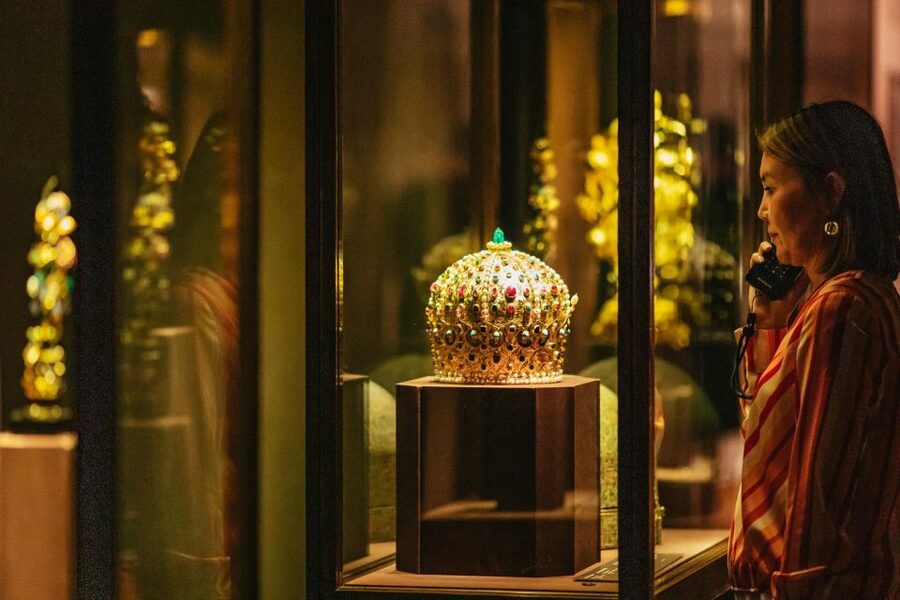
The treasures here aren’t only about crowns and relics. They’re also about material spectacle. You’ll see jewels and diamonds tied to the former power of the Habsburg dynasty, including a standout claim: the largest cut emerald in the world.
This is where you can really appreciate the craft. Big stones aren’t impressive just because they’re big. The cutting choices, the setting style, and the way pieces are displayed in controlled lighting all help you see the stone as architecture, not decoration.
You’ll also encounter the treasure of the Order of the Golden Fleece. That detail matters because it’s not just “rich people stuff.” It’s an order with prestige and politics baked in—something like an elite membership badge that doubles as propaganda.
If you like museum design, this part is good. The layout gives you enough space to move around the display lines, and the items feel grouped around themes: rank, lineage, and faith.






Burgundy Collection and Napoleon II: Power Across Europe
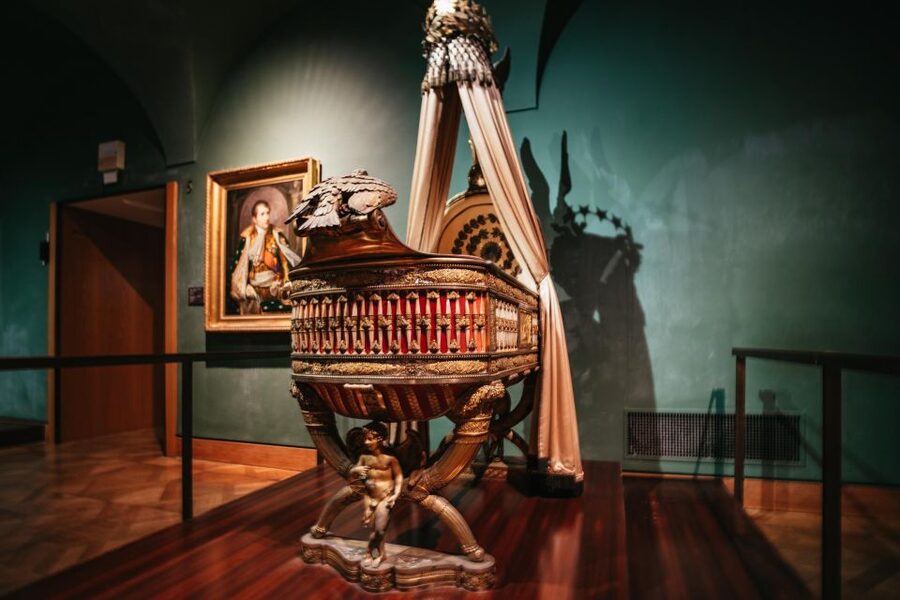
Two sections help expand the story beyond Austria. One is the collection of 15th-century Burgundy items. Another is the cradle of the King of Rome, known as Napoleon II.
Why that matters: the Habsburgs didn’t rule in isolation. They were linked through marriages, alliances, inheritance, and wars across Europe. Seeing Burgundy pieces helps you feel how European wealth circulated and how styles travelled. The Napoleon II cradle is a reminder that even when dynasties shifted, courts still wrapped legitimacy in objects.
If you’re a fan of political history, this is a “wait, that’s here?” moment. If you’re not, it still works because it breaks the treasure rhythm and gives you a new angle to keep your attention.
How Long You Need: Plan 60 to 90 Minutes, Not Four Hours
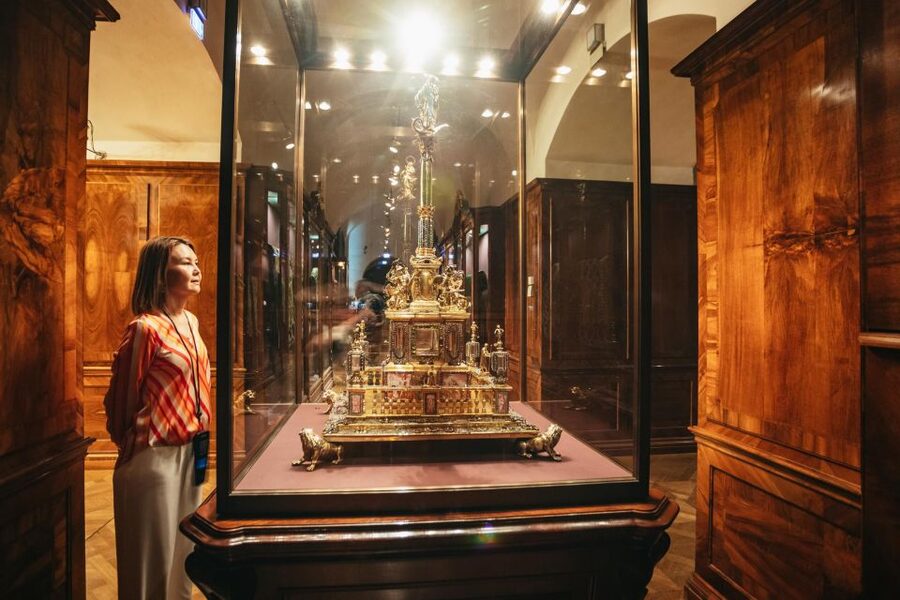
This is a treasury you can do in about an hour or so, with many visitors finishing around 1 to 1.5 hours. That’s ideal if your Vienna schedule is tight. It’s also why you should treat this stop like a focused visit, not a museum marathon.
Here’s a simple way to pace it:
- Spend your first 20 minutes chasing the headline pieces (the crowns and the biggest gems).
- Use the next 30 minutes for the Elisabeth jewellery and Golden Fleece details.
- Save the last 20 minutes for the relics and legendary objects, where you’re more likely to linger.
Light matters here too. One review noted lighting can make it harder to see clearly. So if you care about fine details, don’t just stop at the first angle. Move slightly to improve your view.
Also consider this: audio guidance can help, but you don’t want to be chained to a device. If you use audio, keep your listening shorter bursts. Turn it on when you need context; then turn it off and let your eyes do the work.
Price and Value: What $18 Buys You in Real Terms
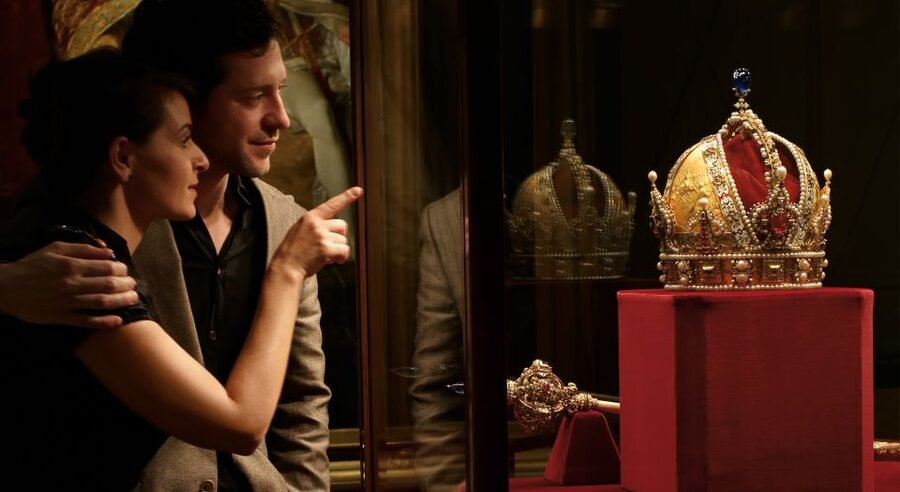
The ticket price is $18 per person. For that, you’re getting entrance to one of the most important treasure chambers in the world, housed in a palace wing that adds atmosphere right away. In value terms, this is less about “seeing a lot” and more about seeing high-impact objects in a compact space.
And the price makes sense when you consider what’s inside:
- world-famous crowns
- relics like the Holy Lance
- legendary objects like the Holy Grail and unicorn horn
- major gems, including a world-sized emerald
If you only have time for one “treasure” stop in Vienna, this is the kind of place that justifies prioritizing. If you’re only browsing casually or hate displays behind glass, you might want to temper expectations and either pair it with something more interactive—or plan a second museum day so you’re not over-stimulated.
Ticketing, Lines, and What to Bring So You Don’t Lose Time
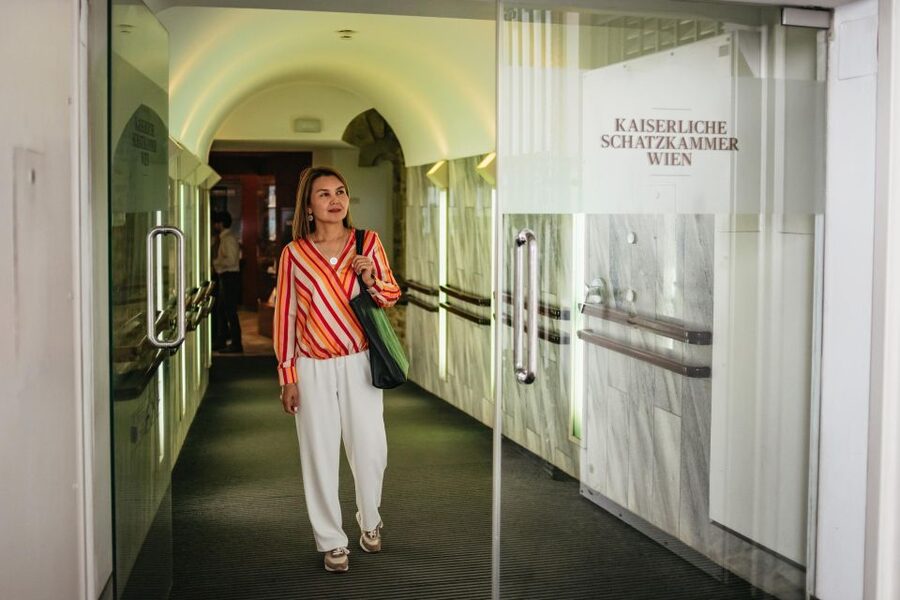
This is a ticketed visit with a printed voucher required, and the meeting point is in the Swiss Wing in the Vienna Hofburg Palace. If you’re the type who hates friction, take a few minutes to check your voucher before you go.
One review complaint was that there can be a line for exchanging QR codes for actual tickets, which reduces the advantage of pre-booking. Another issue mentioned confusing ground signage around the palace. Translation: give yourself a little extra time near arrival so you’re not stressed while searching for the Swiss Wing entrance.
Also, note this: there’s no guided tour included by default. Audio is listed as not included, and you can come with your own guide. That’s actually a plus if you already have a favorite style of learning. It’s a minus if you want someone else to do all the explaining.
Who This Experience Suits Best (and Who Might Skip)
This treasury fits you if you enjoy:
- crowns, royal regalia, and court symbolism
- religious relics displayed as art and history
- gems and metalwork craftsmanship
- a focused museum visit with a clear route
It’s also great for a first-timer in Vienna because the Hofburg connection is instant. You’re not just seeing objects; you’re seeing them in the context where dynastic identity was staged.
You might skip—or shorten your visit—if you:
- hate museum rules and prefer more hands-on stops
- want a long, slow narrative museum experience
- are easily frustrated by lighting behind glass and small label text
Should You Book the Imperial Treasury in the Hofburg Palace?
I’d book it if you want the best “treasure chamber” payoff in Vienna without turning it into a whole day. The combination of imperial crowns, famous Habsburg jewels tied to Elisabeth, and legendary relics like the Holy Grail makes it feel unusual even among top-tier museum stops.
I’d reconsider only if your schedule is too tight to allow for 60 to 90 minutes of real looking, or if you strongly prefer guided commentary included in the price. If you’re prepared to read labels (or add your own audio/guide), this visit is a strong use of your time.
FAQ
Where is the Imperial Treasury located?
It’s in the Swiss Wing of the Vienna Hofburg Palace in Vienna, Austria.
How much does it cost?
The price is $18 per person.
How long is the visit?
You have validity for 1 day. In practice, it’s commonly handled in about 1 hour to 1.5 hours when you take time with the displays.
What’s included in the ticket?
The ticket includes entrance only.
Is an audio guide or a guided tour included?
No. Audio guide and guided tour are not included. You can come with your own guide.
Do I need anything specific to enter?
A printed voucher is required. Wheelchair access is listed as available, and the group size is limited to a small group (up to 10 participants).