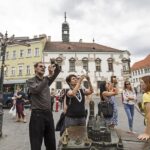
Budapest’s castle hill tells stories fast. This Buda Castle Tour turns the Castle District into a readable timeline, with architecture explained as real history—built, destroyed, rebuilt, and re-used. I love the way the walk connects palace power with everyday city life on medieval streets. I also love the energy of guide Máté, who mixes history and archaeology and backs it up with clear visuals on his iPad. One drawback to plan for: this is a walk-first experience, so the Royal Palace interior and Matthias Church interior aren’t included, and you’ll still be outside for most of the time.
For a reasonable $43.25 per person, you get a focused, 3 hour 30 minute route with a licensed English guide and a small group size capped at 12. You’ll start at the Statue of Prince Eugene of Savoy and finish right by Matthias Church at Szentháromság Square, which is handy if you want to keep exploring on your own afterward. I’d call this a strong pick for first-timers who want meaning, not just sights.
In This Review
- Key Highlights You’ll Actually Feel on the Walk
- Why Buda Castle District Feels Like a Living Timeline
- Tour Price, Timing, and Group Size: Where the Value Comes From
- Prince Eugene to the Royal Palace: Where Power Got Rewritten
- Tárnok and Úri Streets: Medieval Merchants at Street Level
- Saint Mary Magdalene’s Tower: Faith After Siege and Demolition
- Országház Street and the Ministry Building: The Italian Street Meets Neo-Gothic
- Matthias Church Area and Fortuna Street’s Printing Breakthrough
- Market Squares and Archives: Everyday Life to National Memory
- 1686 Siege Points Along the Outer Walls
- The Medieval Jewish Quarter: Included Prayer House Ticket (Check the Closed Days)
- Reused Gothic Walls and Dominican Ruins Next to Modern Development
- Fisherman’s Bastion Finish and What You’ll Skip on Purpose
- Should You Book This Buda Castle Tour?
- FAQ
- How long is the Buda Castle history and architecture tour?
- How much does the tour cost?
- What’s included in the tour ticket?
- Is the tour in English, and do I need a print ticket?
- What major sights are not included in the tour price?
- Is the Jewish prayer house always open during the tour?
- Where does the tour start and end?
- What group size should I expect?
- Who can join, and is it suitable for limited mobility or young kids?
Key Highlights You’ll Actually Feel on the Walk
- Royal Palace as a timeline: Gothic-to-Baroque-to-Neoclassical layers explained in the open air
- Medieval trade streets: Tárnok Street and Úri Street show how Buda’s everyday economy worked
- A tower with a survival story: the remaining tower of Saint Mary Magdalene after 17th-century siege and 20th-century demolition
- Jewish quarter with an included ticket: an excavated medieval prayer house, closed Saturday and Monday
- Siege of Buda on the outer walls: visible points tied to 1686 breaches and the Ottoman Pasha’s fall
- Controversial heritage meets modern Budapest: Dominican ruins next to Hilton-style modern redevelopment
Why Buda Castle District Feels Like a Living Timeline
Buda Castle Hill is one of those places where the buildings refuse to stay in one era. From the Royal Palace grounds to side streets like Tárnok and Úri, you’re basically reading layers of what different rulers, faiths, and communities wanted. This tour keeps that idea front and center: you’re not just looking at pretty stone—you’re seeing cause and effect.
What I like most about this approach is that it makes the Castle District easier to understand fast. Even if you don’t remember every date, the architecture gives you clues. The guide’s job is to point those clues out, then connect them to the people who lived through the changes.
You’ll also walk through areas that many people skip because they’re not the postcard star. That’s where the story gets more human. The medieval streets, remaining church foundations, and synagogue remains make Buda feel lived-in, not museum-like.
You can also read our reviews of more tours and experiences in Budapest.


Tour Price, Timing, and Group Size: Where the Value Comes From
At $43.25 per person for about 3 hours 30 minutes, you’re paying for more than access to sights. The real value is the interpretation—how an English guide ties together palace history, medieval street life, and later wars and reconstructions. If you’ve ever wandered in circles on a historic hill and wished someone would point out what matters, this is that fix.
The group size is limited to a maximum of 12 travelers, which helps keep the pace manageable. The route is best for a moderate walking level, and it’s not suitable for guests with limited mobility. You’re on cobbles and uneven terrain, and there’s no “let’s pause in a café” guarantee built into the structure.
Also note the big planning reality: this experience requires good weather. If Budapest gives you rain or cold gusts, you’ll want to be dressed for it. The upside is that most stops are outdoors, so even a quick break is still part of the experience.
Prince Eugene to the Royal Palace: Where Power Got Rewritten
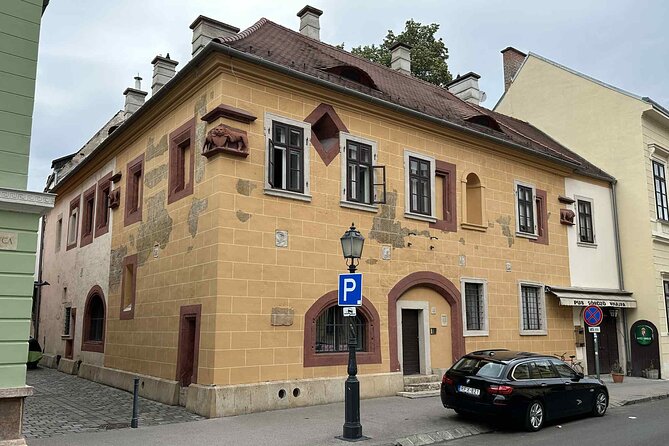
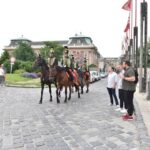
You’ll meet at the Statue of Prince Eugene of Savoy, then get moving quickly into Castle District history. The first stop is the Royal Palace area, where the landmark’s story is explained as a cycle of ambition and destruction. Over centuries, the palace was built, destroyed, and rebuilt—starting from a medieval stronghold and evolving into a royal residence.
This part is especially good if you like architecture more than dates. You’ll hear how different eras left different fingerprints, from Gothic through Baroque and into Neoclassical elements. Even if you’ve seen photos before, walking the area helps you understand how the complex grew into what it looks like today.
Right after, you’ll briefly pause at the remains of the medieval Sigismund Church. The foundations are visible in the courtyards below, tied to the early 15th century expansion of the palace under King Sigismund. This stop is short—about 3 minutes—but it’s one of those “wait, that’s the early stage of this place” moments.
Tárnok and Úri Streets: Medieval Merchants at Street Level
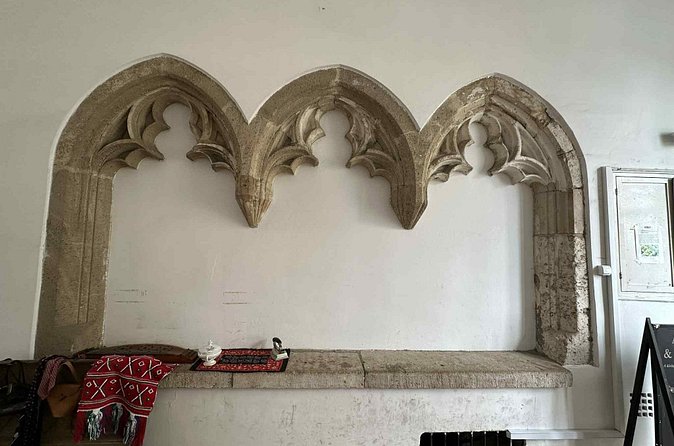
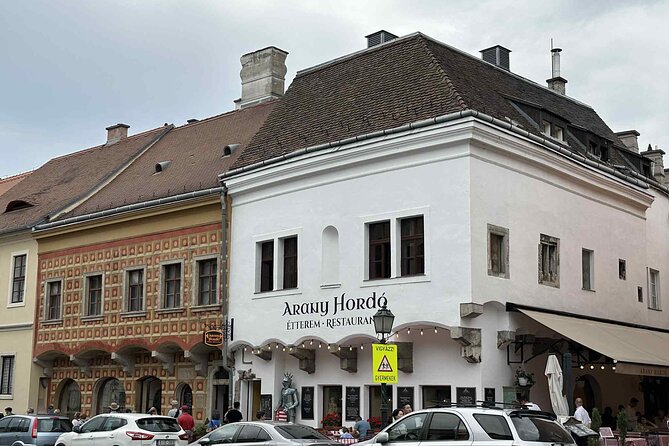
Next comes the medieval burgher town beneath the royal court, and that shift matters. On Tárnok Street, you’re stepping into the main commercial lane of medieval Buda. The cobbled street hides well-preserved merchant houses with Gothic façades, and the tour focuses on how goods were stored, traded, and displayed.
This is the difference between a palace tour and a city tour. You’re not just learning about rulers—you’re learning about the practical gears of daily life. The guide takes you to three authentic buildings that survived fire, siege, and centuries of urban change, all on original medieval foundations. That mix of survival and continuity makes the architecture feel earned, not decorative.
Then you’ll continue to Úri Street, once the noble residential quarter. Here the emphasis shifts from shop and storage to status and power behind thick walls. You’ll also look at the medieval gateways—ornate entrances that once welcomed merchants, craftsmen, and travelers from across the kingdom. Walking under those arches gives you a real sense of scale and movement through the city.
Saint Mary Magdalene’s Tower: Faith After Siege and Demolition
Stop 5 is the Church of Saint Mary Magdalene, but you should calibrate expectations here. The structure was partially destroyed during the siege of Buda in 1686, and later, in the 1950s, Hungary’s communist regime ordered the demolition of the ruined structure. The key surviving piece is the medieval tower.
This is one of the most powerful stops on the route because the “building” you see isn’t the usual full church. Instead, you’re looking at what preservation managed to save, thanks to archaeologists and preservationists. The tower becomes a kind of historical bookmark—proof that memory can survive even when walls don’t.
It’s also a good reminder to keep your eyes up. The tour gives the tower context, but you still do the work of noticing how it rises from the Castle Hill setting.






Országház Street and the Ministry Building: The Italian Street Meets Neo-Gothic
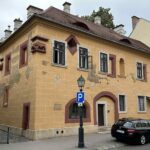
On Országház Street, you’ll hear an older name: the Italian Street from medieval times. The lane was home to an Italian merchant community, and the architecture reflects the prosperity of the 14th and 15th centuries. The tour highlights a rare decorative trace here: the only surviving 16th-century sgraffito decoration in the entire Castle District.
That’s a big “small detail, big payoff” moment. Sgraffito is the kind of thing people walk past unless someone points it out, and once you see it, it changes how you read the walls. This stop is about multicultural trade and European exchange, not just local style.
Then the route moves to the Neo-Gothic building now housing Hungary’s Ministry of Finance (stop 7). The guide explains that several medieval structures were demolished to make space for it in the early 20th century. After World War II damage, the façade was simplified, and in the last five years, it’s been reconstructed—restoring much of the original grandeur. There’s also controversy tied to the reconstruction because one original wing was demolished during the process.
So you end up with a practical lesson: restoration is never purely neutral. It’s a decision with consequences, and you’ll see that idea in stone.
Matthias Church Area and Fortuna Street’s Printing Breakthrough
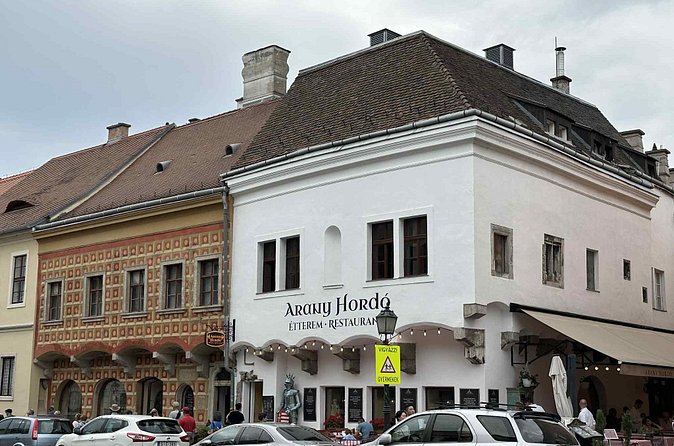
Stop 8 is the Church of the Assumption of the Buda Castle, commonly—and incorrectly—called Matthias Church. The tour doesn’t take you inside (interior access isn’t included), but you still get the correct name and the reason the church matters: it served Buda’s German-speaking community and reflects centuries of religious change on Castle Hill.
Then comes Fortuna Street, which feels quiet now but used to matter for big ideas. In the 1470s, Andreas Hess (spelled as Huss in some retellings) produced Hungary’s first printed book here: the Chronica Hungarorum. Nearby, the Red Hedgehog Inn (Vörös Sün) once stood, a legendary meeting place for travelers, merchants, and intellectuals.
This stop is a great example of what makes the tour different from a list of monuments. It shows how information, printing, and travel traffic fit into the same urban web as noble residences and townhouses.
Market Squares and Archives: Everyday Life to National Memory
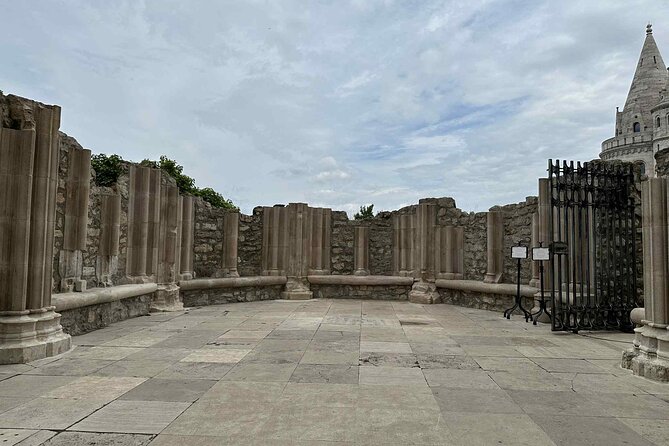
On Becsi Kapu Square, the tour brings you to a medieval marketplace and main entrance to Buda. It was a meeting point where Hungarian townsfolk and the local Jewish community traded, talked, and worshiped. Today, the square keeps historic charm, but the tour’s context helps you imagine the social mix that once filled it.
A short walk later, you reach the National Archives of Hungary, built in the early 20th century in a Neo-Romanesque style. The guide explains why it was designed to echo the medieval character of the Castle District, giving it a look that almost feels older than it is. The building isn’t just symbolic; it houses documents covering the full scope of Hungary’s written past.
This is where the tour quietly asks you to think about preservation on a national scale. Buildings can be rebuilt, but records keep multiplying meaning over time.
1686 Siege Points Along the Outer Walls
Stop 12 shifts the mood toward conflict and survival. Along the outer castle walls near the Arnavut Abdurrahman Abdi Paşa Emlékműve memorial, you’ll learn key moments from the Siege of Buda in 1686. The guide points out where the walls were first breached by the Christian allied forces, and not far away, where the Ottoman Pasha of Buda fell in battle.
Even with only exterior views, the narration helps those walls feel less like scenery and more like evidence. If you like history that connects events to geography, this part will click.
The Medieval Jewish Quarter: Included Prayer House Ticket (Check the Closed Days)
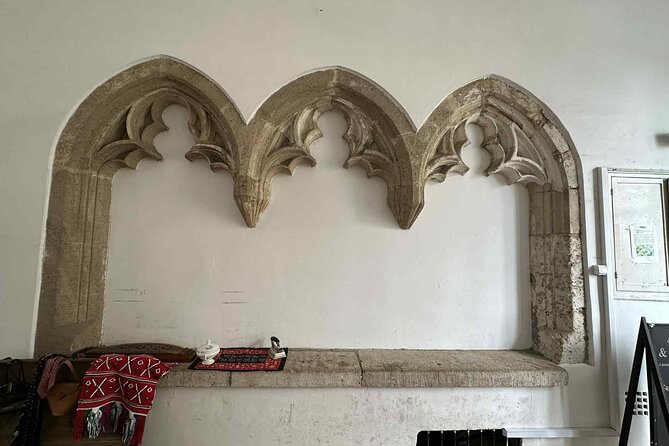
The tour enters the medieval Jewish quarter at stop 13. You’ll pause at the site of a former Gothic synagogue, destroyed long ago, then step to an excavated medieval Jewish prayer house.
Here’s the practical part: the entrance fee for the Jewish prayer house is included, but it’s closed on Saturday and Monday. If your travel dates fall on those days, you may need to plan around that reality or expect limited access.
This stop tends to land emotionally because the space is modest but meaningful. It offers a quiet look at faith and daily life in a community that faced long silence. If you want your Castle District experience to include more than royal power, this is where the tour delivers.
Reused Gothic Walls and Dominican Ruins Next to Modern Development
Stop 14 takes you along Táncsics Mihály utca, where the story becomes literally layered. Old Gothic walls and cellars weren’t simply demolished. Instead, they were incorporated into Baroque and later residential buildings in the 17th and 18th centuries.
The tour calls out how the layered façades and hidden structures show how post-Ottoman Buda rebuilt itself on medieval foundations—both physically and symbolically. It’s one of those “look closer” areas where the city’s survival strategy becomes visible.
Then you’ll reach Dominikánus Udvar (stop 15), with the remains of the Dominican monastery of Saint Nicholas. The guide connects it to Friar Julianus, who embarked on his now-legendary 13th-century journey. Later, the ruins endured fire, siege, and neglect, then were reinterpreted during the construction of the Hilton Hotel in the 20th century.
This is controversial heritage in real time: medieval stonework beside modern architecture. If you’re the type of traveler who asks how we balance progress and memory, you’ll get plenty to think about here.
Fisherman’s Bastion Finish and What You’ll Skip on Purpose
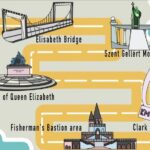
Stop 16 brings you to Fisherman’s Bastion, one of Budapest’s most iconic sights. At the center is an equestrian statue of King Saint Stephen, Hungary’s first Christian king—symbolizing the birth of the Hungarian state. The tour admires the monument and structure from the main level.
Important detail: you will not enter the upper panoramic lookout terrace. Access requires a ticket and isn’t included in the tour price. If you care about the higher viewpoint, plan to purchase that ticket on-site after the tour.
After Fisherman’s Bastion, the tour concludes back at Matthias Church area, at Szentháromság Square. That makes it easy to continue on foot. The Matthias Church interior isn’t included in the tour, but you can choose to visit independently after the guide wraps up.
Should You Book This Buda Castle Tour?
Book it if you want your first Budapest Castle District experience to make sense fast. The route does a great job of connecting big landmarks like the Royal Palace with smaller, quieter places where history feels personal: medieval merchant streets, surviving church remnants, and the medieval Jewish prayer house.
Skip or rethink if your main goal is interior access only. The Royal Palace interior is not included, Matthias Church interior is not included, and you won’t go up Fisherman’s Bastion’s upper terrace during the tour. If you want maximum indoor sightseeing, you’ll likely want to pair this with additional visits.
Also, be honest about your walking tolerance. This isn’t a slow, seated tour. It’s built around good weather and a moderate fitness level, and it’s not suitable for limited mobility. But for people who like walking, reading architecture, and asking questions, it’s an efficient way to see a lot of Budapest’s most layered history in one guided loop.
FAQ
How long is the Buda Castle history and architecture tour?
It runs for about 3 hours 30 minutes.
How much does the tour cost?
The price is $43.25 per person.
What’s included in the tour ticket?
You get an officially licensed English-speaking tour guide, a guest pass with lanyard, and the entrance fee to the Jewish prayer house (the only included paid admission on the route).
Is the tour in English, and do I need a print ticket?
The tour is offered in English, and you’ll receive a mobile ticket.
What major sights are not included in the tour price?
The Royal Palace interior is not included, the interior of Matthias Church is not included, and access to the upper panoramic terrace of Fisherman’s Bastion is not included.
Is the Jewish prayer house always open during the tour?
No. It is closed on Saturday and Monday.
Where does the tour start and end?
It starts at the Statue of Prince Eugene of Savoy, Budapest (1013), and ends at Matthias Church, at Szentháromság Square (1014), right beside the church.
What group size should I expect?
The tour has a maximum of 12 travelers.
Who can join, and is it suitable for limited mobility or young kids?
Children under 10 years old are not permitted. It is not suitable for guests with limited mobility, and it requires moderate physical fitness for the walking route.