REVIEW · BUDAPEST
Buda Castle Walking Tour: A Kingdom of Many Nations
Book on Viator →Operated by Insight Cities · Bookable on Viator
Castle Hill turns history into a stroll. This small-group Budapest walk gives you a clear path through UNESCO-listed Castle Hill, with Matthias Church and Fisherman’s Bastion as real anchor points, not just random photo stops.
I also like that the pace stays friendly for a max of six people. And the guide work is the point: you get a story that moves from medieval kings to Turkish rule, then into the modern era. The one catch to plan for is extra entrance fees for Matthias Church and Fisherman’s Bastion, so you’ll want a little cash and time for the paid bits.
In This Review
- Quick hits before you go
- Why Castle Hill hits harder with a guide
- Price and what you’re really paying for ($126.15 for about 3 hours)
- Meeting point: start at Országház u. 31 and plan your pre-walk timing
- Stop 1: Castle Hill’s palace-and-church skyline (your orientation moment)
- Stop 2: the palace that kept changing jobs (and kept getting rebuilt)
- Stop 3: Sándor Palace and modern Hungarian power
- Stop 4: Matthias Church roof and interior (the paid highlight)
- Stop 5: Fisherman’s Bastion views, seven towers, and the big photo moment
- Stop 6: Vienna Gate and the line of sight toward Obuda and Aquincum
- The guides: why the best part is often the people
- What to expect during the walk: time, pace, and paid choices
- Who this tour is best for (and who might pass)
- Should you book the Buda Castle Walking Tour?
- FAQ
- How long is the Buda Castle walking tour?
- What is the group size?
- What languages is the tour offered in?
- What is the meeting point?
- Where does the tour end?
- Is Matthias Church ticket included?
- Are Fisherman’s Bastion tickets included?
- Is there free cancellation?
Quick hits before you go
- Max 6 people keeps questions easy and the walk from turning into a cattle drive
- Castle Hill context ties together rulers, architecture styles, and changing building purposes
- Matthias Church is the coronation site of Hungarian kings, plus a standout roof and interior
- Fisherman’s Bastion views over the Danube, Pest, Margaret Island, and Gellért Hill
- Seven towers meaning: a nod to the seven Magyar tribes from the late 9th century
- End at Vienna Gate for a final line of sight toward Obuda and Roman Aquincum
Why Castle Hill hits harder with a guide
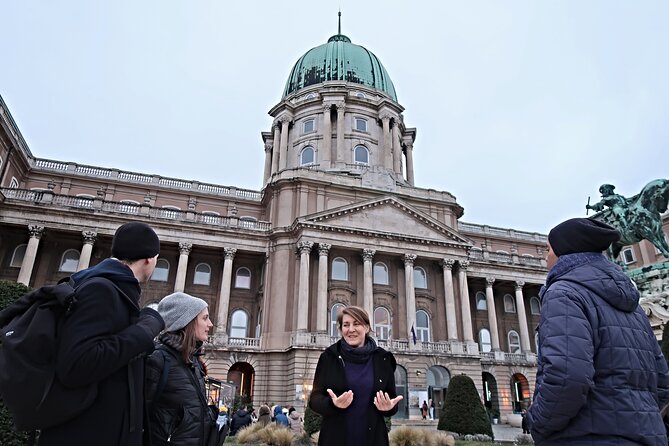
Budapest’s Castle District can feel like two different places at once: one part is postcard scenery, and the other part is a real neighborhood with narrow streets and layers of time stacked on top of each other. A guided walk is what helps it click. You don’t just see buildings; you learn why the street grid and architecture look the way they do, and how the hill kept getting rebuilt and repurposed.
What I like most is the mix of “big names” and street-level detail. The palace area introduces royal power, then you shift into Ottoman-era and Habsburg-era echoes, and later into a modern civic landmark. It’s a history lesson, but it’s also a walk with turns, pauses, and views.
One more practical point: Castle Hill is not smooth. Expect cobbled, uneven streets. If you hate walking, this may not be your favorite day. But if you’re okay with steps and a bit of uneven pavement, the payoff is huge.
You can also read our reviews of more tours and experiences in Budapest.


Price and what you’re really paying for ($126.15 for about 3 hours)
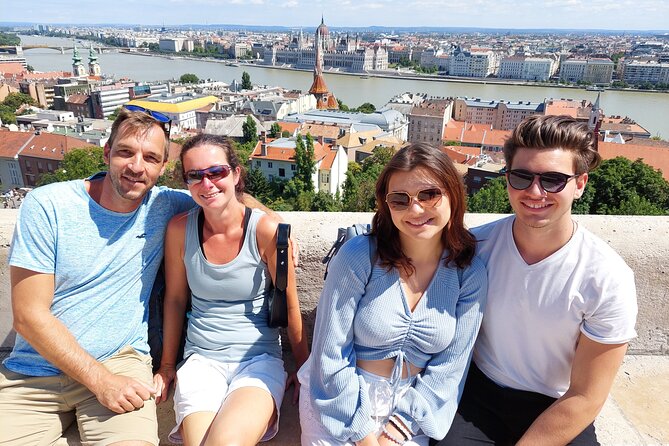
At about $126.15 per person for an approx. 3-hour walk, this isn’t a cheap add-on. But it can be good value if you care about interpretation rather than just sightseeing.
Here’s what you’re paying for:
- A professional guide who can connect architecture and history into one thread
- A small group size, which usually means more time to ask questions
- A route that hits major highlights (and not just the most crowded viewpoints)
What’s not included matters, too. Buda Castle, Matthias Church, and Fisherman’s Bastion tickets are not included, so you’ll likely add a bit more to your budget once you decide how many paid interiors/areas you want. If you’re the type who likes to “see it from outside only,” you can sometimes keep costs down. If you want full access inside, plan for that.
Meeting point: start at Országház u. 31 and plan your pre-walk timing
You’ll meet in Budapest at Országház u. 31, 1014 Hungary. The location is in a central area, and it’s noted as near public transportation, which helps if you’re juggling other plans that day.
Because there are morning or afternoon departures depending on the day, I recommend you match the tour with the rest of your itinerary. If you want more time for museums afterward, pick the earlier slot. If you prefer the later-day light for photos, choose the afternoon option when it’s available.
Either way, wear shoes you trust on cobblestones. Castle Hill doesn’t do “slip-on sneakers” energy.
Stop 1: Castle Hill’s palace-and-church skyline (your orientation moment)
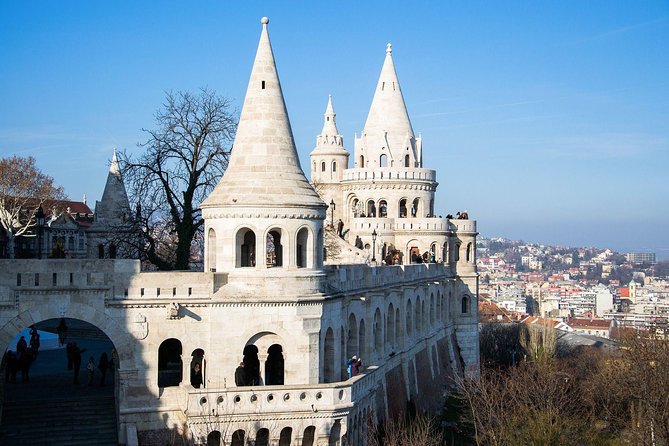
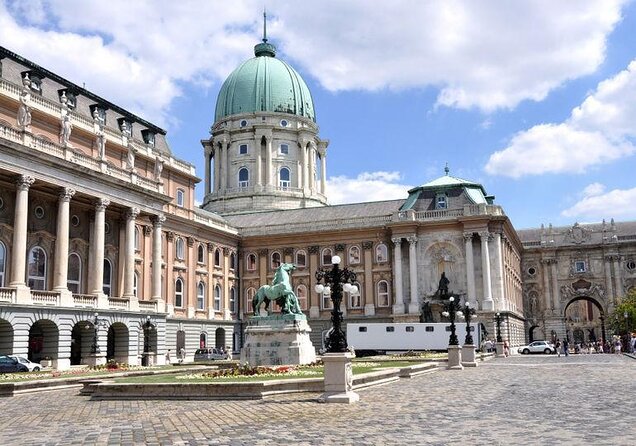
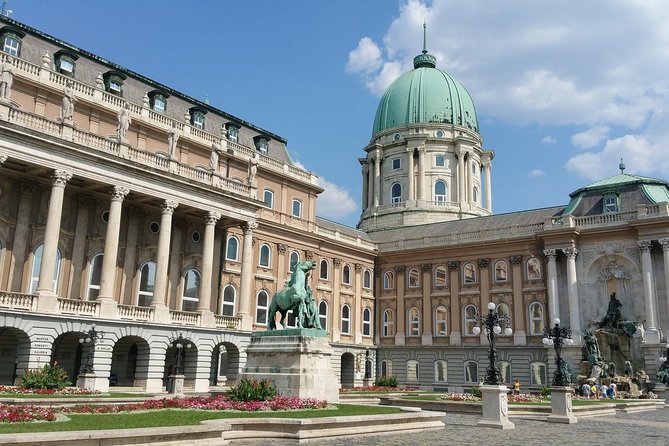
You start on Castle Hill, Budapest’s oldest quarter, where the streets feel narrow and old in a way that’s hard to fake with pictures alone. Two visual anchors set the theme immediately: the imposing palace complex at the southern tip of the hill, and the colored roof of Matthias Church in the middle, with its pointed steeple.
This is where the guide’s job gets very practical. You get orientation: where you are, what style you’re looking at, and what parts are linked to different time periods. It’s also where you learn how the hill’s layout and the building styles relate to the people who held power here.
A heads-up based on how this tour is designed: you’re not doing a museum queue marathon. You’re building a mental map first, so the later stops make sense fast.
Stop 2: the palace that kept changing jobs (and kept getting rebuilt)
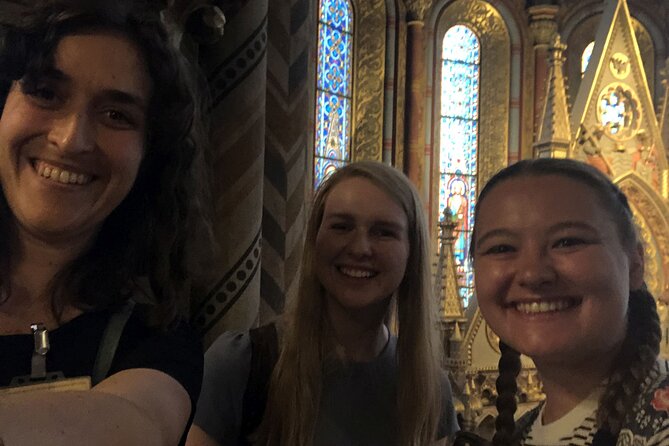
This stop is essentially the reason the tour exists. The palace complex didn’t stay one thing. It was rebuilt, extended, changed, burned down, and rebuilt again. And its final look is mostly shaped by what happened after World War II, when different elements were brought together into the eclectic look you see today.
Here’s the historical sequence you’ll be walked through:
- Around 1250, King Béla IV erected a fortress after the devastation of Mongol invasion
- In the Renaissance period, King Matthias turned it into a famous European court at the end of the 15th century
- After that came the Ottoman period, with Turkish pashas ruling for over 150 years
- Then the Hapsburg emperors followed, keeping their own mark on power and governance
This is also where you’ll have a discussion about the changing function of the building throughout its history. That matters because it explains why you can see multiple layers of architecture in one place. Power always repackages itself. The palace is a physical record of that.
Practical note: if you’re hoping for a single “castle interior” experience, keep expectations realistic. The big value is the walking narrative plus the visual exterior-to-viewpoint rhythm.






Stop 3: Sándor Palace and modern Hungarian power
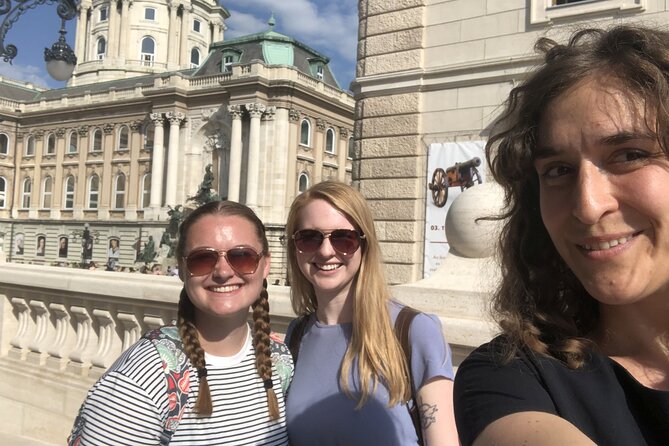
Next you’ll move to Sándor Palace, the official residence of the President of Hungary and the seat of the Office of the President, serving in that role since 2003.
What I like here is the contrast. You’ve been living in centuries of rule-and-rebuild. Then you’re standing near a building that’s still tied to the state today. The palace also has a neat origin story: the original palace was built in Neoclassical style in 1806, commissioned by Count Vincent Sándor, an aristocrat and philosopher of the Austro-Hungarian Empire.
Even if you don’t care about government buildings, this stop helps you see how Castle Hill is not frozen in the past. It still functions, just on a different clock.
Stop 4: Matthias Church roof and interior (the paid highlight)
Matthias Church is a major reason many people choose this tour, and the guide will point out what makes it special. Expect an emphasis on both the outside and inside.
The church is described as a very finely executed Neogothic reconstruction from the end of the 19th century. That matters: it’s not medieval stone with no changes. It’s a carefully made “this is how we remember the grandeur” kind of restoration.
You’ll also get the major headline fact: it’s the coronation site of Hungarian kings. That gives the building extra weight beyond architecture and photos.
Tickets aren’t included, so this is one of the spots where you’ll decide if you want the full interior experience. If you care about ornamentation and can handle paying an entrance fee, this is usually where the time and money pay off.
Quick tip: plan to look up as much as you look forward. Matthias Church’s decorative emphasis is roof-and-detail first.
Stop 5: Fisherman’s Bastion views, seven towers, and the big photo moment
Fisherman’s Bastion is often treated like a viewpoint platform, but this tour helps you understand the symbolism behind the look. The structure is an architectural fantasy in neo-Gothic and neo-Romanesque styles, built between 1895 and 1902.
The seven towers have a specific meaning: they represent the seven Magyar tribes that settled in the Carpathian Basin at the end of the 9th century. So when you look at those towers, it’s not random decoration. It’s a built-in story about origins and identity.
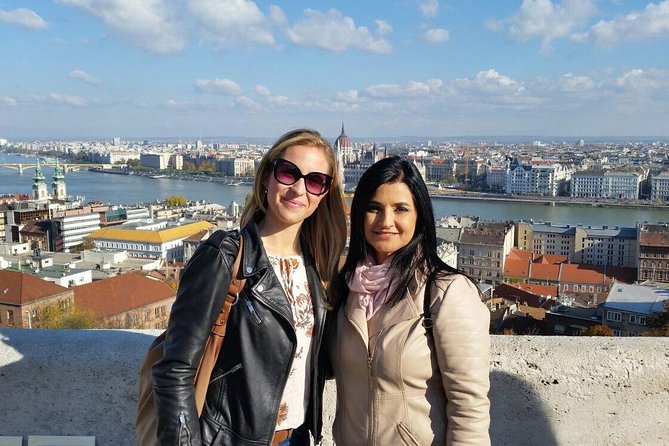
Then you get the practical payoff: the terrace provides some of the best panoramas over the Danube plus views toward Margaret Island, Pest, and Gellért Hill. This is where you’ll feel the “why Budapest is so worth it” moment.
Tickets aren’t included for Fisherman’s Bastion, so budget accordingly if you want full access. Even if you don’t buy a ticket, the view planning is still worth it.
Stop 6: Vienna Gate and the line of sight toward Obuda and Aquincum
Your final stop is Vienna Gate, which is positioned so you can see all the way toward Obuda (Old Buda). This is the end of the route, but it’s also the end of the tour’s story arc: you finish with the Roman thread.
Obuda connects to the Roman city called Aquincum, founded by Romans. That’s a nice way to wrap up: you started with medieval and early modern power, and you end with a deep-time hint that this hill wasn’t just important later—it was important long before kings.
The result is that you leave with layers. Not just a checklist of landmarks.
The guides: why the best part is often the people
This tour lives or dies by the guide, and the feedback here is very consistent about that. I’ve seen repeated praise for guides like Peter, Judith, Gergely (Gregory), Kata, Veronica, Marianna, Runa, Henk, and others. Across the board, the common thread is how well they turn big dates into plain human stories.
In particular, the guide skill is often described as:
- Adjusting the pace and angle to your interests
- Explaining architecture so you can actually spot what you’re looking at
- Sharing local-feeling anecdotes, not just textbook facts
- Keeping it friendly, with help beyond the walking stops when needed
If you like history but hate lectures, this kind of guide matters. The walk is designed so you can ask questions, and the answers help you see the buildings as evidence rather than decoration.
What to expect during the walk: time, pace, and paid choices
The tour is built around a guided walk with a small group, and the timing feels like a steady march from palace-area orientation into specific landmarks and viewpoints.
Two things to keep in mind:
- Some stops involve paying tickets (Matthias Church and Fisherman’s Bastion are the big ones called out as not included). You’ll want to decide if you want those paid experiences.
- Castle Hill streets are old-school walking terrain: narrow and cobbled. Bring comfortable shoes and expect to climb and step.
Also, you don’t need to know Hungarian history in advance. This tour’s value is that it gives you the framework to understand why the hill changed hands and why the buildings look the way they do.
Who this tour is best for (and who might pass)
I think this tour is ideal for you if:
- You want a focused 3-hour overview without getting lost in Castle Hill maze logic
- You like to connect buildings to events (instead of only collecting photos)
- You prefer small-group tours where you can actually talk
- You care about Hungary beyond the usual postcard hits
You might consider another option if:
- You want a lot of indoor museum time
- You hate paying entrance fees at multiple stops
- You dislike uneven cobblestones and lots of walking
Should you book the Buda Castle Walking Tour?
If your goal is to understand Castle Hill instead of just walking through it, this is a strong choice. The small-group size and the way the guide ties together multiple eras make the walk feel like one coherent story, not a set of separate attractions.
My “yes, book it” checklist:
- You’re okay paying extra for Matthias Church and Fisherman’s Bastion
- You want to see the best views without joining huge groups
- You enjoy history explained in a way that helps you look at details during the walk
If that matches you, you’ll leave with a much clearer sense of how Budapest’s power shifted over centuries—and what you’re actually looking at when you stand on Castle Hill.
FAQ
How long is the Buda Castle walking tour?
The tour lasts about 3 hours.
What is the group size?
It’s a small-group tour with a maximum of six people per booking, and a maximum of 8 travelers for the activity.
What languages is the tour offered in?
The tour is offered in English.
What is the meeting point?
The meeting point is Budapest, Országház u. 31, 1014 Hungary.
Where does the tour end?
The tour ends in Budapest, at Vienna Gate.
Is Matthias Church ticket included?
No. Matthias Church tickets are not included (entrance fees are at your own expense).
Are Fisherman’s Bastion tickets included?
No. Fisherman’s Bastion tickets are not included.
Is there free cancellation?
Yes. Free cancellation is available if you cancel up to 24 hours in advance for a full refund.