REVIEW · BUDAPEST
Buda Castle Walking Tour: Fishermans Bastion – Royal Palace
Book on GetYourGuide →Operated by Purple Team · Bookable on GetYourGuide
Castle views in two hours sounds good. This Buda Castle Walking Tour strings together the best photo stops in the Castle District, including Fisherman’s Bastion and the UNESCO panorama. I love that the guide connects big monuments to everyday life on Castle Hill, and I also love the built-in photo pauses that keep the walk from feeling like a rushed checklist. One thing to plan for: you’ll be on your feet for a solid stretch, so wear comfortable shoes.
The meeting is at Szentháromság tér by the Holy Trinity statue—look for the purple umbrella. In the best runs I’ve read about, guides like Kitti, Sou, Claudia, Béla, and Ignácio are funny, clear, and happy to answer questions, including with a microphone so nothing gets lost in the noise of the square.
In This Review
- Key things to know before you walk Fisherman’s Bastion to Royal Palace
- Why this Buda Castle viewpoint walk is a smart use of your time
- Price and time: $3.40 for a guided route that covers the big hitters
- From Szentháromság tér to Fisherman’s Bastion: the walk starts with a plan
- Matthias Church and the Ruszwurm Confectionery break: art plus a real pause
- Castle Hill viewpoints to Chain Bridge: the city context you would miss on your own
- Funicular photo stop: a practical shortcut moment
- Buda Castle and the UNESCO World Heritage panorama: where the story clicks
- Sándor Palace and Savoyai terasz finish: wrapping the walk with a final orientation
- What the guides do differently: humor, Q&A, and clear audio
- What to bring and how to pace yourself on Castle District stairs
- Who should book this Buda Castle Walking Tour (and who should skip it)
- Should you book Buda Castle Fisherman’s Bastion to Royal Palace?
- FAQ
- How long is the Buda Castle Walking Tour?
- Where does the tour start and what do I look for?
- What are the major stops on the walk?
- Is the tour wheelchair accessible?
- Is the tour language English?
- Are museum tickets included?
Key things to know before you walk Fisherman’s Bastion to Royal Palace
- Purple umbrella start: Meet at Szentháromság tér at the Holy Trinity statue.
- Two hours, many viewpoints: Fisherman’s Bastion, Matthias Church, Chain Bridge area sights, then up to Buda Castle.
- UNESCO panorama stop included: You’ll get the viewpoint framed as a World Heritage moment.
- Sweet and savory pause: Ruszwurm Confectionery is one of the stops.
- Guides make it practical: Past groups highlighted friendly guides (Kitti, Sou, Claudia, Béla, Ignácio) and easy-to-hear explanations.
- Museum tickets aren’t included: You’re touring the sights from the outside and viewpoints; entry to museums is separate.
Why this Buda Castle viewpoint walk is a smart use of your time
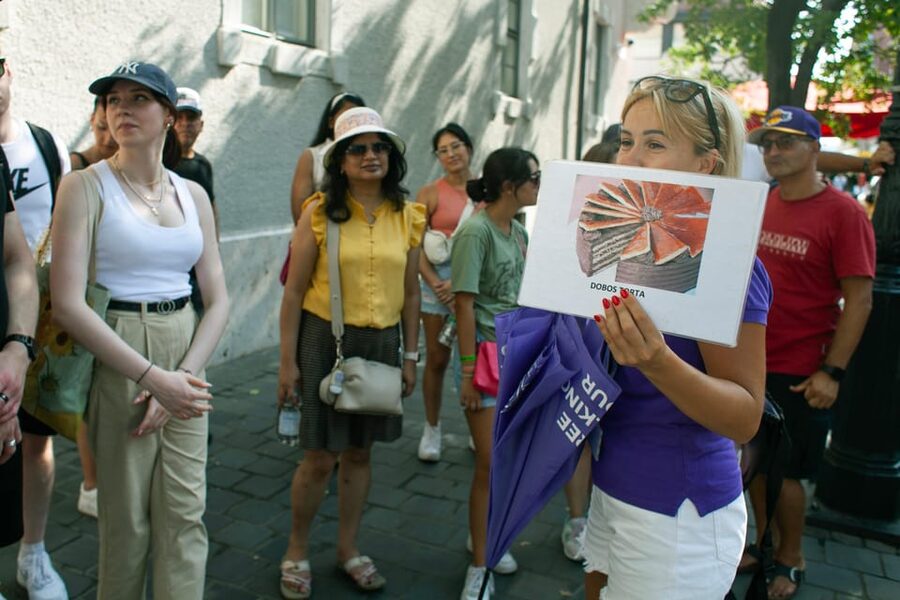
The Castle District can eat a whole day if you just wander. This tour does the opposite: it gives you a guided route that hits the highest-impact viewpoints while also explaining what you’re looking at. You get the glamour of Fisherman’s Bastion and the Royal Palace area, plus the wider city context the viewpoints reveal.
For me, the best value is that the guide doesn’t treat these places like disconnected postcard backdrops. You’ll hear how the Buda Castle area connects past and present, and you’ll walk through parts of the district that feel more residential than museum-like. That matters because it changes how the sights land. Instead of only seeing stone and spires, you start noticing why people built here, lived here, and fought over it.
At 2 hours, it’s also a manageable length. It’s long enough to feel like you learned something, but short enough that you can still enjoy the rest of Budapest the same day.
You can also read our reviews of more tours and experiences in Budapest.


Price and time: $3.40 for a guided route that covers the big hitters
The price listed is $3.40 per person, and on paper that’s almost suspiciously low for a guided, two-hour walk with multiple major stops. The key is what’s included: a live English guide, history and legends, photo stops, and practical recommendations for museums, cafés, and restaurants. Tickets to museums are not included, which is the main cost you might still need later depending on your plans.
So here’s the value equation I’d use if you’re weighing it against self-guided wandering:
- If you mainly want viewpoints and context, this tour is a bargain. You’re paying for someone to translate the place while you stand in the best spots.
- If you plan to go deep into museum interiors, you should budget for museum tickets separately. This tour focuses on walking and seeing key areas rather than doing ticketed museum time.
Also, the tour runs every day and is stated to be not affected by weather conditions. Real life can still mean wet sidewalks or slippery stairs, but the structure is designed to keep moving.
From Szentháromság tér to Fisherman’s Bastion: the walk starts with a plan
You begin at Szentháromság tér, at the Holy Trinity statue. The directions are straightforward: find the purple umbrella in the middle of the square. This matters because the Castle District can feel like a maze of lanes and staircases. Having a clear meeting point helps you actually start the day smoothly.
From the start, you’re headed for one of the area’s most recognizable spaces. Fisherman’s Bastion gets about 15 minutes of sightseeing time, which is not long, but it’s enough when the guide is there to point things out and get you to the right angles fast.
Why this stop works: it’s the “big view” moment early enough to anchor the rest of the walk. You get a feel for how the district sits above the city, and then later stops make more sense because you remember what you saw first.
Possible drawback: because Fisherman’s Bastion is a viewpoint hotspot, you may want to be ready to share space with other photo seekers. The tour helps because you’ll have a guide managing the sequence and the timing, so you’re not just stuck waiting.
Matthias Church and the Ruszwurm Confectionery break: art plus a real pause

After Fisherman’s Bastion, you move to Matthias Church for another 15 minutes. This is one of those stops where the guide makes a difference. Instead of only staring at the exterior, you’ll learn how it fits into the wider story of the Castle District and why people connect this area to Hungarian identity.
Then comes a stop that’s more fun than it is famous: Ruszwurm Confectionery (about 10 minutes). This is your structured break in the middle of sightseeing. Even if you do not buy anything, the stop is useful because it gives you a moment to reset before the route continues.
One small practical note: you can bring food and drinks, and this confectionery stop is a natural place to grab a snack if you did not plan ahead. The tour’s pacing suggests it’s meant to feel like a walk with rhythm, not a marathon.
Castle Hill viewpoints to Chain Bridge: the city context you would miss on your own
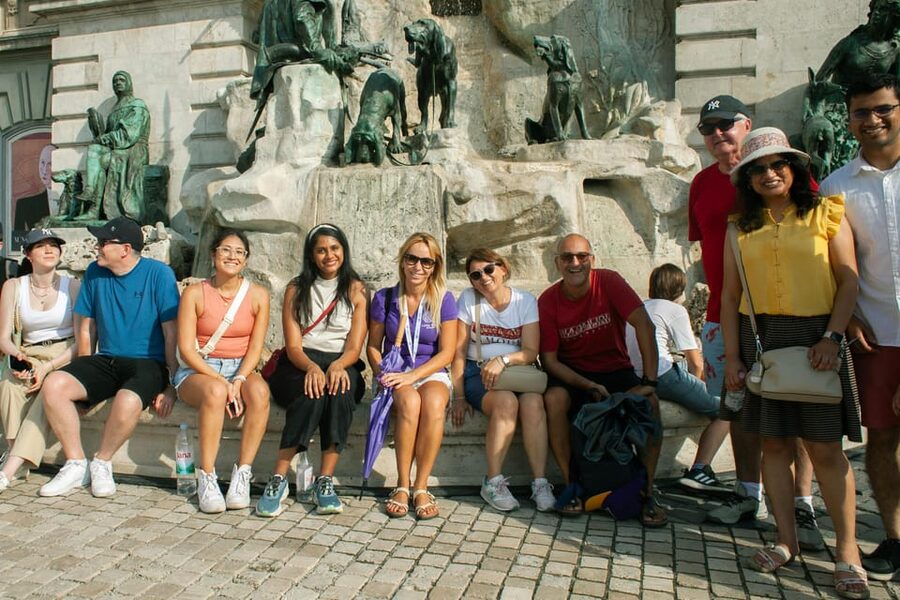
Once you’re on Castle Hill, Budapest (another 15-minute sightseeing stretch), the tour starts to connect the Castle District to the broader city view. The guide frames what you’re seeing in relation to major landmarks across the city, including the Parliament and Chain Bridge, plus the Buda Hills. Even without perfect visibility, that kind of orientation helps you understand where you are in relation to Budapest as a whole.
Then you get a quicker 10-minute sightseeing stop focused on the Chain Bridge area. This is short by design. The goal is not to spend ages staring across the river—it’s to catch the sightlines that make the Castle District feel like a command post over the city.
Possible drawback: if you’re the type who wants long, slow photo sessions, the viewpoint timing may feel brief. But if you want a guided route that actually covers a lot, the time allocation is what makes this walk fit into two hours.






Funicular photo stop: a practical shortcut moment
You’ll also have a photo stop at the Budapest Castle Hill Funicular (about 10 minutes). Even if you don’t ride it, this is a good place to stop and understand the logic of the hill. The Funicular exists for a reason: the Castle District isn’t flat, and getting between elevations historically took planning.
In tours where the guide is engaging (names like Sou and Ignácio come up in the strongest feedback), the funicular photo stop isn’t treated like a random checkpoint. It’s tied back to how people moved and lived in the area.
Bring your patience for this part if you’re traveling with kids or anyone who gets tired on stairs. The tour gives you timed breaks, but the streets up here can still be demanding.
Buda Castle and the UNESCO World Heritage panorama: where the story clicks
Now comes the big one: Buda Castle (about 30 minutes total for photo stop and sightseeing). This is where the tour earns its keep. You spend enough time here to absorb the main sights, but you still keep momentum so the group doesn’t stall.
The highlight framing is specific: you get the UNESCO World Heritage panorama. That phrasing matters because the viewpoint isn’t only about pretty buildings. It’s about how the castle area is recognized as a cultural landmark that shaped the city and regional identity.
What I like about how this is handled: your guide takes you through the Castle District’s residential part, so you see more than monumental surfaces. You hear stories and legends, and you’re guided through the area’s past and present. You’ll also learn about details that make the district feel human, like the little housing areas often described as a small “treasure box,” including houses from the 1800s and the mix of royal and governmental buildings nearby.
You’ll likely also hear about Hungarian culture and everyday life—what it feels like to be Hungarian, not just what happened in history. That tone is a big reason this tour tends to land well for people who want meaning, not just architecture.
A balanced watch-out: this part is photo-focused. If you’re hoping for lots of museum-style interior time, you won’t get that here because museum tickets are not included. Plan to do interiors later if you want them, using your guide’s up-to-date recommendations.
Sándor Palace and Savoyai terasz finish: wrapping the walk with a final orientation
The walk continues to Sándor Palace, with a 15-minute walk-and-see segment. You’re still in the thick of the Castle District vibe, and your guide’s explanations help tie the area’s roles to what you’re looking at.
The tour finishes at Savoyai terasz. Some tour info also notes that it returns you to the meeting-area conceptually, but the stated end point is Savoyai terasz—so treat that as your real finish line.
Why the finish spot is useful: it’s another chance to look out over the area with a clearer mental map of the route you just walked. After you’ve heard the stories and seen the viewpoints, the final stop helps everything click into place.
What the guides do differently: humor, Q&A, and clear audio
One pattern stands out in the strongest feedback: the guide performance is a major part of the experience. Names mentioned across great tours include Kitti, Sou, Claudia, Béla, and Ignácio, and several comments point to traits like being funny, friendly, and able to answer questions without making the tour feel rigid.
Two specific quality signals show up:
- Clarity of explanations: One note mentioned that a microphone made everything easy to understand. That’s practical on busy streets where voices and crowds can steal information.
- Group management: A comment highlighted that the group wasn’t too big, which usually means more chances to ask questions and fewer moments of losing your place.
There’s also a tone element: the tour includes legends and history with no taboo topics. In plain language, that means you should expect frank discussion of Hungary’s past alongside the present, rather than only dry timelines.
And the icing on the cake: the guide also offers up-to-date recommendations for museums, cafés, and restaurants. That’s valuable because it saves you time later when your energy is running low and you still want good food.
What to bring and how to pace yourself on Castle District stairs
This tour is straightforward about gear:
- Comfortable shoes
- Comfortable clothes
- Food and drinks
I’d add one practical mindset: plan for photo time to take longer than you expect. The route includes multiple photo stops—Fisherman’s Bastion, Buda Castle Hill/Funicular/Buda Castle—and even with a guide managing the pace, you’ll want a couple extra seconds at each viewpoint.
If you’re traveling with someone who gets tired on hills, the 2-hour duration helps, but the Castle District can still feel steep. The tour is wheelchair accessible, but the route still includes walking segments, so wear shoes that handle uneven ground and steps.
Who should book this Buda Castle Walking Tour (and who should skip it)
This tour fits best if you want:
- A guided route that hits Fisherman’s Bastion, Matthias Church, and the Buda Castle viewpoint area.
- Context on Hungarian history and Castle District life without spending a day stuck between museum lines.
- Clear photo opportunities with a guide who points out what matters.
You might skip it if:
- You already feel confident self-guiding the Castle District and you’re okay reading quietly on your own.
- You specifically want long museum entry time, because museum tickets are not included.
The sweet spot: first-timers to Budapest who want a high-impact overview and a smart map of where everything sits.
Should you book Buda Castle Fisherman’s Bastion to Royal Palace?
Yes, I’d book it if your goal is to see the Castle District’s major viewpoints in a way that feels like more than sightseeing. The combination of multiple landmark stops, a focused 2-hour length, and an English live guide who’s praised for humor and clarity makes it a strong value—especially at the listed price of $3.40 per person.
Book it with two expectations set: you’ll be outside for most of the tour, and museum entries (if you want them) come separately. If that works for your day plan, this is one of those Budapest walks that gives you the kind of memories you can remember without needing a museum ticket to prove it.
FAQ
How long is the Buda Castle Walking Tour?
The tour lasts about 2 hours. Starting times vary, so you’ll want to check availability for the exact slot you can join.
Where does the tour start and what do I look for?
It starts at Szentháromság tér at the Holy Trinity statue in the middle of the square. Look for the purple umbrella.
What are the major stops on the walk?
You’ll visit viewpoints and landmarks including Fisherman’s Bastion, Matthias Church, Ruszwurm Confectionery, Buda Castle Hill, Chain Bridge viewpoints, a Castle Hill Funicular photo stop, Buda Castle, and Sándor Palace, then finish at Savoyai terasz.
Is the tour wheelchair accessible?
Yes, it’s listed as wheelchair accessible.
Is the tour language English?
Yes, the live guide provides the tour in English.
Are museum tickets included?
No. Tickets to museums are not included, but your guide will share up-to-date recommendations for museums, cafés, and restaurants.