REVIEW · BUDAPEST
Buda Castle’s Secrets with a Historian
Book on Viator →Operated by Budapest Explorers · Bookable on Viator
Castle Hill hides stories in plain sight. On this 2.5-hour walk led by a historian, you get a guided chain of Hungarian history where the buildings do the talking, not just your guide. I love the small-group pace that leaves room for questions, and I love going inside Matthias Church to connect the details to the bigger national story. One drawback: some of the views and sights along the way require extra paid entry, so you’ll want a little cash or a card ready.
What makes this tour feel different is how the stops fit together. You move from monuments that mark major eras to real power centers like the Sándor Palace, then end with the kind of sweeping panorama Budapest is famous for. Guides such as Petra and Monika are often praised for being friendly, interactive, and organized, with a calm tempo even when Castle Hill is crowded.
In This Review
- Key things I’d plan around
- Holy Trinity Column: where Budapest’s story starts
- Fisherman’s Bastion and the real reason it exists
- Matthias Church inside: where legends meet stonework
- National Archives marks and the walk toward Sándor Palace
- Buda Hill Funicular views, Prince Eugene statue, and the Royal Palace panorama
- Price and pacing: what you’re really paying for
- Who should book this tour (and who might skip it)
- Should you book Buda Castle’s Secrets with a Historian?
- FAQ
- What is the duration of this tour?
- Is the tour offered in English?
- How many people are in the group?
- What’s included in the price?
- Do I need tickets for other stops?
- Where does the tour start and end?
Key things I’d plan around
- A historian’s “why it matters” focus: you’ll get context, not just dates.
- Matthias Church is the built-in highlight: entrance is included, and the interior details are the point.
- Small-group energy: usually up to 10 people in the experience you’re booking, with some departures running even smaller.
- You’ll connect multiple landmarks: Holy Trinity Column, Fisherman’s Bastion, the Royal Palace area, and King Matthias’ fountain all reinforce one story.
- Some extras aren’t included: Fisherman’s Bastion, funicular, and parts of the complex may cost extra.
Holy Trinity Column: where Budapest’s story starts
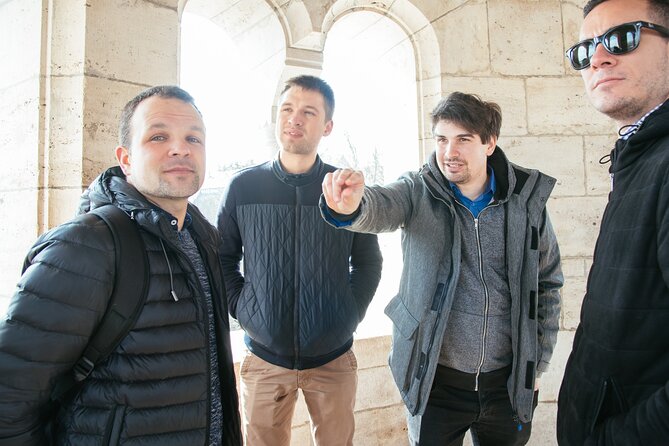
The tour begins at the Holy Trinity Column, a perfect warm-up because it gives you a framework before you start climbing and peering. The surrounding architecture is already impressive, but what you gain here is a sense of why Budapest’s river hills mattered so much over time.
It’s also an easy mental reset. Instead of treating the Castle District like a theme park, you start thinking in “chapters.” That helps when you later see wartime marks on buildings and learn how power, religion, and empire kept reshaping life in this city.
You can also read our reviews of more tours and experiences in Budapest.



Fisherman’s Bastion and the real reason it exists
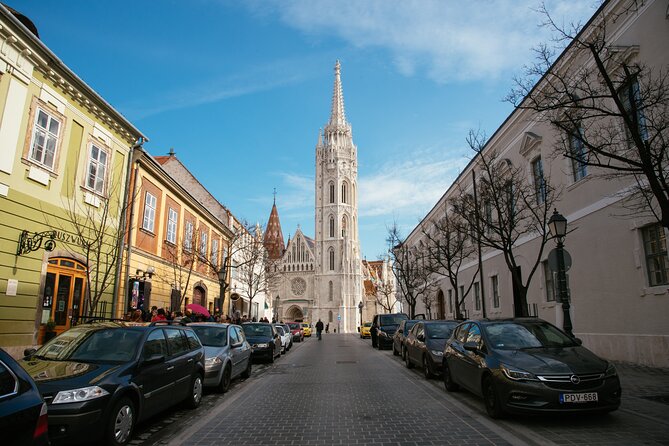
Next comes the Fisherman’s Bastion. It’s one of those spots people photograph first and ask questions about later. This stop changes that. You’ll get the story behind it and, more importantly, its true function—so the place feels less like a decorative lookout and more like a piece of how Budapest wanted to present itself.
You also get a taste of the Castle District’s layout and crowds. Even with a small group, this area can be busy, so the timing matters. Aim for this moment to slow down: take a few photos, then listen closely while your guide explains what you’re actually looking at.
If you’re the type who hates paying for “pretty but pointless,” you’ll likely appreciate that the tour treats this bastion as an information stop, not just a viewpoint.
Matthias Church inside: where legends meet stonework
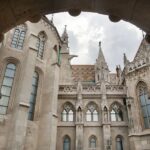
Matthias Church is the big interior payoff. The ticket to enter is included, and it’s worth it because so much of what you’ll hear connects to what you can see up close. The church is often described as one of Budapest’s most beautiful, but on this tour the focus stays practical: what the design elements mean, and how the myths and stories grew around this place.
A favorite detail is how your guide uses legends to help you “read” the church. You may hear stories tied to the people who shaped Hungary’s identity and how rulers used churches and public spaces to project authority.
In several guide styles mentioned in real experiences, the atmosphere stays relaxed rather than rushed. That matters here because you don’t just want a quick look—you want a moment to absorb the interior and ask questions when something sparks your curiosity. If you love architecture, this is where your attention will naturally sharpen.
National Archives marks and the walk toward Sándor Palace
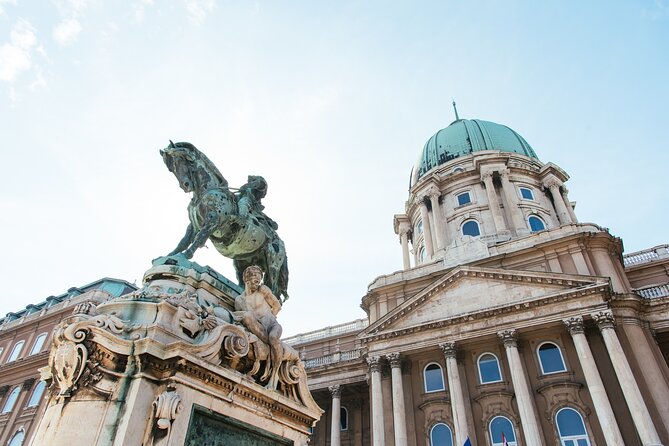
From the church area, you’ll move through the cobbled streets and alleyways that make the Castle District feel like a village built on top of history. This is also where the tour does something smart: it doesn’t limit itself to postcard sights. You’ll pass by the National Archives, a striking building with visible scars from World War II, including bullet holes.
That stop is a quick reality check. It reminds you that all this beauty sits next to real trauma. And it helps the earlier stories feel less like trivia and more like the real layers of a country that kept getting reshaped.
As you head toward Sándor Palace, you shift from religious and cultural symbolism to political power. You’ll stroll to the office of the Hungarian President, and even without entering, you’ll get the sense of why this location became a center of authority. On a hill full of monuments, it’s useful to know which structures are ceremonial and which are governance.
Buda Hill Funicular views, Prince Eugene statue, and the Royal Palace panorama
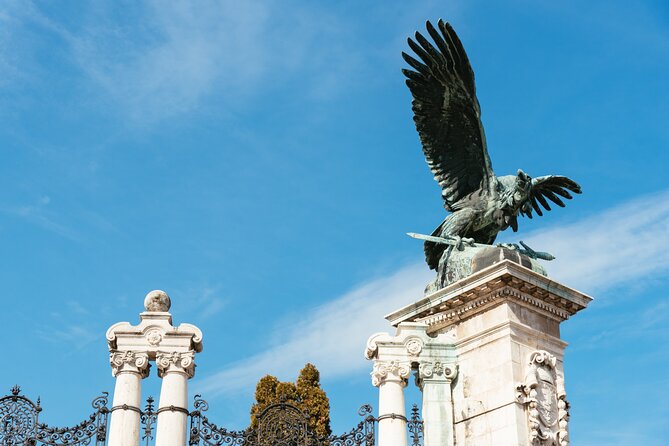
The tour then adds the kind of “Budapest wow” that comes from movement and elevation. You’ll take the Buda Hill Funicular to a top station for panoramic views across the Parliament area and the Pest side. This is a strong payoff moment because it ties the entire skyline together in your mind: where the river splits the city, where major bridges connect, and how the hills frame the view.
You’ll also pause at the equestrian statue of Prince Eugene of Savoy, a short stop with long historical reach. The point isn’t only the statue. It’s the military campaign behind it and how the Habsburgs were connected to Hungary’s fate. This helps unify the tour’s theme: Hungary’s history isn’t one isolated storyline—it’s tangled with European power struggles.
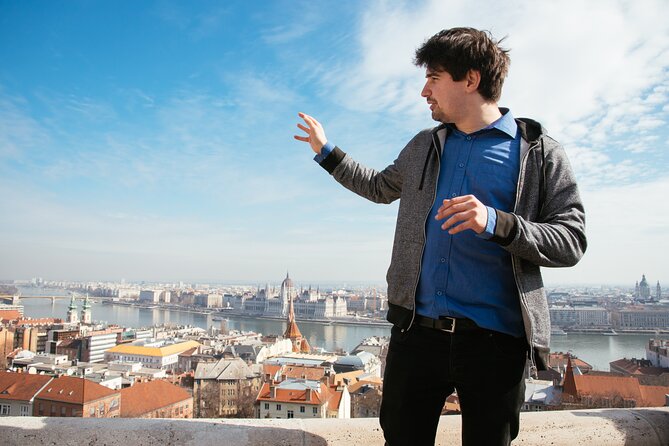
Finally, you reach the Royal Palace area of Buda Castle. You’ll spend time at the terrace, with a panorama that can include the Margaret Island area, the Parliament, the Chain Bridge, St. Stephen’s Basilica, the Budapest Eye, and Elizabeth Bridge (depending on sightlines and crowds). The best way to handle this part is to slow down for a full minute before you start snapping photos. Let your guide’s context lock the landmarks into a mental map.
The tour finishes at the Fountain of King Matthias. This last stop works because it’s not just scenery. You’ll hear the legends behind King Matthias and why so many Hungarians see him as a favorite. It’s a closing “theme button” on the whole walk, tying monarchy, myth, and national pride into one final image.






Price and pacing: what you’re really paying for
At $65.31 per person, this is priced for people who want more than a basic walk-through. You’re paying for a historian-led approach, a tight route across major sites, and an included entrance to Matthias Church. That matters because Budapest’s biggest “must-see” interiors often cost extra, and a lot of self-guided time gets burned waiting in lines without anyone explaining what you’re looking at.
The pacing is also part of the value. The experience is designed around a relaxed tempo, with time for questions and photos rather than a sprint from stop to stop. That’s reflected in many comments about guides like Judith, Gabor, and Rajmund/Raymond keeping things organized and not making the group feel rushed.
Still, be aware of the tradeoff: several stops along the way note admission not included. Fisherman’s Bastion, the funicular ride, and parts of the Royal Palace complex may add costs on top of the base price. If you want every viewpoint without extra payments, check what’s included for your departure and plan for a bit of extra spending.
Group size is capped at 15, but the experience often feels even more intimate, with small groups that make it easier to ask follow-up questions. If you’re traveling solo or with a friend, this kind of group size is usually where you learn the most.
Who should book this tour (and who might skip it)
Book it if you like history that connects to real buildings and you want a guide who can explain not just what something is, but why it matters. You’ll especially enjoy it if Matthias Church is on your list and you want context while you’re standing in the same space.
Skip it if you only want a photo-and-walk plan, or if you hate paying extra for viewpoints beyond the included church entrance. Also, keep in mind this is a moderate physical activity walk on uneven Castle District streets, with slopes and stairs in the mix.
If you’re trying to make sense of Budapest for the first time, this tour gives you a framework fast. Afterward, you’ll have a better feel for which sites are ceremonial, which are political, and which are tied to painful modern history.
Should you book Buda Castle’s Secrets with a Historian?
If you’re the kind of traveler who loves the story behind the setting, I think this is a very solid yes. You get a historian-led flow across the Castle District, a meaningful included interior at Matthias Church, and a small-group experience that doesn’t feel like a checklist march. Just budget for a couple extra paid entries along the route.
If your goal is to leave with a clear mental map and an understanding of why the Castle Hill looks the way it does, this tour is exactly the kind of first-history move that pays off for the rest of your trip.
FAQ
What is the duration of this tour?
The tour runs about 2 hours 30 minutes.
Is the tour offered in English?
Yes, it’s offered in English.
How many people are in the group?
The experience has a maximum of 15 travelers, and it’s often experienced as an intimate small group.
What’s included in the price?
The entrance ticket to Matthias Church is included.
Do I need tickets for other stops?
Admission tickets are not included for several stops such as Fisherman’s Bastion, Sándor Palace, and Buda Hill Funicular.
Where does the tour start and end?
It starts at Holy Trinity Statue on Szentháromság u. and usually ends at the Fountain of King Matthias on Szent György u.