REVIEW · BUDAPEST
Gems of the Budapest Castle District Walking Tour
Book on Viator →Bookable on Viator
Budapest’s Castle District turns into a storybook walk. I like how the guide turns stone monuments into clear meaning, from the symbolism on columns to the “why” behind the views. I also like that the stops are mostly ticket-free, so your money mostly goes to the guide and your feet. The one thing to watch is the pace: you cover a lot of ground in about 2 hours, so plan for steady walking and short photo stops rather than long museum time.
At 3:00 pm, you’ll move through the hill district when the light is often good for photos, and the skyline feels close. The group stays fairly small (max 45), and you’ll get a mobile ticket and a smooth start near the Castle Garden area. If weather is rough, the tour requires good conditions, so build in a little flexibility.
In This Review
- Key Takeaways Before You Start
- Entering the Castle District Story, Not Just the Sights
- Holy Trinity Column and Matthias Church: Reading Budapest’s Symbols
- Fisherman’s Bastion Viewpoints, Statues, and Legends
- Pope-Related Statues, the National Archives, and WWII Scars
- WWII to Independence War: Monuments That Link People to Events
- Szent György Street and the Funicular: Politics, Ruins, and Daily Views
- Turul Bird, King Matthias’s Fountain, and the Castle Courtyard Theatre
- Royal Riding Hall, Prince Eugene, and the Castle Garden Finale
- Price and Value: Why This Walk Costs So Little
- Who This Tour Fits Best (and Who Should Skip It)
- Should You Book the Gems of the Budapest Castle District Walking Tour?
- FAQ
- FAQ
- How long is the Gems of the Budapest Castle District Walking Tour?
- What is the price per person?
- Is the tour in English?
- Is there a live guide?
- Are admission tickets required for the stops?
- Where does the tour start and end?
- What time does the tour begin?
- How big is the group?
- Do I need good weather for this to run?
- What cancellation options are available?
- Is the tour near public transportation, and are service animals allowed?
Key Takeaways Before You Start
Stories are tied to symbols, not just names and dates.
You get multiple photo windows, especially around Fisherman’s Bastion.
Most stops are free to enter, so value stays strong even on a tight budget.
WWII, 1848, and older monarchy threads show up in the monuments, in plain language.
The walk is long for 2 hours, so comfortable shoes matter more than you think.
A top guide in fluent English helps a lot, and Antel is specifically praised for that.
Entering the Castle District Story, Not Just the Sights
This tour is built like a guided walk through layers of Budapest identity. You’re not only seeing famous landmarks on Castle Hill; you’re learning how the people who built, ruled, fought, and survived left messages behind in stone.
The price is shockingly low at $3.61 per person, and the reason is simple: many stops are listed as admission ticket free. So you’re paying mainly for a live guide and a route that stitches scattered landmarks into one storyline you can actually follow.
The structure also matters for your day. At roughly 2 hours 10 minutes, you’ll get the “high points” without needing a half-day commitment. Still, expect a walking rhythm. You’ll get short breaks for photos, but this is not a sit-and-stare tour.
You can also read our reviews of more tours and experiences in Budapest.



Holy Trinity Column and Matthias Church: Reading Budapest’s Symbols
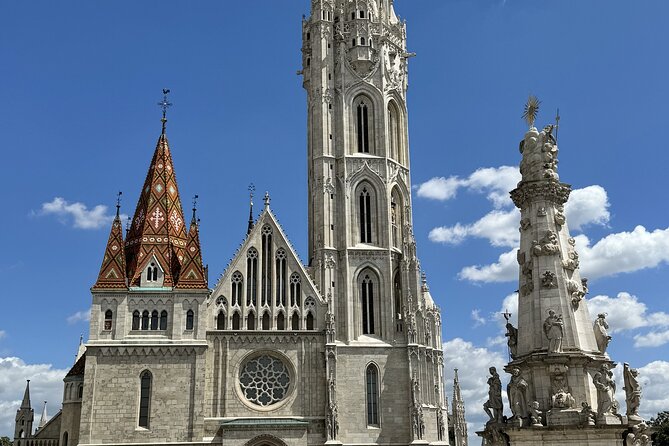
The walk starts at the Holy Trinity Statue on Szentháromság u., and it’s a smart first stop. The Holy Trinity column is where the guide sets the tone: construction background first, then what the figures symbolize. If you usually skip statues because they look busy, this is where you learn how to read them like a message.
Next comes Matthias Church, where you’ll get the foundation background and a quick look at architectural details. This isn’t a deep church interior visit described here, but it’s enough to help you notice what matters when you’re standing in front of the building. The benefit is clarity: you see the “why” before the “what.”
This early pairing also helps with orientation. You’re walking into the Castle District already understanding the difference between decorative stone and purposeful symbolism.
Fisherman’s Bastion Viewpoints, Statues, and Legends
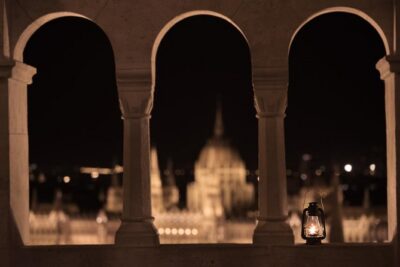
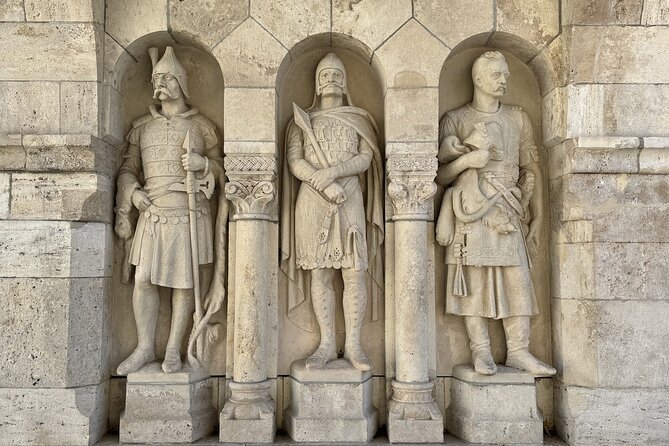
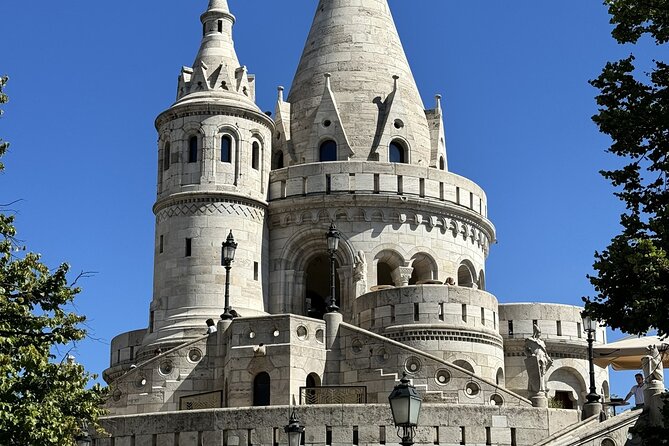
Then you hit Fisherman’s Bastion, one of those places where the scenery pulls you in and the details keep you there. You’ll spend about 20 minutes, with time to explore statues, hear legends, and work the viewpoints for photos.
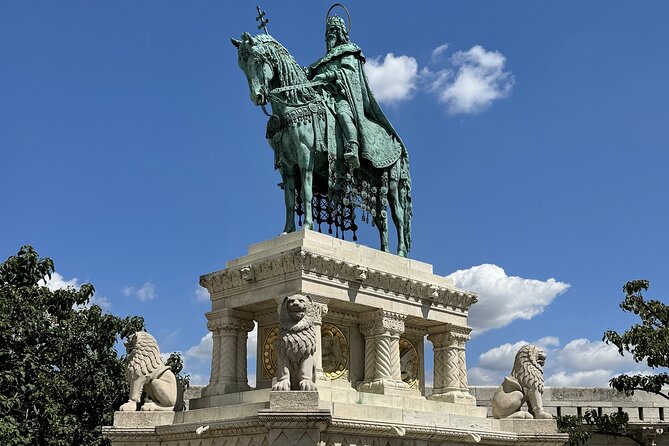
What makes this stop more than a postcard stop is the focus on specific symbolism. The guide talks about the double cross and its relation to Hungarians, and that changes how you look at what you’re seeing. Instead of only scanning for the best skyline angle, you start asking what each element is trying to say.
You also get a chance to connect history to atmosphere. The bastion area is filled with intriguing legends, and those stories give the place personality. Add the panoramic Pest views, and it becomes a satisfying mix of emotion and geography.
Pope-Related Statues, the National Archives, and WWII Scars
From Fisherman’s Bastion, the route moves through a sequence of stops that balance religion, monarchy, and the scars of the 20th century.
At the Statue of Pope Innocent XI, the tour layers in related figures: Pope Sylvester II and King Matthias’s coronation statue. You’re also told it’s connected with the oldest building of Hungary. Even if you don’t catch every name instantly, the guide’s job is to help you track who is who and why the site is treated with such importance.
Next up is the National Archives of Hungary, described here as an architectural showcase. You’ll look for the Vienna gate and the golden signatures by Uri Street, plus nearby statues and their tales. This is one of the best stops for anyone who likes “street-level history,” because archives are about records, memory, and how a country keeps its own story.
Then comes the Church of Saint Mary Magdalene, where you’ll hear about the monument to the coronation mantle of Hungarian kings. You also see mention of WWII ruins, which adds a sobering note without turning the walk into a heavy detour.
If you want a Castle District tour that keeps moving but never forgets the human stakes behind the monuments, this section is the point.
WWII to Independence War: Monuments That Link People to Events
The next stretch zooms into modern turning points: siege, revolution, and the symbols that tried to hold identity together.
At the Arpad Toth Promenade (Setany), you learn about the first flag after WWII, a row of cannons, and the Buda hills view. The tour also gives a brief timeline of the WWII and the siege of Budapest, and the geography makes that story feel more physical. When you stand on a hill and look across a city, the narrative has weight.
Then you’ll meet the Statue of Mounted Andras Hadik, described as the most famous Hungarian knight. The stop also connects to local trends and notes the oldest Hungarian confectionery nearby, which is a fun way to link history to everyday culture. It’s one of those moments where you realize the district isn’t frozen in time; it still lives.
Next is the Labyrinth, a natural cave used as a dungeon. The guide brings in the Dracula/Vlad the Impaler story, which is exactly the kind of folklore that makes a concrete dungeon feel eerie even if you’re not a horror fan. It’s also a quick way to break up the “standing and looking” rhythm.
The Statue of the Independence War follows, with background on the Hungarian revolution of 1848. You’ll get help connecting the symbolisms of the statues back to the original war. Nearby, there’s mention of the House of Houdini, another pop-history reference that keeps the walk from becoming too solemn.






Szent György Street and the Funicular: Politics, Ruins, and Daily Views
At Szent György Street, the tour points out the offices of Hungary’s president and prime ministers. That alone helps you understand the Castle Hill as more than a historic photo area; it’s also an active political space. You’ll also see ruins of medieval castles and hear secret stories, which adds that “keep your eyes open” feeling as you walk.
Then the route shifts to the Buda Hill Funicular area. You’ll learn it’s the second oldest funicular, plus a zero kilometer stone and the oldest bridge of Hungary. Even if you don’t ride anything, this kind of stop gives you context. It’s the district’s infrastructure history, and it helps explain why the Castle Hill looks the way it does.
Turul Bird, King Matthias’s Fountain, and the Castle Courtyard Theatre
The tour leans heavily into iconography next. At the Turul Bird Statue, you’ll hear background on Hungary’s national bird and learn the storyline for how the Hungarians got named. This turns a sculpture into a quick identity lesson—useful, because it helps you remember what you saw without needing to memorize dates.
Then you visit the Fountain of King Matthias, described as the prettiest fountain in Budapest and linked to a romantic-tragedy. Even with limited time, this is a good example of how the guide makes art feel like a story rather than a decoration.
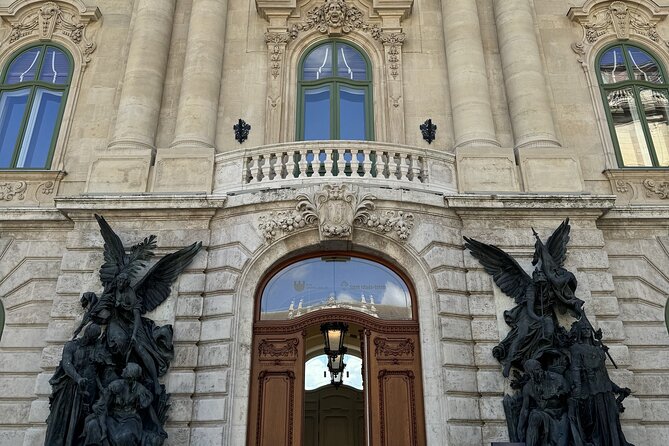
You’ll finish this run at the Lions Court – Buda Castle, where you look at the courtyard and hear explanations about mythical statues on the facade. Courtyards are where you slow down a notch, because façades reward attention. The tour makes that attention easier by telling you what each piece is meant to represent.
Royal Riding Hall, Prince Eugene, and the Castle Garden Finale
Inside the castle area, you’ll get a taste of function and power. The Royal Riding Hall is described as the royal Hungarian stable, along with local trends. You’ll spend only a couple minutes here, but that quick stop adds variety and helps you see the castle district as a working place, not just a monument.
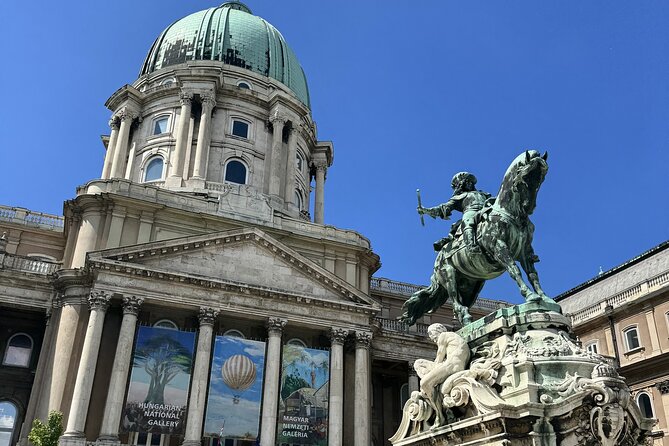
Then comes the Prince Eugene of Savoy’s Equestrian Statue, described as the biggest statue in the castle district. The key idea here is his role as a liberator from the Ottomans, plus fun facts to keep it from feeling like a textbook. When a statue is large enough to dominate your view, the guide’s context is what transforms it from background noise into meaning.
After that, the tour includes S. Maria Mater Dei, a statue of the Virgin Mother Mary and baby Jesus. You’ll also hear how the bridges of Budapest relate to Hungarian monarchs, tying the hill district back to the city below.
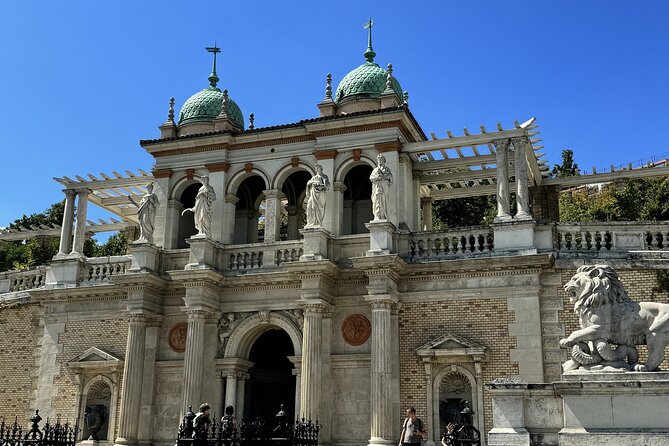
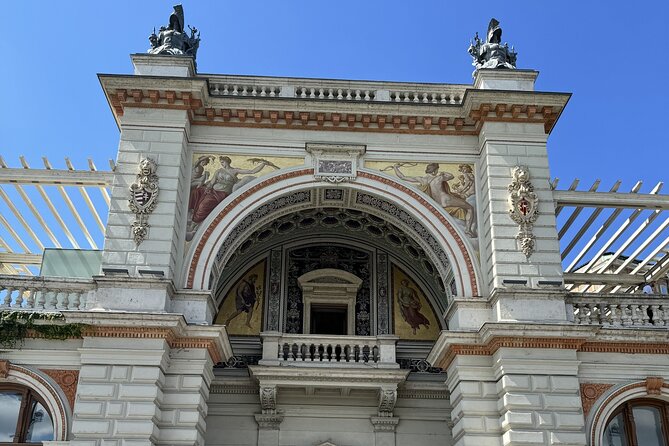
The end phase shifts to calm and aesthetics at Castle Garden. You’ll see the garden, a spiral staircase tower, and the Triton fountain. Then you walk to the Castle Garden Bazaar, where the focus is the architecture of the Várkert Bazar and statues on the facade.
This is a nice way to close. You start with national symbolism, move through wars and legends, and end with a visual reset in gardens and ornate architecture.
Price and Value: Why This Walk Costs So Little
Let’s talk value, because $3.61 is so low it feels like you should be suspicious. In this case, the math makes sense.
You’re paying for:
- a live guide (the main product),
- a packed route that covers many major landmarks,
- and a format that keeps admission ticket free stops from piling up into costly entry fees.
That means you’re not stuck paying museum prices to get a good experience. You can get a structured tour with context while still spending your money on food, transit, and one or two paid activities later.
The real cost is your time and energy. In about 2 hours 10 minutes, you move constantly, and you cover a lot of points on a hill. If you’re prone to fatigue, this tour can feel like a strong workout. If you’re comfortable walking, it’s one of the best “value per step” formats in the area.
Who This Tour Fits Best (and Who Should Skip It)
This tour is best for you if you:
- want a Castle District overview that’s faster than a full day,
- like understanding why monuments exist, not just where they are,
- want photo breaks built into the schedule,
- and prefer an English-speaking guide who keeps the pace friendly.
It can be less ideal if you:
- want long museum-style stops or guided interior time beyond what’s listed,
- hate uphill walking,
- or need lots of downtime between stops.
The good news is that the tour says most people can participate, and it allows service animals. It also runs with a maximum group size of 45, so you should generally be able to hear the guide and keep track of the route.
Should You Book the Gems of the Budapest Castle District Walking Tour?
I’d book it if you want a guided walk that helps you connect the dots across church façades, war memories, royal symbolism, and viewpoints. The strong selling point is that you’re not paying for entries; you’re paying for explanations that make these landmarks easier to remember.
If you’re the type who stands in front of a statue and feels nothing, this tour is designed to fix that. If you’re the type who gets tired fast, consider whether you want a slower day with fewer stops. For many people, especially on a first trip to Budapest, this is a smart use of late afternoon time.
FAQ
FAQ
How long is the Gems of the Budapest Castle District Walking Tour?
It’s approximately 2 hours and 10 minutes.
What is the price per person?
The price is listed as $3.61 per person.
Is the tour in English?
Yes, it’s offered in English.
Is there a live guide?
Yes, the tour includes a live guide.
Are admission tickets required for the stops?
The stops listed on the itinerary show admission ticket free.
Where does the tour start and end?
It starts at the Holy Trinity Statue (Szentháromság u., 1014 Hungary) and ends at Castle Garden Bazaar (Ybl Miklós tér 2-6, 1013 Hungary).
What time does the tour begin?
The start time is 3:00 pm.
How big is the group?
The tour has a maximum of 45 travelers.
Do I need good weather for this to run?
Yes. The experience requires good weather, and if it’s canceled due to poor weather, you’ll be offered a different date or a full refund.
What cancellation options are available?
You can cancel for a full refund up to 24 hours in advance of the experience start time.
Is the tour near public transportation, and are service animals allowed?
Yes, it’s near public transportation, and service animals are allowed.