REVIEW · FLORENCE
Florence: Pitti Palace and Boboli Gardens Guided Tour
Book on GetYourGuide →Operated by Ciaoflorence Tours & Travel · Bookable on GetYourGuide
Florence’s Medici power lives in stone and paint. This tour pairs Pitti Palace with the Palatine Gallery and then sends you outside to the famous Boboli Gardens, all in a tight 2-hour loop. It’s a smart way to connect art, politics, and garden design without getting lost in the museum maze.
I like two things most. First, the story stays clear because you’re with an expert local guide, not just wandering room to room. Second, the Palatine Gallery hits big names and big style—Raphael, Titian, and Caravaggio—while pointing out how the room is meant to feel packed with paintings and ornament.
One thing to watch: this is a walking-heavy museum-and-gardens mix, so comfort matters (and on crowded days you may face short entrance delays). Also, it isn’t suitable for wheelchair users or people with mobility impairments.
In This Review
- Key highlights you’ll actually care about
- Pitti Palace: the Medici’s move from merchant city to royal stage
- Palatine Gallery: Raphael, Titian, Caravaggio, and that full-wall feeling
- Boboli Gardens: Florence’s outdoor set that trained Europe’s royals
- The big garden sights: Buontalenti Grotto, Neptune Fountain, Amphitheater
- How the 2-hour format actually plays out
- Price and value: what $85 buys you besides entry tickets
- What’s included (and what you’ll want to bring)
- Who this tour is best for (and who should rethink it)
- Should you book Florence: Pitti Palace and Boboli Gardens?
- FAQ
- How long is the Pitti Palace and Boboli Gardens guided tour?
- Where do I meet the guide?
- Is the Palatine Gallery included?
- What famous artists can I expect to see mentioned during the gallery visit?
- Do I need to buy separate tickets for Pitti Palace and Boboli Gardens?
- Will I be able to skip the ticket line?
- What extra access do I get with the 24-hour ticket?
- What should I bring, and is flash photography allowed?
- Is the tour suitable for wheelchair users or mobility impairments?
- (Optional) Quick note about booking timing
Key highlights you’ll actually care about

- Small-group pacing that keeps you moving without rushing past the good stuff
- Palatine Gallery masterpieces with Raphael, Titian, and Caravaggio (including Madonna della Seggiola)
- Horror vacui style inside the gallery, where the walls don’t leave empty space
- Boboli Gardens as a real influence on later royal gardens across Europe
- Photo-worthy stops like the Buontalenti Grotto, Fountain of Neptune, and the Amphitheater
Pitti Palace: the Medici’s move from merchant city to royal stage

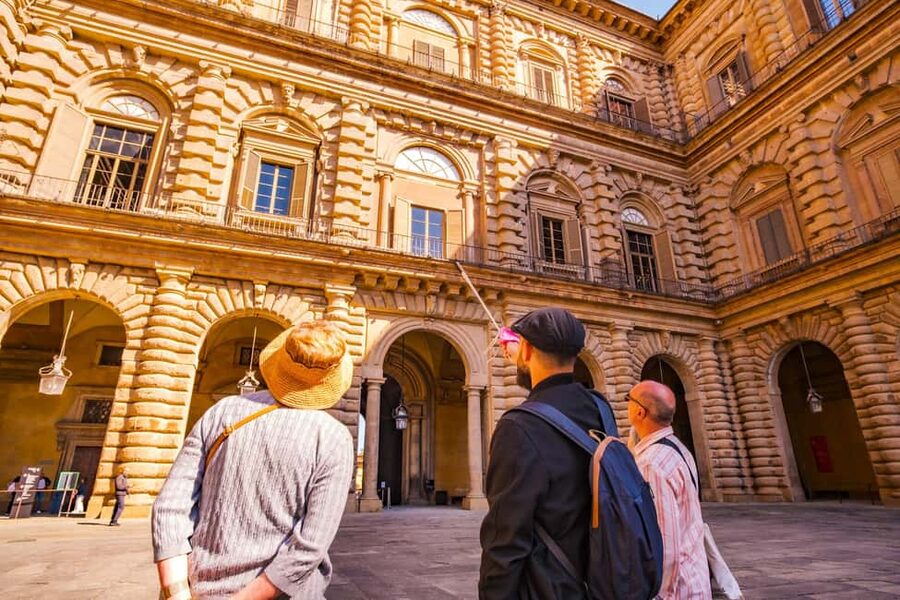
Pitti Palace started as a grand residence for the Pitti family, built in the 15th century. Then the Medici family bought it in 1549, turning it into one of Florence’s main seats of power. That handoff matters, because the palace isn’t just “pretty rooms”—it’s a statement about control, status, and taste.
As you walk through, you’re not only seeing Renaissance architecture. You’re seeing the Medici strategy: take the wealth and influence of Florence and turn it into something you can live inside. That’s why the rooms feel so lavish—each surface is doing work to impress.
This is also a practical museum choice. The palace is large, and without guidance you can end up drifting. With a guided route, you get the rooms that connect best to the Medici story instead of spending your time on the spaces that won’t change how you see the palace.
You can also read our reviews of more tours and experiences in Florence.



Palatine Gallery: Raphael, Titian, Caravaggio, and that full-wall feeling

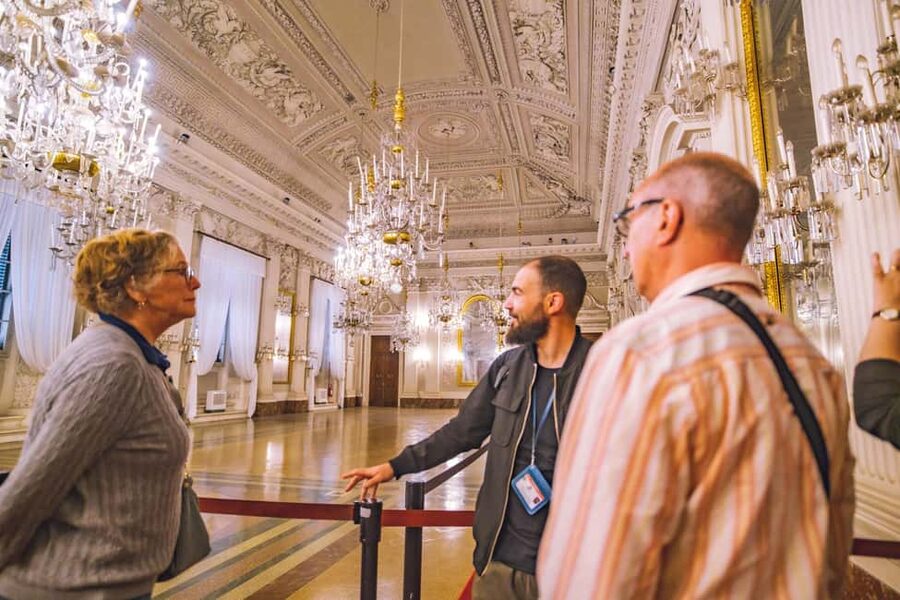
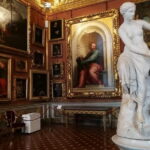
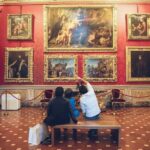
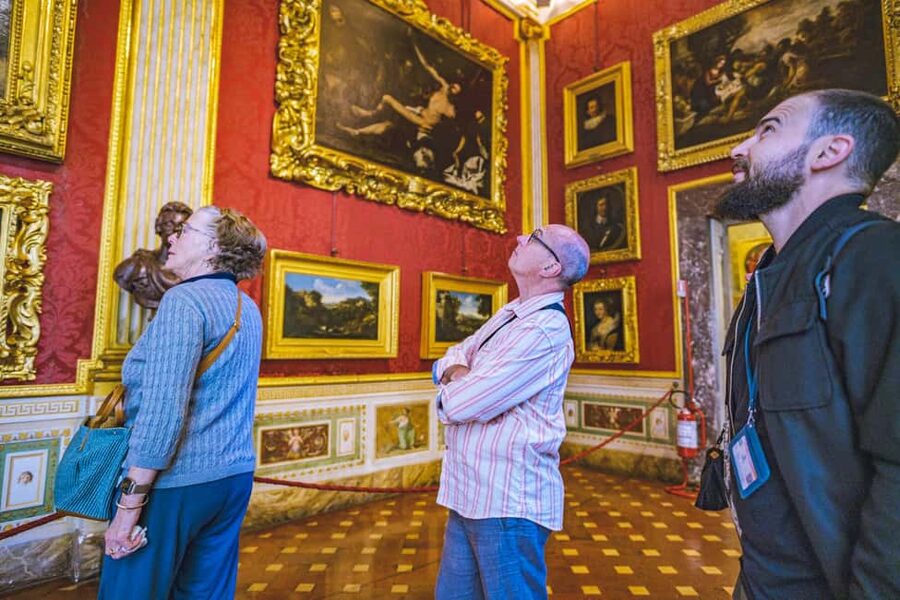
The Palatine Gallery is the reason many people book this tour. You’re walking into an art setting built to overwhelm you—in a good way. The gallery follows the horror vacui concept, meaning the design avoids empty space, so paintings and ornate detail cover what you’d expect to see as “plain wall.”
What I like about the guide-led approach here is that you get context while you’re actually looking. You’re not just hearing names—you’re learning how the Medici collected and displayed art to project authority.
You’ll see works tied to major Renaissance and Baroque gravity. The tour highlights pieces by Raphael, Titian, and Caravaggio, including Raphael’s Madonna della Seggiola. That’s a great moment to slow down, because the image is intimate while the setting around it is pure power-display energy.
And yes, it’s crowded in the emotional sense: frescoes, rich decoration, and walls packed with visual information. If you’ve ever felt museums are either too fast or too quiet, this gallery strikes a middle balance—guided enough to understand, still dense enough to feel like you discovered something.
Boboli Gardens: Florence’s outdoor set that trained Europe’s royals
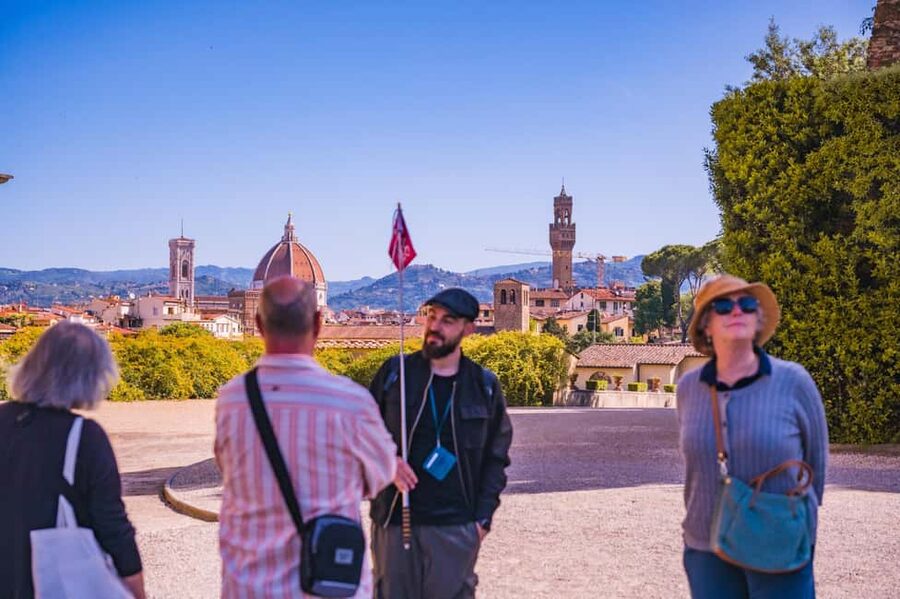
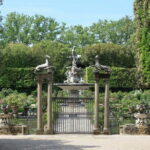
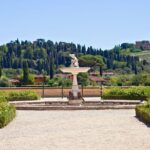
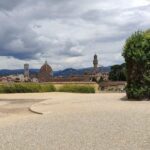
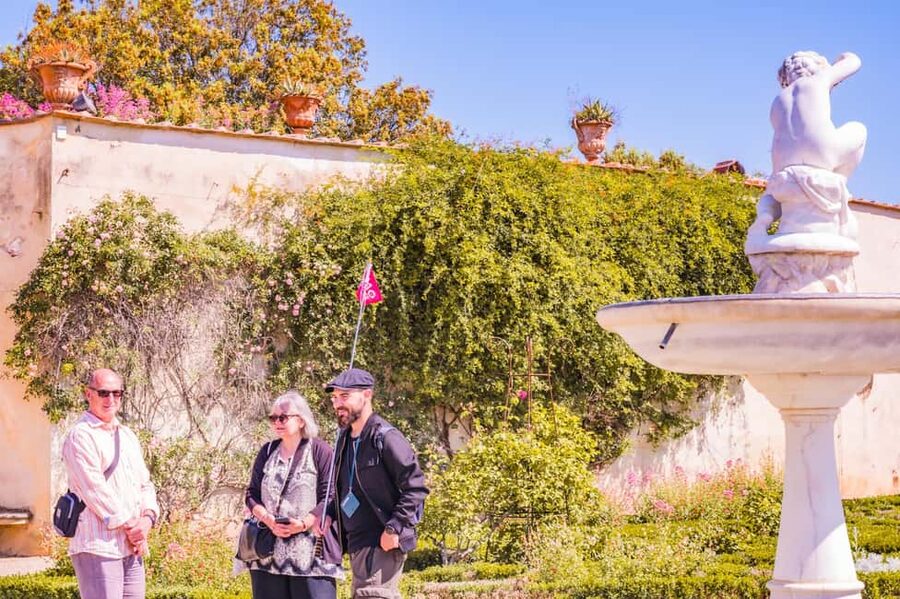
Once you step outside, the tone changes from indoors art to open-air art. Boboli Gardens function like an outdoor museum, built for strolling, showing off, and enjoying nature that’s been shaped into design. It’s not wild countryside; it’s a planned landscape made to behave.
The tour frames the gardens as a model for royal gardens across Europe. That detail is useful because it helps you read what you’re seeing: the layout, the dramatic sights, and the theatrical garden features weren’t only for pleasure. They were examples of how elite taste could be expressed in public space.
You get the best of both worlds here. The palace gives you the Medici’s visual control indoors, then Boboli gives you the same idea outdoors—except now stone, water, and sculptures help tell the story.
The big garden sights: Buontalenti Grotto, Neptune Fountain, Amphitheater
Boboli Gardens have several set-piece moments that pull you off a regular walking path. The tour focuses on three: the Buontalenti Grotto, the Fountain of Neptune, and the Amphitheater.
The Buontalenti Grotto stands out because it feels like theater. It’s not just a cave-like structure; it’s a designed experience that makes you pause and look at the “wow” factor of Renaissance garden creativity. If you love oddball architecture or water-and-stone tricks, you’ll probably enjoy this stop more than you expect.
Then the Fountain of Neptune brings mythology and spectacle together. Neptune is the kind of symbol that fits royal messaging—power over seas, dominance, and classical learning all in one splashy centerpiece. Even if you don’t know every reference, the atmosphere lands.
Finally, the Amphitheater gives the gardens a performance vibe. It’s a reminder that gardens like these were built for people to gather and be seen. When you’re standing there, you can feel why later royal estates borrowed this kind of stagecraft.
How the 2-hour format actually plays out
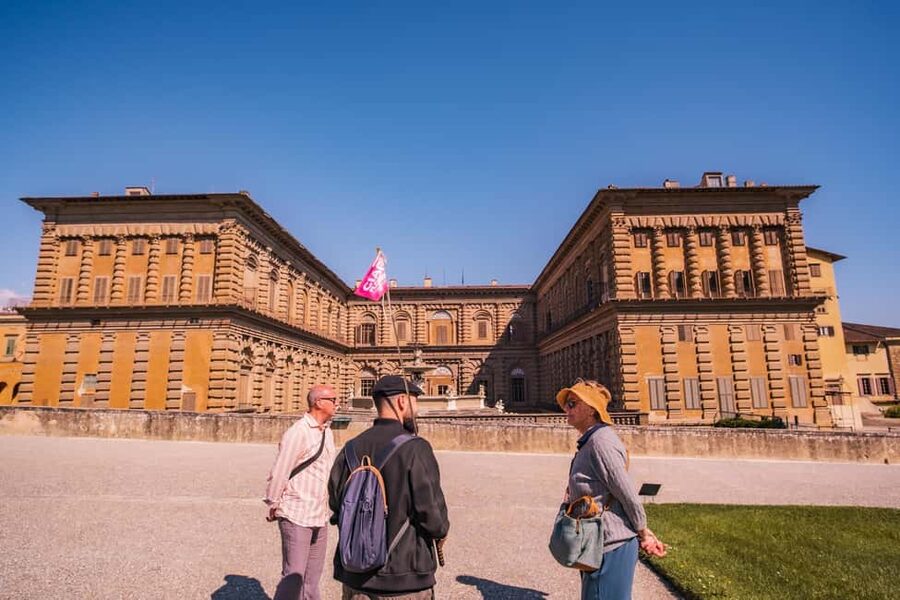
At 2 hours, this is a focused tour, not a slow gallery crawl. You’ll move through Pitti Palace and then walk the main highlights in Boboli Gardens. That timing is ideal for first-timers, especially if you’re also planning other major Florence stops.
The upside: you get the core highlights—Palatine Gallery plus the garden showpieces—without losing half a day. The other upside is mental. Florence can overwhelm you. A short, guided loop helps you build a clearer picture fast.
The only real drawback is that you can’t “wander deep” in 2 hours. If you want to linger, you’ll feel a bit of pressure to keep moving. The tour solves that with a built-in safety net: the 24-hour ticket that lets you explore more museum sections later at your own pace.
Also, the pace is part of the value. The tour is built for a smooth flow through rooms and paths, which makes it especially nice if you’re visiting during peak season.



Price and value: what $85 buys you besides entry tickets
$85 per person sounds like a museum splurge, so it helps to break down why it’s not just paying for doors to open.
You’re paying for three things:
- a live English guide and expert commentary
- time-saving access (including skip the ticket line)
- a tour route that targets the Palatine Gallery and Boboli Gardens highlights
Skip-the-line can matter a lot at Pitti, where delays can crop up on busy days. Even short waits waste prime sightseeing time, so reducing friction tends to pay off fast.
Then there’s the extra value that many people overlook: your 24-hour ticket doesn’t stop at Pitti Palace. It also covers additional museum areas at your leisure, including the Gallery of Modern Art, Museum of Costume and Fashion, Treasury of the Grand Dukes, and the Imperial and Royal Apartments. That means the guided 2 hours can turn into a longer experience spread across the day (or even the next day), if your schedule allows.
So the real “value math” is this: guided interpretation for the highlights now, plus freedom to go deeper later without paying again.
What’s included (and what you’ll want to bring)
This tour includes admission to Pitti Palace and Boboli Gardens, guided visits to the Palatine Gallery, and earphones if you’re in a larger group. It’s a live guided experience in English, run by Ciaoflorence Tours & Travel.
What you should bring is simple but important:
- comfortable shoes (you’ll be walking)
- a camera (flash photography isn’t allowed)
- water, since gardens and palace time can add up
Also plan for the practical reality of Florence: on the busiest days, entrance into museums may have some short delays. If that happens, your guide should keep you moving so you don’t lose the whole morning’s rhythm.
Meeting point is straightforward: meet your guide in front of the main entrance of Palazzo Pitti.
Who this tour is best for (and who should rethink it)
This is a strong fit if you want a clear Medici story without getting stuck in museum weeds. It’s also a great choice if you’re doing Florence highlights in a short time and want the palace-and-gardens connection in one organized outing.
It’s not a fit for wheelchair users or people with mobility impairments, since the tour involves walking through palace areas and the gardens.
You’ll likely enjoy it most if you:
- care about Renaissance art and want names tied to specific works
- like garden design that shaped royal Europe
- prefer guided context over self-paced wandering
If you’re traveling with kids, it can work, but the experience is more art-and-architecture focused than kid-activity focused.
Should you book Florence: Pitti Palace and Boboli Gardens?
I’d book this tour if you’re aiming to understand Florence’s Medici influence in a way that’s organized and time-smart. The Palatine Gallery is the payoff, and the Boboli Gardens add a second layer—how power looks outdoors, too.
It’s also a good book when your schedule is tight. The 2-hour guided visit plus a 24-hour ticket lets you come back later for extra sections like the Gallery of Modern Art or the Imperial and Royal Apartments. That flexibility makes the $85 feel less like a one-off and more like a foundation for a longer museum day.
Skip it only if you need a fully accessible route, or if you hate structured walking and would rather roam completely on your own. Otherwise, this is one of the cleaner ways to get the “Medici story” in Florence without wasting time.
FAQ
How long is the Pitti Palace and Boboli Gardens guided tour?
The tour lasts 2 hours.
Where do I meet the guide?
Meet your guide in front of the main entrance of Palazzo Pitti.
Is the Palatine Gallery included?
Yes. The tour includes a visit to the Palatine Gallery.
What famous artists can I expect to see mentioned during the gallery visit?
The tour highlights works by Raphael, Titian, and Caravaggio, including Raphael’s Madonna della Seggiola.
Do I need to buy separate tickets for Pitti Palace and Boboli Gardens?
Admission fee to Pitti Palace and Boboli Gardens is included in the tour price.
Will I be able to skip the ticket line?
Yes, the tour includes skipping the ticket line.
What extra access do I get with the 24-hour ticket?
Your 24-hour ticket lets you explore other Pitti Palace galleries at your own pace, including the Gallery of Modern Art, Museum of Costume and Fashion, Treasury of the Grand Dukes, and the Imperial and Royal Apartments.
What should I bring, and is flash photography allowed?
Bring comfortable shoes, a camera, and water. Flash photography is not allowed.
Is the tour suitable for wheelchair users or mobility impairments?
No, the tour is not suitable for people with mobility impairments or wheelchair users.
(Optional) Quick note about booking timing
Free cancellation is available up to 24 hours in advance, and you can reserve now and pay later to keep plans flexible.