REVIEW · SPLIT
Split Palace & Old Town -Private walking tour- Entrance included
Book on Viator →Operated by Split Guide · Bookable on Viator
Diocletian’s Palace clicks fast. This private walking tour stitches together the big monuments of Split with the lived-in squares and streets around them, so the city feels logical instead of random. You start at the Riva, then move inside Diocletian’s world—Cathedral, Jupiter stops, and the palace cellars—before finishing in Old Town squares and café country near the Procurative. Guides like Dana and Jana are highlighted for making the route easy to follow and for practical tips after the tour.
What I like most is the included entrances for the key indoor/under-street stops, so you’re not hunting tickets or timing. Second, I love the mix of sacred Roman sites and everyday medieval city spaces—Old Town squares, the fish market area, and the Napoleon-era shopping street all show up in one walk.
One thing to consider: the tour depends on good weather, and some sights can’t always be visited due to events or church services. That can mean a small change to the plan, but you still get the core palace-and-old-town storyline.
In This Review
- Key highlights you should know before you go
- Entering Split’s Palace world without getting lost in details
- The Riva start: quick orientation along Split’s promenade
- Diocletian’s Palace interiors: the included ticket stops that matter most
- Inside the palace walls: what you learn from the Cathedral and the Jupiter stop
- Diocletian’s Cellars: seeing the palace scale in person
- The Peristyle and the sacred side of the palace
- From private vestibule to Christian center: how the tour “tracks power”
- Golden Gate to Old Split: Roman roads leading into medieval streets
- Narodni Trg, Pjaca, and Voćni Trg: where public life still happens
- Split Fish Market and the sulfur baths effect
- Marmontova ulica: Napoleon-era building work in modern shopping lanes
- Ending at Procurative: a smooth, satisfying finish with coffee nearby
- Price and value: what you’re really paying for
- Who this tour fits best
- Should you book this Split Palace & Old Town private tour?
- FAQ
- FAQ
- How long is the Split Palace and Old Town private walking tour?
- Where does the tour start and end?
- Is this tour private?
- What language is the tour offered in?
- Are admission tickets included?
- What kind of ticket do I receive?
- Is the tour suitable for people with different needs?
- What if some sights are closed due to events or church services?
- Is good weather required?
- Can I cancel and get a full refund?
- Are service animals allowed, and is it near public transportation?
Key highlights you should know before you go
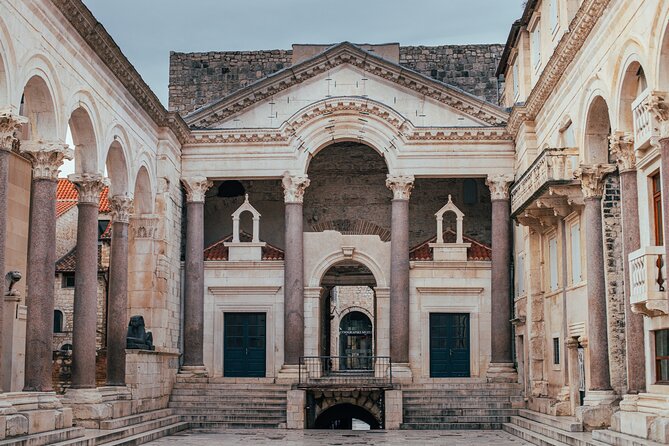
- Major palace entrances are included, including the Cathedral of Saint Domnius interior, the Temple of Jupiter, and Diocletian’s cellars/basement areas.
- Private tour format means you can ask questions and adjust the pace to your group’s needs.
- A structured route moves from the Riva to Roman gates and right into the medieval center (Narodni Trg, Pjaca, Voćni trg).
- You see the palace as a system: peristyle, vestibule, sacred spots, and the north gate that led toward Salona.
- Old Town “real life” stops are built in, including the fish market area and the Napoleon-era Marmontova street.
- An easy finish point at the Procurative, where you can relax right away with cafes and restaurants.
Entering Split’s Palace world without getting lost in details
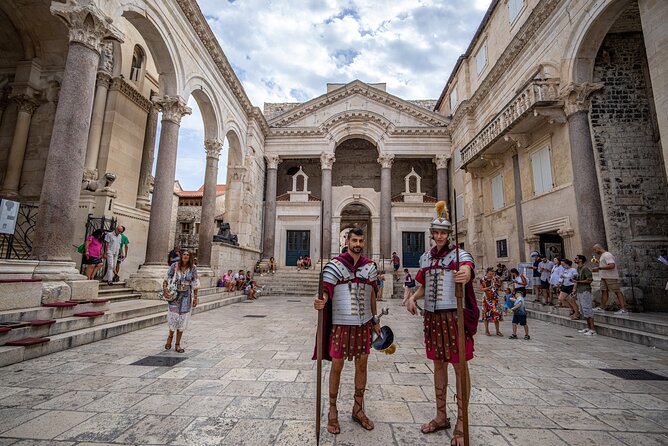
Split can feel like two cities at once. One is the grand Roman shell—Diocletian’s Palace and its gates, temples, and stone corridors. The other is the medieval-and-beyond city that grew inside and around it, with market life, public squares, and side streets that still do what they were built to do: connect people, commerce, and daily routines.
This tour keeps you from bouncing around on your own and guessing what connects what. You’re shown the palace’s layout in the order it was meant to be experienced, then guided into the surrounding Old Town with the same sense of direction. That’s the big value: not just seeing buildings, but understanding why they sit where they do.
You’ll also be in a private group, and that matters here. Split’s Old Town is compact, but it’s not simple. Having a guide means you get clarity fast—plus suggestions for where to go after, which came up in the best feedback for Dana and Jana.
You can also read our reviews of more tours and experiences in Split.
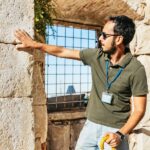
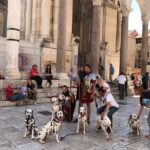

The Riva start: quick orientation along Split’s promenade
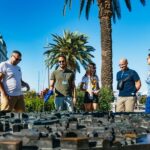
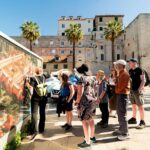
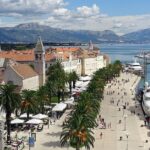
You begin at the Model of the historical core of the city of Split, near the water. Then you start walking from the Riva, Split’s famous promenade. It’s a smart first move because it gives you context before you hit the stone maze.
In the first stretch, the guide sets the stage: how the palace relates to the shoreline, how Roman power shows up in architecture, and how the city’s later growth wrapped itself around the original structure. Even if you arrive thinking you only want “pretty old buildings,” this opening helps you frame what you’re about to see.
Practical tip: since this is a walking tour and you’re moving in and out of sites, wear shoes you’re comfortable with for uneven stone and short climbs.
Diocletian’s Palace interiors: the included ticket stops that matter most

Once you’re in the palace complex, the itinerary focuses on the places that explain the palace’s dual identity: imperial space and spiritual space. Depending on whether worship or events are happening and what’s open, you’ll visit several major indoor highlights, with entrance fees included for the key ones.
Here’s what the guide is aiming to show you:
- The basement/cellar area for a sense of scale (you’re literally seeing what’s under the palace).
- The Cathedral of Saint Domnius interior and how the building changed as Christianity took over.
- The Temple of Jupiter stop, now functioning as a baptistery, with its ceiling design.
This is where included entrances are worth real money. Even if you’re used to paying entry fees, it’s the time and stress you save—plus the guide telling you exactly what you’re looking at—that makes the coverage feel like value, not just a discount.
Inside the palace walls: what you learn from the Cathedral and the Jupiter stop
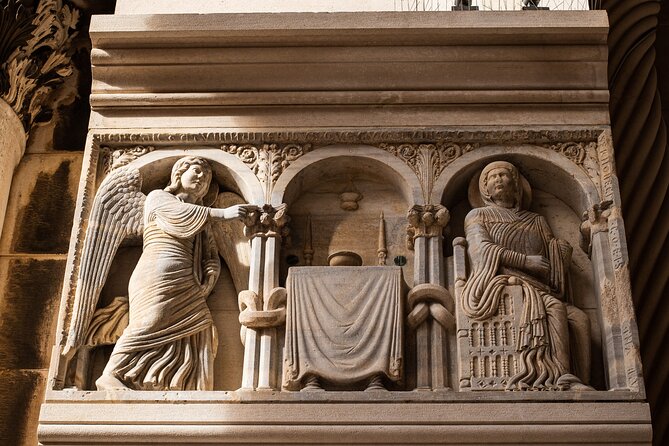
Split’s Cathedral of Saint Domnius used to be Diocletian’s mausoleum. Later, as Christianity spread, the emperor’s pagan function faded and the place became a Christian cathedral. You can’t truly understand Split’s transformation just by looking at exterior walls; the guide ties the shift to what you’re seeing.
Next is the Temple of Jupiter, which is now a baptistery. Pay attention to the ceiling design because the details mattered enough to influence Renaissance architects in Dalmatia. That’s the kind of connection that makes the tour feel more than scenic sightseeing.
If a site is affected by church services or events, don’t panic. The tour notes that the program may adjust slightly. In practice, you’ll still come away with the main narrative: Roman imperial power turning into Christian public space.
Diocletian’s Cellars: seeing the palace scale in person
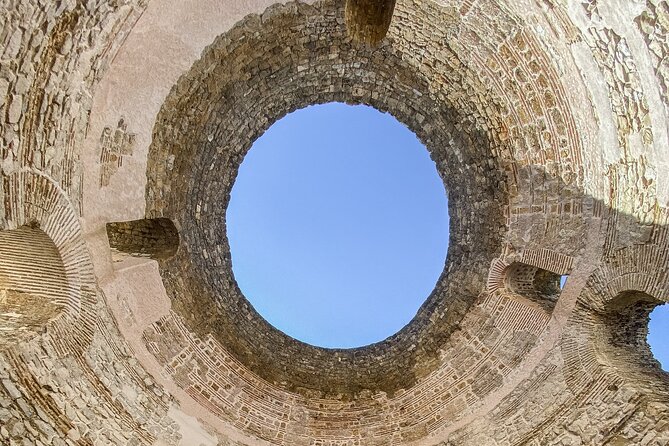
Through the south gate, you enter the cellars of the palace. These spaces were built more than 1700 years ago and are described as very well preserved. That’s not just a fun fact; it changes your mental image of the palace.
On your own, it’s easy to think of the palace as walls and courtyards. In the cellars, you get the sense of dimension: how much space the palace controlled, how the structure supported daily movement, storage, or private use, and why the layout made sense for a ruler.
This stop is also a nice reset from the brighter street level. If the sun is strong, you’ll appreciate the cooler indoor-feeling transition.



The Peristyle and the sacred side of the palace
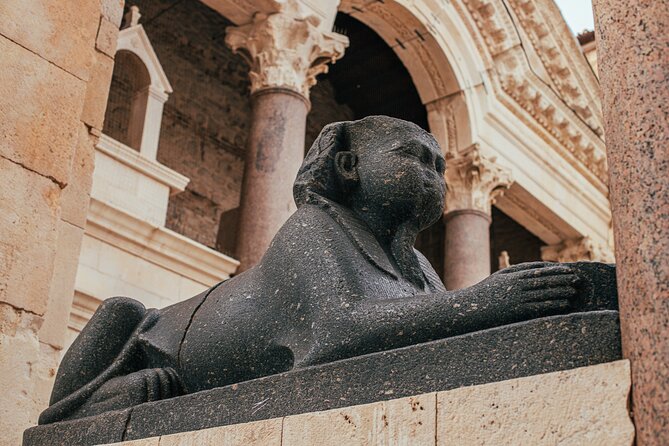
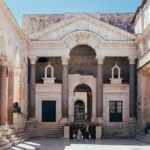
The Peristyle is described as the sacral meeting place in Diocletian’s time. This is where the emperor showed himself to subjects and where he was worshipped as the son of Jupiter.
That’s the lesson the guide gives you: this wasn’t a random courtyard. It was political theater with a religious backbone. When you look at a space like that, the buildings around it start to feel “arranged,” not merely “there.”
Then the tour moves to a sequence of palace areas that each add a layer:
- The Peristyle for public-sacred spectacle.
- The Temple of Jupiter for spiritual function and design legacy.
- The vestibule conceptually for the private-to-public transition inside the palace.
From private vestibule to Christian center: how the tour “tracks power”
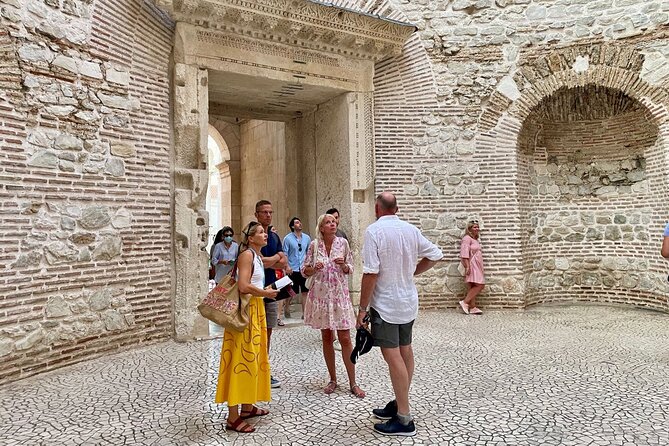
One of the more interesting in-between stops is the vestibulum of Diocletian’s Palace. It was the entrance zone to the emperor’s private chambers. So even though you’re walking outdoors and through historic spaces, the tour keeps a clear idea in your head: what was public, what was private, and how the boundaries worked.
After that, you return to the larger spiritual shift at the Cathedral of Saint Domnius. The guide’s explanation ties the missing/changed remains to the Christianization process. It’s not just a story; it helps you interpret why the building’s role changed while the stone body stayed.
This is a good moment to ask your guide questions, especially if you’re trying to connect what you see with what you’ve read later.
Golden Gate to Old Split: Roman roads leading into medieval streets
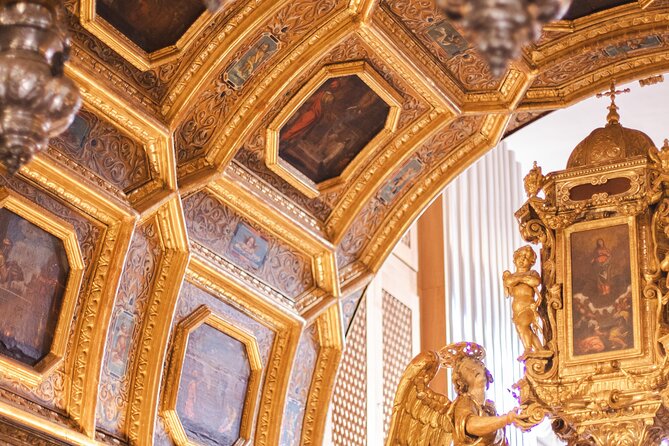
The Golden Gate is the north gate of the palace and was the most important gate in Roman times. The road from here led to Salona, the capital of the Roman province. That detail matters because it turns your walk into a map: you’re not only walking inside a historic shell—you’re walking along the logic of Roman movement.
Once you pass that threshold, the tour continues along the palace walls toward the medieval center. The route brings you into the actual heart of Old Town, starting around Narodni Trg and continuing toward Voćni Trg.
This section is great if you want the “Split you actually see now,” not only the Roman monuments. You’ll feel how the palace area became the seed for later city life.
Narodni Trg, Pjaca, and Voćni Trg: where public life still happens
After the gate, you head toward Narodni Trg and then to Pjaca (People’s Square). Pjaca was the center of the city since the Middle Ages, and it still reads that way today. You’ll also see old Venetian palaces and an old city hall in neo-Gothic style. That mix is part of Split’s personality: multiple eras sharing the same stage.
Next is Voćni trg, the former fruit market (today referenced as Fruit’s Square). There’s now a monument to Marko Marulić, one of Split’s most important Renaissance authors. It’s a small stop, but it’s exactly the kind of detail that gives Old Town texture—literature and civic space, not only architecture.
If you like learning what each square used to do, this middle stretch is worth slowing down for. Take a minute to look at how streets funnel into these spaces. The tour helps you see the “why” behind the layout.
Split Fish Market and the sulfur baths effect
Then you reach the fish market area. This stop is practical and physical: it helps you understand Split as a working coastal city, not an outdoor museum. The tour also notes that sulfur baths sit next door, and that even Diocletian knew sulfur baths could offer relief for rheumatism and other diseases.
There’s also a fun practical fact with real-world implications: the sulfur smell is why there are no flies in the fish market. That’s the kind of detail a guide only shares if they’re paying attention to how the place functions.
If you’re sensitive to strong smells, consider timing your visit. You won’t be stuck forever; it’s a short stop, and then you move back into open squares and pedestrian streets.
Marmontova ulica: Napoleon-era building work in modern shopping lanes
From the market area, the tour continues to Marmontova ulica, a busy shopping street and pedestrian zone. The guide connects it to French building under Napoleon’s rule in the early 19th century.
This stop helps you connect the dots between eras again. You’re walking on a street shape that was influenced by major political power shifts long after Rome. It’s a reminder that Split’s historic identity kept evolving, not freezing in time.
If your goal is photography and browsing, this is where you can do it without losing the narrative. You’ll know what you’re looking at.
Ending at Procurative: a smooth, satisfying finish with coffee nearby
The tour ends at Prokurative, a square described as reminiscent of St. Mark’s Square in Venice. The payoff here is simple: cafes and restaurants are right there, so you can continue at your own pace.
This ending point is useful because it’s a natural decompression zone. After palace interiors and Roman gates, you get open space and an easy next step: grab a drink, eat something, then decide where to go based on what the guide suggested.
Price and value: what you’re really paying for
At $203.95 per person for about 2 hours 30 minutes, this is not a budget “see everything quickly” option. But it also isn’t just a generic walk.
Here’s where the value comes from:
- Included entrance fees cover key palace attractions: the basement/cellars, the Cathedral of Saint Domnius interior, and the Temple of Jupiter. That’s the expensive, time-sensitive part that often makes tours feel worth it.
- It’s private, so you’re not sharing the experience with strangers while you try to hear explanations in crowded spaces.
- You get an organized route across multiple eras—Roman imperial structure, Christian transformation, medieval squares, and modern street life.
One more practical point: the tour is listed as booked on average about 73 days in advance, which usually means it’s a steady go-to choice during peak season. Booking earlier is smart if you have specific days in mind.
Who this tour fits best
This private Split Palace & Old Town tour works especially well if you:
- Want a clear route through Diocletian’s Palace without guessing.
- Care about how buildings changed roles over time (pagan mausoleum to Christian cathedral, temple to baptistery).
- Prefer an active walking experience with explanations at each step.
- Like the idea of finishing in the café-squares zone with easy options for food afterward.
It might be less ideal if you dislike walking or if you need a strictly predictable outdoor schedule. Because good weather is required and some stops can shift due to services or events, you’ll want flexibility.
Should you book this Split Palace & Old Town private tour?
Book it if your priority is understanding the palace as a living system—imperial power, sacred space, and then the medieval city that grew into it. The included entrances help you focus on the parts that actually unlock the story: Cathedral of Saint Domnius, the Temple of Jupiter, and Diocletian’s cellars.
Don’t book it if you want a self-guided “wander-only” day and you’re comfortable buying entrances and figuring out what matters on your own. But if you’d rather get your bearings fast and walk away with clear connections between gates, squares, and changing functions of buildings, this is a strong choice.
FAQ
FAQ
How long is the Split Palace and Old Town private walking tour?
It lasts about 2 hours 30 minutes.
Where does the tour start and end?
It starts at the Model of the historical core of the city of Split on Obala Hrvatskog narodnog preporoda 23, and it ends at Republic Square (Prokurative).
Is this tour private?
Yes. It’s a private tour/activity, and only your group participates.
What language is the tour offered in?
The tour is offered in English.
Are admission tickets included?
Yes. Entrance fees are included for three palace attractions: the basement/cellar area, the Cathedral of Saint Domnius interior, and the Temple of Jupiter. Other listed stops have free admission.
What kind of ticket do I receive?
You get a mobile ticket.
Is the tour suitable for people with different needs?
The tour can be adapted to special needs. Let the provider know in advance.
What if some sights are closed due to events or church services?
If attractions can’t be visited, the program may be slightly changed.
Is good weather required?
Yes, it requires good weather. If it’s canceled due to poor weather, you’ll be offered a different date or a full refund.
Can I cancel and get a full refund?
Yes. You can cancel up to 24 hours in advance for a full refund. If you cancel less than 24 hours before the start time, it’s not refunded.
Are service animals allowed, and is it near public transportation?
Service animals are allowed, and it’s near public transportation.