REVIEW · MARRAKESH
Marrakech: Bahia Palace Guided Tour – Skip-the-Line Access
Book on GetYourGuide →Operated by Moments in Morocco - Tour Agency · Bookable on GetYourGuide
If you only have a day, this one helps. You get skip-the-line access to Bahia Palace, then your guide connects the tiles, cedar ceilings, and royal gardens to what was going on in 19th-century Marrakesh. It’s a smart way to see one of the city’s top landmarks without losing time in ticket lines.
I also love the two-part structure. First you explore Bahia Palace at walking pace with a licensed guide, then you step into the Mellah (the old Jewish quarter) to understand how Marrakesh’s communities shaped daily life. A final stop at Djemaa el-Fna ties it all together with the Medina’s sights and sounds.
One thing to consider: you pay the Bahia Palace entry fee on your own (100 MAD per adult), and the tour involves walking on uneven paths. If you have mobility issues, it’s not suitable.
In This Review
- Key highlights to know before you go
- Skip-the-Line Bahia Palace: why this tour starts strong
- Meeting at Café de France (Djemaa el-Fna) without stress
- Inside Bahia Palace: courtyards, zellige, and cedar ceilings
- The Mellah walk: history on the ground
- Finishing at Djemaa el-Fna: a Medina reality check
- What you’ll pay: $12 plus the real palace entry cost
- Small-group pacing (and why it helps you see more)
- Who this tour suits best (and who might skip it)
- A practical plan for your day around Bahia Palace
- Should you book the Marrakech Bahia Palace guided tour?
- FAQ
- Is the Bahia Palace entry ticket included in the tour price?
- Where do I meet the guide?
- Is transportation included?
- What does the tour include besides the palace?
- What should I bring?
- What languages are available?
- Is the tour suitable for people with mobility impairments?
Key highlights to know before you go
- Skip-the-line Bahia Palace entry saves time when you arrive in peak hours
- Licensed guide + guided entry inside each monument, with time for photos afterward
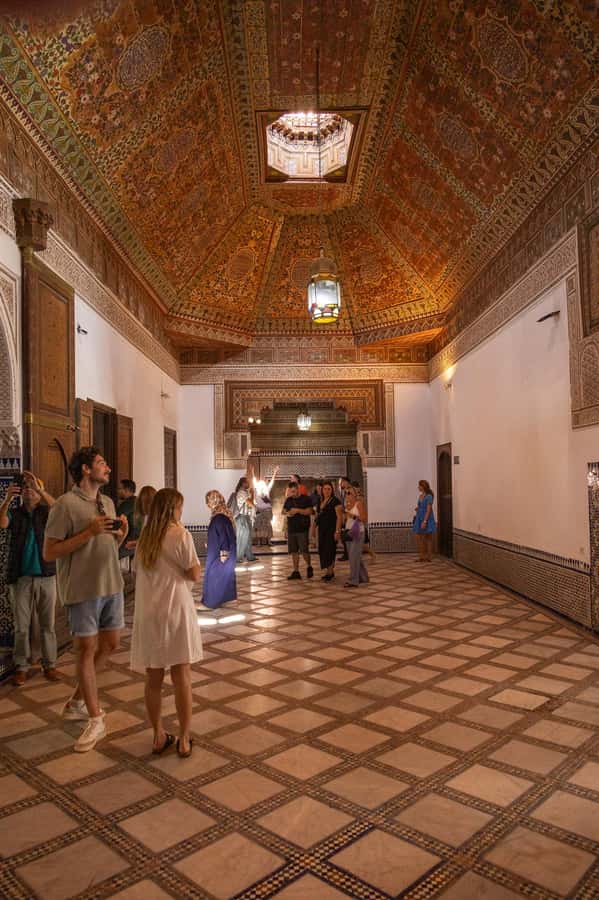
- Zellige and carved cedar are the showpieces, and your guide explains what you’re seeing
- Mellah walk gives context about Marrakesh’s Jewish heritage and surviving landmarks
- Djemaa el-Fna finish means you end where the Medina energy is strongest
Skip-the-Line Bahia Palace: why this tour starts strong
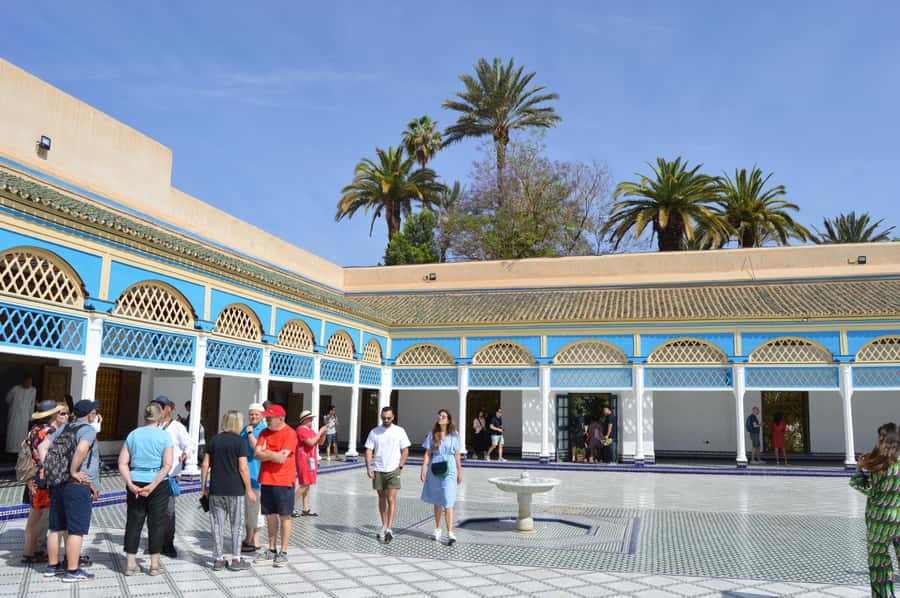
Bahia Palace is one of those places where the details can overwhelm you in the best way. The courtyards feel built for lingering, and the rooms reward slow looking—especially the tilework and carved woodwork. This tour’s big advantage is skip-the-line access, which matters in Marrakesh because queues can eat up your daylight fast.
Your guide doesn’t just point out the highlights. They give you the context that makes the architecture click: who commissioned the palace, why certain design choices were made, and how the palace functioned in Moroccan society during the 19th century. That framing turns a pretty building into a story you can actually follow while you walk.
Another reason I like this setup: you get time to see it twice. You’ll do the guided portion with your guide inside, then you also get free time to explore on your own and take photos without rushing.
You can also read our reviews of more tours and experiences in Marrakesh.
Meeting at Café de France (Djemaa el-Fna) without stress
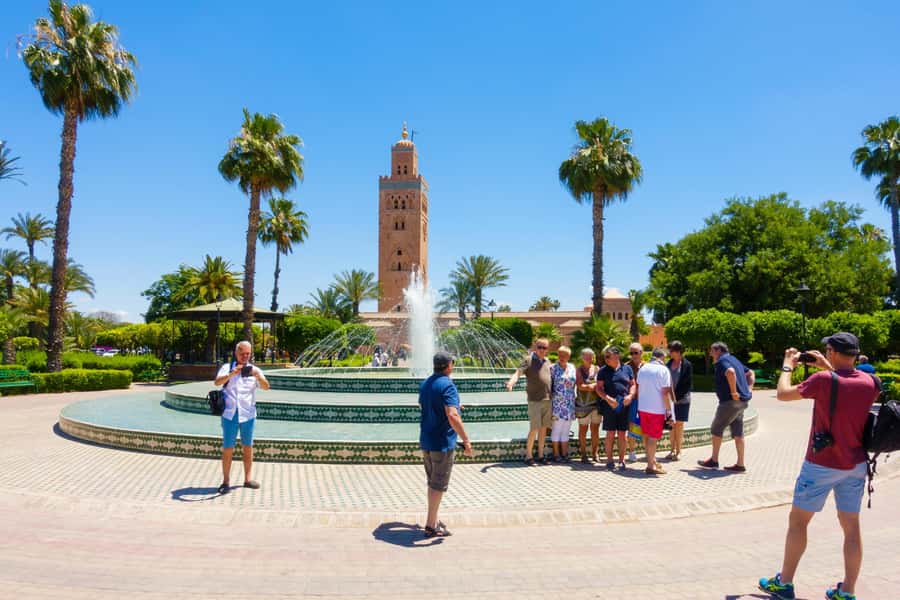
You meet your guide in front of Cafe de France at Djemaa el-Fna square. That location is easy to find, and it’s also where the tour ends—so you’re not stuck figuring out a second pickup drop-off point later.
If you choose the private option, hotel pickup is offered within the Medina area. If you’re on a small-group option, you’ll keep it simple with the meet point at Djemaa el-Fna. Either way, you’ll have a reminder on WhatsApp the day before with the guide’s name and the meeting point details—useful when the Medina streets start to blur together.
Tip: bring cash. Not just for tips, but because the palace entry fee is not included, and you’ll want to handle that quickly so your group doesn’t stall right at the start.
Inside Bahia Palace: courtyards, zellige, and cedar ceilings
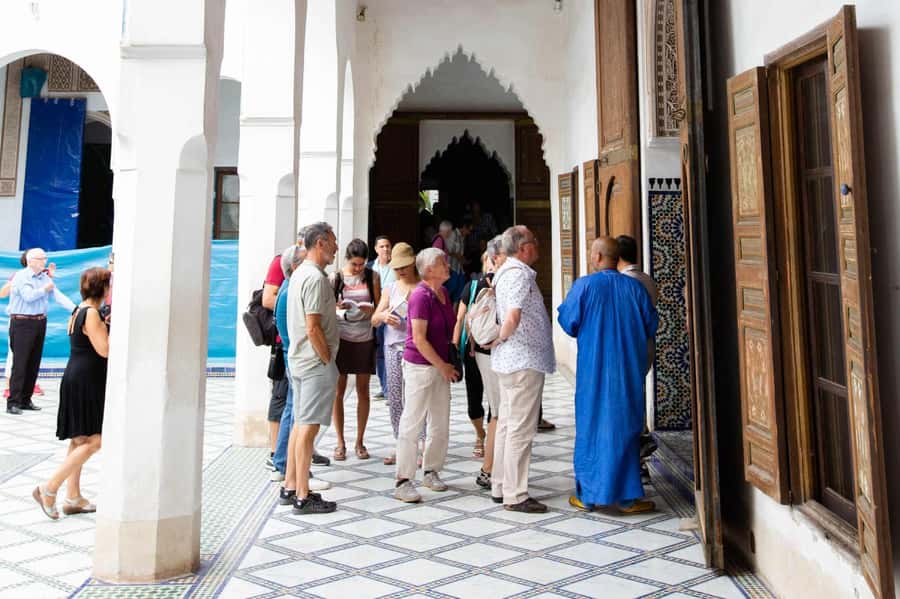
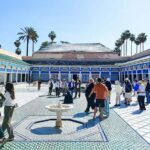
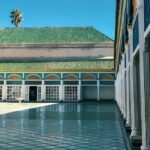
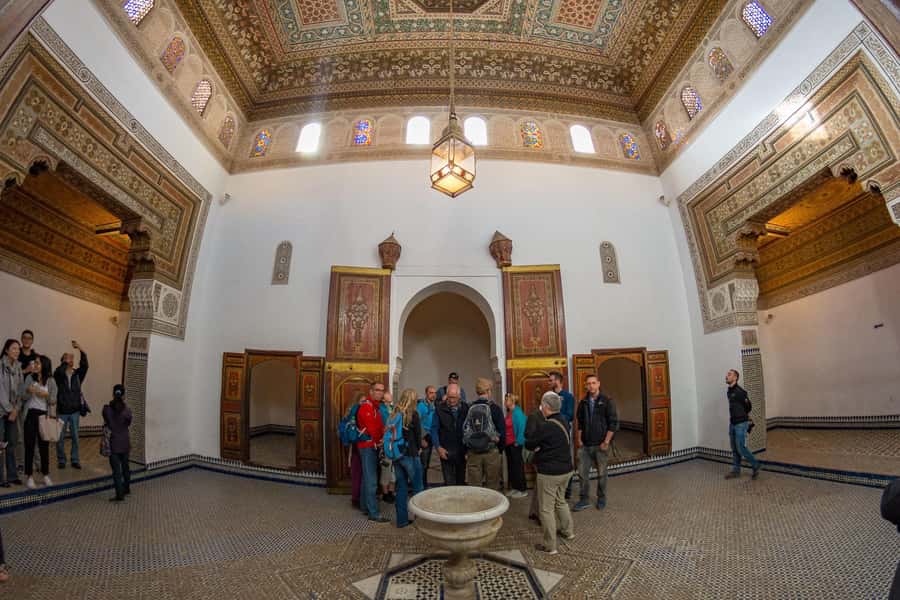
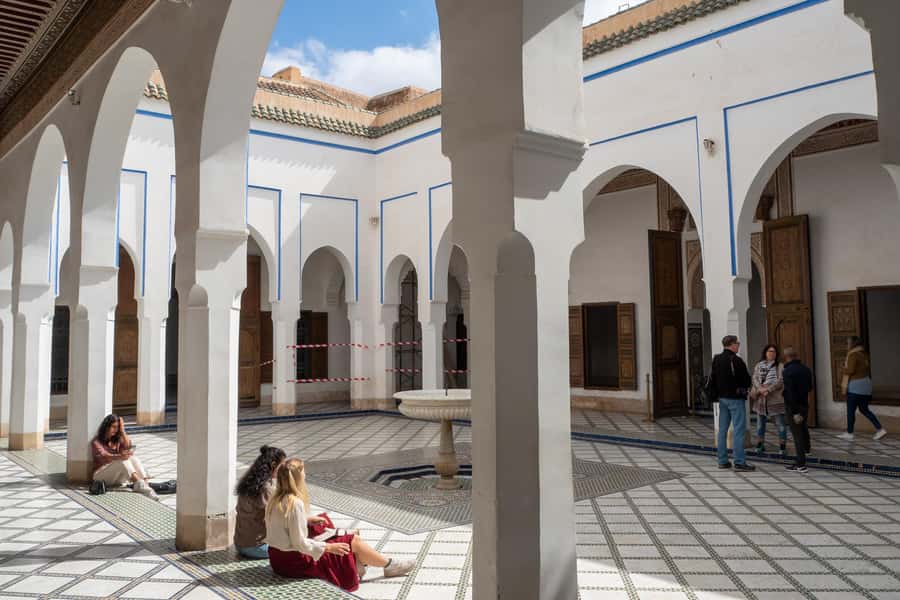
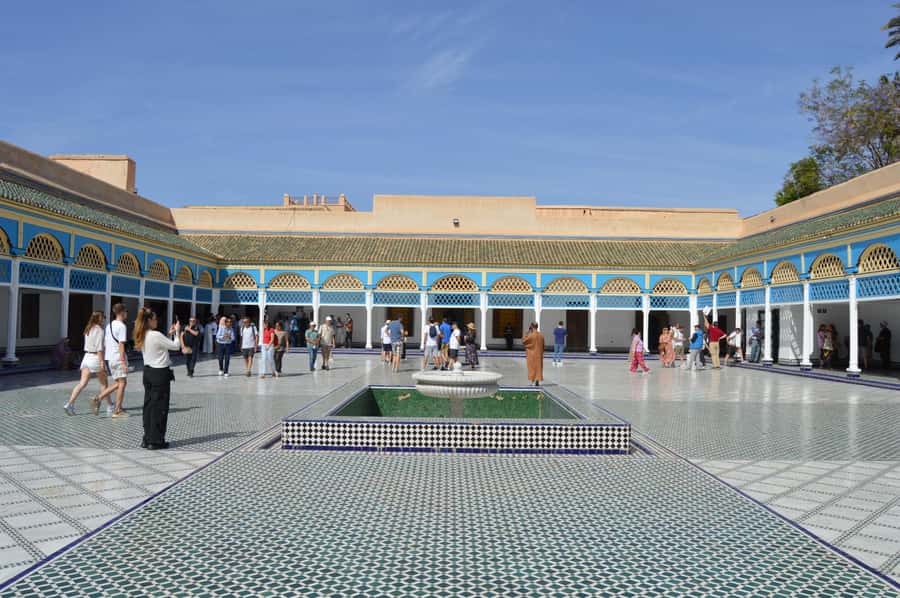
When you enter Bahia Palace, the first thing you notice is the scale of the courtyards. They’re not just pretty open spaces—they act like the palace’s breathing system, pulling light and movement into the layout. With a guide, you’ll learn what to look for beyond the obvious photo spots.
Here’s what makes the guided walk worth it:
- Zellige tilework in the courtyards is full of pattern logic. Your guide helps you see the designs as intentional decoration, not random beauty.
- Carved cedarwood ceilings show fine craftsmanship. You’ll get a sense of how labor and artistic skill were used to create that polished, layered look.
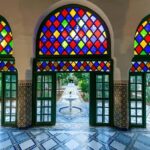
- Royal gardens provide a break from indoor density. Even if the day feels hot, these outdoor spaces help you slow down and really notice the palace rhythm.
You’ll also hear stories tied to court life and royal intrigue. Even if you’re not a history nerd, those details help you understand why the palace is arranged the way it is—private spaces, decorative emphasis, and the way the compound guides movement.
Because the guide walks in with you, you’re not left standing outside explaining with your phone. The pacing is practical: guided stops where it matters, then enough time to roam and take pictures.
The Mellah walk: history on the ground
After Bahia Palace, the tour takes a short stop in the Mellah, Marrakesh’s former Jewish quarter. This is where the experience shifts from architecture to community—less about ceilings and more about streets.
A good guide makes the Mellah stop meaningful. You’ll hear stories about how the community once thrived and what remains today. Your path may include synagogues and traditional markets, where you can see remnants of heritage still part of the area’s identity.
Even if you only spend a limited time there, the payoff is big: it helps you connect what you saw in the palace—power, artisanship, and society—with how different groups lived in the city. You start to understand Marrakesh as a layered place, not a set of separate attractions.
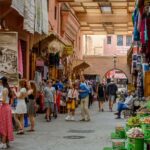
One practical note: the Mellah streets can be narrow and busy. Comfortable shoes matter here more than at most museums.
Finishing at Djemaa el-Fna: a Medina reality check
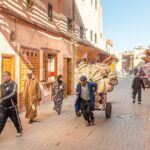
The tour ends back near Djemaa el-Fna, with time to absorb the Medina. This isn’t a quiet museum exit. You’ll be dropped into the center of Marrakesh’s street life—food aromas, street performers, chatter, and the constant flow of people moving between stalls and alleys.
I like ending here because you don’t feel like you’re fleeing the city right after a landmark visit. You finish where you can continue exploring on your own if the day still has energy. Also, since your meeting point is the same, it’s easier to regroup and head back to your riad or hotel.
If you want to keep your experience organized, use your guide’s last bit of advice. Many guides on this tour share local recommendations for what to see next and how to plan a couple of hours without wasting time. In the past, guides like Hassan and Ahmad have been praised for offering helpful trip suggestions and photo help, which is exactly what you need after a long walk.

What you’ll pay: $12 plus the real palace entry cost
The tour price is listed at $12 per person, but the big detail is that the Bahia Palace ticket is not included. The palace entry fee is 100 MAD per adult, so you should plan to pay that separately.
So is it still good value? In most cases, yes—because you’re paying for more than standing in line. You get:
- a licensed local guide
- skip-the-line access
- guided time inside the palace plus free exploration time
- a structured route that includes the Mellah and a Medina finish
If you’re comparing this to a DIY visit, remember what can go wrong. Without a guide, it’s easy to walk through beautiful rooms and miss the meaning behind them. The guide work is what makes Bahia Palace feel coherent, not just decorative.
Also consider that the tour includes WhatsApp reminder support, which can reduce the usual “where do we meet?” stress in the Medina.
If you’re on a budget, bring the right cash early, wear comfortable shoes, and treat the palace entry fee as part of your trip plan—not an unexpected add-on.
Small-group pacing (and why it helps you see more)
This experience is described as a private or small-group walking tour depending on the option you choose. In a place like Marrakesh, small groups matter because they keep the walking manageable and allow your guide to answer questions.
You’ll also benefit from the tour style: the guide accompanies you inside each monument, then you get time to explore and take photos. That balance prevents the classic problem of tours that feel like a sprint, where you’re only half seeing things before you’re moved along.
From guide profiles shared through past experiences, you can expect guides who are friendly and supportive. Names that come up include Yassine, Achraf, Ousif, Yacin, Ahmad, and Mohamed (Momo). People highlight small actions like taking photos for you, answering questions, and sharing local ideas while you walk.
Who this tour suits best (and who might skip it)
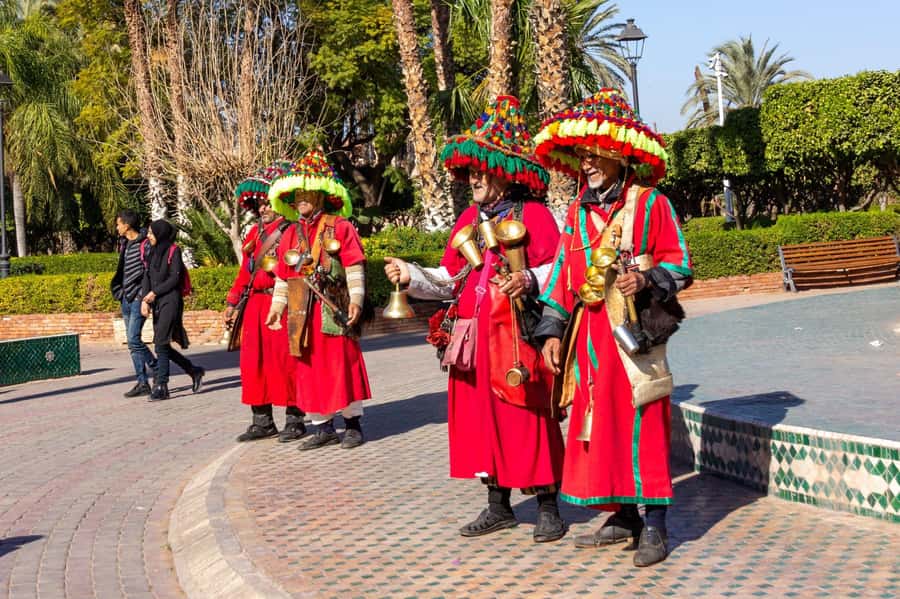
This Bahia Palace + Mellah tour fits best if you want:
- a guided, time-efficient way to see Bahia Palace
- more than a photo stop (you want the story behind the architecture)
- a meaningful cultural context stop at the Mellah
- an easy ending point at Djemaa el-Fna
It’s not suitable for people with mobility impairments, based on the walking and monument access approach.
Also keep in mind the general comfort factors you’ll feel in Marrakesh: heat, walking time, and narrow streets. Even when the tour is well paced, you’ll still want comfortable shoes and water. And yes, bring cash for the entry fee.
A practical plan for your day around Bahia Palace
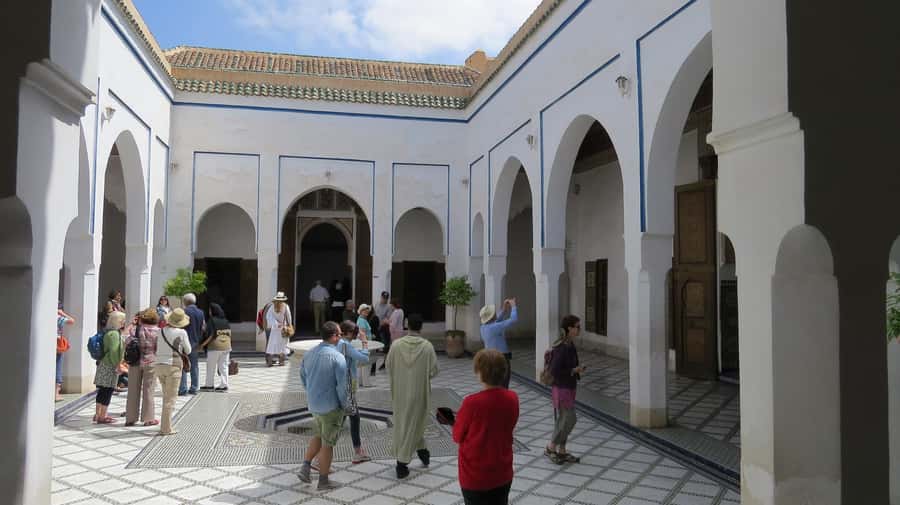
If you’re planning around this tour, treat it like your “anchor visit.” Bahia Palace is the main event, and the Mellah and Medina finish work as context and a payoff.
A simple strategy:
- Wear shoes you can walk a lot in.
- Carry water and small bills.
- Don’t schedule anything super tight right after Djemaa el-Fna, since street activity is intense and you may want a few minutes to decompress.
If you’re visiting Marrakesh for the first time, picking an early tour can help you see the city in a more organized way before you start getting pulled into souk decisions.
Should you book the Marrakech Bahia Palace guided tour?
Book it if you want the best combination of skip-the-line convenience and a guide who can connect the palace details to real social and historical context. The Mellah stop adds value beyond sightseeing because it shifts the focus from architecture to community life, and ending at Djemaa el-Fna keeps your day grounded in the Medina.
Skip it if you hate walking, you need mobility-friendly access, or you’re the type who prefers to wander without any structured storytelling. Also skip if you don’t want to budget the extra 100 MAD per adult palace entry fee.
If you’re flexible, this is a smart first- or second-day activity. It gives you orientation, key sights, and a clearer sense of what you’re looking at when you return to the Medina on your own.
FAQ
Is the Bahia Palace entry ticket included in the tour price?
No. Entry tickets are not included. Bahia Palace costs 100 MAD per adult, and you’ll pay it separately.
Where do I meet the guide?
Meet your guide in front of Cafe de France at Djemaa el-Fna square.
Is transportation included?
Transportation is not included in the tour price. If you choose the private option, hotel pickup within the Medina is offered.
What does the tour include besides the palace?
You’ll have guided access and time at Bahia Palace, a stop in the Mellah to learn about the historic Jewish quarter, and the tour ends back at Djemaa el-Fna.
What should I bring?
Bring comfortable shoes, water, and cash (for the Bahia Palace entry fee).
What languages are available?
The tour is offered in English and French.
Is the tour suitable for people with mobility impairments?
No. It is not suitable for people with mobility impairments.