REVIEW · MARRAKESH
Marrakech: Bahia Palace, Saadian Tombs, Souk and Medina Tour
Book on GetYourGuide →Operated by Moments in Morocco - Tour Agency · Bookable on GetYourGuide
Four hours that feel like a time machine. This Marrakech tour strings together Bahia Palace and the Saadian Tombs with a guided walk through the Medina’s twists and turns, so you’re not just seeing landmarks—you’re understanding why they matter. You’ll also get a smart photo-and-orientation route through Kasbah streets, Bab Agnou, and the Mellah, ending back near the main square.
One note to plan for: monument tickets aren’t included in the tour price, and you pay for Bahia Palace and the Saadian Tombs on-site in cash—skip-the-line helps, but you’ll still want to budget that extra time and money.
In This Review
- Key things that make this Marrakech tour worth your time
- Starting at Café de France in Djemaa el-Fna
- Koutoubia Mosque: the best exterior photo stop, timed right
- Kasbah streets and Bab Agnou: power, stonework, and street-level life
- Saadian Tombs: where you slow down and pay attention
- Mellah: Marrakech’s Jewish quarter, explained through streets
- Bahia Palace: the interior you’ll remember for years
- Souks and the Medina: getting your bearings without getting lost
- A note on argan oil, herbal stops, and shopping pressure
- Timing matters: Ramadan hours and the flow of your day
- Price and value: what you’re really paying for
- Who this tour fits best
- How guides shape the experience (and why that matters)
- Should you book the Marrakech Bahia Palace, Saadian Tombs, Souk and Medina Tour?
- FAQ
- What’s included in the tour price?
- Are Bahia Palace and the Saadian Tombs tickets included?
- Where do we meet the guide?
- How long is the tour?
- Which languages are available for the guide?
- Is Koutoubia Mosque included, and can I enter?
- Is hotel pickup provided?
- What should I bring?
- What happens during Ramadan?
- Is this tour wheelchair accessible?
Key things that make this Marrakech tour worth your time
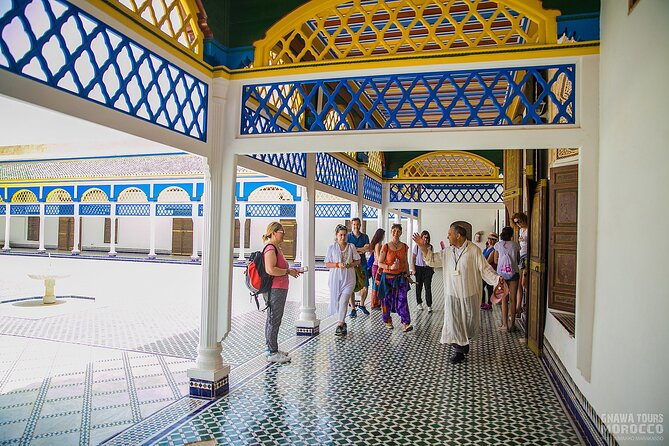
- Bahia Palace interiors: cedar-work ceilings, tilework, and calm courtyards that are a break from the street noise
- Saadian Tombs craftsmanship: zellij tilework, marble columns, and decorated ceilings tied to a long-vanished dynasty
- A guided Medina route: you’ll get bearings fast in the souks, rather than spending hours just finding your way
- Koutoubia and Bab Agnou context: exterior views plus stories that connect architecture to power and history
- A practical ending: the tour finishes around Café de France in Djemaa el-Fna, where it’s easy to continue your day
Starting at Café de France in Djemaa el-Fna
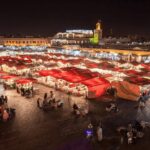
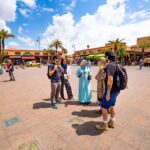
Meeting in front of Café de France (in Djemaa el-Fna square) is actually a good move. This is one of the easiest “anchor points” in central Marrakech, and it means you start right where visitors naturally want to be.
If you’ve ever tried to meet a guide in a crowd of guides, you know it can be tricky. The WhatsApp reminder the day before is a real help—use it. Look for your guide’s name and meeting point details, and give yourself a few extra minutes so you’re not hunting while the square gets louder.
You can also read our reviews of more tours and experiences in Marrakesh.

Koutoubia Mosque: the best exterior photo stop, timed right
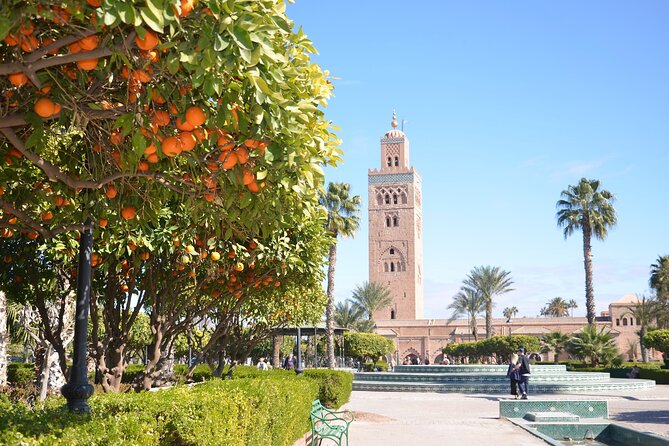
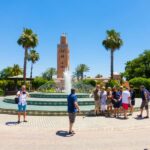
Your first real landmark moment is Koutoubia Mosque. During the tour, it’s an exterior photo stop and guided viewing—entry is restricted to Muslims during prayer times, so don’t expect to wander inside.
What you do get is a strong architecture intro: the Almohad style and the famous minaret that you can often spot across town. It’s a great “this is what defines Marrakech’s skyline” stop, and it gives you a visual reference before you start moving through the smaller streets.
Kasbah streets and Bab Agnou: power, stonework, and street-level life
Next come the Kasbah area streets, where you’ll walk past walls, gateways, and everyday scenes that make the city feel lived-in—not just museum-like. This part matters because Marrakech isn’t only about monuments. It’s also about the neighborhoods around them, and how people move through the old city day after day.
Right after, you’ll see Bab Agnou from the outside. This 12th-century gate is known for ornate stone carvings and royal importance. Even without entering, it’s a strong “wow” moment. It also helps you connect what you saw at Koutoubia to the broader idea of how architecture signaled authority in different periods.
Saadian Tombs: where you slow down and pay attention
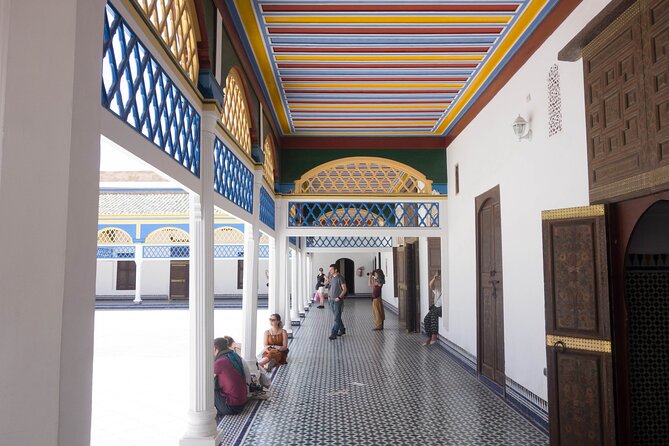
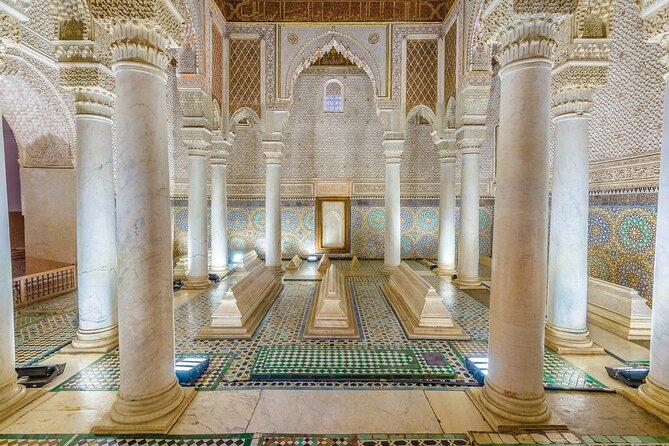
The Saadian Tombs are one of the tour’s big payoff stops. These are beautifully preserved royal burial spaces, rediscovered in 1917 after being forgotten for centuries. Inside, the craftsmanship is the star: zellij tilework, marble columns, and richly decorated ceilings.
This is also where a guide earns their fee. The story behind the site changes how you look at the details—tile patterns don’t feel random, and you start noticing how the space was designed for status and remembrance. Plan for a guided portion plus free time, since you’ll want moments to look slowly and take photos.
Budget time and money here. Tickets are extra (and paid in cash on-site), and in peak periods you may still find some waiting even with skip-the-line help at the start.
Mellah: Marrakech’s Jewish quarter, explained through streets
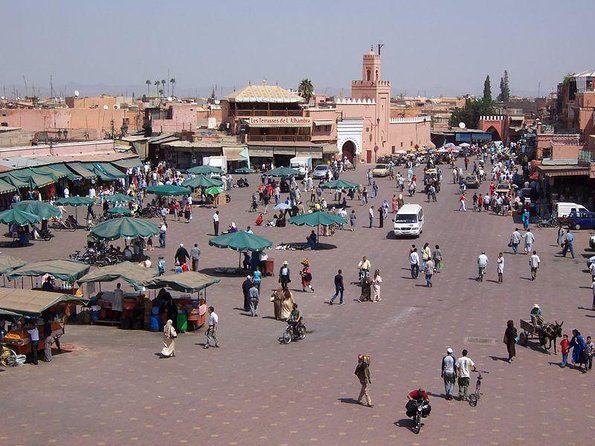
After the tombs, the tour shifts into the Mellah, the former Jewish quarter. You’ll walk through the street layout and architecture with a guide who explains how this area functioned and how cultural communities shaped Marrakech’s identity.
This stop is easy to underestimate if you’re only chasing the big-name sights. I like it because it gives the city more than one storyline. When you leave, you understand Marrakech as a place made of overlapping histories, not a single chapter.
Bahia Palace: the interior you’ll remember for years
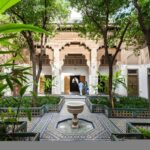
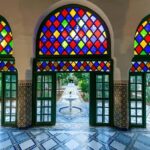
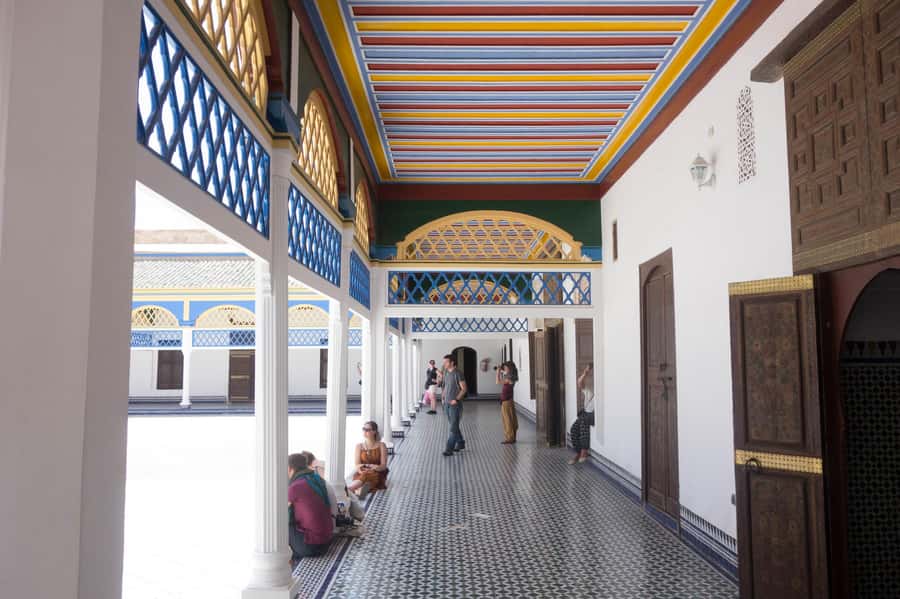
Then comes Bahia Palace, and it’s usually the moment people exhale. This 19th-century palace was built to show off top-level Moroccan artistry, and you feel that in the design right away: peaceful courtyards, colorful tilework, and hand-carved cedar ceilings.
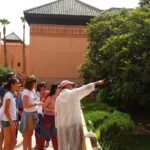
You’ll tour with your guide inside, and you’ll also get free time to explore at your own pace. That mix is important. The guide’s explanations help you see what you might miss on your own, and the pause time lets you soak it in instead of treating it like a checklist.
Two practical notes:
- Some sections may be under renovation, so don’t be shocked if part of the palace looks different than you expected.
- Tickets are extra and paid in cash on-site.
Souks and the Medina: getting your bearings without getting lost
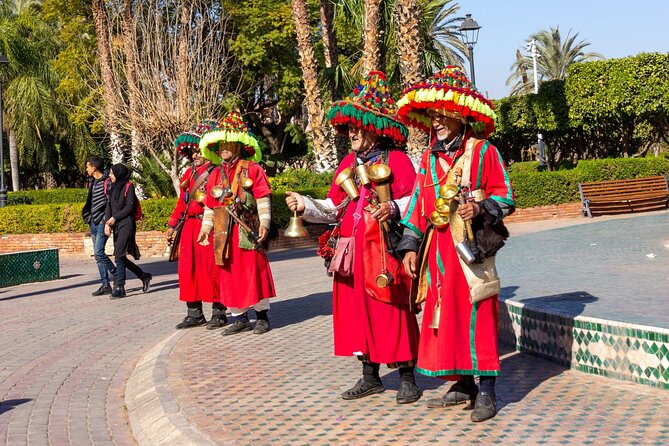
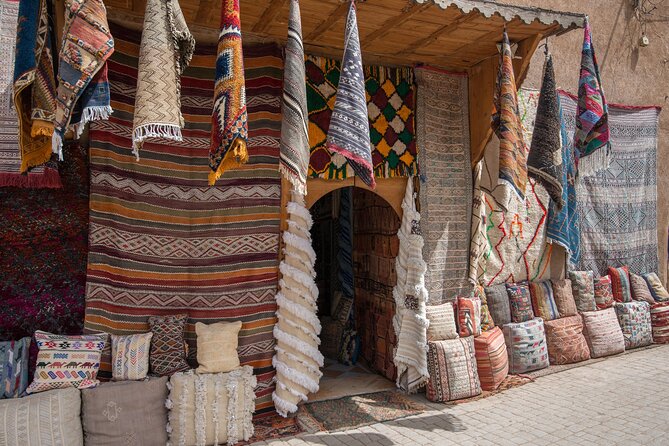
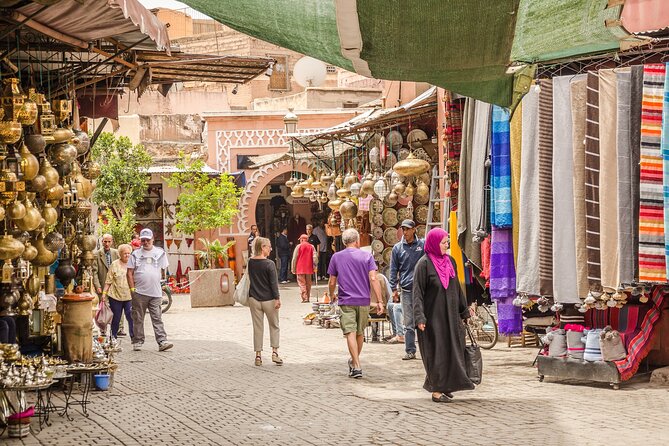
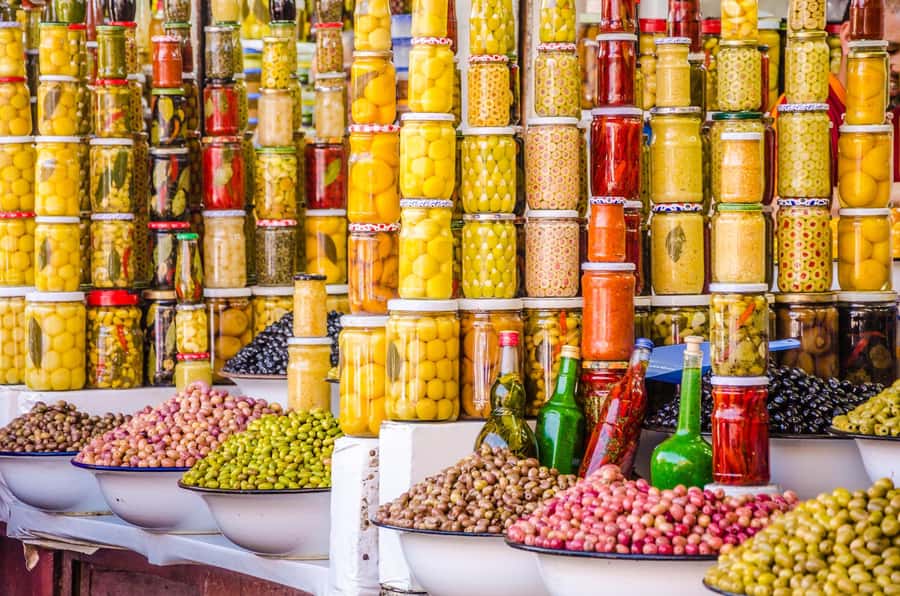
The souks and Medina walk is where the tour turns from monuments into “real Marrakech.” You’ll move through trading streets where spices, textiles, leather goods, and crafts show up around every bend. It’s also where your guide’s routing helps, because the Medina can swallow time quickly if you don’t know which alleys to prioritize.
What I like here is the “learn and then wander” structure. You’ll get guided context, you’ll stop for photos, and you’ll have time to keep exploring. By the time you finish, you’re more likely to return to the places you liked instead of starting from scratch on day two.
A note on argan oil, herbal stops, and shopping pressure
Some tours in Marrakech include short product stops—this one may include an argan oil or herbal demonstration experience, plus a storefront visit. That part can be great if you’re curious, and it can feel like a sales moment if you’re not.
Here’s the practical approach: if you want to learn without tasting oils or doing a demonstration, say no. One traveler even mentioned being able to refuse an argon oil experience for allergy reasons. If you’re sensitive to scents or strong products, keep that in mind before you agree to anything.
Also, keep your eyes open on pricing. I’d treat any shop stop as optional learning, not a guarantee of good value compared to local markets.
Timing matters: Ramadan hours and the flow of your day
Marrakech schedules shift during Ramadan. If you’re traveling between mid-February and mid-March, monument hours can close earlier than normal. Morning tours start at 09:30 instead of 10:00, and afternoon tours start at 13:00 instead of 14:00, so you have enough time to enjoy everything.
If you want your photos without stress, also consider that prayer times can affect access at Koutoubia Mosque. You’ll still get the best exterior views, but don’t plan on changing your route last minute.
Price and value: what you’re really paying for
At about $20 per person for a 4-hour guided walk, you’re mainly paying for three things:
1) a licensed guide who connects sights to history and neighborhoods,
2) a route that prevents time-wasting,
3) skip-the-line entry help at key points.
But two monument tickets are not included: Bahia Palace and the Saadian Tombs (paid in cash on-site). That means your real total cost depends on how you budget for those entries.
Still, the value is strong for a first visit or for a short stay. You get multiple iconic stops in one coherent loop, and the guide helps you move through the Medina without turning the whole day into navigation.
Who this tour fits best
This is ideal if:
- it’s your first time in Marrakech and you want quick orientation,
- you like architecture and want “why this exists” explanations,
- you want a guided route through the Medina without losing half your day.
It may be less ideal if you have limited mobility. The tour is labeled wheelchair accessible, but the walking and the reality of stairs inside some monuments can make it difficult. If that’s your situation, ask the provider what accessibility looks like for your specific route and timing.
How guides shape the experience (and why that matters)
The guides behind this tour tend to be the difference between seeing and understanding. In recent group experiences, guides like Mo, Mustapha, Yasmine, Ayoub, Mouhssine, and Yassine have shown up with the same core strengths: clear explanations, patient pacing, and a knack for answering questions in a way that makes the city feel personal.
A few practical tips you can borrow from that style:
- Ask questions at stops, not while walking at full speed.
- Use the free time to focus on one area you care about most (ceiling work at Bahia Palace, for example).
- If you’re slow-walking, tell your guide early so the group pacing still works.
Should you book the Marrakech Bahia Palace, Saadian Tombs, Souk and Medina Tour?
Yes—if you want a smart first-day introduction that connects palace interiors, royal tombs, and Medina street life into one solid route. It’s especially good value when you factor in the paid-on-site monument entries you’d otherwise manage alone, plus the time saved in navigation.
Book it if you can handle a bit of crowd energy and you’re comfortable paying tickets in cash on-site. Skip it if you only want one or two places and you’re the type who prefers wandering without structure. And if you’re sensitive to product demos, be ready to politely decline.
FAQ
What’s included in the tour price?
The price covers a licensed local guide, a private or small-group walking tour, skip-the-line access at the monuments, guided tours inside each site, free time to explore at your own pace, and a WhatsApp reminder with meeting details and helpful tips.
Are Bahia Palace and the Saadian Tombs tickets included?
No. Entry tickets are not included. Bahia Palace and the Saadian Tombs cost 100 MAD per adult each, paid in cash on-site.
Where do we meet the guide?
You meet your guide in front of Café de France in Djemaa el-Fna square.
How long is the tour?
The tour lasts 4 hours.
Which languages are available for the guide?
The tour guide is available in French, English, Spanish, and Italian.
Is Koutoubia Mosque included, and can I enter?
Koutoubia Mosque is included as an exterior photo stop and viewing. Entry is restricted to Muslims during prayer times, so expect outside access during your visit.
Is hotel pickup provided?
Hotel pickup is optional. If you’re staying in the Medina, pickup from your riad’s reception is offered for the private option. Otherwise, you meet at Café de France.
What should I bring?
Bring comfortable shoes, sunglasses, a sun hat, water, and cash for monument tickets.
What happens during Ramadan?
During Ramadan, monuments close earlier than usual. Morning tours start at 09:30 and afternoon tours start at 13:00 to fit in enough time for the sites.
Is this tour wheelchair accessible?
The activity information lists wheelchair accessibility, but it also states it’s not suitable for people with mobility impairments. If mobility is a concern, it’s best to check with the provider about what parts of the route and monuments will be difficult for you.