REVIEW · MARRAKESH
Marrakech: Bahia Palace, Saadian Tombs & Medina Guided Tour
Book on GetYourGuide →Operated by Moments in Morocco - Tour Agency · Bookable on GetYourGuide
Marrakech rewards those who walk with a guide. This Bahia Palace and Saadian Tombs focused circuit is a fast, high-impact way to see how Morocco’s power, faith, and craft show up in real stone, tile, and wood. I love that the tour pairs major monuments with real-life Medina lanes where you can actually ask questions and watch artisans at work. The main drawback to plan for is the walking—this is not an easy stroll.
You meet at Cafe de France in the Djemaa el-Fna area, then you’re off: photo stops, guided history inside key sites, and short stretches of free time so you don’t feel herded. I also like the practical touch of a WhatsApp reminder the day before, which helps when Marrakech is busy and directions get confusing. Guides such as Hassan, Ahmad, and Youness are often mentioned for keeping things clear and fun, which matters when you’re learning on the move.
In this 4-hour format, you get an efficient first-day overview of Marrakesh without sacrificing the details that make the palaces and tombs worth your time—especially the ornament you might miss if you’re wandering alone.
In This Review
- Key things to notice before you go
- A 4-hour loop that covers the big three: palace, tombs, and Medina
- Djemaa el-Fna: your orientation start in the middle of it all
- Saadian Tombs: why the quiet feels powerful
- Kasbah area and Bab Agnaou: the city’s stone welcome
- Bahia Palace: the 19th-century masterpiece that rewards slow looking
- Koutoubia Mosque, Mellah, and Bab Agnou Gate: seeing faith and community from street level
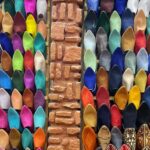
- Medina souks and Rahba Kedima: craft you can actually see
- How much free time you get (and how to use it well)
- Tickets, timing, and what changes during Ramadan
- Price and logistics: what $18 is really buying you
- Who this tour fits best, and who should skip it
- Should you book this Marrakech guided tour?
- FAQ
- Are the Bahia Palace and Saadian Tombs entry tickets included?
- Where do I meet the guide?
- How long is the tour?
- Is hotel pickup included?
- Can I enter the Koutoubia Mosque during the tour?
- What language is the tour guide?
- What should I bring for the tour?
- FAQ
- What changes during Ramadan?
Key things to notice before you go
- Skip-the-first-ticket-line help to save time at paid sites (you may still see some queues inside).
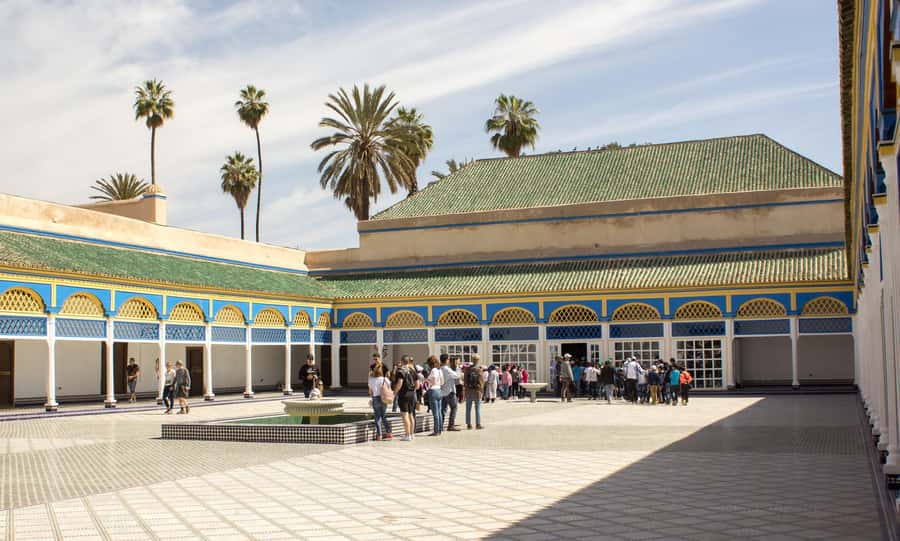
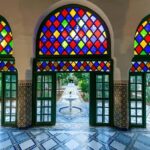
- Bahia Palace’s design details, including cedarwood ceilings, mosaic floors, and carved stucco across about 150 rooms.
- Saadian Tombs’ material craft, where marble epitaphs and hand-cut zellij tiles do the talking.
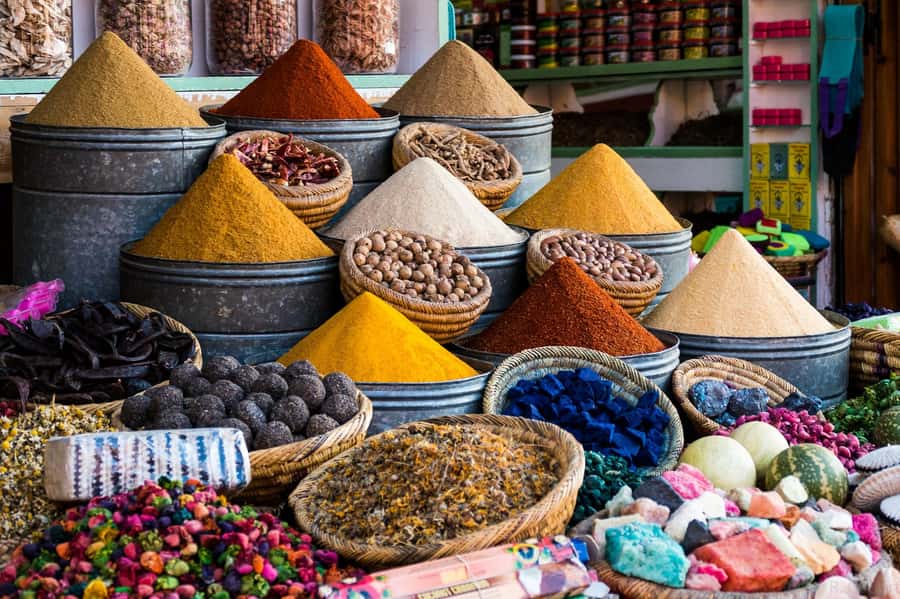
- Real souk structure, with stops that make sense—Souk Semmarine area to Souk El Attarine style stalls.
- Medina navigation built in, including time in UNESCO-listed lanes and around Rahba Kedima.
- Guides who set a pace, with room for photos and browsing rather than nonstop talking.
A 4-hour loop that covers the big three: palace, tombs, and Medina
This tour is designed like a guided route through Marrakech’s most important “layers.” You’ll start at the city’s iconic public square, then shift into two monument zones that explain how rulers displayed power—palace gardens and royal burial spaces—before finishing in the Medina, where everyday life keeps the city alive.
What makes this format valuable is that it’s not just sightseeing. You’re learning the why behind the look: zellij tile patterns in the tombs, cedarwood and courtyard light in Bahia Palace, and the way markets connect neighborhoods and craftspeople.
You can also read our reviews of more tours and experiences in Marrakesh.

Djemaa el-Fna: your orientation start in the middle of it all
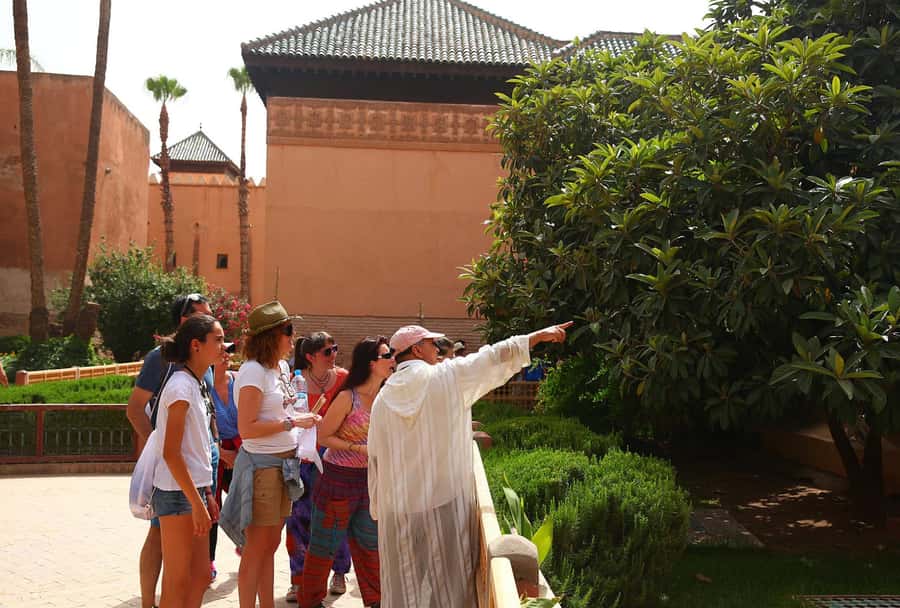
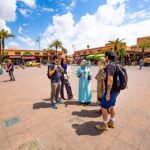
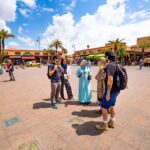
The first stop is Djemaa el-Fna, the place you’ll hear about even before you arrive. By day, expect the classic scene—street performers, snake charmers, storytellers, and fresh juice stalls—and the kind of crowd motion that makes first-time visitors feel slightly overwhelmed.
Here’s what I like about starting there: you get your bearings fast. A guided photo stop plus a short walk helps you understand where the flow of people goes, so later in the Medina you’re not trying to “wing it” from memory.
Practical tip: wear comfortable shoes and bring water. Even a 15-minute square stop can feel longer once you’re scanning for the next turn.
Saadian Tombs: why the quiet feels powerful
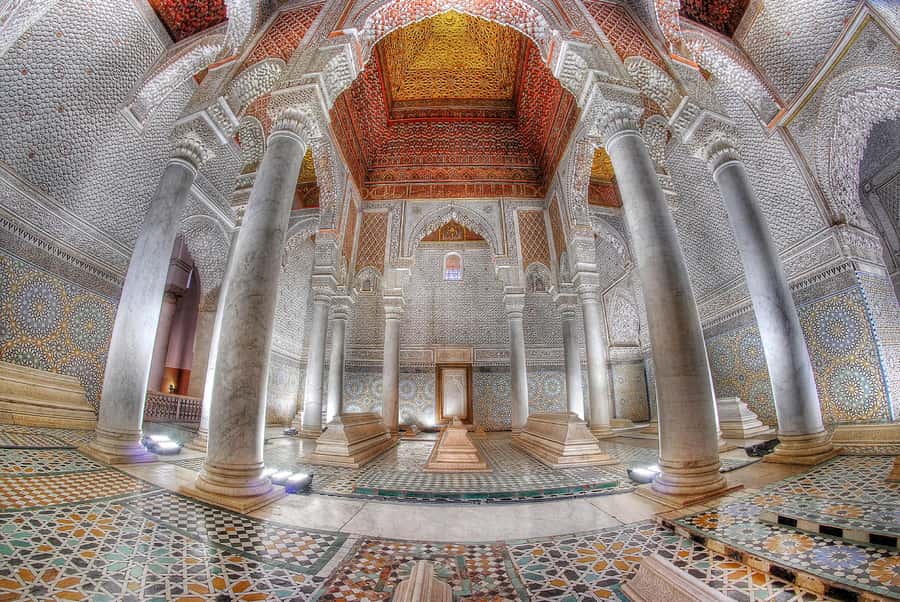
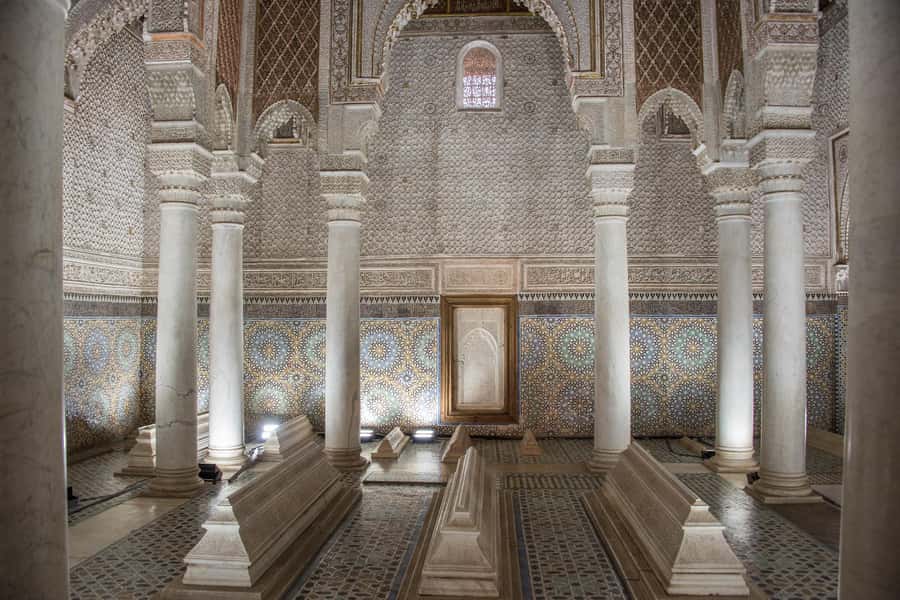
Next you head to the Saadian Tombs, the peaceful resting place of the Saadian dynasty. What sets this stop apart is the attention to craft. You’re looking at marble epitaphs, ornate stucco work, and hand-cut zellij tiles—small details that turn the tomb complex into more than a quick photo stop.
You’ll get a guided explanation inside, plus time to wander at your own pace. That balance matters here: the tombs feel best when you can slow down and look at the surfaces without a voice in your ear the whole time.
One consideration: queues can happen, especially at the Saadian Tombs during peak season. The guide’s help with the initial process reduces waiting, but you should still plan for some time in line.
Kasbah area and Bab Agnaou: the city’s stone welcome
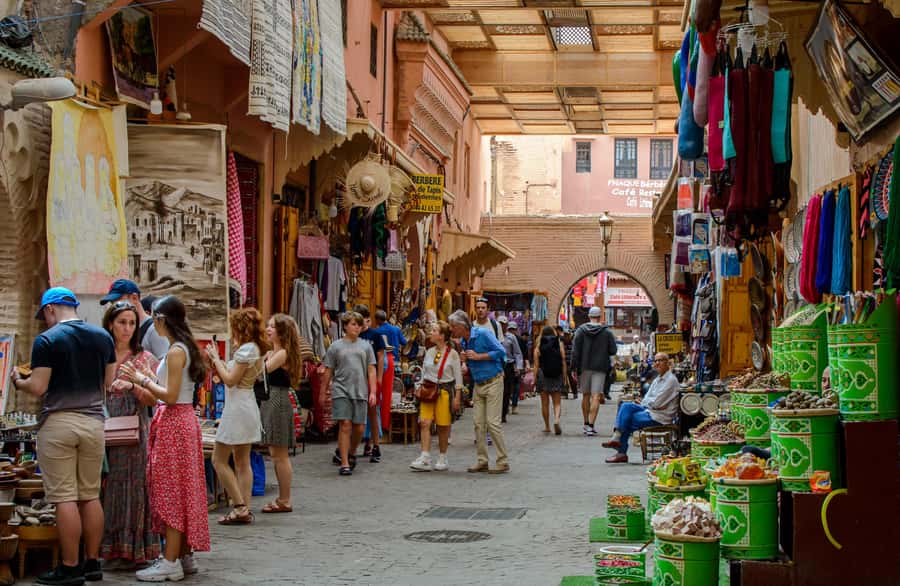
From the Kasbah area, you’ll pause for photos around the fortified wall landscape and then reach Bab Agnaou, the grand 12th-century gate known for intricate carvings. This is one of those Marrakech stops where you’ll recognize it in pictures later, but it’s more meaningful in person because you can sense how gates shaped movement—who entered, who controlled access, and how the royal quarter was protected.
This part is shorter in the overall schedule, but it works as a bridge between “royal” Marrakech and “everyday” Marrakech. It’s a reminder that the city is built in layers, not sections.
Bahia Palace: the 19th-century masterpiece that rewards slow looking
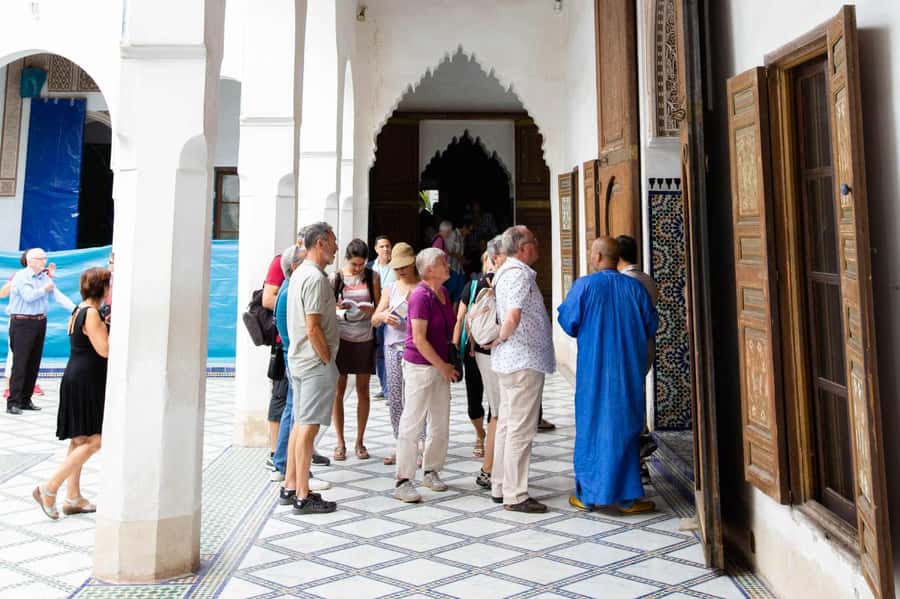
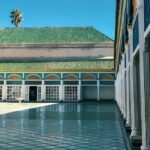
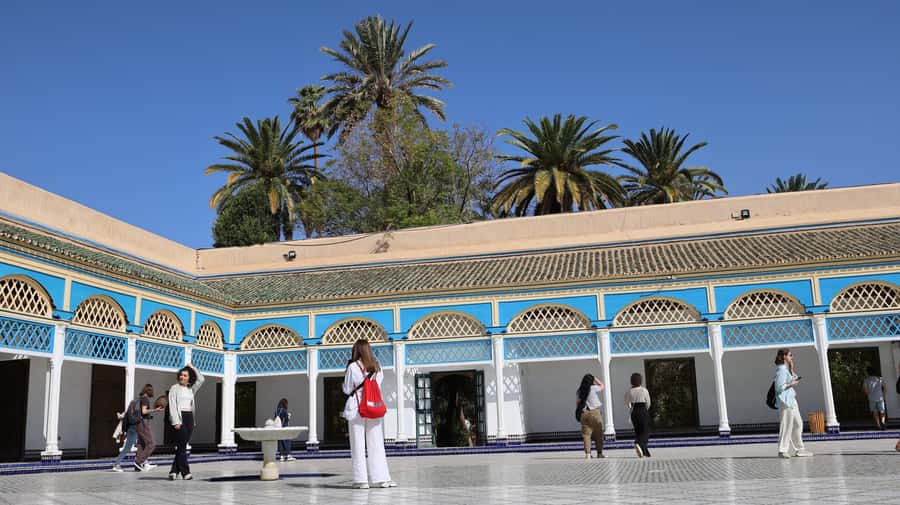
Bahia Palace is the emotional peak for many visitors, and for good reason. Built in the 19th century by Grand Vizier Si Moussa, it’s famous for its gardens, sunlit courtyards, and an astonishing scale—over 150 rooms.
The standout details are the materials and finishing:
- cedarwood ceilings that draw the eye overhead
- mosaic floors that catch light as you move
- finely carved stucco that turns walls into decoration
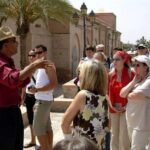
You’ll go inside with your guide for the guided portion, and you’ll also get free time to explore and take photos. I like that you’re not forced to sprint through corridors; you can linger long enough to notice how different rooms feel based on light and layout.
A heads-up: some sections may be under renovation, so a few areas might look different depending on current conditions.

Koutoubia Mosque, Mellah, and Bab Agnou Gate: seeing faith and community from street level
One of the tour’s strengths is that it doesn’t only chase palaces. You also get viewpoint context around the Koutoubia Mosque, plus time that connects you to the historic Mellah (the old Jewish quarter) and the nearby market life.
Koutoubia is viewed from the outside only. Entry is restricted to Muslims during prayer times, so don’t build your day around expecting to walk inside. Instead, focus on what the outside view can teach you: scale, location, and how a major religious landmark anchors the city.
The Mellah and related old-quarter stops also matter because Marrakech isn’t only about rulers and monuments. These neighborhood layers help you understand how different communities shaped the city’s history—and how that history still shows up in architecture and street layout.
Medina souks and Rahba Kedima: craft you can actually see
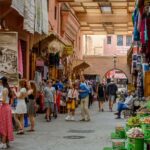
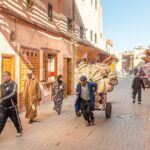
After the monument stops, the tour moves into the UNESCO-listed Medina. This is where you feel Marrakech as a living place: narrow alleys, carved wooden doors, and a maze of connections that can be fun to explore—until you get lost.
Your guide helps you avoid that trap by moving you through key souk areas, including the Souk Semmarine to Souk El Attarine style corridor and the shopping zone around Rahba Kedima. You’ll also get guided time in the Medina so you’re not just wandering for 30 minutes and hoping for the best.
What I find most valuable here is the craft element. You may have the chance to meet artisans in their workshops and watch how goods are made—pottery, woodcraft, and metalwork—using techniques that have been passed down for generations.
Shopping reality check: take your time, compare, and ask questions. If a deal sounds too perfect, treat it like a prompt to slow down and verify.
How much free time you get (and how to use it well)
Throughout the tour, you get short free-time pockets inside visited sites. That’s not extra fluff; it’s the part that turns the day from sightseeing into memory-making.
Here’s how to use it smartly:
- At Bahia Palace and the tombs, use free time for photos and close-ups of tile and carving.
- In the souks, use free time to step back, watch how stalls work, then ask your guide about what you’re seeing.
- In busy lanes, use the free minutes to regroup—Marrakech crowd flow changes fast.
If you’re on your first trip, this rhythm helps you “get your bearings” while still learning what you’re looking at.
Tickets, timing, and what changes during Ramadan
Two major monuments require paid entry, and the tour price does not include them. You’ll need to pay in cash on-site:
- Bahia Palace: 100 MAD per adult
- Saadian Tombs: 100 MAD per adult
So, budget for those tickets on top of the tour price. Also note that this tour doesn’t include transportation or food and drinks, so plan to handle your own breaks.
Timing can shift during Ramadan. Monuments close earlier than usual, and the tour’s starting times adjust to match:
- morning tours start at 09:30 instead of 10:00
- afternoon tours start at 13:00 instead of 14:00
If your trip overlaps Ramadan, it’s worth choosing the start time that gives you enough daylight inside the monuments.
Price and logistics: what $18 is really buying you
At about $18 per person for a 4-hour guided circuit, the value comes from what’s included—not the sightseeing list. You’re paying for:
- a licensed local guide (English or French)
- private or small-group format depending on your option
- skip-the-first-ticket-line support
- free time at monuments so you’re not trapped in a nonstop lecture
- a WhatsApp reminder the day before
The biggest cost add-on is the paid monument entry (around 200 MAD total for Bahia Palace and the Saadian Tombs per adult), plus cash for anything you buy in the Medina.
Also, you should plan to bring cash for tickets and for market purchases. Cards can be accepted in some places, but you don’t want to be stuck during a paid-entry moment.
Transportation is not included. If you’re outside the Medina, you’ll be responsible for getting there (unless you choose a private option with pickup details).
Who this tour fits best, and who should skip it
This is a walking tour, and that’s not the same as saying it’s “light.” It’s built for people who can comfortably navigate uneven stone, crowds, and Medina alleys for a few hours.
It’s also not suitable for people with mobility impairments. If that’s your situation, look for an alternative with less walking or different access.
This tour is perfect for you if:
- you’re in Marrakech for the first time and want a guided overview
- you care about architecture details like zellij, cedarwood, and stucco
- you want to shop with a plan, not wander in circles
- you like meeting artisans and understanding crafts in context
If you hate crowds or prefer major sites only, consider a slower day with fewer locations. But if you want the city’s core in one go, this is a strong use of time.
Should you book this Marrakech guided tour?
Book it if you want a structured first-day route that links Bahia Palace, Saadian Tombs, and the Medina into one story—plus you like having a guide who can point out details while still letting you roam a bit on your own.
Skip or reconsider if you’re dealing with mobility limits, or if you’re the type who needs long, unbroken time in one place. This tour works because it’s efficient and guided; it’s not designed for a slow, sit-and-stare pace.
If you do book, come ready: comfortable shoes, water, sunglasses, and enough cash for the Bahia Palace and Saadian Tombs tickets.
FAQ
Are the Bahia Palace and Saadian Tombs entry tickets included?
No. Entry tickets are not included in the tour price. Bahia Palace costs 100 MAD per adult, and the Saadian Tombs cost 100 MAD per adult, paid in cash on-site.
Where do I meet the guide?
You meet your guide in front of Cafe de France in the Djemaa El Fna square. The provider confirms arrangements shortly before the tour.
How long is the tour?
The duration is 4 hours.
Is hotel pickup included?
Pickup depends on the option you select. If you choose the private option and you are staying inside the Medina, your guide can meet you at your riad reception. Otherwise, you meet at Cafe de France.
Can I enter the Koutoubia Mosque during the tour?
Koutoubia Mosque is viewed from the outside only. Entry is restricted to Muslims during prayer times.
What language is the tour guide?
The live tour guide speaks French and English.
What should I bring for the tour?
Bring comfortable shoes, sunglasses, water, and cash.
FAQ
What changes during Ramadan?
During Ramadan, monuments close earlier. Morning tours start at 09:30 instead of 10:00, and afternoon tours start at 13:00 instead of 14:00 to ensure you have enough time inside.