REVIEW · MARRAKESH
Marrakech: Palace, Museum, Madrasa & Medina Highlights Tour
Book on GetYourGuide →Operated by Moments in Morocco - Tour Agency · Bookable on GetYourGuide
Marrakech can overwhelm fast. This tour pulls you straight to the Bahia Palace and Ben Youssef Madrasa, then feeds you medina-market context so you know what you’re looking at. It’s a tight 4-hour loop that keeps the sights moving without feeling like a sprint.
I especially like the skip-the-line benefit at major monuments, which saves time for actually seeing the details. I also like that your guide stays with you inside each site, then gives you free time to wander, take photos, and soak it in at your own pace.
One consideration: the medina lanes and souks mean more walking than you might expect, and some souk stops can feel like set shopping time (like a tea stop). If you want pure wandering the whole way, go in with that in mind.
In This Review
- Key tour takeaways before you go
- Meeting at Café de France: your launchpad in Djemaa el-Fna
- Jemaa el-Fna photo stop: see the show before the museums
- Bahia Palace: 160 rooms, courtyards, and the feeling of scale
- Souk Semmarine to Souk El Attarine: shopping lanes with guardrails
- Ben Youssef Madrasa: tilework that tells a story
- Dar El Bacha Museum: palace luxury in museum form
- Rahba Kedima and the walk back to Jemaa el-Fna
- Tickets, timing, and what the $18 buys you
- Private vs small-group: who this tour fits best
- What to bring so the 4 hours feel easy
- Should you book this Marrakech highlights tour?
- FAQ
- Where do we meet for this tour?
- How long is the tour?
- What is the price and what’s included?
- Are monument entry tickets included in the tour price?
- Do I need transportation to join the tour?
- Is the tour in English?
- Will the guide stay with us inside the monuments?
- What should I wear or bring?
- Is it wheelchair accessible?
- Is there free cancellation?
Key tour takeaways before you go
- Café de France meets Djemaa el-Fna energy so you start in the right place fast
- Bahia Palace’s 160-room layout makes the architecture easy to picture, not just photograph
- Ben Youssef Medersa’s tile-and-cedar schooling connects design to daily learning life
- Souk Semmarine and El Attarine cover clothing/leather plus spices, perfumes, and beauty products
- Dar El Bacha Museum is a strong add-on when it’s open, but it can be closed Monday
Meeting at Café de France: your launchpad in Djemaa el-Fna
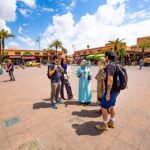
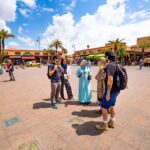
You meet at Café de France right by Jemaa el-Fna. That’s smart. Instead of searching side streets with a crowd around you, you start at a landmark that’s hard to miss and easy for your guide to find you.
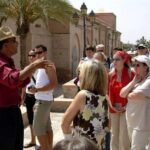
From there, you’ll get guided orientation through the medina while the tour keeps moving. Several guides (Yassine, Mouhssine, Hassan, Achraf, and others named by past guests) seem to focus on making the sights understandable, not just listing facts. Expect a mix of explanation and practical direction so you can handle the area on your own afterward.
You can also read our reviews of more tours and experiences in Marrakesh.

Jemaa el-Fna photo stop: see the show before the museums
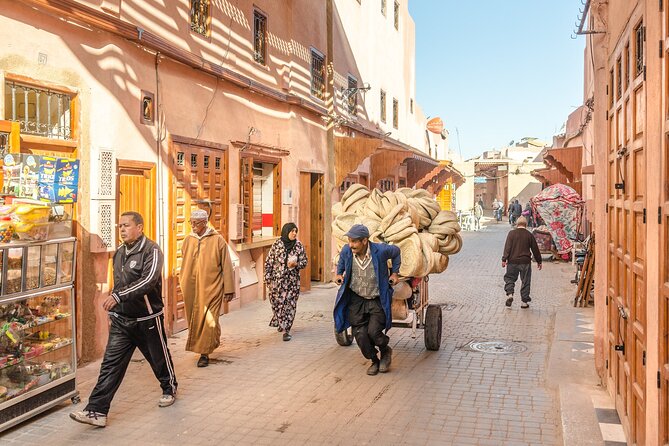
Your first stop is a quick look at Jemaa el-Fna. It’s where Marrakech shows you its daily rhythm: performers, storytellers, musicians, and vendors all sharing the same space. Even if you’ve seen photos, being there in person makes the place feel real and immediate.
This is also where your guide helps you “read” the scene. You’ll learn what you’re seeing and why it matters culturally, not just what to photograph. Plus, it’s a great moment to calibrate your expectations for the walk ahead—shade, crowds, and sound are part of the experience.
Bahia Palace: 160 rooms, courtyards, and the feeling of scale
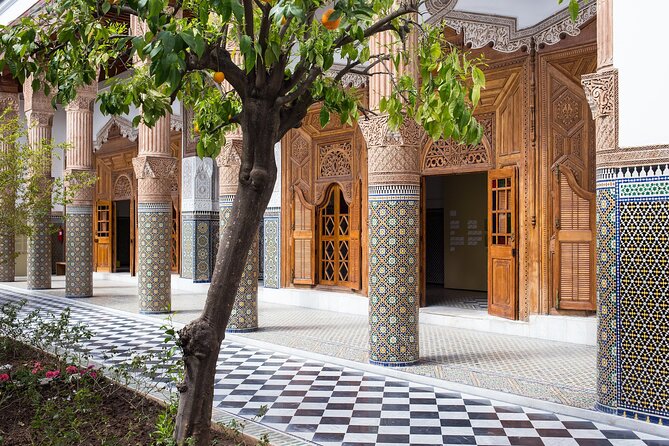
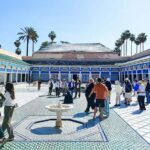
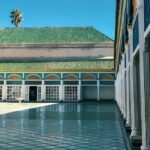
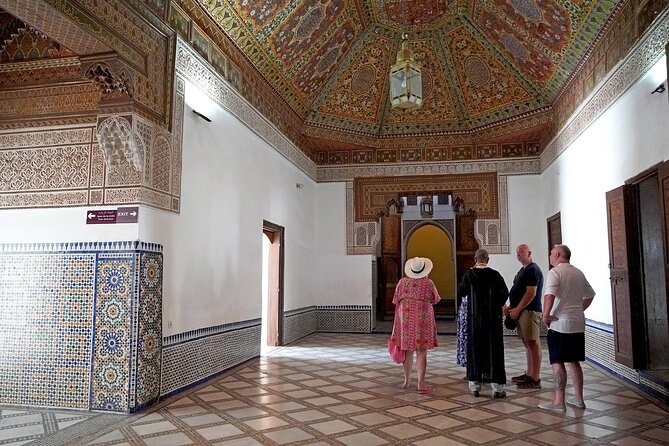
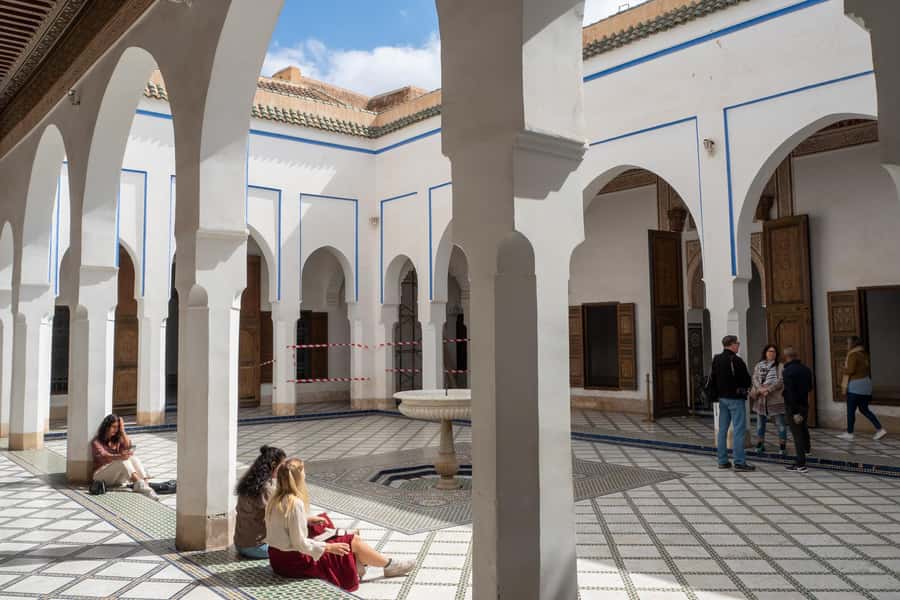
Next comes El Bahia Palace, a 19th-century palace built around quiet courtyards. The big idea is simple: the rooms work like a layered map, and the courtyards act like breathing spaces that organize the whole complex.
You’ll have guided time through the main areas, with the tour describing how the palace’s stucco panels, zellij tilework, painted ceilings, and marble finishes fit together. One standout detail is the scale: about 160 intricately designed rooms arranged around courtyards. With a guide, it’s not just “a palace”—it becomes something you can actually follow.
Then there’s the garden, roughly eight hectares. Even a short stroll through the grounds helps your brain reset after busy streets. You’ll get a mix of architecture and atmosphere, and the calm courtyards make the photos look better because you’re not rushing.
A practical tip: wear shoes you can walk in for hours. The palace is beautiful, but you’ll still be moving from stop to stop and standing to look closely.
Souk Semmarine to Souk El Attarine: shopping lanes with guardrails
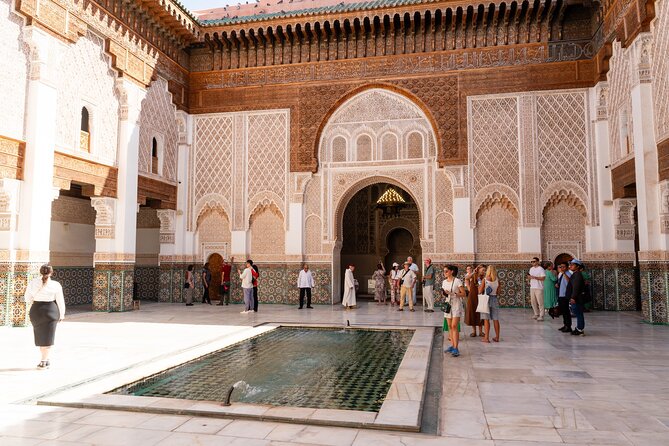
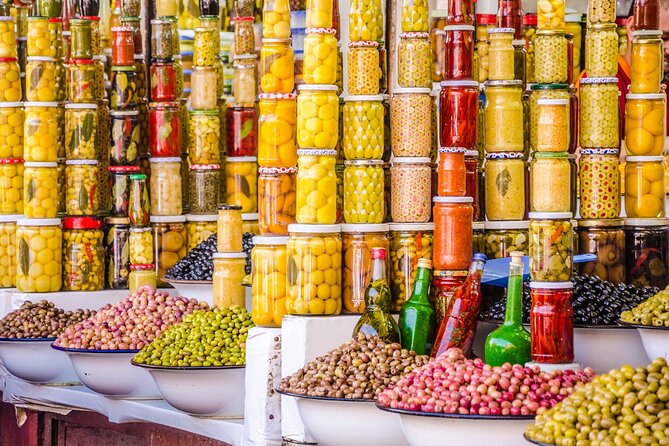
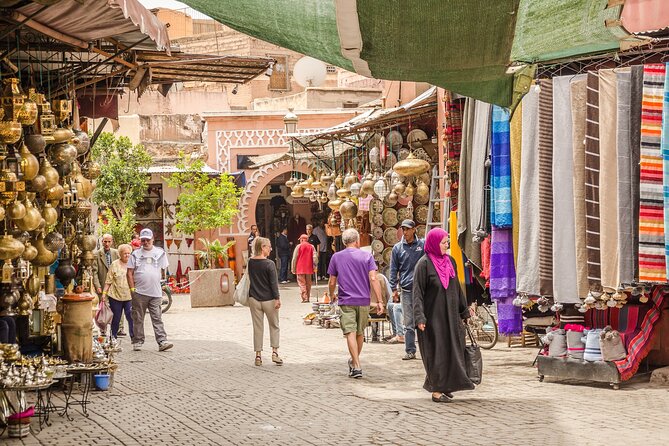
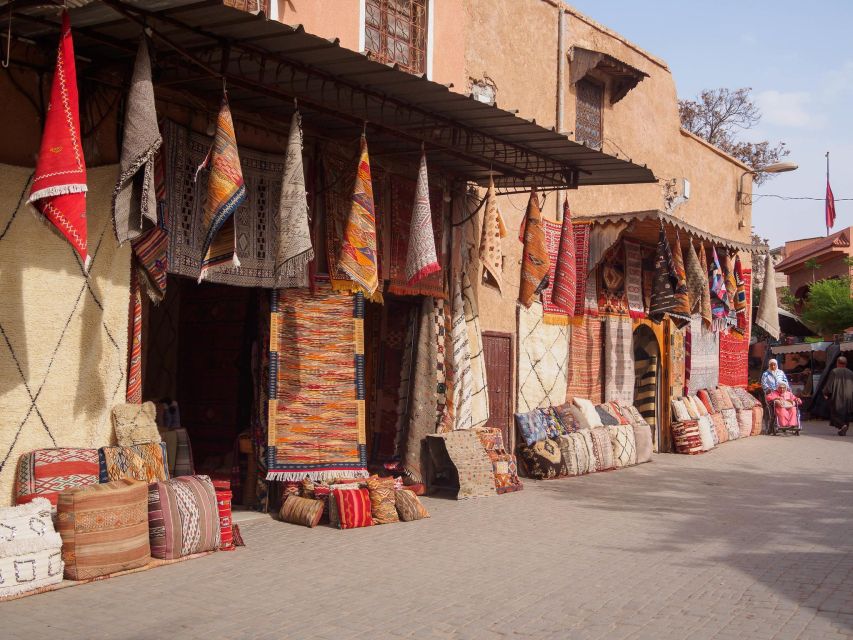
After Bahia, you head into the souks, including Souk Semmarine and Souk El Attarine. This is where your guide’s role shifts from historian to translator. You’re not just passing shops; you’re learning what each section is known for—traditional clothing and leather goods in one stretch, and spices, perfumes, and beauty products in another.
Souk time is typically around 15 minutes at Semmarine, with a guided walk and shopping window. You’ll also see how artisans work and where crafts show up in everyday life. Some tours include quick workshop-style glimpses of pottery, metalwork, and wooden crafts in the surrounding area, which helps you spot what’s real versus what’s mass-produced.
Now the honest bit: some guests feel that parts of the souk route include planned stops that are meant to lead to purchases. One example people bring up is a tea-shop-style stop that can feel slightly predetermined. If you’re hoping for free-form strolling and zero shopping pressure, you’ll want to set your own boundary early and use the time for browsing only—or ask your guide to keep you moving.
Ben Youssef Madrasa: tilework that tells a story
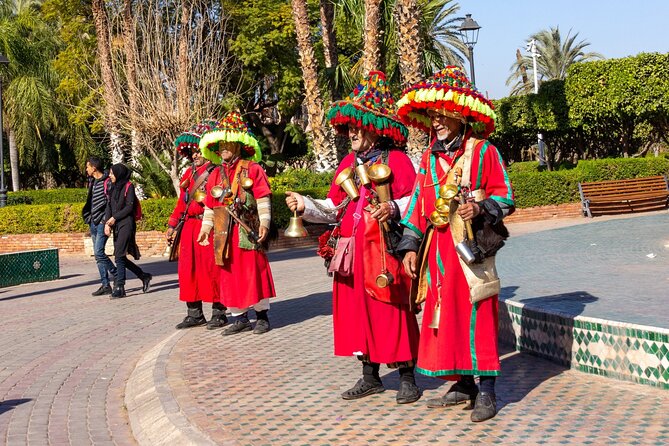
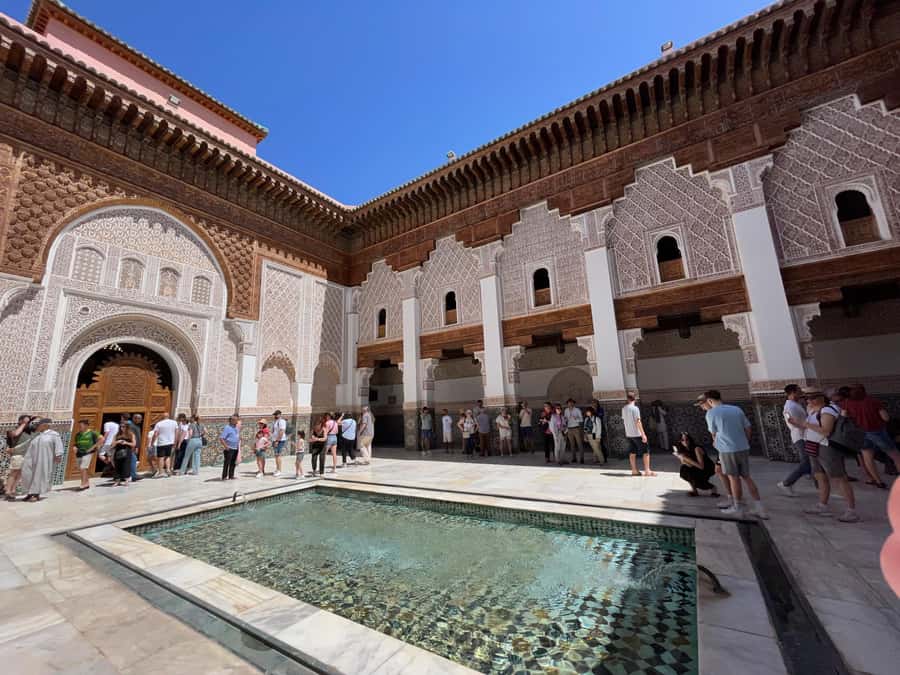
Ben Youssef Madrasa is usually the star for people who care about Islamic architecture. This Quranic school dates to the 14th century and was later rebuilt in the 1560s. It once housed around 800 students, which is the kind of detail that makes the building feel less like a museum and more like a living education center.
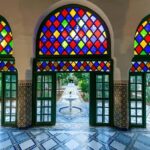
Inside, you’re looking at zellij tiling, carved cedar wood, and stucco plasterwork. These aren’t just decorative. The design creates a rhythm for study and reflection, and your guide helps connect the geometry and materials to how people experienced the space.
You’ll get about 40 minutes here, with guided commentary plus time to explore on your own. That free time matters at Ben Youssef, because your eye will keep catching new patterns. If you rush through, you miss the point: the beauty is in the layout and repetition as much as it is in any single wall.
Dar El Bacha Museum: palace luxury in museum form
If there’s time, you’ll add Dar El Bacha Museum. This palace-turned-museum is where Moroccan art shows up in the kind of rooms that once belonged to the city’s elite. You’ll walk through grand spaces and see collections that can include woodwork, textiles, and ceramics, depending on what’s on display during your visit.
Your guided visit is about 30 minutes. That’s enough time to notice the opulent details without turning it into a museum marathon.
One scheduling warning worth taking seriously: Dar El Bacha is closed on Monday (so don’t plan it as your only museum day if your trip lands on a Monday). If it’s closed, you can still enjoy the rest of the tour, but it’s good to know so you can adjust expectations.
Rahba Kedima and the walk back to Jemaa el-Fna
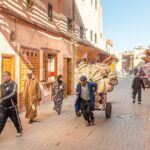
Later you’ll pass Rahba Kedima, another medina area where you’ll get a photo stop and short guided context, plus time to wander. This part of the route is helpful because it adds texture. After palace walls and madrasa architecture, Rahba’s street-level feel reminds you that Marrakech is not only monuments—it’s markets, trades, and daily life all layered together.
Then you end back around Jemaa el-Fna for a final stretch and a last guided wrap-up. The return loop matters. You go from first impressions to a clearer mental map, so leaving feels less like you’re escaping chaos and more like you’re stepping back into a place you understand.
Tickets, timing, and what the $18 buys you
The tour price is $18 per person for about 4 hours of guided walking. That price is value for what you get mainly because it includes skip-the-line access for key monuments and a licensed local guide who goes inside with you.
Entry tickets are not included. Specifically:
- Bahia Palace: 100 MAD per adult
- Ben Youssef Madrasa: 50 MAD per adult
Tickets for other sites aren’t priced in the info you provided, but the rule is the same: monument entry fees are separate from the tour price. So budget for tickets plus any personal shopping.
Is it worth it? For me, yes—because in this part of Marrakech the hard part isn’t finding places. It’s surviving the time drain of lines and the confusion of lanes. With a guide, you lose less energy to logistics and more energy to seeing.
Private vs small-group: who this tour fits best
You can choose private or small-group options. If you pick private, hotel pickup from your riad/hotel inside the Medina is optional. Small-group is often easier for pacing: more access to your guide, less crowd shuffle.
This tour is a great fit if:
- It’s your first day and you need a fast orientation
- You want the big monuments connected by real context
- You like structured time but still want free time inside sites
It’s less ideal if you hate walking in crowds. You’ll be on your feet through medina lanes, and the tour is described as not suitable for people with mobility impairments. The route can still feel manageable to fit travelers who move at a normal pace, but it is still a walking-focused experience.
What to bring so the 4 hours feel easy
Bring:
- Comfortable shoes
- Sunglasses
- Water
I’d also add one practical mindset: expect the heat and the noise to vary. Some guides manage the pace well even in very hot weather, and a good guide will keep the group together and adjust timing when needed, but your comfort still depends on your basics.
Should you book this Marrakech highlights tour?
If you want a strong first taste of Marrakech—palaces, Islamic education architecture, and the medina’s trade streets—this tour is a solid choice. The combination of guided inside access and skip-the-line time is exactly what helps you feel confident on your next day’s DIY wandering.
Skip it only if you’re mainly looking for deep museum time, or if you dislike shopping detours completely. In that case, you might prefer separate ticketing for the monuments and build your own route, especially if you already know the medina well.
Overall, the high rating (4.7) lines up with the biggest reasons to book: efficient sightseeing, guides who explain more than just dates, and enough flexibility to explore at your own pace inside the sites.
FAQ
Where do we meet for this tour?
You meet your guide in front of Café de France in Jemaa el-Fna.
How long is the tour?
The tour duration is 4 hours.
What is the price and what’s included?
The price is $18 per person. It includes a licensed local guide, a private or small-group walking tour, and skip-the-line access to monuments. It also includes free time to explore each monument at your own pace.
Are monument entry tickets included in the tour price?
No. Entry tickets are not included. Bahia Palace is listed at 100 MAD per adult, and Madrasa Ben Youssef is 50 MAD per adult. Dar El Bacha Museum is also not included as an entry ticket (since monument tickets aren’t included).
Do I need transportation to join the tour?
Transportation is not included. The meeting point is Café de France in Jemaa el-Fna. Pickup is described as optional only for the private option from your riad/hotel within the Medina.
Is the tour in English?
The live tour guide is offered in English and French.
Will the guide stay with us inside the monuments?
Yes. Your guide goes inside each monument with you to give the guided portion, and then you get free time to explore and take photos.
What should I wear or bring?
Bring comfortable shoes, sunglasses, and water.
Is it wheelchair accessible?
The information says wheelchair accessible, but it also states it is not suitable for people with mobility impairments. If you have mobility concerns, you should confirm details with the provider before booking.
Is there free cancellation?
Yes. Free cancellation is available up to 24 hours in advance for a full refund.