REVIEW · OSAKA
Samurai Armor & Sword experience with phot near Osaka Castle
Book on GetYourGuide →Operated by 株式会社武士の誉れ · Bookable on GetYourGuide
If you want something more hands-on than temple photos, this one works. You’ll step into Samurai Honor (Bushi no Homare) and learn the why behind the sword—armor, bowing, drills, and even a real cutting attempt. I like that the session is built around safe instruction from an English-speaking professional team, not just costume time. I also love that you get a clear sense of samurai etiquette before you swing. One drawback to factor in: like many popular timed activities, schedule changes and cancellations due to overbooking can happen, so keep a little flexibility.
This is also a very practical pick for an Osaka trip. It runs 90 minutes, it’s close to Osaka Castle sightseeing routes, and you end with a commemorative armor photo. One more consideration: it’s not for little kids or very elderly guests (it lists limits), so check fit first.
In This Review
- Key things I’d target before you book
- Why This Samurai Armor Experience Fits Next To Osaka Castle
- Bus i no Homare Setup: Costumes, Dojo Shrine, and First Bow
- How Samurai Sword Manners Get Taught Before You Swing
- Walking Practice and Iai Basics With a Practice Sword
- From Kata Stances to a Real Cutting Moment
- Trying on Samurai Armor, Helmet, and the Photo Moment
- Price, Timing, and Value for 90 Minutes
- Who This Fits Best (And Who Might Want To Skip It)
- Should You Book Samurai Honor for Your Osaka Stop?
- FAQ
- Where is the meeting point?
- How long is the experience?
- What should I bring?
- What language is offered?
- Is this a group experience or private?
- What do I get to do during the session?
- Who is it not suitable for?
Key things I’d target before you book
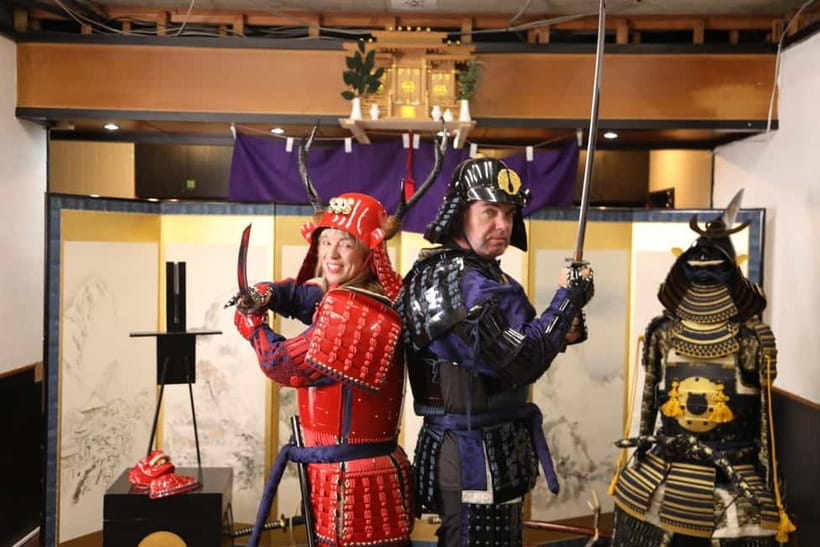
- Samurai armor indoors: you actually wear it, helmet and all, not just look at it
- Iai basics first: bowing, stance, draw (battou), symbolic blade handling, and resheathing (nottou)
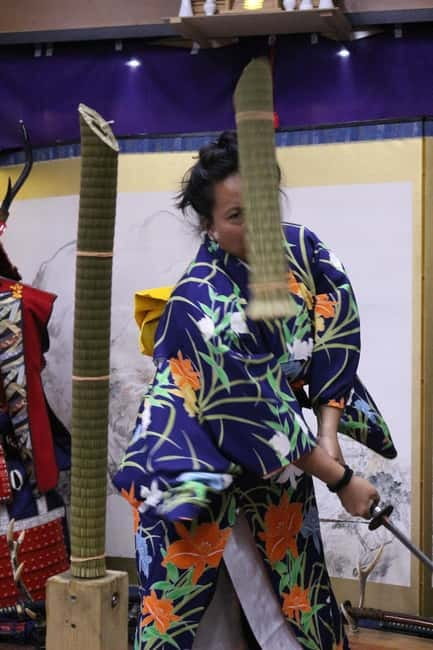
- Sword cutting with a real Japanese sword: guided toward a controlled cutting moment
- Bushido manners: the session frames sword use as responsibility, not just technique
- 90-minute private format: better pace, less waiting around
- Photo shooting included: they send your photo data to your email after
Why This Samurai Armor Experience Fits Next To Osaka Castle
Osaka Castle is the obvious daytime anchor, but it can feel like “see and move on.” This experience gives you a different kind of souvenir: the feeling of being part of the story. It’s designed for one thing—samurai training and presence—and it places you in the armor and sword culture that people usually only read about.
The big win is location-area convenience. You’re in Osaka (Honshu), at Bushi no Homare / Samurai Honor, with the meeting point marked by a wooden sign that reads Honor of the Samurai. If you’re already planning Osaka Castle, this is one of the only nearby setups where you can do the full “armor + sword practice” experience rather than a quick costume rental.
Also, the time commitment is friendly. Ninety minutes is long enough to feel like you learned something real, but short enough that it won’t steal your whole day from Osaka’s food and neighborhoods.
You can also read our reviews of more tours and experiences in Osaka.



Bus i no Homare Setup: Costumes, Dojo Shrine, and First Bow
The experience starts before any sword ever comes out. You begin with preparation and changing into a samurai outfit—described as a dogi and hakama—so your body moves in the right way for the training. This matters more than it sounds. Clothing changes how you stand, how you learn the stance, and how safe and stable your movements are.
Then you move into the training space. The session begins with a bow, and it’s framed around a dojo shrine. You’re not just copying a ritual; you’re learning the structure of how training is supposed to feel: start with respect, end with respect, keep your focus.
If you’re wondering what tone this sets, that’s it. This isn’t “hands-on for the thrill.” It’s “hands-on with responsibility,” and the bow is the first signal that your instructor is managing both technique and mindset.
Practical note: they ask you to arrive early. You should plan to get there 30 minutes before your reserved time for instructions and changing.
How Samurai Sword Manners Get Taught Before You Swing
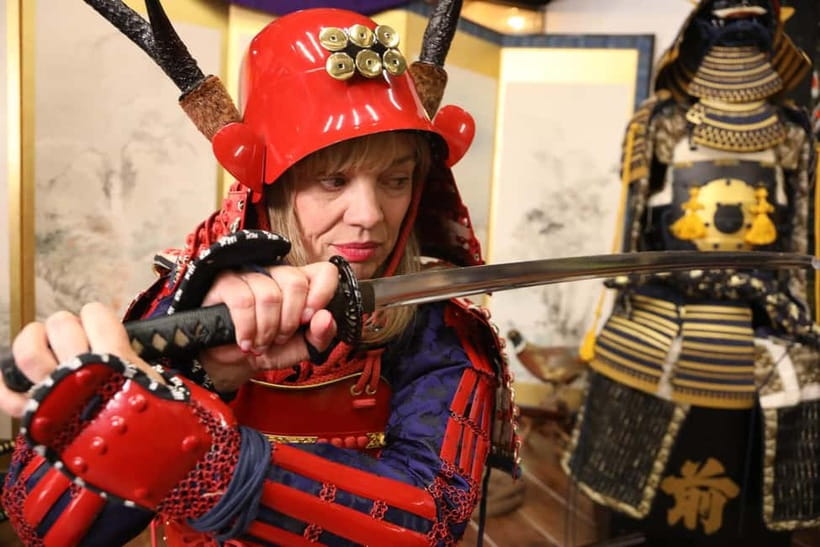
Before you get drawn into drills, you’ll learn the reasoning behind samurai sword culture as they present it in the class. The instruction includes a lesson on how boys learned sword use early with wooden swords, and how at around age 15 they could wear a serious blade—because the sword isn’t just a tool, it’s tied to self-respect and responsibility.
They also explain that samurai lived with swords close by. Even in peaceful times, they kept the sword ready and nearby. The session stresses the idea that a sword is carried in a way that keeps it ready to draw without causing harm or careless contact.
You’ll also practice some movement habits that tie directly to sword safety. A key point is that a samurai walks on the left side of the road so the sword sheaths don’t rub against each other. And the session connects that to the concept of keeping the koiguchi (the sword’s mouth/seating point) cut and ready for immediate draw.
This is one of the most useful parts for you as a visitor: it teaches you to see sword technique as a system—movement, spacing, and readiness—rather than just arm swings.
Walking Practice and Iai Basics With a Practice Sword
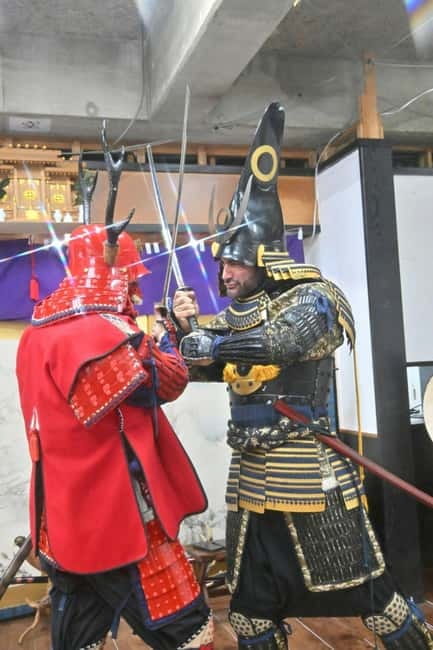
After you’re outfitted and briefed, the training shifts into fundamentals. You’ll practice the basics of sword handling—including how the sword is positioned at the waist, and the directional detail that the blade side should face up when inserting it into the belt.
Then comes iai training, which is the set of motions focused on drawing and responding from a standing position. The program uses a practice iai sword (not the real blade moment right away), so you can build the sequence safely and repeatedly.
The drill sequence they cover is clearly laid out:
- Battou: pulling the sword from the scabbard to cut
- Swinging from a stance: controlling the motion and letting the sword’s weight do the work
- Chiburui: a symbolic motion of removing blood from the blade after a cut
- Nottou: returning the sword to its sheath after the symbolic action
You’ll learn how to swing with correct weight transfer rather than just using arm strength. The class even points to what you should hear when the technique clicks: a hi-nari sound from the sword.
If you’ve never done martial arts drills, here’s the best way to think about it: you’re training timing and form more than power. That’s what lets the cutting moment later feel controlled instead of chaotic.
From Kata Stances to a Real Cutting Moment
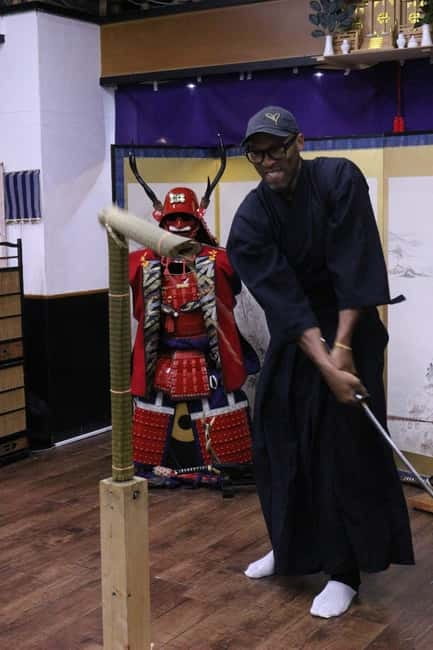
Once your stance and draw sequence are in place, you move toward sword techniques taught directly by the master instructor—covering basic kata and stances, plus sword swings from correct positioning.
The session then includes the moment many people book for: trying cutting with a real Japanese samurai sword. The instructions describe this as a chance to experience the world’s best cutting performance, while still working within the training structure you’ve already built (bowing, posture, draw mechanics).
One thing I appreciate here is how they frame cutting as technique and discipline. The class doesn’t treat it like a stunt. It’s tied to the Bushido idea of responsibility and to earlier lessons about sword manners and careful movement.
What to expect during the cutting attempt:
- You’ll be guided into the correct stance and draw timing
- You’ll focus on controlled mechanics—especially how the swing uses the sword’s weight
- You’ll likely repeat or adjust based on the instructor’s cues
- You should end up with a stronger sense of what makes the blade “work” beyond brute force
That’s the “wow” factor without being reckless.





Trying on Samurai Armor, Helmet, and the Photo Moment
Before you leave, you get the second big highlight: putting on samurai armor and helmet. The program notes that wearing armor was part of how samurai showed dignity and beauty before war, and the experience leans into that presence.
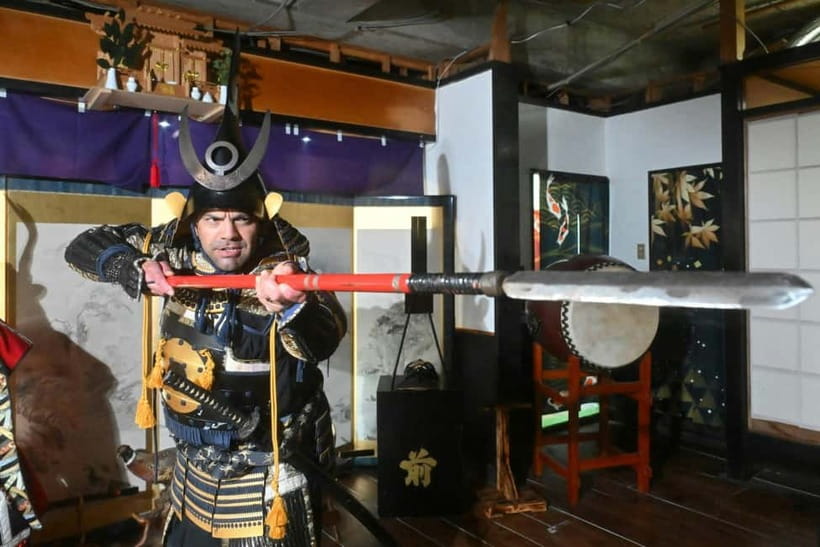
This is also where the training turns into a memory. You’ll get the armor look—sword at the waist, and the highlight mentions a naginata (spear) ready in the setting. Even if you don’t handle it in a drill, seeing that whole kit helps you understand how many pieces go into the “samurai-ready” look.
Then there’s the photo moment. They take a photo with the armor and include it as part of the package. Your photo data is sent to your designated email address after.
A small practical tip: you’ll want to wear comfortable shoes for changing and moving around, but keep it simple. The only item you’re specifically told to bring is a T-shirt, so plan to get through the clothing transition quickly and calmly.
Price, Timing, and Value for 90 Minutes
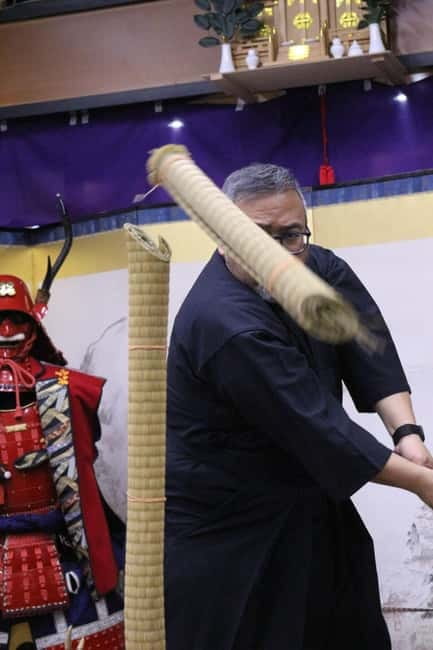
At $106 per person for 90 minutes, this isn’t a cheap “costume and walk around” add-on. But it’s also not priced like a full-day martial arts program. The value comes from what’s included:
- Samurai clothing (dogi and hakama)
- Armor wear indoors (helmet included)
- English-speaking staff and a certified professional instructor
- Sword instruction (iai basics and techniques, plus real sword cutting)
- Photo shooting, with data sent by email
Also, tax and tips are included, which helps avoid the common “why did my total change?” surprise.
If you’re paying for experiences in Japan, you’re usually buying one of two things: convenience or craftsmanship. This gives you both. The convenience is Osaka Castle proximity. The craftsmanship is hands-on technique with a real sword and structured drills.
The only “watch your step” value issue is timing reliability. There was at least one reported case of cancellation due to overbooking, with the booking needing rescheduling. That doesn’t mean it happens constantly, but it’s a good reminder to keep an extra window in your Osaka schedule.
Who This Fits Best (And Who Might Want To Skip It)
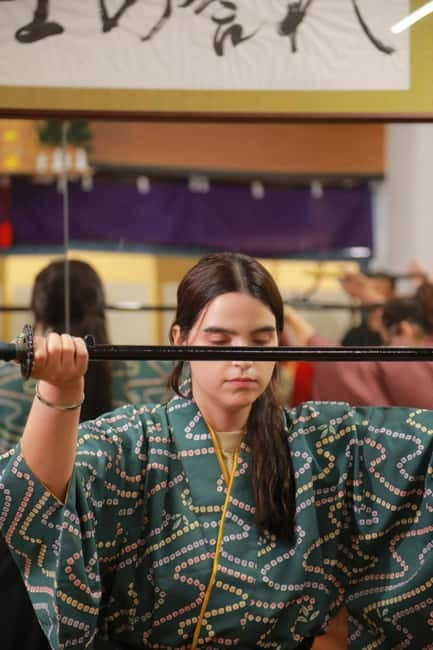
This experience is best for adults and teens who want a real-feeling samurai experience: practice stances, learn the draw sequence, and get a genuine cutting try under instructor guidance.
It also fits well if you’re the type who likes meaning behind the motions—because the class includes Bushido manners and framing about responsibility, not just physical technique.
Not suitable for:
- Children under 10
- People over 80
- People with altitude sickness
- Babies under 1 year
So if you’re traveling with a family, you’ll want to match ages and comfort levels before committing.
On language: English and Japanese are supported. For other languages (Italian, Spanish, French, Chinese, Thai, Indonesian), you have to inquire about staff schedule before reserving, and it may not always be possible.
Should You Book Samurai Honor for Your Osaka Stop?
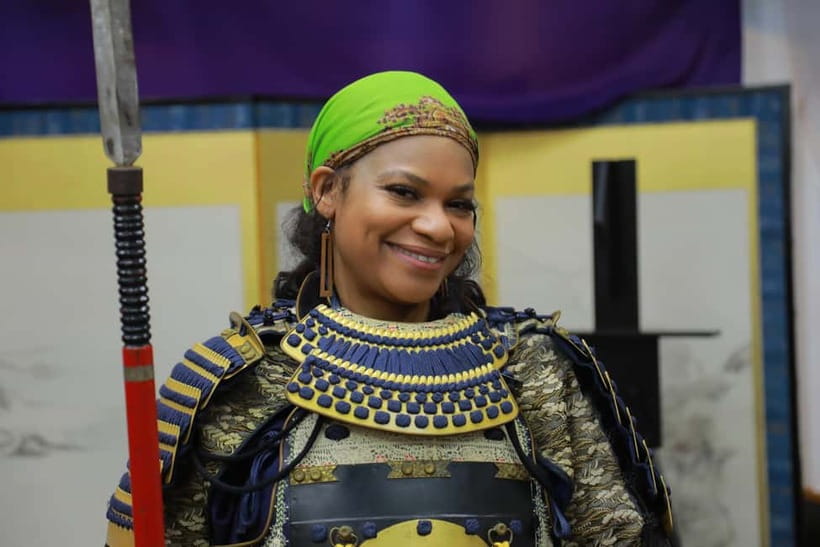
If your Osaka plan includes Osaka Castle and you want one nearby experience that feels like more than a photo, I think this is an easy yes—especially if armor + sword + instruction is what you want, not just a costume.
Book it if:
- You want to wear samurai armor and get a serious photo
- You like the idea of learning iai basics in a structured, respectful way
- You’re excited to try cutting with a real Japanese sword under guidance
- You want a 90-minute private group format that won’t drag
Skip or reconsider if:
- You’re extremely tight on schedule and can’t handle the small risk of rescheduling
- Your group includes someone outside their stated age suitability limits
- You’re looking for a long historical talk instead of hands-on training
Overall, this is one of the most direct ways to connect Osaka’s big landmark day with a focused samurai training experience at Samurai Honor / Bushi no Homare, run by 株式会社武士の誉れ.
FAQ
Where is the meeting point?
You meet at the location marked by a wooden sign that reads Honor of the Samurai. The sign is described as a rack with Samurai Honor activity pamphlets in front of the store, near hanging kimono and hakama.
How long is the experience?
It lasts 90 minutes.
What should I bring?
Bring a T-shirt.
What language is offered?
The default interpreter language is English. Other languages (Italian, Spanish, French, Chinese, Thai, Indonesian) can be requested by inquiring about the staff schedule before booking, though it may not always be available.
Is this a group experience or private?
It’s listed as a private group.
What do I get to do during the session?
You change into samurai clothing, bow to a shrine to begin training, learn samurai and sword manners, practice walking and iai basics with an iai practice sword (including battou, chiburui, and nottou), try techniques with a master, attempt cutting with a real samurai sword, wear samurai armor indoors, and take a photo.
Who is it not suitable for?
It’s not suitable for children under 10, people with altitude sickness, people over 80, and babies under 1 year. Pets and baby strollers are also not allowed (assistance dogs allowed).