REVIEW · OSAKA
Ramen-Making Experience in the Osaka Castle Area with Souvenir
Book on Viator →Operated by Ramen Making Studio · Bookable on Viator
Osaka Castle and ramen in one stop feels right on the nose. I like that you actually make ramen from scratch in a small class, and I love the freedom to choose your soup base (tonkotsu, shoyu, or miso). One thing to consider: at this price point, you’ll want to go in ready to cook and eat on the spot, not just watch.
This is a 2-hour session with English-speaking instruction, designed for all skill levels and families. The studio is an easy walk from Osaka Castle, and you’ll leave with what you made—plus a souvenir—so it’s not just a lesson, it’s a meal you can recreate later.
In This Review
- Key highlights at a glance
- Ramen from scratch near Osaka Castle: why this class feels worth it
- The two-hour ramen workflow: noodles, chashu, then soup base
- Noodle making with ramen wheat flour
- Chashu making: tender chicken with broth flavor
- Soup base: pick your style, then build your bowl
- What happens at the end
- Soup bases you choose: tonkotsu, shoyu, or miso
- Inside the studio: ramen motifs, a 100-year-old door, and culture stops
- How the instructor support works in a small group
- Price and value: what you’re paying for at $85.39
- Getting there: walking from Osaka Castle and easy station access
- Who should book this ramen-making experience
- Should you book this ramen-making class?
- FAQ
- How long is the ramen-making class?
- Where does the class start?
- Is it near Osaka Castle?
- What soup bases can I choose from?
- Do you make the noodles yourself?
- Do I make chashu as part of the class?
- Is the class suitable for beginners or families?
- Is there an English-speaking instructor?
- What group size is it?
- What if I have dietary or allergy concerns?
- Does the class include a souvenir?
- Can I cancel for a full refund?
- Are photos or videos taken during the experience?
Key highlights at a glance

- Small-group cooking (up to 8 people) keeps the class practical, not crowded.
- Choose your broth base: tonkotsu, shoyu, or miso from well-known shop-style recipes.
- Make ramen noodles and chashu rather than following a one-step demo.
- English-speaking, real-time help while you pull noodles and build your bowl.
- Photo-friendly studio details plus a quick intro to Japanese culture.
- Souvenir included at the end so you take something home, not just photos.
Ramen from scratch near Osaka Castle: why this class feels worth it
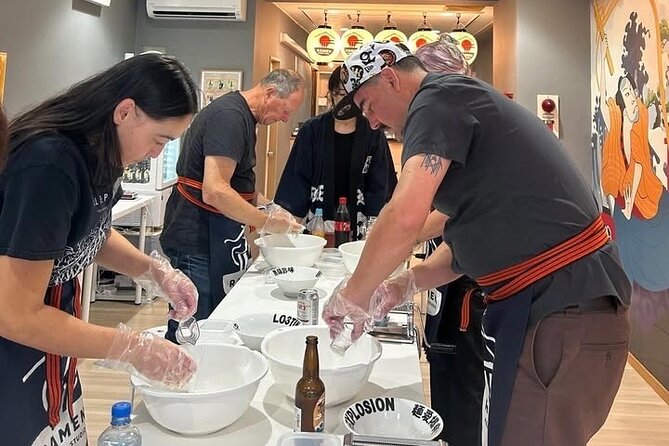
Osaka is famous for food that’s bold and practical, and this cooking class matches that vibe. You’re in a studio in the Osaka Castle area, close enough that you can pair it with sightseeing before or after. The real win is that you’re not just learning what ramen is. You’re doing the work: noodles, chashu, and soup base, all guided step by step.
Two choices shape the whole experience. First, you select your soup base—tonkotsu, shoyu, or miso—so your final bowl tastes like your pick, not a default menu item. Second, the class is set up for hands-on learning. Even if you’ve never made noodles before, the workflow is designed so you can participate without feeling lost.
One detail that matters for your day: it runs in the morning or late afternoon, about 2 hours total. That makes it easier to plan around museum hours, castle time, or food walks in the evening. If your trip schedule is tight, you’re more likely to find a slot that fits.
You can also read our reviews of more tours and experiences in Osaka.


The two-hour ramen workflow: noodles, chashu, then soup base
Here’s how the class plays out, and why each step is valuable for you as a cook.
Noodle making with ramen wheat flour
You’ll start with noodle prep using Japanese wheat flour made for ramen. The goal isn’t just to end up with edible noodles—it’s to experience the texture ramen is known for. Freshly made noodles are chewy, and that chew matters. When you pull and handle your own dough, you start to understand what makes ramen noodles springy instead of soft or gummy.
If you’re the type who forgets cooking instructions at home, this part is a good reset. Your hands learn the feel. Later, when you try again, you’ll remember the rhythm more than the exact measurements.
Chashu making: tender chicken with broth flavor
Next comes chashu. You’ll prepare tender, juicy chashu using chicken simmered in the studio’s original broth. This is where ramen stops being a noodle concept and becomes a full bowl. Chashu adds depth, and you’ll learn how the simmering process contributes to tenderness and flavor.
In a typical restaurant, chashu just shows up. In this class, you see how the broth influences the meat and how careful simmering changes the result. It’s one of the most satisfying parts because the payoff is immediately obvious when you taste.
Soup base: pick your style, then build your bowl
Finally, you make the soup base. You can choose from tonkotsu, shoyu, or miso, each based on recipes inspired by well-known ramen shops. These are not just flavor names. Tonkotsu is creamy and rich in style, shoyu leans savory and soy-forward, and miso adds a deeper, slightly sweet and earthy character.
This step is also where you learn practical cooking thinking: how ingredients and technique create a base you can keep tasting and adjusting. Even if you don’t cook much at home, you walk away with a clearer sense of ramen flavor structure.





What happens at the end
At the end, you’ll receive a souvenir to take home. And you’ll also eat the ramen you made, which is the best way to confirm what your choices produced. This is one of those experiences where the lesson and the meal are the same thing.
Soup bases you choose: tonkotsu, shoyu, or miso
Let’s talk about the choice, because it affects both taste and what you’ll remember most.
- Tonkotsu: if you like rich comfort and that creamy depth, this is the one that rewards you most.
- Shoyu: a solid pick when you prefer clean savory flavor with soy character.
- Miso: choose this for warmth and a deeper, fuller flavor profile.
Each base is made with secret-style recipes taken from inspiration of famous ramen shops. The class keeps this simple for you: you don’t have to study ramen chemistry. You pick the broth direction and follow the technique to build it.
If you’re unsure what to choose, go with what you usually order in Japan—your best bet is the flavor you already crave. You’ll enjoy the class more when the bowl matches your tastes.
Inside the studio: ramen motifs, a 100-year-old door, and culture stops
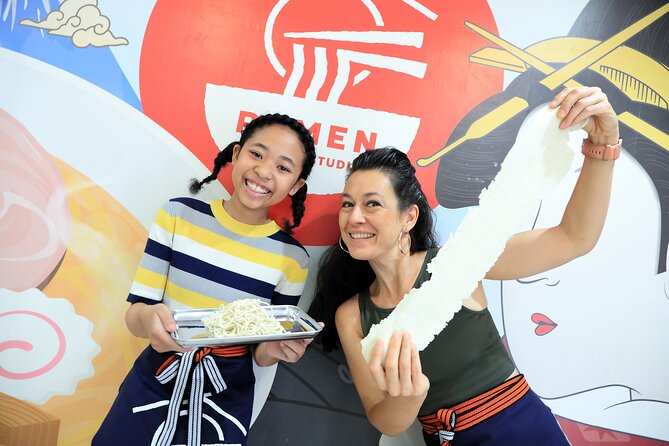
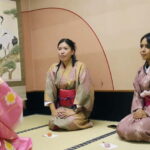
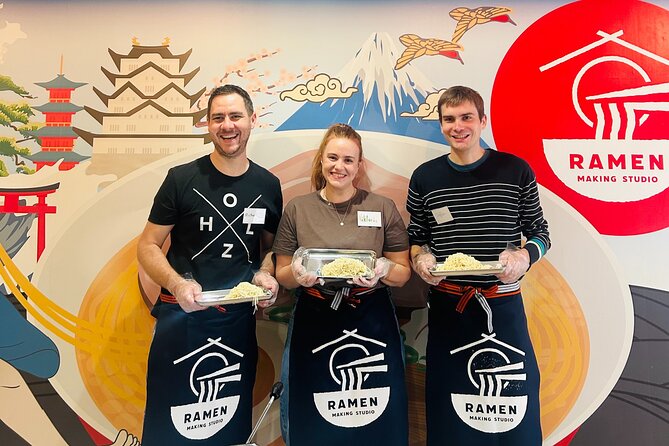
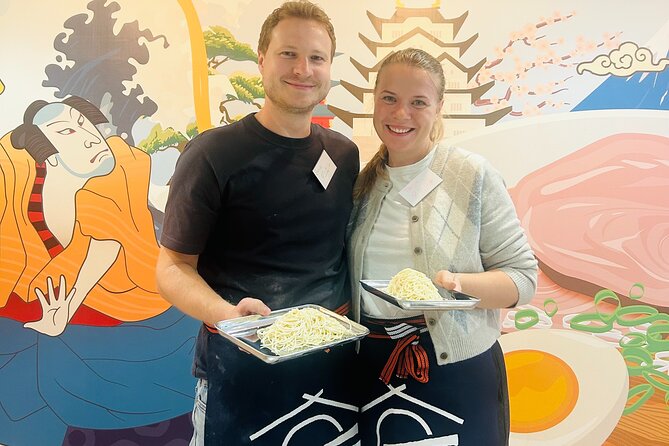
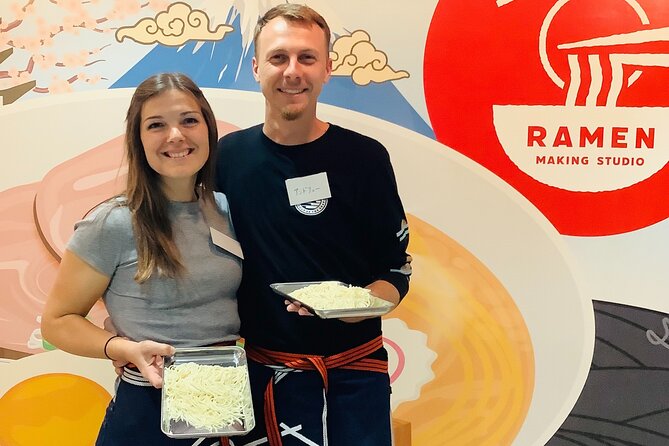
You meet in a studio that feels intentionally themed. The walls are decorated with ramen and Japanese motifs, so it’s easy to take photos without staging anything. There’s also a glass door at the entrance made more than 100 years ago using a technique that no longer exists. It’s one of those small details that quietly makes the place feel special, not just functional.
Inside, you’ll also get items that reflect Japanese culture, with staff introducing them during your visit. You don’t get a long lecture. It’s more like you’re getting context while you’re already excited about food.
This cultural touch matters because it helps you connect the dots. Ramen isn’t random comfort food. It’s regional technique plus shop style, shaped by ingredients and method. That short cultural layer makes the whole class feel more grounded.
How the instructor support works in a small group
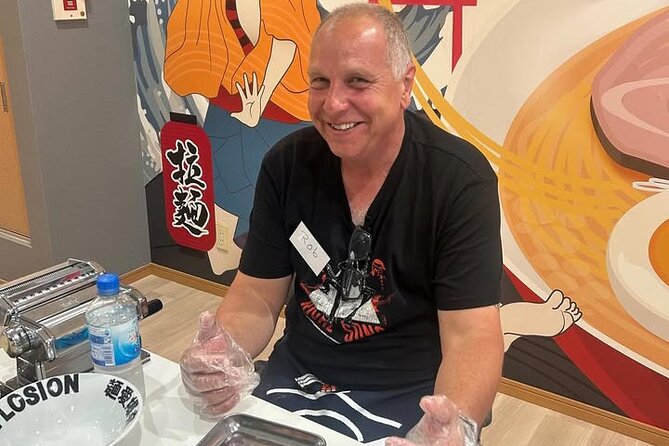
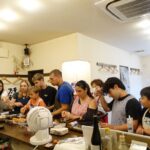
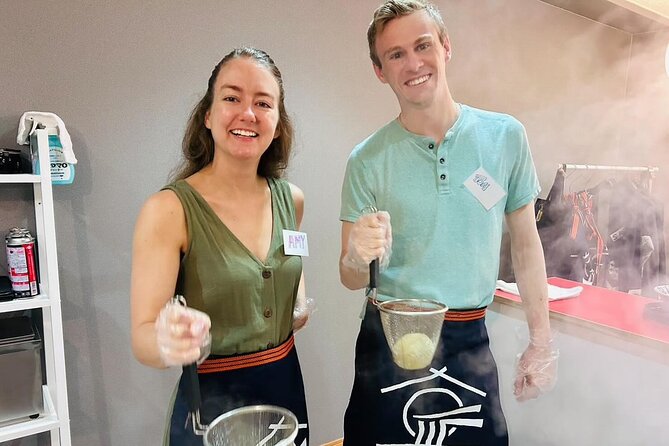
This is a small class with a maximum of 8 travelers, and that size changes everything. In a bigger group, someone is always waiting. Here, you get more direct help while you work the noodles and assemble your bowl.
The instructors are English-speaking, and the teaching style is hands-on with real-time answers. If you’re the type who asks lots of questions, you’ll likely appreciate the pace. If you’re shy, you still get guidance because the format is practical: you’re doing the steps as you go.
A big plus is that the explanation doesn’t feel separate from cooking. It’s tied to the task. You learn because you need the next step to succeed.
Price and value: what you’re paying for at $85.39
At $85.39 per person for about 2 hours, this isn’t a cheap snack. But it’s also not an expensive show. The value comes from several things you don’t get in a typical food stop:
- You cook multiple components: noodles, chashu, and soup base.
- You choose your flavor direction with tonkotsu, shoyu, or miso.
- You get English-speaking support throughout, not just a printed menu.
- You leave with a souvenir and a bowl of ramen you made yourself.
In other words, you’re paying for instruction plus ingredients plus the experience of doing it from scratch. If you love cooking, this price makes sense. If you’re only in Osaka for quick sightseeing, you might find it harder to justify.
Also consider what you’ll do right after. If you’ve got time to stroll and digest, great. If your next stop is a tight train connection, plan buffer time—two hours plus walking will take a bite out of your schedule.
Getting there: walking from Osaka Castle and easy station access
Location is one of the easiest parts of this plan. The studio is within walking distance of Osaka Castle (about 20 minutes). If you’d rather use transit, you have train options nearby too, with stations less than 10 minutes away.
Useful station exits include:
- Tenmabashi Station (exit 13) about 10 minutes
- Minamimorimachi Station (exit 6) about 10 minutes
- Tenmangu Station (exit 7) about 5 minutes
It’s also convenient if you’re coming from major areas: places like Umeda Sky Building and Namba are reachable in about 20–30 minutes by train. That’s helpful if you’re mixing this class with shopping or night food.
Your meeting point is in Higashitenma, Kita Ward at 1-chōme4 東天満ハイツ, and the class ends back at the same location.
Who should book this ramen-making experience
This class fits best if you want something practical, interactive, and memorable.
You’ll likely love it if:
- You want to take home a skill you can actually try again.
- You enjoy cooking and want hands-on technique, not just tasting.
- You’re traveling with family or friends and want an activity everyone can join.
- You want an English-friendly experience without complicated planning.
It also works well for first-timers. The class is open to all skill levels and designed to keep things approachable while still teaching authentic technique.
If you’re food-sensitive to specific flavors, note you’ll be choosing among tonkotsu, shoyu, and miso. The class is built around those broth options, so your menu flexibility depends on your preferences.
Should you book this ramen-making class?
I think you should book this if you want a hands-on Osaka food moment that’s more than eating. It gives you a complete ramen workflow—noodles, chashu, and soup base—with English support in a small up-to-8 group. The studio setting is fun, the cultural bits are short but meaningful, and the souvenir makes it feel like a real activity, not just a meal.
Skip it if your travel plan is purely sightseeing and you don’t want to cook. Also, at this price, it helps to go in motivated to participate and eat what you make. If you want a low-effort food stop, this is still worth considering only if you truly enjoy cooking.
If you’re torn between booking and passing, ask yourself one simple question: do you want to learn ramen by doing it, or do you just want to taste ramen? This class is for the first option.
FAQ
How long is the ramen-making class?
The class runs for about 2 hours.
Where does the class start?
It starts at the meeting point in Osaka, Kita Ward, Higashitenma (Japan, 530-0044): 1-chōme4 東天満ハイツ. It ends back at the meeting point.
Is it near Osaka Castle?
Yes. The studio is within walking distance of Osaka Castle, about 20 minutes on foot.
What soup bases can I choose from?
You can choose among tonkotsu, shoyu, or miso.
Do you make the noodles yourself?
Yes. You make your own ramen noodles using Japanese wheat flour made for ramen.
Do I make chashu as part of the class?
Yes. You prepare chashu using chicken simmered in the studio’s original broth.
Is the class suitable for beginners or families?
Yes. It’s family-friendly and open to all skill levels.
Is there an English-speaking instructor?
Yes. The class uses English-speaking instructors who can answer questions in real time.
What group size is it?
It’s a maximum of 8 travelers.
What if I have dietary or allergy concerns?
The provided details explain the ramen components and broth choices, but they don’t list specific allergy handling or ingredient substitutions. If you have dietary needs, it’s best to contact the provider before booking.
Does the class include a souvenir?
Yes. You receive a souvenir at the end of the class.
Can I cancel for a full refund?
Yes. Free cancellation is available up to 24 hours in advance for a full refund.
Are photos or videos taken during the experience?
Staff may take photos and videos that could be used on social media or for advertising. If you do not wish them to be used, you should inform staff before the experience begins.