REVIEW · SPLIT
Essential Diocletian’s Palace Tour for First-Time Visitors
Book on GetYourGuide →Operated by KUKUVIA, Vl. Jelena Tanjić · Bookable on GetYourGuide
Split gets easier with Roman ruins.
This Diocletian’s Palace walk helps you see the big picture fast, from early power politics to daily life in today’s Split, told in an easy, fun way by Jelena (a local from Bosnia and Herzegovina). I especially loved the clear, engaging stories that make the layout click, and the built-in Vestibule selfie moment for an instant memory. One watch-out: it’s not suitable for wheelchair users, and it’s a steady walking tour for 90 minutes.
You’ll hit the essential stops most first-timers want: the Golden Gate, People’s Square (Pjaca), Jupiter’s Temple, the Peristyle, the Cathedral of Saint Domnius, and the Diocletian’s Cellars area. After the ruins, you land at the Riva promenade, where Split’s street energy makes more sense because you’ve just learned how the place was designed. I also like that the tour doesn’t end with the last stone: you get personalized recommendations on where to eat and what to do next, plus access to vouchers/discounts at well-known restaurants and bars.
It also helps that the group is capped at 10 people, so questions don’t get lost. And while you’ll see a lot of the palace core, don’t expect every ticketed interior highlight—some areas like the Substructures/Bell Tower and certain cathedral areas are not part of this walk, so you may still want to plan one extra stop on your own.
In This Review
- Key things to look forward to
- Why Diocletian’s Palace makes your first day in Split click
- Finding the start: Gregory of Nin and the Golden Gate
- Golden Gate to People’s Square: the power layout behind the streets
- Jupiter’s Temple and the Peristyle: seeing the palace as a designed system
- Saint Domnius and the Vestibule Dome selfie: a Roman story meets modern Split
- Diocletian’s Cellars and the Egyptian Sphinx detail
- Pjaca and the Riva promenade: finishing with Split’s street reality
- Price and value: why $41 for 90 minutes can be a smart buy
- Who should book this tour (and who might want a different option)
- Should you book this Diocletian’s Palace tour?
- FAQ
- How long is the tour?
- What are the main sites you’ll see?
- Where do I meet the guide?
- Is the tour in English?
- What’s included besides the guided walk?
- Is the tour wheelchair accessible?
Key things to look forward to
- A first-timer-friendly route that links Roman-era design to modern Split street life
- Golden Gate, Peristyle, and Saint Domnius explained in plain language, not a lecture
- Vestibule Dome selfie time so you leave with a fun keepsake
- Diocletian’s Cellars focus plus standout details like the Egyptian Sphinx
- Small group size (10 max) with room for real conversation
- Restaurant and bar vouchers/discounts and a practical list of what to do next
Why Diocletian’s Palace makes your first day in Split click

Diocletian’s Palace is one of those places that can feel confusing at first—big stone walls, lots of alleys, and buildings layered on top of older buildings. What makes this tour work for first-time visitors is that it gives you a map for your brain. You start learning what each space was for, then you see how that purpose still shapes how people move around today.
I also like the way Jelena connects the story to the wider Balkans. That extra context matters because Split wasn’t formed in a vacuum—it sat in a region where cultures mixed and borders changed. When you hear that kind of broader perspective while standing in the palace, the history stops feeling abstract.
And because it’s built around key sights, you don’t waste your limited sightseeing time trying to figure out what’s important. In 90 minutes, you get a working understanding of the palace layout and the “why” behind the most famous spots.
You can also read our reviews of more tours and experiences in Split.


Finding the start: Gregory of Nin and the Golden Gate
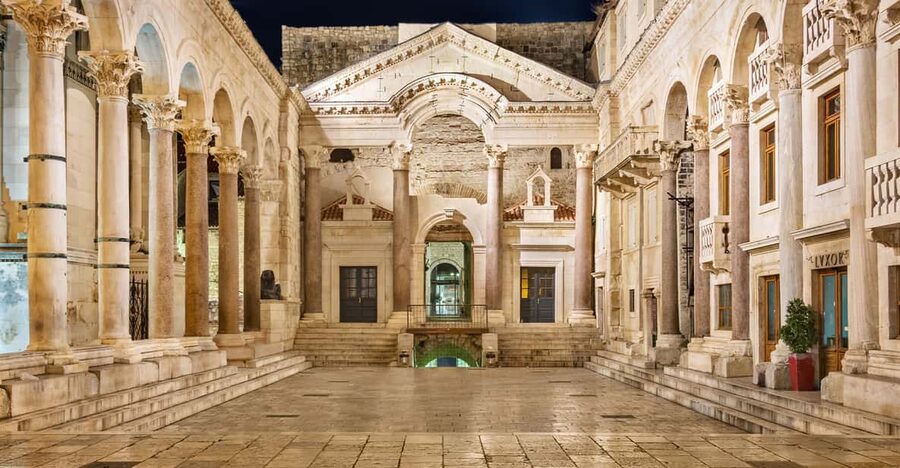
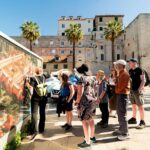
Your meeting point is in front of the big statue of bishop Gregory of Nin and by the north entrance to the palace called the Golden Gate. You’re told to look for a black umbrella—a small detail, but it saves time when you’re scanning crowds and stone streets.
The location is smart. You don’t start by guessing where the palace begins; you start at the main entrance point, and the tour immediately builds context from there. That means your first stop isn’t just a landmark—it’s a starting page for the whole story.
If you’re early, use that time to orient yourself visually. Spend a minute looking at the flow of traffic near the Golden Gate and how people funnel into the palace streets. Once the guide begins explaining, that pattern becomes way easier to understand.
Golden Gate to People’s Square: the power layout behind the streets
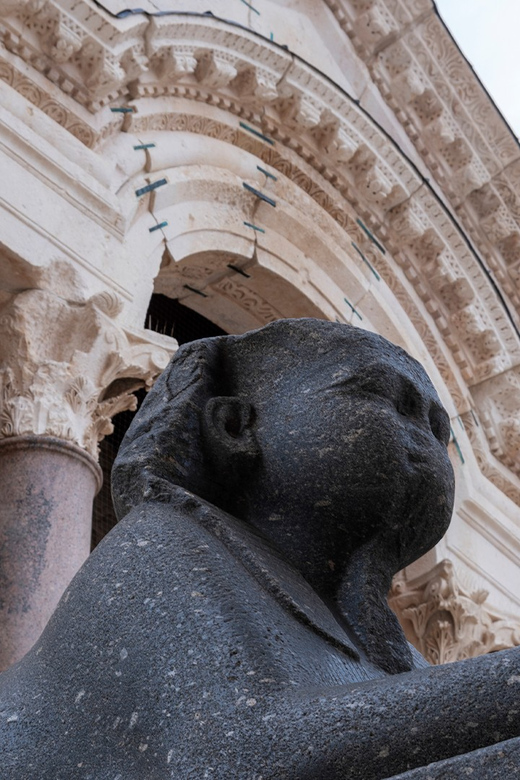
From the Golden Gate, the tour moves into the palace world where Roman design decisions shaped everyday life. The Golden Gate isn’t just an entrance—it’s a statement about control and ceremony, and you’ll hear what made this part of the palace feel official.
Next comes People’s Square, which is the heart of the palace area’s public space. This is where you start feeling the shift from ancient function to modern use. The Roman idea was about structure and authority; today, it’s about movement, meeting points, and street-level energy.
One of the strengths of this tour is how it keeps switching your lens. You’re not only told what things are called. You also get help understanding how the spaces relate to each other, so you’re less likely to end up with a bunch of disconnected “cool places I saw” and more likely to leave with a clear mental model.
Jupiter’s Temple and the Peristyle: seeing the palace as a designed system
Jupiter’s Temple is one of those stops that can be easy to rush past if you’re just following sights. Here, it gets treated like a clue. You learn how religious space and civic space fit into the palace plan, so it feels logical rather than random.
Then you get to the Peristyle, the palace’s central open-air space. This is where people often try to take photos and move on. On this tour, you slow down just enough to understand why it mattered. It’s also where the layout becomes obvious—open space, surrounding structures, sight lines, and the sense of a place built for both spectacle and order.
I like that the guiding style stays interactive. You’re encouraged to ask questions, and Jelena answers with the kind of clarity that makes you feel caught up, not behind. In a palace this old, that’s a big deal.
Also, because the group is small, you’re not constantly stepping around strangers while trying to hear. That makes a difference with a 90-minute format.
Saint Domnius and the Vestibule Dome selfie: a Roman story meets modern Split
The Cathedral of Saint Domnius is a standout because it ties the Roman palace story to later Christian layers. Even if you already know the name, it lands differently when you understand how the palace spaces evolved and how new uses took hold inside older walls.
One practical note: based on the tour’s structure, you talk about the cathedral areas from the right viewing points rather than doing a full ticket-style interior route. If you want every interior room, you may need to plan extra time outside the tour.
Then comes the fun part: the Vestibule Dome selfie. This isn’t a random gimmick. It’s placed in a dramatic architectural setting, so you get both a memory and a reason to look up. Standing there with your group photo also breaks the rhythm, which helps when you’re walking through so many similar-looking stone corridors and arches.
If you like souvenirs, this is one of the best “low effort, high payoff” moments on the day.



Diocletian’s Cellars and the Egyptian Sphinx detail
The tour includes the Diocletian’s Cellars area, and it treats the underground spaces like part of the palace story rather than a side attraction. You’ll hear why these spaces mattered and what role they played in the palace’s daily operations.
You’ll also spot the famous Egyptian Sphinx detail. That’s the kind of object that feels like an artistic footnote until you learn what it represents in the broader Roman world. Even if you’re not into archaeology, these odd details help the palace feel human—someone made choices that traveled far beyond local stone.
Another practical point: the cellar stop is focused on access to the cellar areas, not the full museum-style experience some people expect. If you’re the type who wants to read every label inside an exhibition, you might still want to add a separate visit after the tour. For most first-timers, though, this stop hits the right balance of story and time.
Pjaca and the Riva promenade: finishing with Split’s street reality
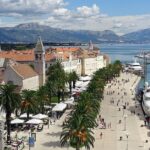
You finish at Split Riva, the waterfront promenade where the city suddenly feels like a living place again instead of a historical set. Ending here is smart. It gives your brain an easy landing: after learning the palace structure, you can watch how modern Split uses public space.
Along the way, you also pass through Pjaca, the main square vibe of the palace area. Squares can feel generic in other cities, but here you have context. You know why people gathered, where the important thresholds were, and why certain routes feel natural.
I also appreciate that the guide blends present-day life into the explanations. Jelena lived in Split for years, and she brings that lived-in perspective into the tour. You get not only what the palace was, but how people experience the city now.
And if you need a breather, multiple reviews mention the guide is thoughtful about practical needs like water, shade, and bathroom breaks. That’s real value on a hot day.
Price and value: why $41 for 90 minutes can be a smart buy
At $41 per person for about 90 minutes, you’re paying for three things: expert interpretation, a tight route, and added extras beyond basic sightseeing. A self-guided walk through Diocletian’s Palace can be fun, but you’ll likely spend a lot of time figuring out what to prioritize and what you’re looking at.
Here, the guide covers the key landmarks: Golden Gate, People’s Square (Pjaca), Jupiter’s Temple, Peristyle, Cathedral of Saint Domnius, Vestibule, and Diocletian’s Cellars, then finishes at Riva. That’s a big coverage goal for only 1.5 hours, and it matters because Split rewards a planned day. You’ll spend less time wandering and more time understanding.
Then there’s the added value people often overlook: discounts and vouchers for restaurants and bars, plus a list of personalized recommendations afterward. That can turn the tour from a history hour into a whole day plan—especially helpful when you’re deciding where to eat in a place with lots of options.
Finally, the small group size (up to 10) is part of the cost equation. You get a quieter experience where you can actually hear explanations and ask questions without fighting the flow.
Who should book this tour (and who might want a different option)
This is a great choice if you’re a first-time visitor who wants structure, not random ruins hopping. I’d especially recommend it if you like guided storytelling and want a clear sense of how Roman design influenced modern Split.
It’s also a good fit if you travel with mixed ages. One review even notes that a 13-year-old gave a thumbs up, which tells me the pacing and humor tend to work across ages.
The main mismatch is mobility. It’s not suitable for wheelchair users, and because it’s a walking route through historic areas, you’ll want to be comfortable on foot for the full 90 minutes.
One more consideration: if you want a complete interior deep dive into everything connected to the palace complex (like substructures, bell tower, or certain cathedral interior zones), you might need additional independent sightseeing. This tour does the “essential first” job well, not the “see every ticketed room” job.
Should you book this Diocletian’s Palace tour?
If you’re visiting Split for the first time and you want your day to make sense, I’d book this. The small-group size, the focus on the most important palace areas, and Jelena’s storytelling style are exactly what you want on day one. The icing on the cake is the Vestibule Dome selfie and the added practical help afterward—food ideas, sight ideas, and voucher access that can save you money while you explore.
Just go in with one clear expectation: this is a smart orientation walk, not a full museum circuit. If you plan an extra stop for the interior spaces you care about most, you’ll get the best of both worlds.
If you want, tell me your travel month and whether you’re more into architecture, Roman history, or food. I can suggest how to pair this tour with a simple half-day plan around the rest of Split.
FAQ
How long is the tour?
The tour lasts 90 minutes.
What are the main sites you’ll see?
You visit key landmarks including the Golden Gate, People’s Square (Pjaca), Jupiter’s Temple, the Peristyle, the Cathedral of Saint Domnius, Vestibul, and Diocletian’s Cellars, and you finish at the Split Riva promenade.
Where do I meet the guide?
Meet in front of the big statue of bishop Gregory of Nin at the north entrance to the Palace called the Golden Gate. Look for a black umbrella.
Is the tour in English?
Yes, the tour is offered in English.
What’s included besides the guided walk?
In addition to storytelling and guidance through the palace areas, you get a Vestibule Dome selfie and vouchers/discounts in some well-known restaurants and bars, plus a recommendations list after the tour.
Is the tour wheelchair accessible?
No. It’s listed as not suitable for wheelchair users.