REVIEW · SPLIT
Split: 1.5-Hour Walking Tour and Diocletian’s Palace
Book on GetYourGuide →Operated by www.south-tours.com · Bookable on GetYourGuide
Roman walls still run this city. In about 90 minutes to two hours, you’ll wander Diocletian’s Palace from gate to gate and go down into the cellars, then end at Saint Domnius, tied to a Roman mausoleum and known as the oldest Catholic cathedral in the world. I love how the route shows you Roman design plus later additions, so you don’t just stare at ruins—you see a living city layered over time. I also like how you get a taste of everyday Mediterranean life around the waterfront and squares, not only museum stops. The one catch: this is a walk, with uneven old-town streets, so comfortable shoes matter and the tour isn’t a good fit if you have mobility limits.
If you’re into pop culture, you’ll get a quick hit near the Game of Thrones Museum, plus filming-spot pointers that help the story feel local. Guides such as Sandra and Ivan (and others in the same rotation) tend to keep things moving with clear, story-driven explanations, so the group stays engaged without feeling like a lecture. You’ll also notice the contrast between tight stone alleys and open viewpoints over the Riva and Marjan Hill.
At $41 for 1.5–2 hours with a live guide, this is solid value for first-timers who want a map made of history. Entrance fees aren’t included, so you’ll want to budget for those separately if you plan to go inside buildings.
In This Review
- Key highlights worth knowing
- Split’s Roman maze in 90 minutes (and why it works)
- Where you start and how early matters on old-town streets
- Golden Gate to People’s Square: getting your bearings fast
- Game of Thrones museum stop: quick, useful, and optional-feeling
- Fruit Square and the palace gates: small spots with big meaning
- Riva promenade and Marjan Hill: the best way to catch your breath
- Entering Diocletian’s Palace cellars: where the tour goes beyond the obvious
- Peristil and the Egyptian sphinx: the detail you’ll remember
- Cathedral of Saint Domnius: Roman mausoleum to living church
- Vestibil photo stop and the route’s final momentum
- Guides, stories, and the local touch you can feel
- Price and time: is $41 worth it?
- Who should book this Split walking tour?
- Should you book the 1.5–2 hour Diocletian’s Palace walking tour?
- FAQ
- How long is the Split 1.5-hour walking tour?
- How much does the tour cost?
- What’s included in the tour price?
- Are entrance fees included?
- What languages are offered?
- Where is the meeting point?
- Is this tour suitable for people with mobility impairments?
- Is free cancellation available?
- Can I reserve now and pay later?
Key highlights worth knowing
- Diocletian’s Palace cellars: go underground and see how the palace worked beyond the postcards
- Saint Domnius (Cathedral of Saint Domnius): the oldest Catholic cathedral in the world, formed from a Roman mausoleum
- Peristyle details: spot the last remaining Egyptian sphinx in black granite
- Architectural time travel: Roman to 20th-century streets inside one compact route
- Riva promenade views: a panoramic break that helps you orient yourself in Split
- Game of Thrones context: short stop and local filming-spot references that make the setting click
Split’s Roman maze in 90 minutes (and why it works)
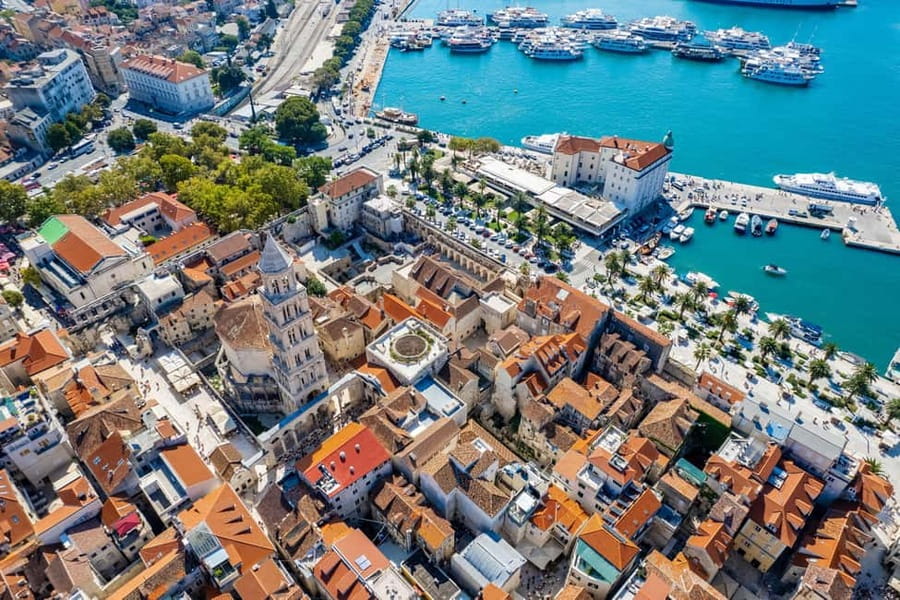
Split can feel like a maze on your first day. This walking tour solves that problem fast. You’re not trying to memorize streets on your own—you follow a guide through the palace core, then out to the cathedral and viewpoints so you leave with a mental picture of where everything sits.
The time window is the secret sauce. In 90 minutes to two hours, you get the major anchors: the palace gates, the Peristyle area, and Saint Domnius. Then you also get the city-life bits that make Split feel like Split. That mix is what helps most visitors. If you only see the big monuments, you miss how locals actually move through the old walls.
Also, because it’s a walking route, you’ll start noticing things without being told. You’ll see why Diocletian’s Palace is so important: it was designed as a self-contained world. Later periods didn’t erase that plan—they added to it, creating that satisfying “many eras in one place” effect.
You can also read our reviews of more tours and experiences in Split.


Where you start and how early matters on old-town streets
The meeting point can vary based on which starting option you book. Some groups meet at a South Tours Travel Agency location, while others start near major landmarks like Golden Gate in the palace area.
Early in the day usually helps. Old Town streets can get hot, narrow, and crowded quickly, and several guide styles aim to keep you comfortable while staying on schedule. The tour isn’t described as accessible-friendly, so if you’re thinking about it and you have any walking difficulty, treat this as a serious consideration, not a minor one. Even with the best guide, old paving doesn’t become new paving.
What I’d recommend for you: bring comfortable walking shoes and plan for a lot of stone underfoot. If you’re the kind of traveler who likes to stop for photos, you’ll fit it in—there’s at least one dedicated photo stop (the Vestibul area), and you’ll have viewpoints from the Riva promenade along the way.
Golden Gate to People’s Square: getting your bearings fast
Your tour route starts with classic Split orientation. A Golden Gate start is useful because it’s an obvious point of reference. From there, you’ll work your way through central old-town spaces where locals and visitors both flow.
One of the clever parts of this route is the early balance of big sights and lived-in squares. Stops like People’s Square and nearby areas help you understand that Diocletian’s Palace isn’t fenced off like a single landmark. It’s the backbone of a neighborhood. As you walk, the architecture shifts: you’ll see how Roman planning shaped later layouts, then how newer buildings pressed into those same lines.
This is where the tour earns its keep for first-timers. You get structure. After the tour, you’re not wandering randomly—you can make decisions about what to revisit, what to skip, and where you’d like to return for a slower look.
Game of Thrones museum stop: quick, useful, and optional-feeling
You’ll get a short stop at the Game of Thrones Museum. It’s brief, but it’s not random. The point isn’t to turn your tour into a theme park. It’s to give you visual and storytelling cues so that references make sense once you’re in Split’s streets.
If you’re a fan, this tiny timing window can make the rest of the walk click. If you’re not into the show, don’t worry—you’ll still cover the main historical highlights. The palace and cathedral are the core of the experience; Game of Thrones is more like seasoning.
A good guide makes this moment work. From what I’ve seen reflected in past guide performances, guides often add filming-spot pointers, plus local context about ports and how the city functions today. That helps you connect fiction to place, without losing the actual Roman story.
Fruit Square and the palace gates: small spots with big meaning
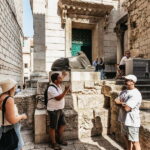
Two stops in particular help you see how the palace connected with daily life: Fruit Square (Voćni Trg) and the gate areas.
Fruit Square is famous because it marks the site of an old fruit market. That matters because it shows how people used the space around the palace. Even in a city built around imperial power, commerce happened. Food markets make history feel human. You’re not just looking at a ruler’s home—you’re imagining what everyday life looked like.
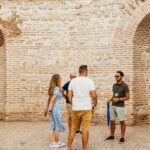
Then come the gates. The North Gate and West Gate are part of your walk through the palace grounds, and they’re more than photo backdrops. Gates are about movement and control, which is a big theme in Diocletian’s Palace. By the time you reach the cathedral, you’ll have a better sense of how the palace shaped the city’s flow.
This is one of the tour’s underrated strengths: it gives you context for transitions—how you move from one era to the next, and from one function (imperial/military) to another (civic/living).




Riva promenade and Marjan Hill: the best way to catch your breath
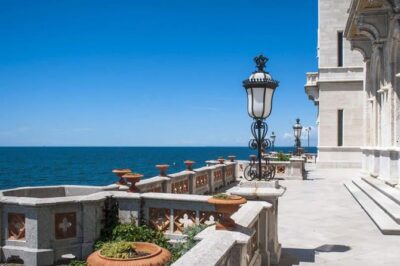
After the palace core, you’ll head down toward the Riva waterfront. This is a smart break, because it changes both the scenery and your body rhythm. Walking through stone and arches can feel like you’re moving inside a maze. The waterfront opens things up.
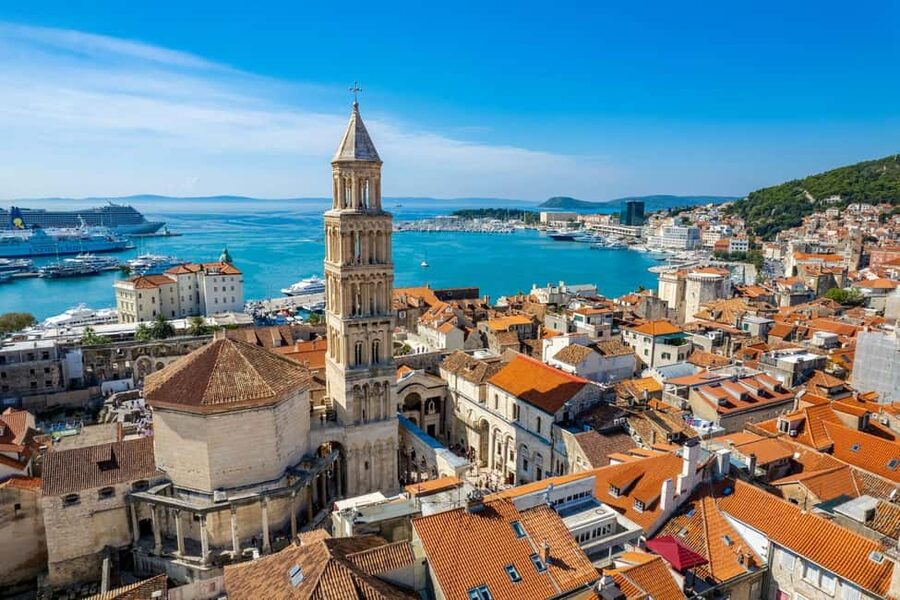
You’ll get panoramic views of Marjan Hill from the promenade area. Those views do two things for you. First, they show scale—Split isn’t just the compact historic center. Second, they help you orient yourself for the rest of your stay. You can look at the hills, then look back at the old town and understand how the city sits in the wider landscape.
This is also where you get a taste of the Mediterranean lifestyle the tour emphasizes. Even without a food-focused stop, the Riva area gives you the vibe: people lingering, conversation in public space, and the everyday rhythm of a coastal city.
Entering Diocletian’s Palace cellars: where the tour goes beyond the obvious
The palace cellars are the headline if you like history with a physical reality. You see the palace from below—literally—and that changes how you understand it. Roman emperors didn’t build only for show; they built for function, storage, and control.
Going into the cellars adds a different kind of atmosphere than the open courtyards. It’s cooler, darker, and more enclosed. That helps you imagine the palace working as a system, not just a collection of stones. You also get a clearer story of how the palace was connected to the wider palace grounds, since your walk includes moving around the palace from major entry points.
One thing to keep in mind: entrance fees are not included. If you plan to go inside additional areas during or after the tour, budget for those. The cellars visit is included in the overall experience as described, but you should still expect optional paid entries elsewhere depending on what you choose to do with your free time.
Peristil and the Egyptian sphinx: the detail you’ll remember

At the Peristil area, you shift from “big palace” to “small-but-amazing details.” This is where the tour helps you slow down. The Peristyle is known for standout elements, including the last remaining Egyptian sphinx in black granite.
That’s a wild detail for Split, and it’s also a great reminder: empires didn’t think in modern borders. Roman tastes and materials traveled. When you see that sphinx, you’re not just looking at a curiosity—you’re seeing evidence of how the Mediterranean world was connected through trade, power, and culture.
The Peristil stop also helps you understand Diocletian’s layout. Even if you don’t memorize names, you’ll learn the feel of the space: open central areas framed by palace architecture, built for viewing and movement.
If you’re the type who takes photos often, don’t panic. You’ll have enough time to capture key views without turning the tour into a speed-run.
Cathedral of Saint Domnius: Roman mausoleum to living church

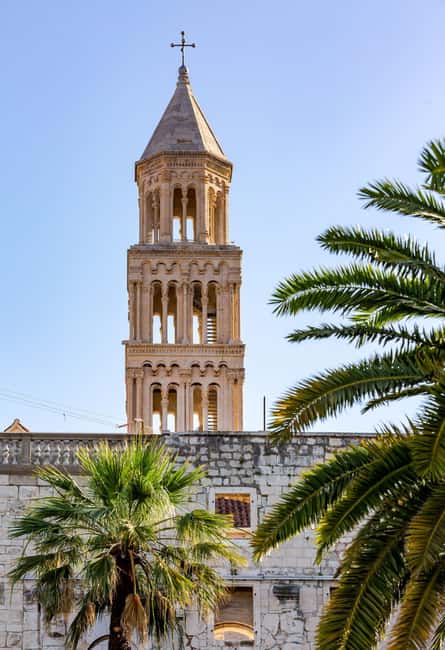
The Cathedral of Saint Domnius is the kind of stop that makes Split feel extra meaningful. It’s described as the oldest Catholic cathedral in the world, and it was formed from an Imperial Roman mausoleum. That combination is powerful because it shows how sacred spaces get reused.
This isn’t a dead ruin. It’s a functioning church shaped by Roman foundations. Watching it from different angles during your guided time gives you that “how did this survive?” feeling, but with an answer: it didn’t just survive. It kept getting new purposes layered on top of old foundations.
Because the tour includes a guided stop here, you’ll get more than a quick glance. You’ll likely understand why Saint Domnius matters to the broader story of Split’s identity—Roman beginnings, Christian continuity, and a city that never fully stopped building.
This is also a good place to ask your guide questions if you have them. If you want to know what to see next on your own, this is a great moment to get recommendations.
Vestibil photo stop and the route’s final momentum
The Vestibul area includes a photo stop and a guided segment. Even if you think you’ve already gotten your best shots, this part helps you capture the palace’s flow from a slightly different angle than the classic courtyard views.
What I like about finishing with these transitional areas is that it helps your brain connect dots. When you later walk back through Split on your own, you’ll remember which streets feel like palace zones and which parts feel like the broader city center.
It also gives you a natural pause near the end of the walk. The route is planned to stay within 90 minutes to two hours, so you end with time to keep exploring without feeling exhausted.
Guides, stories, and the local touch you can feel
The tour lives or dies on the guide. The strongest tours here share a common style: clear explanations, quick context, and anecdotes that make architecture feel like a story rather than a list of facts.
You may hear guide names like Sandra, Ana, Anna, Ivan, and Jelena referenced as people who bring extra energy and local perspective. A few guide styles also add practical suggestions—what taverns to try, where to head for viewpoints, and how to handle the heat. One guide approach that stands out is the ability to keep things upbeat even if the weather shifts, while still covering the main route.
If you want value, look for that storytelling balance. You want enough detail to understand what you’re seeing, but not so much you lose the walk itself. Past guide feedback tends to praise exactly that sweet spot: thorough explanations, but paced so you don’t get numb.
Price and time: is $41 worth it?
$41 for a 1.5–2 hour guided walking tour is a fair price for Split, especially if you’re using the guide to do two jobs at once. You’re getting a structured introduction to Diocletian’s Palace and you’re also getting help navigating through the old town so you don’t waste your first day guessing.
The best value comes if you’re a first-timer or you like your sightseeing guided. If you already know Split well and you’d rather wander solo, you might feel the tour is only partially necessary. But if you want the fastest path to understanding the palace, the cathedral connection, and the city layout, it’s a good deal.
Entrance fees aren’t included, so budget extra if you plan to go into specific paid spaces beyond what’s covered. Still, a guided route that points out the big features—cellars, Peristil, cathedral—and the smaller meaningful spots—like Fruit Square—can save you time and confusion.
And if you like flexibility, you can reserve without immediate payment as described. That’s useful when you’re planning a tight itinerary around ferry times or weather.
Who should book this Split walking tour?
You should book if you want:
- A quick, guided orientation to Split’s old town built around Diocletian’s Palace
- A focused visit to cellars, Peristil highlights, and Saint Domnius
- A route that connects Roman architecture to what you can still experience today, including waterfront life
You might skip it if:
- You can’t handle lots of walking on uneven streets (this isn’t recommended for limited mobility)
- You’re looking for a long, slow, museum-style day with lots of free wandering time
- You already have a detailed plan for the palace and cathedral and only need a map
Should you book the 1.5–2 hour Diocletian’s Palace walking tour?
If it fits your walking ability, I’d say yes. This tour is one of the more efficient ways to understand Split’s signature site without spending hours figuring things out on your own. You get the standout moments—cellars, Peristil with the black granite sphinx, and the Cathedral of Saint Domnius—plus practical orientation through Fruit Square, the gates, and Riva views.
Book it when you want clarity early in your trip. Then you can spend your remaining time wandering at your own pace with fewer wrong turns and more “I get it now” moments.
FAQ
How long is the Split 1.5-hour walking tour?
It runs for 90 minutes to 2 hours.
How much does the tour cost?
The price is listed as $41 per person.
What’s included in the tour price?
You get a live guide for the duration of 1.5 to 2 hours.
Are entrance fees included?
No. Entrance fees are not included, and food and beverages are not included either.
What languages are offered?
The live guide is available in English and Spanish.
Where is the meeting point?
The meeting point may vary depending on the starting option you book.
Is this tour suitable for people with mobility impairments?
It is not recommended for people with limited mobility and is not suitable for people with mobility impairments.
Is free cancellation available?
Yes. You can cancel up to 24 hours in advance for a full refund.
Can I reserve now and pay later?
Yes. The option to reserve now & pay later is offered as described.