REVIEW · SEOUL
Korean Heritage Tour: Palaces and Villages of Seoul Including Gyeongbokgung Palace
Book on Viator →Operated by KOREA TOUR (DMZ TOUR) · Bookable on Viator
Seoul can feel big and confusing fast, so this day trip gives you structure. I like the guided walking time at Gyeongbokgung Palace and the way the day balances palace, temple, and everyday culture at the Folk Village. I also like that you get hotel round-trip transport and a real lunch, not a grab-and-go situation. One possible drawback: the schedule includes a ginseng center stop that can feel shopping-focused instead of heritage-focused.
If you’re coming to Seoul for the first time, this is the kind of tour that helps you get your bearings. It’s also a good way to see several “big ticket” cultural sites without spending half your day figuring out trains, entrances, and timing. Just be ready for a moderate amount of walking and a fairly full itinerary.
The group is small (max 10), and the pace usually depends on your guide and the day’s crowd levels. On Tuesday, the tour swaps Gyeongbokgung for Deoksugung, so you still get a major palace experience.
In This Review
- Key highlights to know before you go
- Price and logistics: what $140 buys you in real terms
- From your hotel to Blue House: start time and what you’ll actually see
- Gyeongbokgung Palace: Joseon grandeur, restoration, and a guided walk
- Tuesday swap: Deoksugung and the Seoul Museum of History
- National Folklore Museum: learning Korean daily life with replicas
- Jogyesa Temple: a 500-year-old Buddhist stop that slows the day
- Lunch plus the ginseng center: where value can wobble
- Korean Folk Village: crafts, hands-on culture, and the “living museum” approach
- How the day flows: pacing, walking, and crowd pressure
- The guide factor: when English explanations make or break the day
- Who should book this Seoul heritage day, and who should skip it
- FAQ
- FAQ
- What’s the total length of the tour?
- Does the tour include hotel pickup and drop-off?
- Are admission tickets included for Gyeongbokgung Palace and the Folk Village?
- What time does the tour start?
- What happens if I book for a Tuesday?
- Is lunch included?
- Is there a ginseng stop during the day?
- How much walking is involved?
- How big are the groups?
- Should you book this tour?
Key highlights to know before you go
- Gyeongbokgung Palace guided walk with focus on gates, pavilions, and royal halls
- Museum learning that’s easy to follow via replica-based exhibits at the National Folklore Museum
- Jogyesa Temple stop featuring a main hall dating back about 500 years
- Korean Folk Village craft demonstrations like pottery making, basket weaving, and winnow making
- Traditional lunch included after a scheduled ginseng center visit
- Small group size (up to 10) means you’re not lost in a crowd
Price and logistics: what $140 buys you in real terms
At $140 per person for about 8 hours 30 minutes, you’re paying for a day with a guide plus the hard parts removed: transit time, ticket logistics, and route planning. The tour includes round-trip hotel pickup and drop-off by air-conditioned coach, which matters in Seoul traffic when you’d otherwise be juggling metro lines and walking transfers.
You’ll also get admission included for Gyeongbokgung Palace and the Korean Folk Village. The National Folk Museum of Korea stop is listed as free admission, and Jogyesa Temple entry is also free, so your paid “value” concentrates where it counts: the guided palace time and the Folk Village experience.
One practical thing: the tour uses mobile tickets, so you don’t have to hunt for paper. And because the group is limited to a maximum of 10, you’re usually getting enough attention at each stop to understand what you’re seeing (especially if your guide is strong with English).
You can also read our reviews of more tours and experiences in Seoul.

From your hotel to Blue House: start time and what you’ll actually see
The day starts at 8:30 am with pickup. You’ll meet your guide on the coach and get narration as you ride past major landmarks—most notably the Blue House area, described as the executive office and official residence of the South Korean head of state.
Here’s the key: you’ll drive by. There’s no claim in the schedule that you enter Blue House grounds. Still, it’s a useful orientation moment. You start learning names and places early, and that helps when you later focus on the palace complex layout.
The coach ride also builds in a reality check: this is a full-day itinerary, so you’ll be moving. But the advantage is you’re not wasting your morning trying to solve transit puzzles. You can use that ride time to get context for the palace and temple stops later.
Gyeongbokgung Palace: Joseon grandeur, restoration, and a guided walk
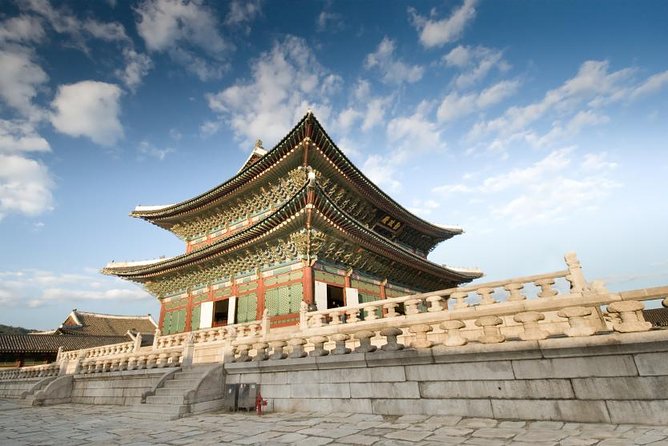
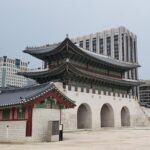
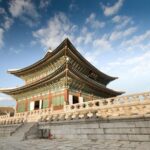
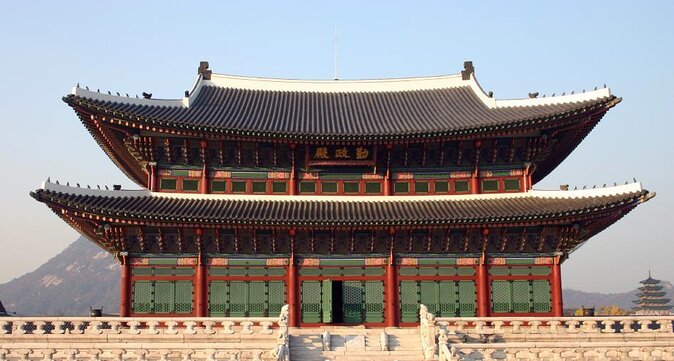
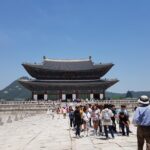
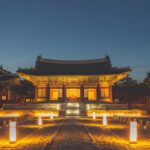
This is the heart of the tour. Gyeongbokgung Palace was constructed in 1395 and is the first royal palace built by the Joseon Dynasty. The schedule notes that much of it was destroyed during the Japanese occupation, and restoration efforts have brought it back toward its original condition. That adds weight to what you see: this isn’t just pretty architecture; it’s also a story of loss and rebuilding.
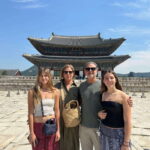
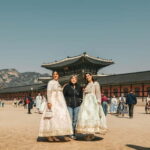
The tour includes about 1 hour at the palace with guided time (admission included). You’ll stroll the grounds and focus on the major elements: gates, pavilions, and royal halls. Walking here is important. From the outside, palace sites can feel like “a few buildings.” On foot with a guide, you start seeing how the grounds are organized and why the layout matters.
A quick timing note: one of the most satisfying parts of any palace visit is seeing it with a guide’s pacing. You don’t need to sprint between photo spots. You want time to look up, notice roof lines, and understand what each area was meant for.
Tuesday swap: Deoksugung and the Seoul Museum of History
Gyeongbokgung Palace is closed on Tuesdays. If your tour date lands on a Tuesday, the schedule says you’ll visit Deoksugung Palace instead, and you’ll also tour the Seoul Museum of History there. So you’re not stuck missing a major palace day—just getting a different one.
National Folklore Museum: learning Korean daily life with replicas
After the palace, you head to the National Folklore Museum of Korea. The tour format here is intentionally approachable: the museum uses replicas to explain the history of traditional life across ancient times to the 20th century.
Your scheduled time is about 20 minutes, and the museum admission is listed as free. That’s not a long museum visit, so I treat it like a “get the big themes” stop. You’re not expected to read everything. The point is to leave the palace with more context for what court and daily life looked like across centuries.
The museum is described as having exhibitions with over 90,000 artifacts, including artifacts and model replicas. Even if you can’t see everything in 20 minutes, it’s still useful to understand the overall direction: what ordinary life meant, not only royal life.
Jogyesa Temple: a 500-year-old Buddhist stop that slows the day
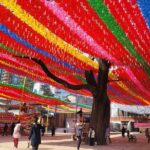
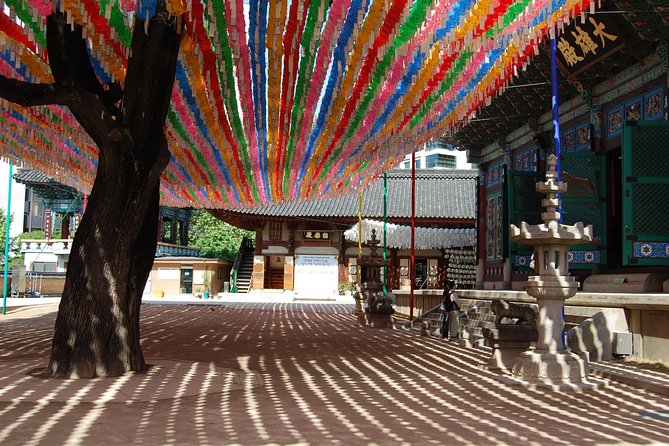
Next up is Jogyesa Temple, part of the Jogye Order of Korean Buddhism. The main hall is described as dating back about 500 years, which gives this stop real depth right away. The schedule also mentions that outside you can admire trees lining the entrance (locust and baeksong trees).
Your time here is short—about 2 minutes in the itinerary list—so think of Jogyesa as a pause, not a full temple exploration. You’ll enter the Daeungjeon, the main temple building.
In a day full of palace halls and craft demonstrations, I like having one religious site that feels more grounded in everyday practice. Even a brief visit helps break the day’s rhythm.
Lunch plus the ginseng center: where value can wobble
Around midday, you’ll stop at a Korean Ginseng Center prior to lunch. Then you eat at a local restaurant with traditional Korean lunch included.
The ginseng stop is scheduled for about 30 minutes and the tour description says you can learn about the product and have the opportunity to purchase ginseng. This is where your expectations matter.
Some guides keep it factual and informative. Others turn it into a sales stop. In the end, you’re still in a cultural heritage tour, so you’ll probably want the ginseng segment to feel educational. If you’re not interested in purchasing health products, mentally plan to treat that segment as a quick stop, then focus your attention on the lunch.
The lunch itself is usually the easier win: it’s included, and you’re not choosing what to eat while hungry and tired. After a morning of walking, a real sit-down meal helps you finish strong.
Korean Folk Village: crafts, hands-on culture, and the “living museum” approach
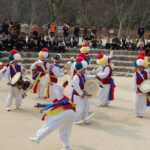
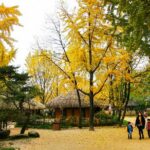
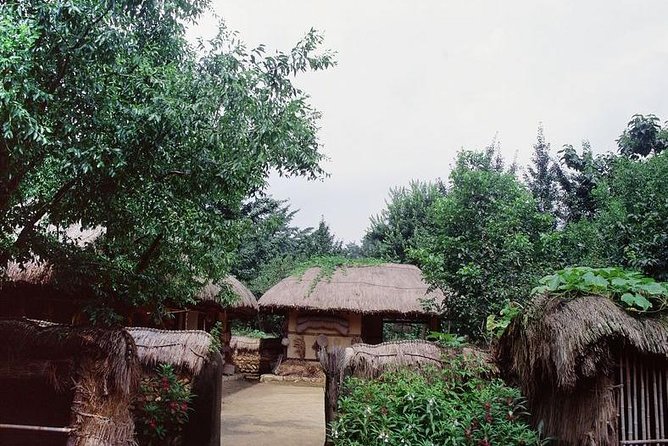
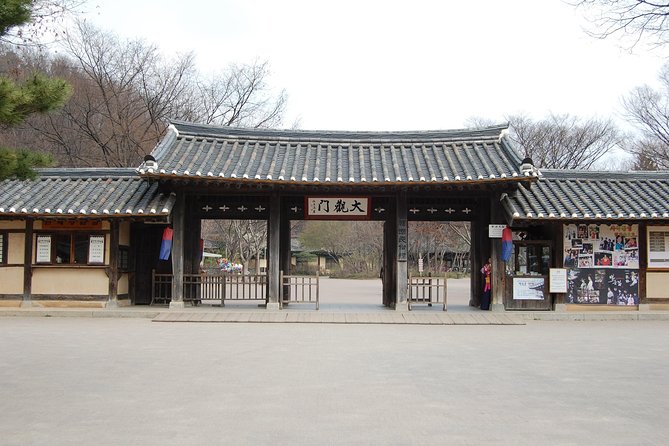
In the afternoon, you’ll go to the Korean Folk Village, described as a living showcase for traditional Korean life and folk culture. Admission is included, and your time here is about 1 hour 20 minutes, which is a solid chunk.
This stop is less about museum reading and more about watching crafts and making traditions visible. The tour description lists activities you may see, like:
- Pottery making
- Basket weaving
- Making winnows
- Embroidery
- Traditional crafts using bamboo, wood, and brass
Because it’s called a living museum, it’s not just buildings and explanations. You’re there to see skills at work. Even if you don’t understand every word, the demonstrations do most of the teaching for you.
That said, this is also the area where the “what did I think it would be?” mismatch can happen. If you expect quiet, historically preserved village streets with deep historical interpretation, you might find it more performance-like. If you’re happy to treat it as a practical cultural snapshot with crafts and demonstrations, you’ll likely enjoy the time.
I’d use the full 1 hour 20 minutes. Don’t rush it. Watch one or two craft stations carefully, then wander with a plan: find the demonstrations that match your interests.
How the day flows: pacing, walking, and crowd pressure
Overall, this is a full-day loop: palace → museum → temple → lunch → ginseng center → Folk Village → back to your hotel. There’s no free-spirited wandering time built in. The benefit is efficiency. The tradeoff is you’re on schedule most of the day.
The tour notes a moderate amount of walking, so wear comfortable shoes and plan for standing in lines or waiting at photo points. The palace complex is large, and even with a guided route, you’ll be moving between gates and halls.
The best approach: let the guide set the pace early, then take control where you can. After the guide gives the key context, you’ll usually have enough freedom to look around within each stop. If you’re the type who loves photos, remember that palace photography often takes time, especially when groups cluster in the same spots.
Group size also matters. With a maximum of 10, you usually avoid feeling like you’re competing for the guide’s attention. That small-group feel often makes the palace and temple stops more satisfying.
The guide factor: when English explanations make or break the day
For a tour like this, the guide can turn “sights” into “sense.” In the experiences I’ve gathered around this tour format, names like Sunny, Winnie, David, Dora, and Michelle come up in connection with clear English and helpful narration.
Here’s how to use that to your advantage: if you meet your guide and their English is strong, lean into it. Ask quick questions during breaks: What should I notice at the palace? Which hall matters most? What does a specific craft represent at the Folk Village?
Even small questions help you turn a guided day into a guided understanding.
Who should book this Seoul heritage day, and who should skip it
This tour is a strong fit if you want:
- A guided introduction to Seoul’s major cultural anchors
- A day that’s efficient without feeling like a scammy checklist
- Hotel pickup and a coach that handles transit friction
- A mix of palace architecture, museum learning, temple context, and crafts
I’d skip or choose carefully if you:
- Hate shopping-focused stops and prefer pure sightseeing
- Want long, unhurried museum time (your museum window is short)
- Prefer independent travel with flexible timing
If you’re traveling with limited time in Seoul and want a cultural sampler that still feels structured and meaningful, this can be a smart booking. It’s also a solid option for first-timers who don’t want to plan every entry ticket and route.
FAQ
FAQ
What’s the total length of the tour?
It runs for about 8 hours 30 minutes.
Does the tour include hotel pickup and drop-off?
Yes. You get round-trip hotel transport by air-conditioned coach.
Are admission tickets included for Gyeongbokgung Palace and the Folk Village?
Yes. Gyeongbokgung Palace admission is included, and so is admission for the Korean Folk Village. The National Folklore Museum stop and Jogyesa Temple are listed as free admission.
What time does the tour start?
Pickup starts at 8:30 am.
What happens if I book for a Tuesday?
Gyeongbokgung Palace is closed on Tuesdays, so the tour visits Deoksugung Palace instead and also tours the Seoul Museum of History.
Is lunch included?
Yes. Lunch at a local Korean restaurant is included.
Is there a ginseng stop during the day?
Yes. The schedule includes a ginseng center stop before lunch, about 30 minutes, with time to learn and purchase ginseng if you want.
How much walking is involved?
A moderate amount of walking is involved, so comfortable shoes are a good idea.
How big are the groups?
The tour has a maximum of 10 travelers and a minimum of 4 people.
Should you book this tour?
If you want one guided day that covers palace architecture, a museum context stop, a Buddhist temple visit, and a craft-focused village experience, I’d say yes. The value is strongest when you take it as an overview day and let the guide connect the dots—especially at Gyeongbokgung.
If you’re very sensitive to shopping-style stops, go into the day expecting a ginseng center time block. Then protect your energy for the palace walk and the Korean Folk Village craft demonstrations, which are the parts most likely to feel like real cultural payoff.