REVIEW · SEOUL
Seoul City Sightseeing Tour Including Gyeongbokgung Palace, N Seoul Tower, and Namsangol Hanok Village
Book on Viator →Operated by SEOUL CITY TOUR CO. LTD. · Bookable on Viator
Seoul in one day, with less stress. This guided route strings together major palaces, top city temples, and two classic Seoul photo stops with real cultural context. It’s a smart way to see the big hits without turning your day into a map-reading contest.
I like that the hotel pickup and air-conditioned coach make the whole plan feel doable. I also like that most attraction admission fees are handled, so you’re not constantly pulling out your wallet.
One thing to watch: the schedule is packed, and the ginseng-center stop can feel more like a sales pitch than a museum. Also, lunch and the N Seoul Tower observation ticket cost extra.
In This Review
- Key Things You Should Know Before You Go
- A One-Day Seoul Checklist for $80: Where the Value Really Comes From
- Hotel Pickup, AC Coach, and an Efficient 8-Hour Rhythm
- Jogyesa Temple: The Calm Start Before the Big Palace Day
- Blue House Pass-By and Gyeongbokgung Palace (With the Guard Ceremony Timing)
- The National Folk Museum Inside Gyeongbokgung: Daily Life That Makes Korea Feel Real
- Insadong Lunch and Shopping Break: A Practical Midday Reset
- The Ginseng Stop at 청하고려인삼(주): Interesting Context, Watch the Shopping Energy
- N Seoul Tower on Mt Namsan: Cable Car Included, Observation Ticket Extra
- Namsangol Hanok Village: Five Hanok, Joseon Social Classes, and a Garden Walk
- The Human Factor: Guides Like AJ, BK, Sadie, Charles Park, Lizzy, and Meil
- Who This Tour Fits Best (and Who Might Want a Different Plan)
- Should You Book This Seoul City Sightseeing Tour?
- FAQ
- Is hotel pickup included?
- How long is the tour?
- What attractions have admission fees included?
- What is not included in the price?
- What happens if I travel on a Tuesday?
- Is the group large?
Key Things You Should Know Before You Go
- Most admissions are included: You pay less along the way, then spend your time looking at the sights.
- Cable car is included, but the observation ticket isn’t at N Seoul Tower, so plan for that extra.
- Tuesdays have swaps: Gyeongbokgung Palace, the Folk Museum, and Namsangol Hanok Village may be closed.
- Your day includes a real Seoul neighborhood break in Insadong for shopping and lunch.
- Some stops are short by design: you’ll move efficiently, not linger for hours.
- Group size stays manageable at a maximum of 40 people.
A One-Day Seoul Checklist for $80: Where the Value Really Comes From
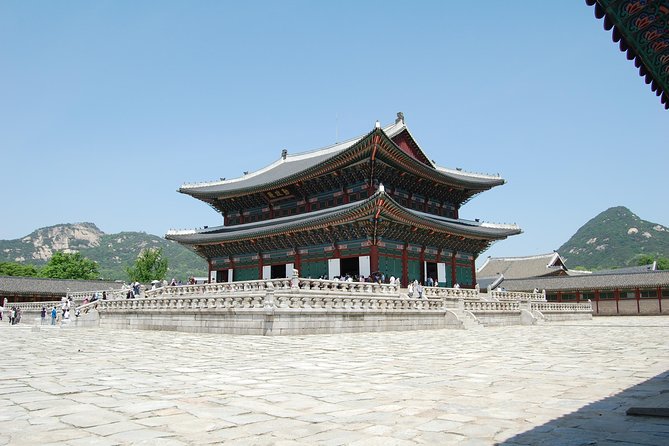
For $80, you’re buying a full circuit of Seoul’s best-known “first timer” stops: Jogyesa Temple, Gyeongbokgung Palace, the National Folk Museum, N Seoul Tower, and Namsangol Hanok Village. The value isn’t just the headline attractions; it’s that the day is structured so you don’t waste half your vacation in transit.
Most attraction admissions are included, which matters in Seoul. Ticket costs can add up fast when you’re bouncing between palaces, museums, and heritage areas. Here, you get that bulk of the pay-now stress taken off your plate, then you can decide how you want to spend on lunch and the tower viewing.
Just know the “pay extras” parts ahead of time. Lunch is on you, and the N Seoul Tower observation-deck ticket is not included, even though the cable car is. Budget a bit so you don’t feel surprised when you get to the tower.
You can also read our reviews of more tours and experiences in Seoul.

Hotel Pickup, AC Coach, and an Efficient 8-Hour Rhythm
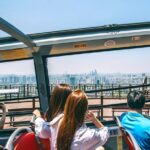
The tour runs about 8 hours and starts in the morning. You meet your guide and travel by comfortable coach with air-conditioning, which is a big deal in Seoul’s weather swings. You’ll also have a mobile ticket, which keeps your day smooth if you’re juggling a group schedule.
You’ll do a moderate amount of walking. That’s normal for palaces, temples, and hanok villages, but wear shoes you can handle for a few hours total. If you’re the type who likes to linger, this itinerary may feel a bit “pace-y,” because several stops are intentionally short.
One practical tip: bring a camera ready mode. The day includes a guard ceremony stop and multiple photo opportunities from major landmarks. Waiting until you’re already inside a site can cost you those quick shots when the moment is right.
Jogyesa Temple: The Calm Start Before the Big Palace Day
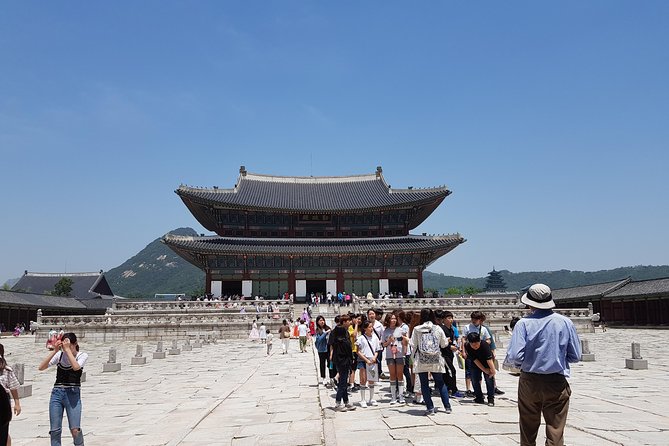
Jogyesa Temple sets the tone right away. It’s the chief Buddhist temple in Korea, and the grounds feel like a pause button compared with Seoul streets. Even with only about 20 minutes there, it’s enough time to notice the temple rhythm—quiet courtyards, traditional architecture cues, and that sense of “you’ve arrived” without needing a long hike.
Admission is free for this stop, so you’re paying nothing extra for the atmosphere. This is also a good warm-up for the rest of the day: after Jogyesa, Gyeongbokgung Palace and its Joseon-era world make more sense because you’ve already switched gears from modern Seoul into tradition.
If you like temples, don’t expect a slow, in-depth devotional visit. This is the kind of stop that works best if you keep your eyes open and ask questions when your guide offers context.
Blue House Pass-By and Gyeongbokgung Palace (With the Guard Ceremony Timing)
After Jogyesa, the route passes the Blue House (Cheongwadae) area. The presidential complex is tied to traditional Korean architecture, and even if you can’t tour everything inside, the sightline stop helps you picture where the “present-day power meets old Korea” idea lives in Seoul.
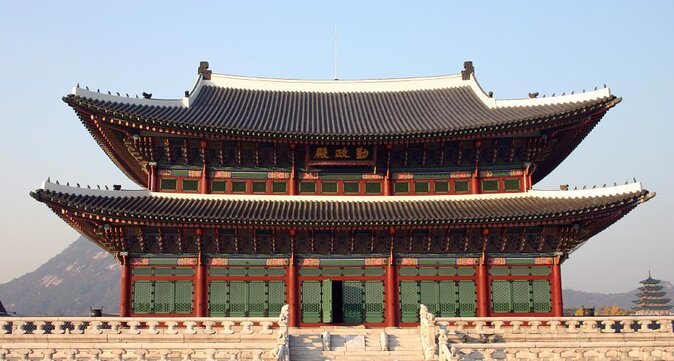
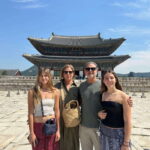
Then comes Gyeongbokgung Palace. This is the royal family’s residence during the Joseon Dynasty, built in the 14th century and recognized as the largest of the Five Grand Palaces. Your guide walks you around the compound and explains the palace’s architecture and traditions, which is what turns “pretty buildings” into a story you can remember.
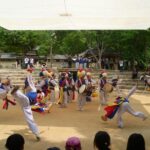
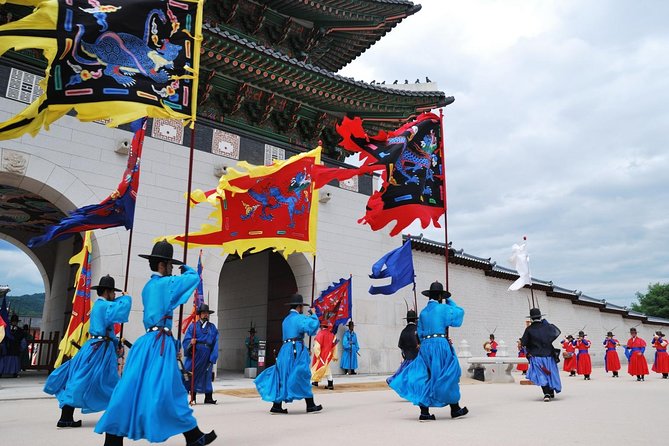
There’s also a well-placed stop for the changing of the guards at Gwanghwamun Gate. The timing matters: you only get around 10 minutes there, so keep your camera handy and don’t get stuck at the back of the group. This is the kind of moment that goes fast, even when you’re ready for it.
Important day note: Tuesdays aren’t available for the palace timing plan. If the palace or related sites are closed, the tour swaps in Deoksu Palace and other nearby alternatives. This is why you should treat the itinerary as a plan, not a contract.
The National Folk Museum Inside Gyeongbokgung: Daily Life That Makes Korea Feel Real
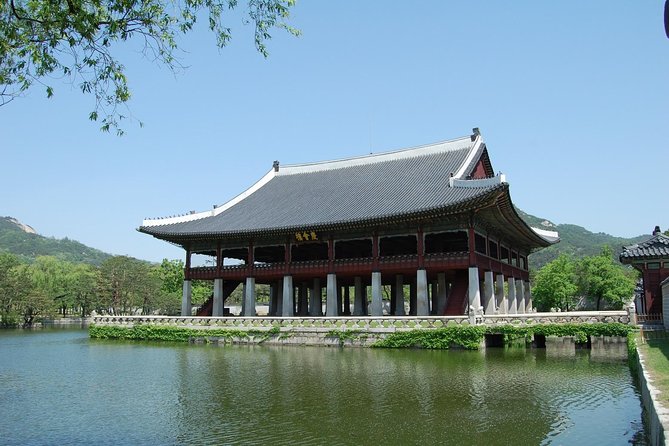
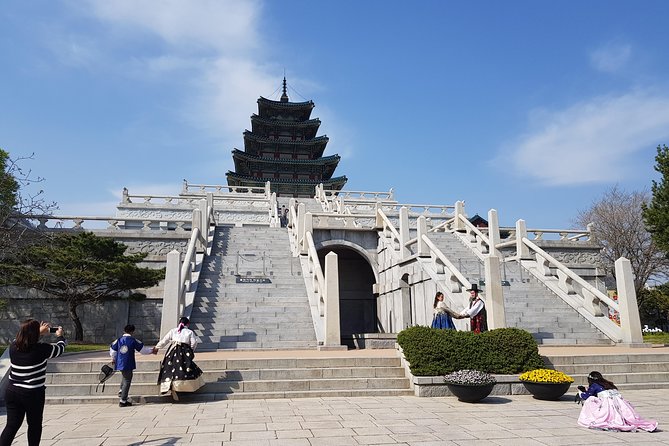
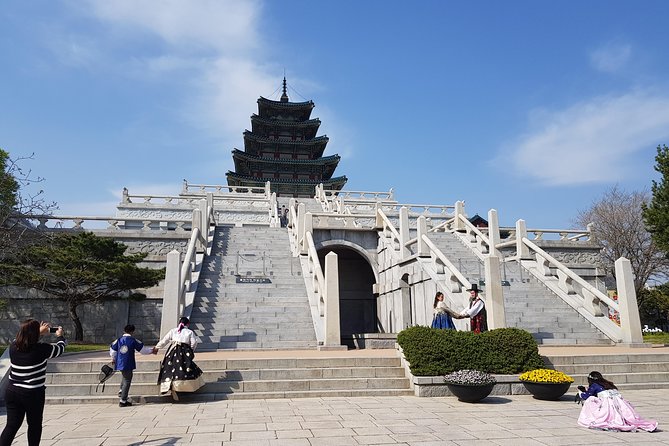
At the palace, the National Folk Museum is where the day gets more human. You’ll see how people lived in Korea from ancient times toward today, not just royal portraits and palace halls. The museum displays connect daily life to bigger themes like agriculture, hunting, weaving, cooking, and class roles.
This stop is included and typically runs about 20 minutes. That length is short enough that you won’t “finish” the museum, but it’s long enough to catch the main threads. I like this structure because it gives you a foundation you can carry into the later hanok village visit.
One smart mindset: treat the museum like a glossary for what you’ll see next. When you later look at Joseon-era homes and social classes, you’ll recognize the ideas the museum introduced.

Insadong Lunch and Shopping Break: A Practical Midday Reset
After the palace-and-museum block, the day shifts into the neighborhood side of Seoul with a stop in Insadong. This is a classic area for tea houses and traditional-style shops, and it’s a good place to breathe for a bit.
Lunch is part of the plan, but it’s at your own expense. The tour gives you the idea of what to order—bibimbap (rice with vegetables and meat) or bulgogi (grilled marinated beef). You’ll also have about an hour to wander, shop, and pick up souvenirs.
This is one of the best parts of a big day tour because it doesn’t feel like another ticketed site. You get a real neighborhood pause where you can slow down, compare snack smells, and decide what you actually want to buy instead of grabbing the first thing a shopkeeper hands you.
If you have dietary limits, this is the time to ask your guide for quick suggestions before you sit down. With only about an hour, planning beats improvising.
The Ginseng Stop at 청하고려인삼(주): Interesting Context, Watch the Shopping Energy
Next is a traditional ginseng center stop called 청하고려인삼(주). You’ll learn about ginseng as a medicinal staple, and you’ll have time to browse and buy. Admission is free for this visit, and the session lasts about 20 minutes.
Here’s the balance: the topic is genuinely part of Korea’s cultural story, especially when it’s tied to traditional medicine. At the same time, this stop can feel like the most sales-forward part of the day, and some people feel the “pressure” more than the “education.”
My advice is simple. If you want ginseng, shop with a clear budget and don’t let the sales pitch speed up your decision-making. If you don’t want to buy, treat it like a quick history stop and focus on learning rather than bargaining.
N Seoul Tower on Mt Namsan: Cable Car Included, Observation Ticket Extra
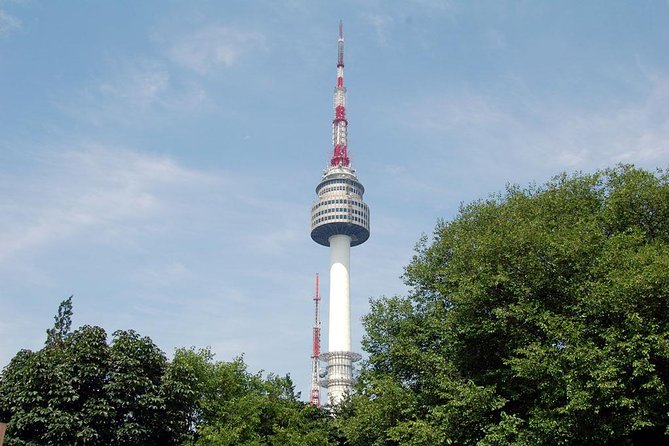
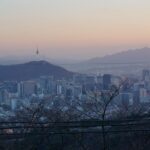
After lunch, the tour heads to N Seoul Tower on Mt Namsan. Expect a scenic lift experience and a big-city payoff. You’ll take the elevator up to the observation deck for panoramic views, which is exactly what you need near the end of a long day.
The tower visit is about 1 hour, and here’s the key detail: the observation-deck ticket isn’t included. The cable car is included, so you’ll likely use it as part of the route up, but you’ll still pay separately for the viewing ticket.
This is where it helps to decide your priorities. If you’re happy with quick skyline photos, you might choose your time carefully at the top. If you want the classic view, plan for that extra cost and go when the light looks best.
Pro tip: if weather is cloudy or rainy, you may get fewer views than you hope. The tower is still worth it for the experience, but don’t expect perfect visibility every day.
Namsangol Hanok Village: Five Hanok, Joseon Social Classes, and a Garden Walk
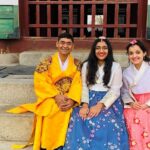
The final heritage stop is Namsangol Hanok Village, a modeled village from the Joseon Dynasty. Your guide leads you through streets of the hanok community and points out how different housing types reflect different social classes, from peasants to royalty.
You’ll see five hanok homes and get time to notice the gardens—there’s an elegant pavilion and a stream that adds that “Korea in miniature” feeling. This stop is about 30 minutes and admission is free.
One more schedule note: Mondays can bring a swap if Namsangol Hanok Village is closed, with a switch to Bukchon Hanok Village instead. That way, you still end the day in a Joseon-era neighborhood setting.
If you’re taking photos, this is a great stop to slow down. The palace taught you the political story, the museum added daily-life context, and now the hanok village helps you picture what that life might have looked like on an everyday street.
The Human Factor: Guides Like AJ, BK, Sadie, Charles Park, Lizzy, and Meil
A day like this rises or falls on communication. This tour leans heavily on guided storytelling because many stops are time-limited. When the guide keeps the pace while still giving clear context, the whole day feels smooth.
I’ve seen this company’s guides repeatedly praised for things that matter in real life: clear pacing, patient handling of group needs, and practical explanations right before each site. Names that come up in that category include AJ, BK, Sadie, Charles Park, Lizzy, and Meil. If you notice you’ve got one of these guides, take it as a good sign that you’ll understand what you’re seeing, not just where to stand for a picture.
Even if you don’t get those specific guides, the lesson still applies: on a multi-stop tour, ask questions early. Good answers turn “a packed itinerary” into “a memorable day.”
Who This Tour Fits Best (and Who Might Want a Different Plan)
This is a solid pick if you:
- Want Seoul highlights in one day without figuring out transit between far-flung neighborhoods
- Like a guide to connect buildings to stories, especially for Joseon-era sites
- Prefer a planned lunch window and a structured route over long free days
You might consider a different approach if you:
- Want long, slow museum time or deep palace touring at your own pace
- Hate shopping stops, even when the topic is interesting
- Are extremely sensitive to paying extra at specific attractions (tower observation ticket, lunch)
Overall, it’s designed for first-timers and time-strapped visitors who still want a real taste of Korean culture.
Should You Book This Seoul City Sightseeing Tour?
If you’re doing Seoul for a few days and want a fast but meaningful overview, I’d book it. The biggest reasons are the included admissions and the stress-free flow: hotel pickup, air-conditioned transport, and efficient stops that hit temple, palace, museum, viewpoint, and hanok in one sweep.
Just go in with two expectations set: lunch and the N Seoul Tower observation ticket are extra, and the ginseng center is a shopping-focused stop. If that doesn’t bother you, you’ll get a day that feels like a Seoul starter pack with context, not just a list of photo stops.
FAQ
Is hotel pickup included?
Yes. Hotel pickup is included, and drop-off is available in Myeongdong / City Hall / Itaewon.
How long is the tour?
The duration is about 8 hours.
What attractions have admission fees included?
Admission fees to most attractions are included, including Gyeongbokgung Palace, the National Folk Museum of Korea, and Namsangol Hanok Village.
What is not included in the price?
Food and drinks aren’t included, and the N Seoul Tower observation ticket is not included (cable car is included).
What happens if I travel on a Tuesday?
On Tuesdays, Gyeongbokgung Palace, the National Folk Museum, and Namsangol Hanok Village may be closed. The tour will visit Deoksu Palace instead, along with the History Museum and Myeongdong. The changing of the guard option at Gwanghwamun Gate is not available on Tuesdays.
Is the group large?
The tour has a maximum of 40 travelers.