REVIEW · SEOUL
(Small Group) Palace & Seoul Old Town Highlights
Book on Viator →Operated by Honey Trail · Bookable on Viator
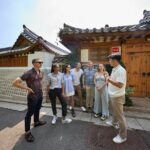
Three hours, and Seoul clicks into place. This small-group walking tour (max 10 people) strings together Joseon-era landmarks and today’s hangouts so you get orientation quickly, not just photos. You’ll leave knowing what’s where, and why these places matter.
I especially like the balance: Gyeongbokgung Palace gets real attention, and the short stops around it help you build a mental map. I also like the value feel—most of the stops are admission-free on the schedule, and the palace entry ticket is included.
The only real catch: it’s a packed walk. If you’re hoping for long linger time, this 3-hour format may feel a bit brisk, and it runs best with good weather since the experience requires it.
In This Review
- Key things I’d watch for
- A tight 3-hour loop of Seoul’s Joseon sites
- Anguk Station to Insadong: starting where locals actually connect
- Insadong in ten minutes: what to notice fast
- Jogyesa Temple: calm in the middle of the city
- Gwanghwamun Square: a plaza you can’t miss
- Gyeongbokgung Palace for 90 minutes: the main event
- Bukchon Hanok Village: hanok between royal palaces
- Lee’s guiding style: history + present-day context, without the lecture
- Price and value: is $60.27 a good deal?
- Pace, weather, and the small-group reality
- Practical tips for a smoother day
- Who should book this tour?
- Should you book the Palace & Seoul Old Town Highlights?
- FAQ
- What is the duration of the tour?
- What is the group size?
- Where is the meeting point?
- Do I need a printed ticket?
- Is the Gyeongbokgung Palace ticket included?
- Are the other stops admission-free?
- What is the walking like?
- Is the tour dependent on weather?
- Can I cancel for free?
Key things I’d watch for
- Max 10 people keeps the group moving without feeling crowded.
- Gyeongbokgung Palace ticket included saves time and makes the plan feel complete.
- Short, smart stops let you see more without turning it into a slog.
- Lee’s teaching style includes mini quiz moments and traditional game breaks.
- Insadong to Bukchon stitches together shopping streets, temples, palaces, and hanok neighborhoods in one loop.
A tight 3-hour loop of Seoul’s Joseon sites
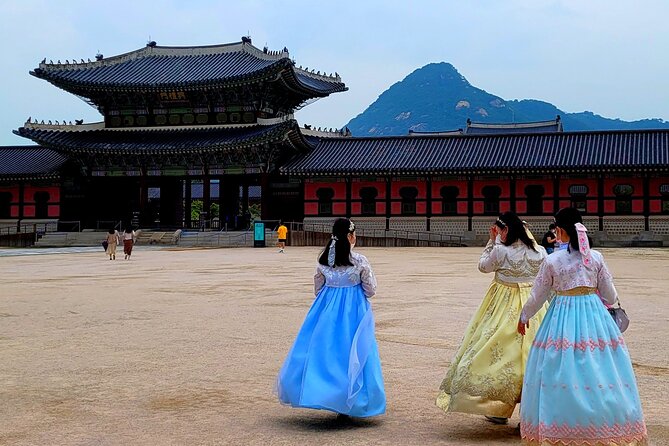
This tour is built for limited time. Instead of picking one palace and calling it a day, you get a connected route: market streets, a major Buddhist temple, a central memorial plaza, then the big royal palace, finishing in a historic hanok neighborhood.
The result is practical. By the time you’re done, you should be able to point at the main areas on a map and understand how they relate—palaces, squares, and the older neighborhoods between them.
The small group size matters, too. With a maximum of 10, you’re less likely to get swept along, and there’s room for questions without the guide shouting over a crowd.
You can also read our reviews of more tours and experiences in Seoul.


Anguk Station to Insadong: starting where locals actually connect
You meet at Anguk Subway Station, Exit 6 (outside). The tour ends back at the same meeting point, so you’re not dropped somewhere random after a long walk.
From there, the route heads toward Insadong, a neighborhood known for traditional goods, restaurants, and tea houses. Even with only about 10 minutes, the goal isn’t shopping for hours—it’s getting a quick feel for the area’s character and learning what to look for when you return on your own.
If you like planning ahead, this is a good warm-up. Insadong is the kind of place where a guide can point out what’s worth your time so you’re not wandering blindly later.
Insadong in ten minutes: what to notice fast
With a short stop, you’ll want to focus on details that help you decide later. Think: street layout, where the tea houses are clustered, and the kinds of traditional items that show up more often than not.
This is also a moment to get your bearings. Once you know where Insadong sits relative to the palace area, the rest of the morning becomes easier to follow.
A quick stop can feel tight, but that’s the point of a highlights walk. You get just enough to create momentum.
Jogyesa Temple: calm in the middle of the city
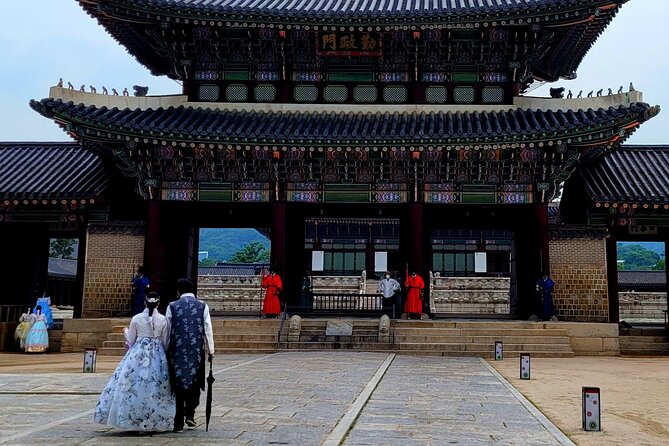
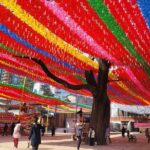
Next up is Jogyesa Temple, described as the head temple of the Jogye Order of Korean Buddhism. It’s a peaceful sanctuary in central Seoul and was founded in 1910.
You’ll have about 30 minutes here. That’s a realistic amount of time to slow down without falling behind, especially if you’re the type who likes noticing small things—courtyard rhythm, prayer spaces, and how the atmosphere changes once you enter.
This stop is valuable because it breaks the “palace only” pattern. You get a different kind of Korean heritage story: not royal halls, but everyday spiritual life centered in the city.
Gwanghwamun Square: a plaza you can’t miss
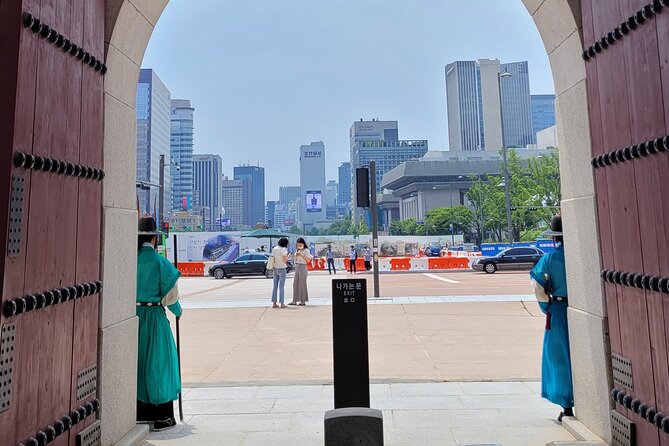
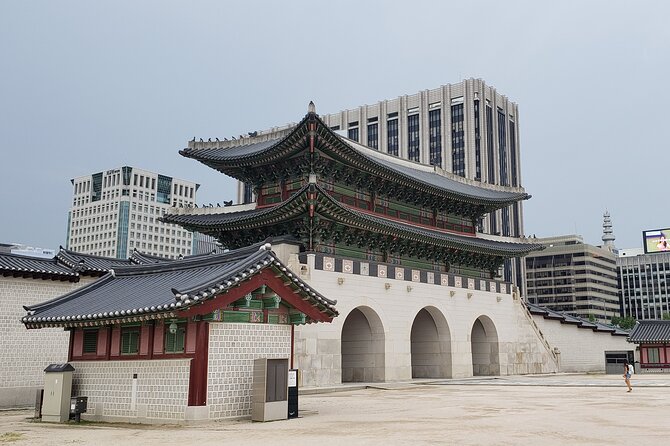
From Jogyesa, the route moves to Gwanghwamun Square, a central public plaza right in front of Gyeongbokgung Palace. Expect statues tied to Korea’s national figures, including King Sejong the Great and Admiral Yi Sun-sin.
You’ll get around 20 minutes at this stop. That’s long enough to understand why the square is such a landmark and to orient yourself for the palace entrance next.
If you’re picturing what Gyeongbokgung feels like when you see it from the street, this plaza sets that expectation. It helps you connect the city’s open public space to the royal complex beyond.

Gyeongbokgung Palace for 90 minutes: the main event
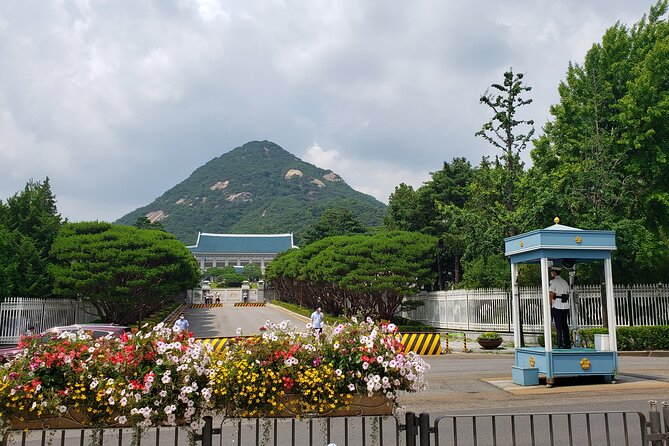
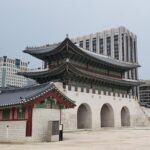
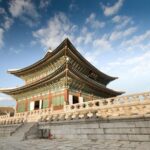
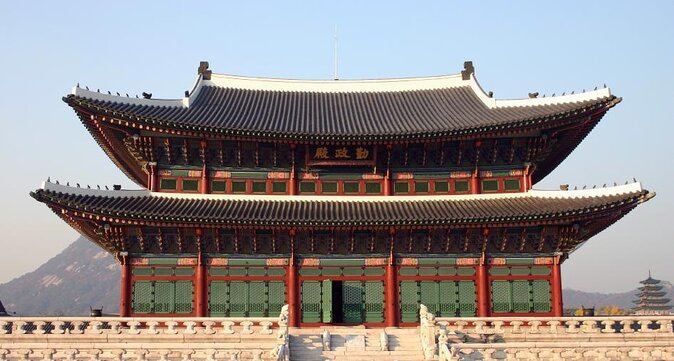
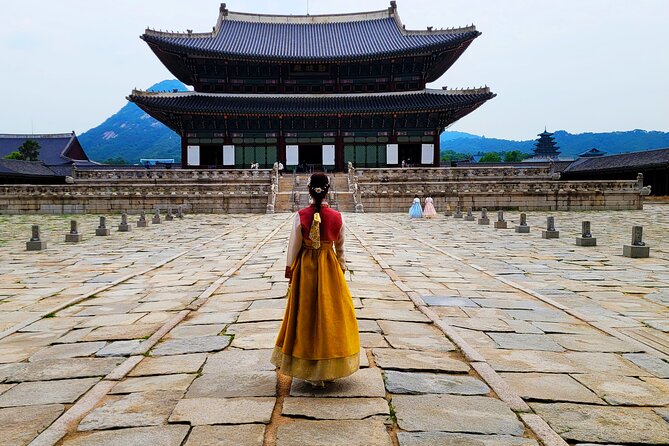
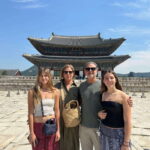
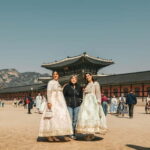
Gyeongbokgung Palace is the star. It’s the main royal palace of the Joseon Dynasty, built in 1395, and the setting is part of the story: mountains behind and the city in front.
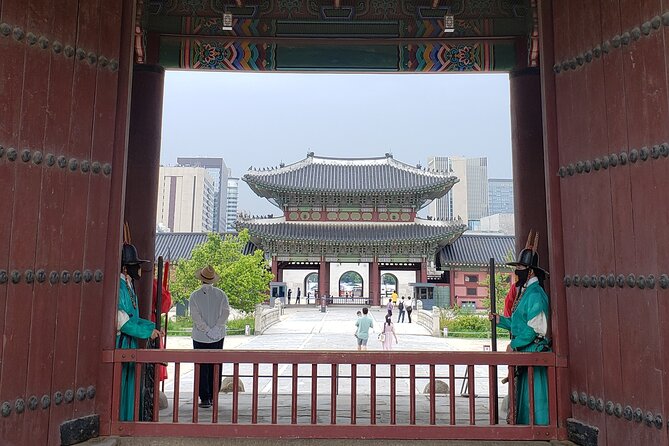
You’ll spend about 1 hour 30 minutes here, and the palace admission ticket is included. That matters because you don’t have to figure out entry details mid-tour, and it keeps your time focused on the buildings and grounds rather than logistics.
With this much time at the palace, you should be able to see more than just the first gate photo. A good guide can also help you read the place—why certain areas feel ceremonial, how the layout supports royal movement, and what the palace reflects about Joseon-era priorities.
This is also where the tour’s “future exploring” promise gets real. Once you’ve walked it once with context, you’re more likely to come back on your own and notice things you’d otherwise skip.
Bukchon Hanok Village: hanok between royal palaces
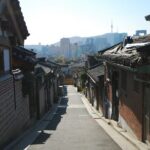
Your final stop is Bukchon Hanok Village. It’s described as a historic neighborhood between two royal palaces, filled with traditional houses called hanok.
You’ll have about 30 minutes. That’s short, but it’s enough to understand the neighborhood’s shape and to spot the architectural patterns that make hanok areas recognizable: rooftops, alley angles, and the way the houses sit tightly together.
This stop is free on the schedule, so you’re mostly paying for time and guidance rather than ticket costs. And when you’re done, you’ll know where to look if you want a longer wander later.
The best way to use this half hour is to pick a small number of viewpoints and really check how the rooftops and alleys line up. If you try to cover every street, you’ll just end up moving quickly for photos. Focus beats speed here.
Lee’s guiding style: history + present-day context, without the lecture
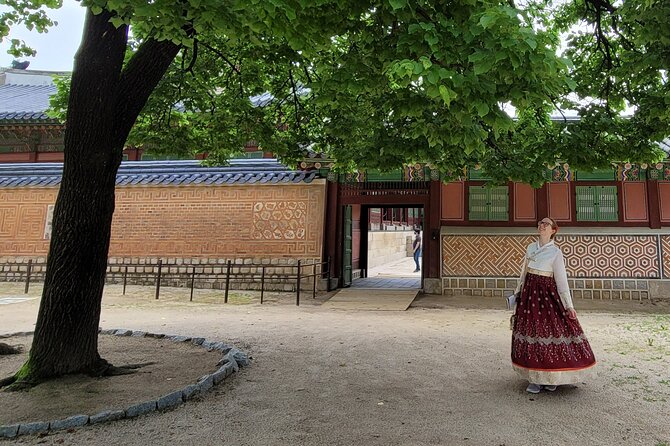
One theme from the experience is that the guide, Lee (listed as @honeytrailkorea), keeps people engaged while still teaching you something real. The feedback mentions a balance of Joseon-era history with practical notes about modern Korean life.
Lee is also described as patient, caring, and responsive to questions. That’s not just nice—it can be the difference between a tour that feels like a checklist and one that turns into actual understanding.
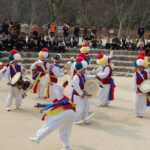
A few reviews also mention mini quizzes and traditional games during breaks. That kind of structure can help if you’re visiting multiple heritage sites in one day and your brain is trying to keep up.
If you want a guide who explains and then answers, this setup fits well. You’re not stuck guessing what you’re looking at.
Price and value: is $60.27 a good deal?
At $60.27 per person for about 3 hours, this isn’t a “free walking tour,” but it also isn’t a big-ticket day. The key value lever is what’s included: the Gyeongbokgung Palace ticket.
Most of the other scheduled stops are noted as free (Insadong, Jogyesa Temple, Gwanghwamun Square, and Bukchon Hanok Village). So you’re paying primarily for a guide, a time-saving route plan, and a smooth connection between areas.
For first-time Seoul visits, the value is usually in orientation. You’re not just seeing five locations—you’re learning how they connect, which makes it easier to build the rest of your itinerary without spending your precious vacation hours on trial and error.
One other practical point: the tour can be booked and you’ll typically confirm at booking time, which helps if you’re trying to lock in a schedule early. The fact that it’s commonly booked about 34 days in advance suggests it stays popular, so waiting until the last week might be risky.
Pace, weather, and the small-group reality
This is a walking tour, and it runs on a timed sequence. Some stops are brief by design, like Insadong, while others allow a longer look, like Gyeongbokgung Palace.
That means your experience will depend on your own travel style. If you love quick “scan and learn,” you’ll enjoy the pace. If you prefer to linger in shops or take slow photo walks, you may feel slightly rushed.
Also keep in mind the experience requires good weather. That doesn’t mean you’ll never see a cloudy day, but it does mean you should keep a flexible mindset in case the tour has to shift.
Practical tips for a smoother day
Wear shoes you can walk in comfortably. The total format is a short visit to multiple areas, so you’ll do real walking even if each stop is time-limited.
Bring a phone-charged plan for the mobile ticket. You’ll use a mobile ticket rather than a paper one, so make sure your battery can last through the day.
Since the tour is near public transportation, you don’t need a car or complicated transit planning. You’ll be using subway access, and the start at Anguk Station makes it easier to reach from many parts of the city.
Finally, arrive a few minutes early if you can. The meeting point is specific (Anguk Station, Exit 6 outside), and a calm start keeps the rest of the route from feeling hurried.
Who should book this tour?
This is a strong fit if:
- you’re on a tight schedule and want a high-quality overview in about 3 hours
- you like a guide who ties heritage sites to how to understand the city now
- you want a small group (max 10) instead of a large crowd experience
- you’re visiting for the first time and need an orientation boost before going off on your own
It may be less ideal if:
- you want long, slow time in one palace area
- you hate walking or prefer a slower pace with more free time
- you’re traveling at a time when weather is highly unpredictable and you can’t adjust plans
Should you book the Palace & Seoul Old Town Highlights?
I’d book this if you want a well-paced introduction that hits the right landmarks in the right order: Insadong for the traditional streets, Jogyesa for a calm pause, Gwanghwamun for the central anchor, Gyeongbokgung for the big royal centerpiece (with the ticket included), then Bukchon Hanok Village to wrap it up with hanok neighborhoods.
If you’re the type who enjoys short stops that point you toward what to explore later, this tour earns its cost. And with Lee guiding—plus the mini quizzes and game-style breaks mentioned in feedback—you should come away feeling like you learned something without getting stuck in a lecture.
If you hate brisk schedules, consider adding extra self-guided time on a different day for the palace and hanok area. But as a first Seoul “map in motion,” this one is a smart use of half a day.
FAQ
What is the duration of the tour?
The tour lasts about 3 hours.
What is the group size?
This is a small group with a maximum of 10 travelers.
Where is the meeting point?
You meet at Anguk Subway Station, Exit 6 (outside).
Do I need a printed ticket?
No. You’ll use a mobile ticket.
Is the Gyeongbokgung Palace ticket included?
Yes. The tour includes the Gyeongbokgung Palace admission ticket.
Are the other stops admission-free?
On the schedule, Insadong, Jogyesa Temple, Gwanghwamun Square, and Bukchon Hanok Village are listed as free.
What is the walking like?
It’s a small-group walking tour with multiple stops across the old town/palace area.
Is the tour dependent on weather?
Yes. The experience requires good weather. If it’s canceled due to poor weather, you’ll be offered a different date or a full refund.
Can I cancel for free?
Yes. You can cancel up to 24 hours in advance for a full refund.