REVIEW · TOKYO
Imperial Palace Tour: Discover Samurai History with a Local Guide
Book on Viator →Operated by YURAGI · Bookable on Viator
Samurai clues hide inside Tokyo’s calm walls. This small-group walk through the Imperial Palace East Gardens turns stone, gates, and viewpoints into a clear story of Japan’s power shifts. You’ll trace parts of Edo Castle and hear how samurai and emperors shaped what came next.
I especially like the stop-by-stop focus on standout relics: Tatsumi Yagura watchtower and the double-arched Ni-ju Bashi bridge. You also get real hands-on context from a professional guide, so the places don’t feel like random photo spots.
One thing to plan for: meeting a guide at a busy landmark can be slightly tricky. There’s even been a report of a not-so-smooth start finding the guide, so I’d arrive early and make sure you know exactly where you’re meeting.
In This Review
- Key things to know before you go
- Why the Imperial Palace East Gardens Matter for Samurai-Era Tokyo
- Price and Time: A 2-Hour Walk for $12.90
- Getting There: The Starbucks Start at Kokyo Gaien
- Stop 1: Sakurada Tatsumi Yagura (Sakurada Nijū Yagura) Watchtower
- Stop 2: Ni-ju Bashi Bridge and the Main Approach View
- Stop 3: Imperial Palace East Gardens and Edo Castle Ruin Remnants
- Stop 4: Imperial Palace Grounds, Moats, and the Emperor’s Residence Area
- What You’ll Learn About Samurai and Imperial Power (So It Actually Sticks)
- Walking Comfort and Who This Tour Fits Best
- Booking Value: Small Group, Free Stops, and a Mobile Ticket
- Should You Book This Imperial Palace Samurai History Tour?
- FAQ
- How long is the Imperial Palace tour?
- What does the tour cost?
- How many people are in the group?
- Where do we meet for the tour?
- Is there a mobile ticket?
- Are admissions required for the listed stops?
- Is this tour suitable for everyone in terms of walking?
- Can I cancel and get a full refund?
- Is the tour near public transportation?
Key things to know before you go

- Max 8 travelers means you can actually ask questions and keep the pace comfortable
- Tatsumi Yagura (Sakurada Nijū Yagura) is a rare surviving Edo-period watchtower you’ll see up close
- Ni-ju Bashi gives you one of the most recognizable Imperial Palace viewpoints over the moat
- Edo Castle remnants show up as stone ruins, gates, and the layout of the old stronghold
- Free admission at each stop (per the tour’s listed stops) keeps the outing good value
- Mobile ticket helps you move quickly after you meet up
Why the Imperial Palace East Gardens Matter for Samurai-Era Tokyo

This isn’t a tour that just checks boxes with photos. The Imperial Palace East Gardens sit on former Edo Castle grounds, so you’re seeing the stage where Tokugawa-era power played out. On a walking route like this, the “why” shows up fast: moats, stone walls, and gates aren’t decoration. They’re defense and control, built for a world where politics could turn dangerous.
The neat part is how a good guide connects everyday geometry to big historical shifts. You’ll hear how samurai culture and imperial authority both matter here, even when you’re standing in calm garden paths.
And because the gardens are open to the public, your experience stays grounded. You’re not stuck waiting on obscure access rules. You walk, you look, you listen, and the places make sense.
You can also read our reviews of more tours and experiences in Tokyo.
Price and Time: A 2-Hour Walk for $12.90
At $12.90 per person for about 2 hours, this is priced like a “doable today” history add-on. What makes it feel like value is that the tour’s key sights are listed with free admission tickets at each stop. So you’re paying mainly for interpretation and a guided route, not for site entry fees.
Also, this is small-group by default: up to 8 travelers. In a place like Tokyo’s Imperial area, that matters. A large group turns viewpoints into traffic. A small group makes it easier to hear details, and the pace stays human.
If you’re short on time or you want something structured without spending half the day in transit, this length is a smart fit. Two hours is enough to get your bearings and still leave you energy for more exploring on your own.
Getting There: The Starbucks Start at Kokyo Gaien
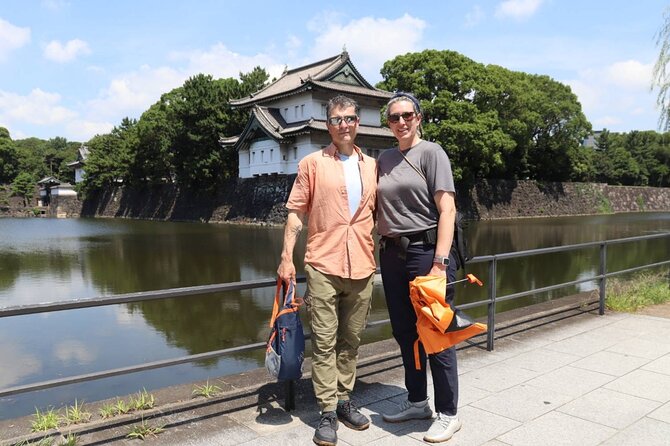
Your meeting point is Starbucks Coffee at Kokyo Gaien Wadakura Fountain Park, located at 3-1 Kōkyogaien, Chiyoda City, Tokyo 100-0002, Japan. The tour ends back at the meeting point.
A practical note: Starbucks is a busy, visible anchor, but it’s still easy to lose track of a specific guide in a crowded area. That one reported case of trouble finding the guide is your clue: arrive a bit early, and be ready to confirm you have the right group. Having your mobile ticket handy also helps you settle quickly.
The tour is described as near public transportation, which is a big deal in central Tokyo. You can slot it between other sightseeing plans without fighting an overly complicated commute.
Stop 1: Sakurada Tatsumi Yagura (Sakurada Nijū Yagura) Watchtower
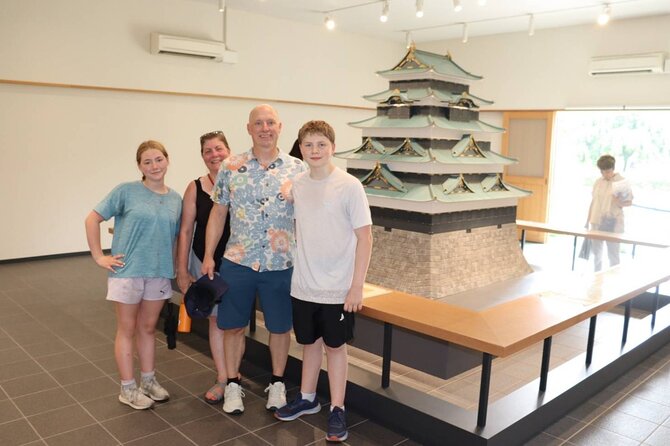
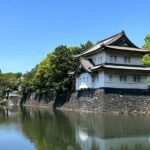
You start at Tatsumi Yagura, also known as Sakurada Nijū Yagura. This is a historic two-story watchtower inside the Imperial Palace grounds, built during the Edo period. What makes it special is that it’s one of the few surviving Edo-period structures.
When you look at a watchtower like this on foot, you start to understand what a castle system needed beyond walls. A watchtower is a tool: it’s for observing movement, monitoring threats, and controlling information. The guide stories here matter because they help you “see” the sightlines and roles that the building originally had.
Possible drawback: since it’s an outdoor structure and part of a larger grounds area, the experience is mostly about observing from the route and soaking in context. If you expect lots of time inside controlled indoor spaces, this isn’t set up like that based on the listed stops.
Stop 2: Ni-ju Bashi Bridge and the Main Approach View
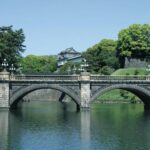
Next up is the Two-tiered Bridge, known as Ni-ju Bashi. This double-arched bridge is one of the most iconic views of the Imperial Palace. It spans the moat and serves as the main approach to the inner grounds.
This is where the tour earns its “wow” factor, especially for first-time visitors. Bridges in castle systems are more than scenic. They’re chokepoints. In a moat-and-wall layout, that approach line controls how people enter and how defenders respond.
You’ll have about 15 minutes here, and that’s usually just right for a bridge viewpoint plus story time. If it’s crowded when you arrive, keep your expectations realistic: your time is short, so it helps to focus on learning what the guide points out rather than trying to get the perfect angle.


Stop 3: Imperial Palace East Gardens and Edo Castle Ruin Remnants
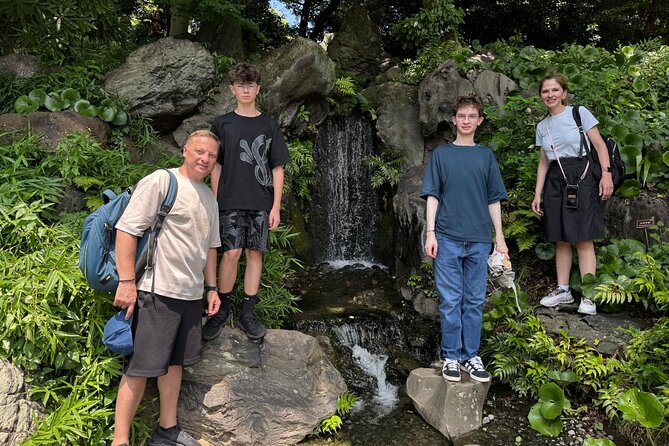
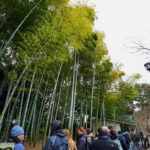
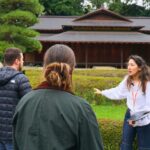
The heart of the walk is the Imperial Palace East Gardens, which sit on the former grounds of Edo Castle. This is where you’ll move through stone walls, gates, and traditional garden design elements. Seasonal flowers may appear, but the bigger “seasonal” factor is light and crowd flow.
You’ll also hear about major remnants linked to the old Edo Castle layout, including the Tenshudai and the broader Edo Castle ruin setting. Even when you’re just looking at stones and boundaries, a guide can help you understand what these remnants imply about how the shogunate organized power.
A key benefit of this stop is pacing. In many Tokyo history tours, you either sprint between places or you spend too long in museums. Here, your attention stays outdoors and focused on how space functioned. It’s a different kind of learning: less about absorbing text, more about making the layout click in your head.
Possible consideration: since this is a garden route, it’s still a walking experience. Wear shoes you’re comfortable in. You’ll have a smoother time if you’re used to steady walking in urban areas.
Stop 4: Imperial Palace Grounds, Moats, and the Emperor’s Residence Area
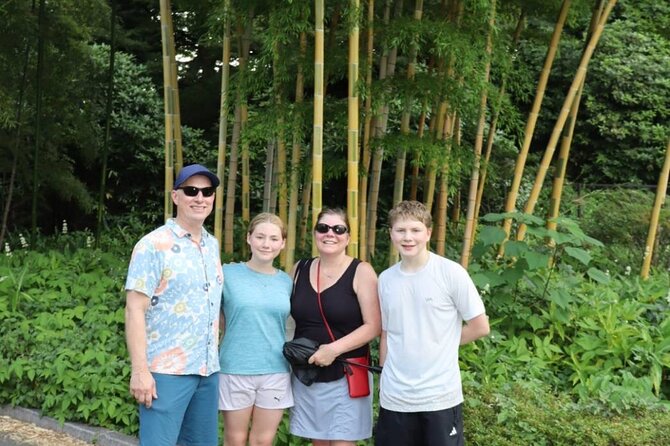
You finish at the Imperial Palace itself. The Imperial Palace is the residence of the Emperor of Japan, and it’s also a major Tokyo landmark. Historically, it was the site of Edo Castle, and you’ll see elements such as moats and stone walls that reflect the defensive castle past.
This stop is about perspective. When you stand near the Imperial Palace area after learning the Edo Castle connections, it’s easier to understand continuity and change: the same general geography can serve very different political eras. The guide’s stories are what help you connect emperors, the Tokugawa shogunate, and the samurai-era power structure.
Time at this stop is about 30 minutes, which means you’ll get enough explanation to feel oriented, but not so much that you get bored. It’s a strong “wrap-up” moment after the watchtower and bridge.
One practical note: the experience centers on what you can see from the public-facing grounds along the walking route. If your goal is highly specific interior access, you may need different arrangements. But for a historical walking tour focused on exterior structures and context, this fits well.
What You’ll Learn About Samurai and Imperial Power (So It Actually Sticks)
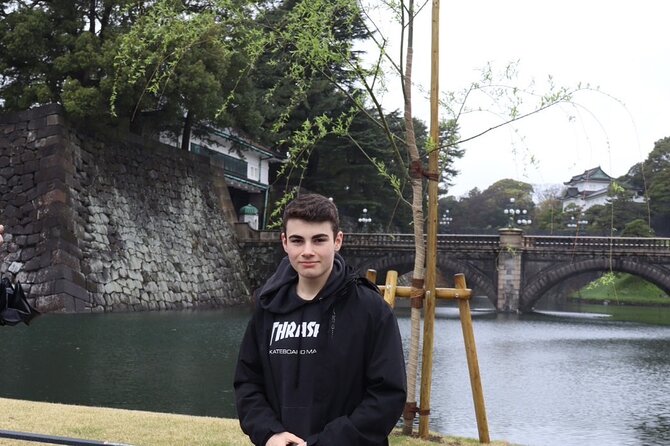
The tour’s main promise is stories of Japanese emperors, samurai warriors, and the political power that shaped Japan’s past. The value isn’t just that you hear names and dates. It’s that the stories are anchored to visible features: towers, bridges, stone boundaries, and the garden path layout.
For example, watching the route you’re walking through makes it easier to understand how castles were designed to manage people and threats. And once you’ve seen Ni-ju Bashi as the main approach, it’s hard to unsee the idea of controlled entry.
I also like that the tour frames this as Tokyo’s evolution. You start in Edo Castle remnants and end at the Imperial Palace area, so you get a clear before-and-after feel without needing a separate museum stop.
If you’re the type who wants history that feels like it has direction, this works. The route gives your brain a spine to hang details on.
Walking Comfort and Who This Tour Fits Best
This experience is described as suitable for people with moderate physical fitness. It’s a walking tour, and while it’s not described as extreme, you should expect steady walking and standing at viewpoints.
It also caps at 8 travelers, which makes it friendly if you like small groups. If you’re traveling solo or as a couple, it’s easier to follow the guide’s pace and hear answers to questions.
If you’re traveling with limited time in Tokyo, this kind of route is a smart pick. You get a concentrated story of the samurai and shogunate era without committing to a full day.
If you hate group pace changes or you need total quiet all the time, a guided format may feel a bit active. But the time at each stop is clearly portioned, so you’re not stuck at one location forever.
Booking Value: Small Group, Free Stops, and a Mobile Ticket
Here’s why the “small and structured” approach pays off. Up to 8 travelers means you’re more likely to get direct answers. Admission is listed as free at each stop, so your ticket price goes toward the guide and the route logic.
The mobile ticket also helps. You don’t have to hunt down paper vouchers once you’re on the ground. And since the tour ends back at the meeting point, you can plan your next activity without worrying about where the walk leaves you.
One more detail worth noting: group discounts are listed as part of the features. If you’re traveling with friends, it’s worth checking whether that discount applies to your group size and booking setup.
Should You Book This Imperial Palace Samurai History Tour?
If you want a short, high-signal introduction to Tokyo’s power past, I’d say yes. The 2-hour format is practical, the sights are meaningful (Tatsumi Yagura watchtower and Ni-ju Bashi in particular), and the small group size keeps the experience from feeling like a conveyor belt.
You should book if:
- you like history that connects to what you see outdoors
- you’re visiting Tokyo for the first time and want clear structure
- you prefer a small group over big bus tours
- you’re okay with moderate walking and standing at viewpoints
Skip it only if:
- you’re mainly looking for long indoor museum-style time
- you want very long stays at a single site
- you’re very anxious about meeting-point logistics (then just arrive early and confirm your meeting spot)
FAQ
How long is the Imperial Palace tour?
It runs for about 2 hours.
What does the tour cost?
The price is $12.90 per person.
How many people are in the group?
The tour has a maximum of 8 travelers.
Where do we meet for the tour?
You meet at Starbucks Coffee – Kokyo Gaien Wadakura Fountain Park, 3-1 Kōkyogaien, Chiyoda City, Tokyo 100-0002, Japan.
Is there a mobile ticket?
Yes, the tour uses a mobile ticket.
Are admissions required for the listed stops?
The listed stops show admission ticket free.
Is this tour suitable for everyone in terms of walking?
It’s recommended for travelers with a moderate physical fitness level.
Can I cancel and get a full refund?
Yes. You can cancel up to 24 hours in advance for a full refund.
Is the tour near public transportation?
Yes, it’s described as near public transportation.